
What these indoor planters are made for
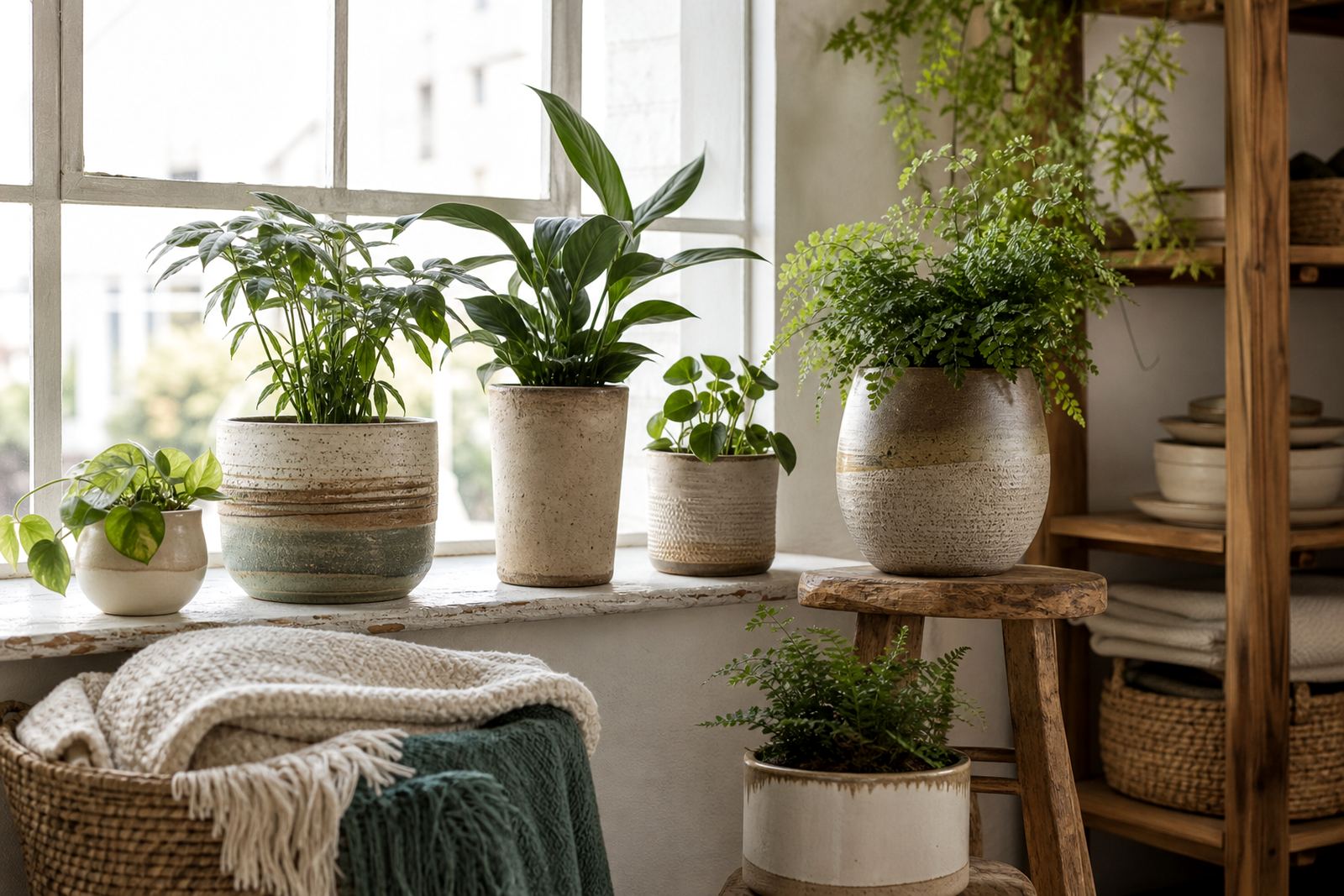
Indoor planters in this range are made to hold herbs, small foliage plants and decorative indoor greenery in homes, studios and workspaces. The range includes hand-thrown ceramic pots, carved or turned timber vessels, woven outer planters and mixed decor pieces with a grounded, natural look. Shapes are chosen for practical planting depth, steady placement and easy styling on shelves, window ledges and tables.
Most pieces suit normal nursery pots or direct planting, depending on the finish and drainage detail. Some designs are better for leafy plants and succulents, while deeper forms work well for basil, mint, parsley and similar herbs. A few styles are made as cachepots for holding a plant in its nursery container, which is useful when the client wants a cleaner finish indoors.
Sizes, shapes and finish choices
Planter sizes vary so the piece can suit a single herb pot or a grouped indoor arrangement. Typical diameters range from about 12 cm to 28 cm, with heights from 10 cm to 24 cm depending on the form. Smaller planters work well on kitchen ledges and side tables, while wider pieces suit entry consoles, shelves and cluster displays.
- Small: 12 cm to 15 cm diameter for herbs, cacti and compact succulents.
- Medium: 16 cm to 22 cm diameter for foliage plants and mixed tabletop displays.
- Large: 23 cm to 28 cm diameter for statement indoor arrangements or paired planters.
- Finishes: matte glaze, satin glaze, bare clay, sealed timber, woven fibre or mixed texture.
- Forms: round, tapered, low bowl, tall cylinder and footed shapes.
Because each item is handmade, there will be slight differences in glaze, grain, weave and size. That variation is part of the appeal and means no two pieces sit exactly the same on the shelf.
Where they fit best indoors
These planters suit homes in Cape Town apartments, Stellenbosch houses, Johannesburg townhomes and Durban coastal interiors alike. In humid coastal areas, a glazed ceramic or well sealed timber piece is often easier to maintain, especially where the planter sits near a kitchen, patio door or bright window. In drier inland homes, terracotta style finishes and matte ceramics bring warmth without looking heavy.
They work well in:
- Kitchen windows for basil, rosemary and parsley.
- Living room shelves and coffee tables.
- Bedroom corners with low light tolerant greenery.
- Office reception spaces and meeting rooms.
- Gift tables for housewarmings, weddings and corporate gifting.
For a cleaner indoor look, many clients pair one taller planter with two smaller ones in related tones. That gives balance without making the arrangement feel too formal.
Fitting, drainage and placement details
Some indoor planters include a drainage hole and saucer, while others are closed base cachepots. It helps to confirm which type you need before ordering, because the planting method differs. If the planter has drainage, a drip tray or fitted saucer is useful on wooden furniture and painted surfaces. If it is a cachepot, the nursery pot should sit inside with a small gap at the base so any excess moisture does not collect against the roots.
For heavier ceramic pieces, place the planter on a flat, stable surface that can carry the weight when watered. On shelves or window ledges, check the depth and overhang carefully so the piece sits level. If a client plans to move the planter often, lighter woven or timber styles may be easier to handle in tight spaces.
- Confirm whether the planter has drainage holes or is a closed base piece.
- Check the internal diameter if the nursery pot must fit inside.
- Confirm the total height if it needs to sit under shelves or rails.
- Ask about saucers, feet or inserts if the surface is delicate.
Care for ceramic, timber and woven finishes
Care depends on the material. Ceramic planters can usually be wiped with a damp cloth and mild soap, then dried fully before being placed back on furniture. Glazed surfaces are easier to clean, while unglazed or raw clay areas may mark if left wet for too long. Timber planters should be kept dry between waterings and wiped with a soft cloth. In coastal towns like Cape Town and Durban, sealed timber needs a little extra attention so moisture does not sit in corners or joins.
Woven planters should be kept away from standing water and cleaned gently with a dry brush or soft cloth. If the planter is used as a cachepot, lift the inner pot out to water it in the sink, then let it drain before returning it to the outer shell. This keeps the finish in better condition and helps avoid staining on timber or fibre.
Details to confirm before ordering
Handmade pieces are best matched to the plant and the room before delivery is arranged. A few measurements and finish details make the order far more suitable for the intended space.
- Desired size in centimetres, both width and height.
- Drainage requirement: hole, saucer, or closed base.
- Plant type: herb, succulent, leafy indoor plant or mixed arrangement.
- Material preference: ceramic, timber, woven or mixed finish.
- Colour tone: earthy, neutral, dark, pale or patterned.
- Placement: shelf, floor, table, window ledge or reception counter.
If the planter is part of a gift set, it helps to include whether it should suit a single plant or a fuller indoor arrangement. For bulk orders and corporate gifting, grouped sizes and matched tones usually work better than a random mix.
Delivery and gifting across South Africa
Indoor planters can be delivered across South Africa, including Cape Town, Johannesburg, Durban, Pretoria and Stellenbosch, with local delivery options in Woodstock, the Southern Suburbs and the Atlantic Seaboard. When a client is sending a planter as a gift, gift wrapping and a note can be added, and curated gift boxes or custom bundles are available for housewarming sets, wedding gifting and corporate orders.
Because these are handmade items, packaging is handled to protect edges, glaze surfaces and any fragile trim. If several planters are ordered together, it is worth confirming which pieces should be packed as one gift and which should travel separately. That helps with unwrapping, display and transport once the parcel reaches the recipient.
Key facts
| Product type | Handmade indoor planters for herbs, foliage and decorative greenery |
|---|---|
| Materials | Ceramic, timber, woven fibre and mixed decorative finishes |
| Typical sizes | 12 cm to 28 cm diameter, 10 cm to 24 cm height |
| Drainage options | Drainage hole, saucer, or closed base cachepot |
| Use settings | Kitchen, lounge, bedroom, office, reception and gift styling |
| Care | Wipe clean, avoid standing water, dry thoroughly after watering |