
Handmade hooks with a clean timber finish
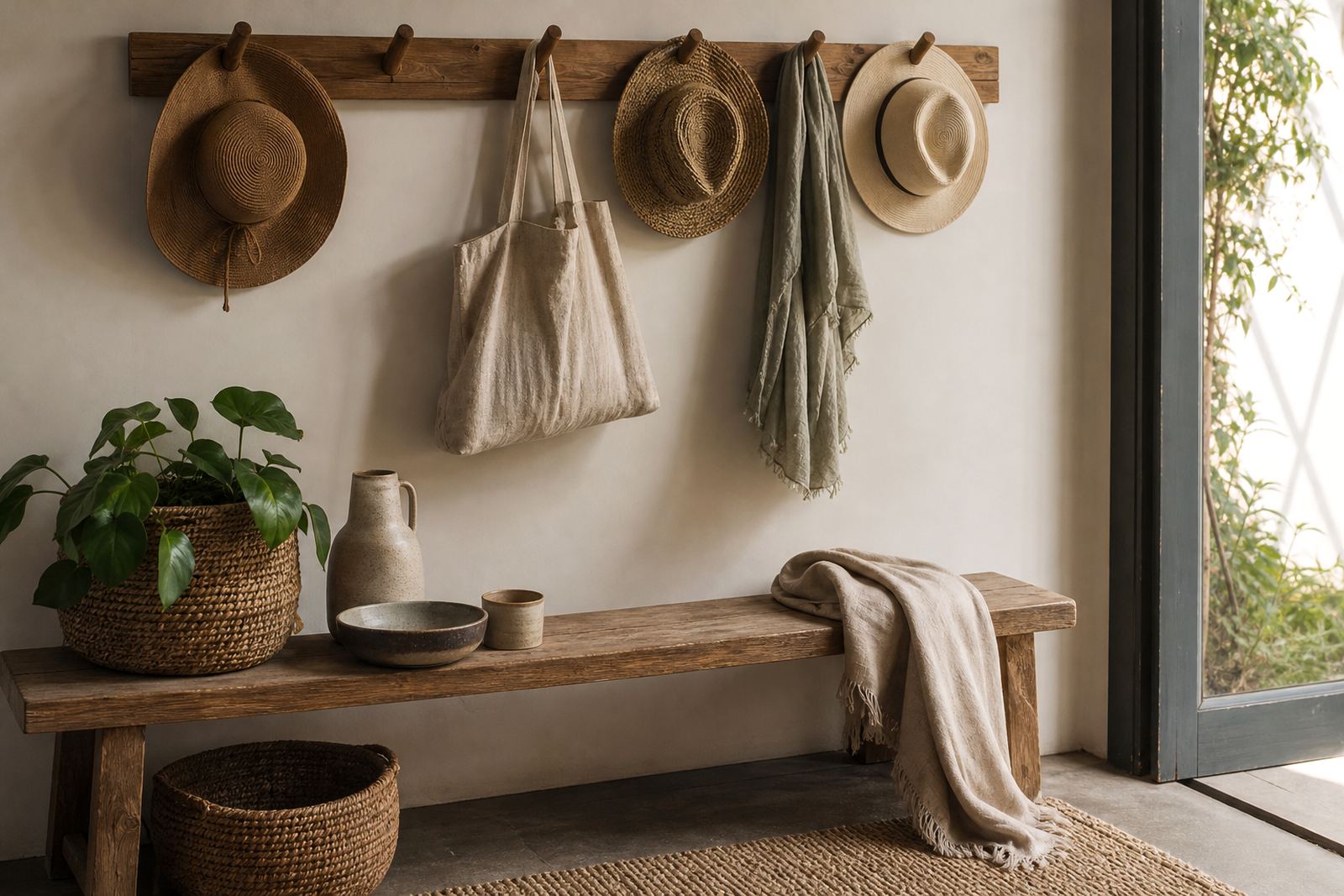
Our wooden wall hooks are made for everyday hanging in homes, guest houses and small retail spaces. They are sized for towels, tea towels, hats, tote bags, light handbags and dressing gowns, with a neat profile that sits close to the wall. Most pieces are made from solid timber or layered wood components, then sanded smooth and finished to show the grain rather than cover it up.
Because each maker works by hand, small differences in grain, tone and edge detail are part of the piece. You may see lighter and darker sections, natural knots or slight variation between hooks in the same set, which is normal for timber products. That is often what gives the hooks their character in a room with other natural materials like linen, clay and woven baskets.
- Suitable for single-hook use or grouped in a row
- Compact enough for narrow walls, passages and behind doors
- Works well with both painted walls and raw plaster finishes
Sizes, shapes and hanging styles available
Wooden wall hooks are available in a few practical formats, depending on the maker and the batch. Some are individual hooks for a single point, while others are supplied in sets for a longer wall run. Typical lengths range from about 50 mm for compact pegs to around 300 mm or more for multi-hook bars, with projection usually kept modest so the item does not stick out far into the room.
Hook depth, backplate thickness and fixing spacing can vary, so it helps to confirm the exact piece before ordering. If you are planning a row above a bench, in a scullery or near a basin, measure the wall area first and allow enough space between hooks for the items you want to hang. For heavier use, choose a wider bar or a thicker timber section with stronger fixing points.
- Single peg style for one item at a time
- Multi-hook rail for family bathrooms, entrances or utility areas
- Mixed sets for a consistent look across several rooms
Where wooden wall hooks work best
These hooks suit homes that need practical storage without taking up floor space. In Cape Town flats, Woodstock apartments and smaller rooms in Stellenbosch homes, they are useful where wardrobes and freestanding stands would feel too bulky. They also work well in guest rooms, rental units and holiday homes where quick tidy-up storage matters.
In bathrooms, they are best placed away from direct water spray and where steam does not sit for long periods. In kitchens, they can hold aprons, tea towels or light shopping bags near a prep area. In bedrooms and entryways, they are handy for hats, scarves and everyday bags. If you are fitting them in a coastal area such as the Atlantic Seaboard or Durban, ask about the finish used so you can plan for humidity and sea air.
- Bathrooms, but not in direct splash zones
- Entrances for keys, hats and light bags
- Bedrooms, laundries, sculleries and guest rooms
Fixing details and fitting on different wall types
Most wooden wall hooks are installed with screws through a hidden or visible backplate, or with the fixing holes built into the timber piece. For plastered brick walls, masonry plugs and screws are usually used. On drywall or timber lining, the fitter must choose fixings that suit the wall structure. The hook should be anchored into sound material, especially if it will carry repeated use.
If the wall is tiled, very hard plaster or uneven, it is worth checking the fitting position before drilling. This helps avoid cracks, chipped tile edges or hooks sitting at an angle. A level is important if you are mounting a row, because even a slight tilt is easy to notice once the hooks are in use. For a clean result, measure the spacing between hooks before drilling all the holes.
- Confirm wall type before installation
- Check whether the item uses a single fixing point or two screw points
- Allow for the item depth so doors and cupboards still open freely
Timber care for everyday use
Wooden hooks need light care to keep their finish neat, especially in busy rooms and coastal homes. Wipe them with a dry or slightly damp soft cloth when dust builds up. If they are finished with oil or wax, avoid soaking the timber or using harsh cleaners, as those can dull the surface or leave patchy marks. In humid rooms, wipe off moisture after use so the wood stays stable.
Do not hang very wet towels or heavy loaded bags for long periods on a small peg unless the maker has specified that it can carry that weight. Over time, repeated strain can loosen the fixing or mark the timber. A gentle maintenance check every so often is worthwhile: make sure the screw heads are still firm and the hook has not worked loose from the wall. Small care now helps the piece last well.
- Dust with a soft dry cloth
- Use mild cleaner only if the finish allows it
- Keep away from prolonged soaking and direct splash
Details to confirm before placing an order
When ordering wooden wall hooks, it helps to confirm a few practical points so the right piece is chosen for your wall and use. If you need a set for a passage, bathroom or scullery, check whether the hooks are sold singly or as a grouped run. Confirm the overall length, hook projection, timber type and finish tone, because natural wood can range from pale honey shades to deeper brown tones.
You should also confirm the fixing style, the number of mounting points and whether screws are supplied. If the hooks are going near existing cabinetry, tiles or painted feature walls, it is useful to note the wall colour and the available space so the profile suits the room. For gift orders, gift wrapping and notes can be arranged, and for larger projects such as housewarming sets or bulk gifting, the bundle can be matched to the room style you need.
- Exact size and number of hooks needed
- Timber type, finish and colour variation
- Fixing method, wall type and whether fittings are included
Key facts
| Product type | Handmade wooden wall hooks |
|---|---|
| Materials | Solid timber or layered wood, finished with oil, wax or sealed coating depending on maker |
| Typical use | Towels, hats, light bags, scarves, aprons and dressing gowns |
| Typical sizes | Single hooks from about 50 mm; multi-hook rails often around 200 to 300 mm or more |
| Fixing | Screws and suitable wall plugs, matched to plaster, brick, drywall or timber lining |
| Care | Dust regularly, wipe dry after moisture exposure and avoid harsh cleaners |