
A compact Melville brief with no room for wasted corners
The client was a private homeowner in Melville, Johannesburg, fitting out a small studio with one main living area, a sleeping zone and a modest kitchenette. The brief was practical from the start: keep the floor as open as possible, use vertical space well, and choose homeware that could carry daily use without looking harsh in a small room.
There were a few fixed constraints. Wall space was limited, the room already had a lot of visual activity from windows and built-in fittings, and the owner wanted pieces that would travel well if the layout changed later. We kept the selection light in colour and honest in material, with natural timber tones, matte ceramics and woven textiles that softened the room without adding clutter.
- Location: Melville, Johannesburg
- Home type: studio apartment
- Main challenge: storage in a small footprint
- Style direction: warm, practical, low-visual-noise pieces
What we measured before anything was chosen
Before supplying anything, we worked from the room measurements and the placement of doors, windows and plug points. That helped us avoid items that would block movement or interrupt the sightline across the studio. In a space like this, a few centimetres matter more than people expect, especially around walkways and bedside access.
The chosen mix had to do more than look good. Ceramics were selected for everyday tabletop use, textiles had to be easy to fold and store, and the wood pieces needed a finish that could handle regular handling. We also kept the scale of each item modest so the room did not feel weighed down by bulky objects.
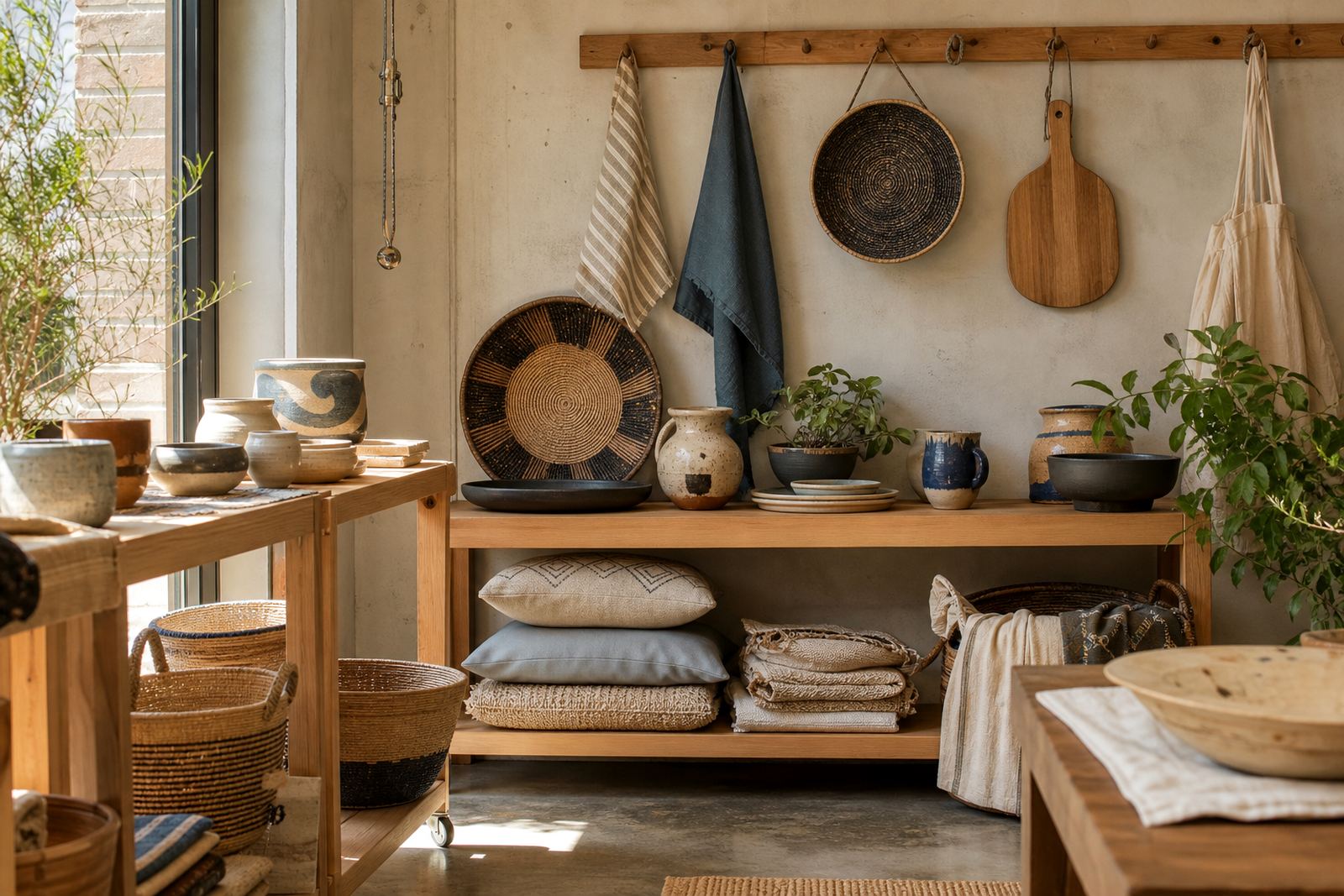
- Wall hooks were placed where bags, hats and light outerwear could hang without crowding the floor
- Multi-use trays and bowls were used for keys, toiletries and bedside items
- Textiles were chosen in neutral shades so they could work with changing cushions or bedding later
- Wood accessories were kept slim and simple for easy repositioning
Handmade pieces supplied for the space
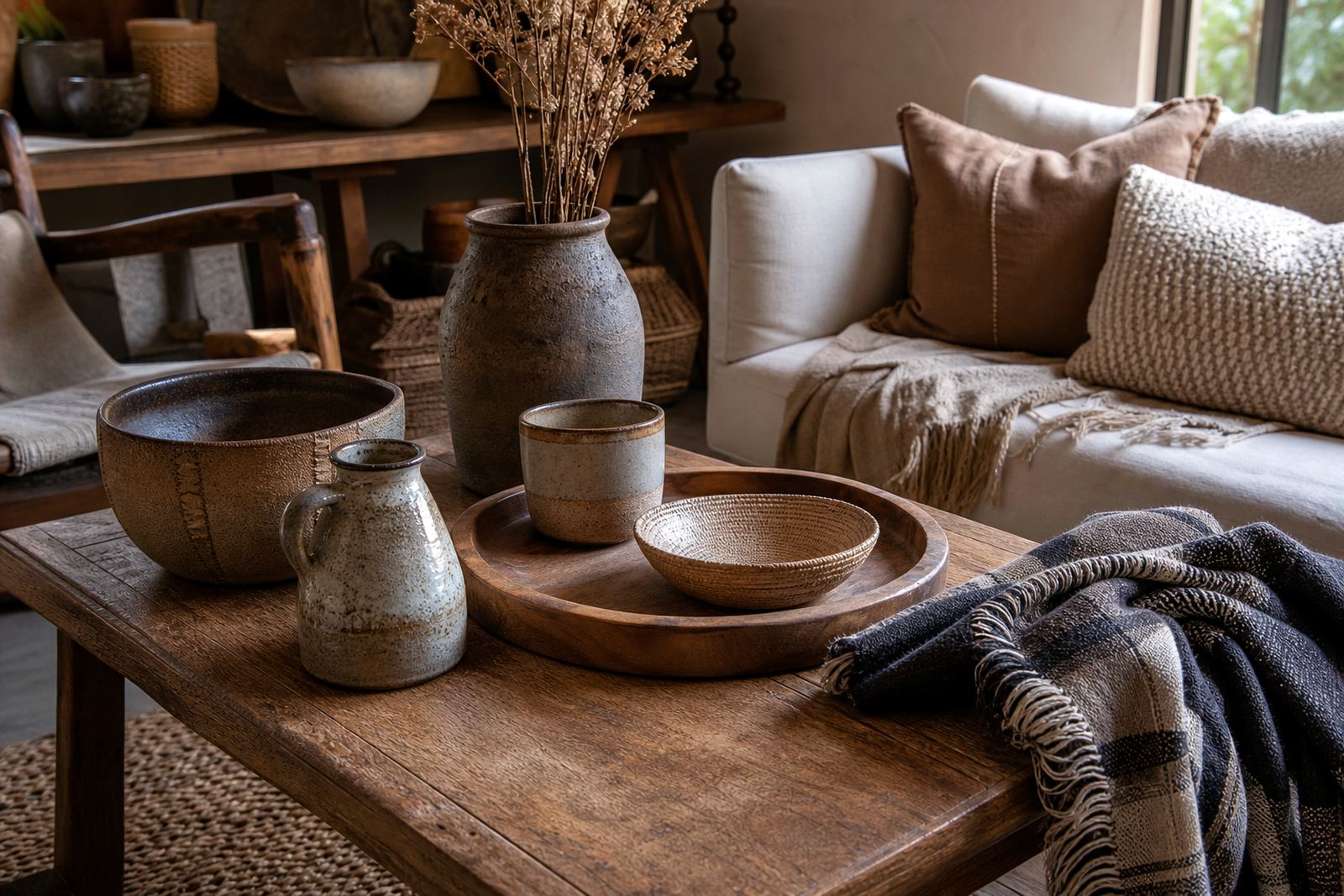
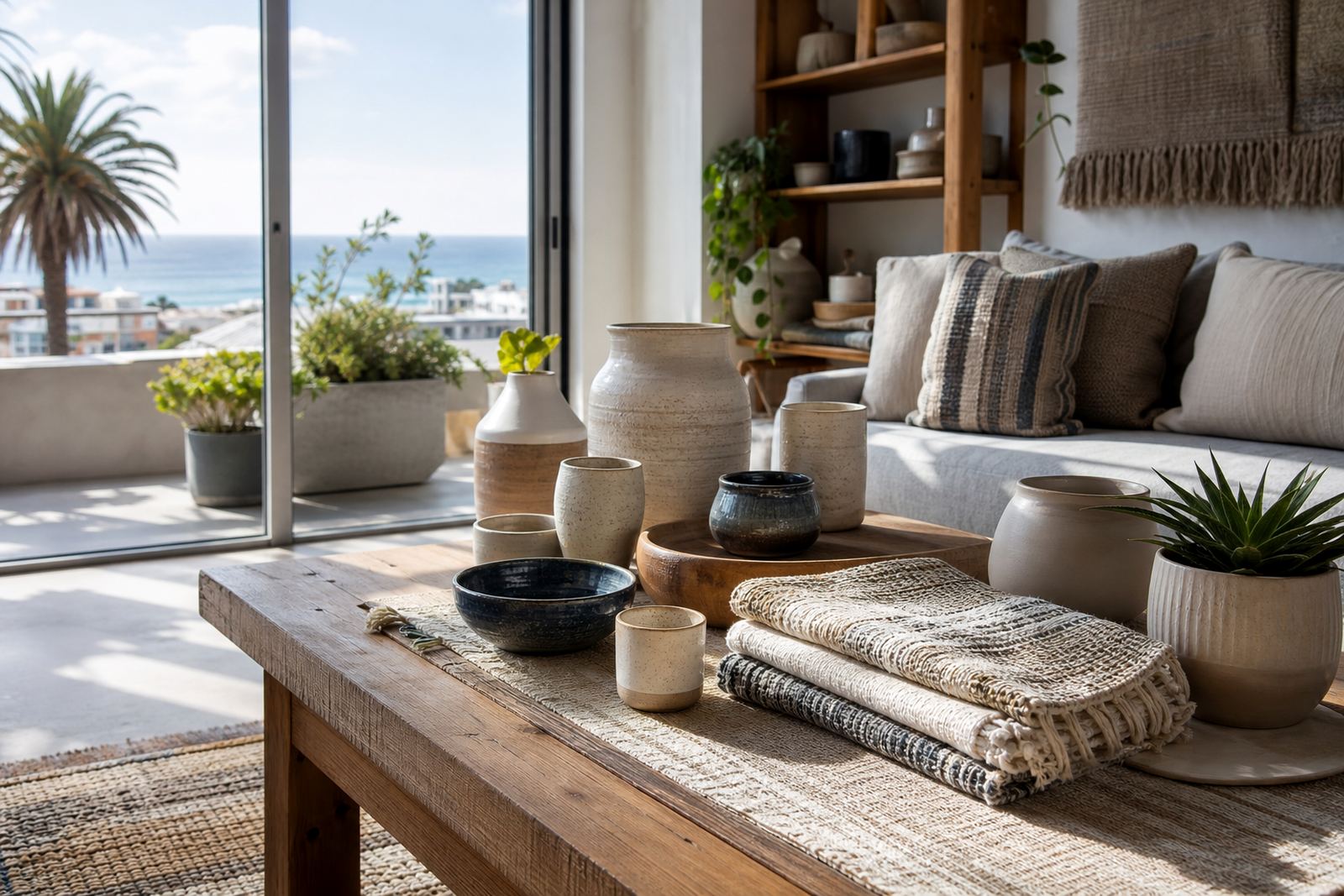
We put together a mixed selection of handmade homeware that could work in more than one part of the studio. The ceramics brought structure to the kitchenette and side surfaces, while the wood items handled everyday organising. Textiles were used for softness, storage and texture, especially where hard surfaces would otherwise dominate.
The finish on each piece needed to suit a lived-in home rather than a display shelf. That meant selecting items with practical proportions, smooth edges and materials that are familiar in South African homes. A small ceramic vessel, for example, can be both decorative and useful if it is sized correctly for flowers, utensils or bathroom items. The same approach worked for woven baskets and wall hooks, which had to be strong enough for repeated use and neat enough to sit in plain view.
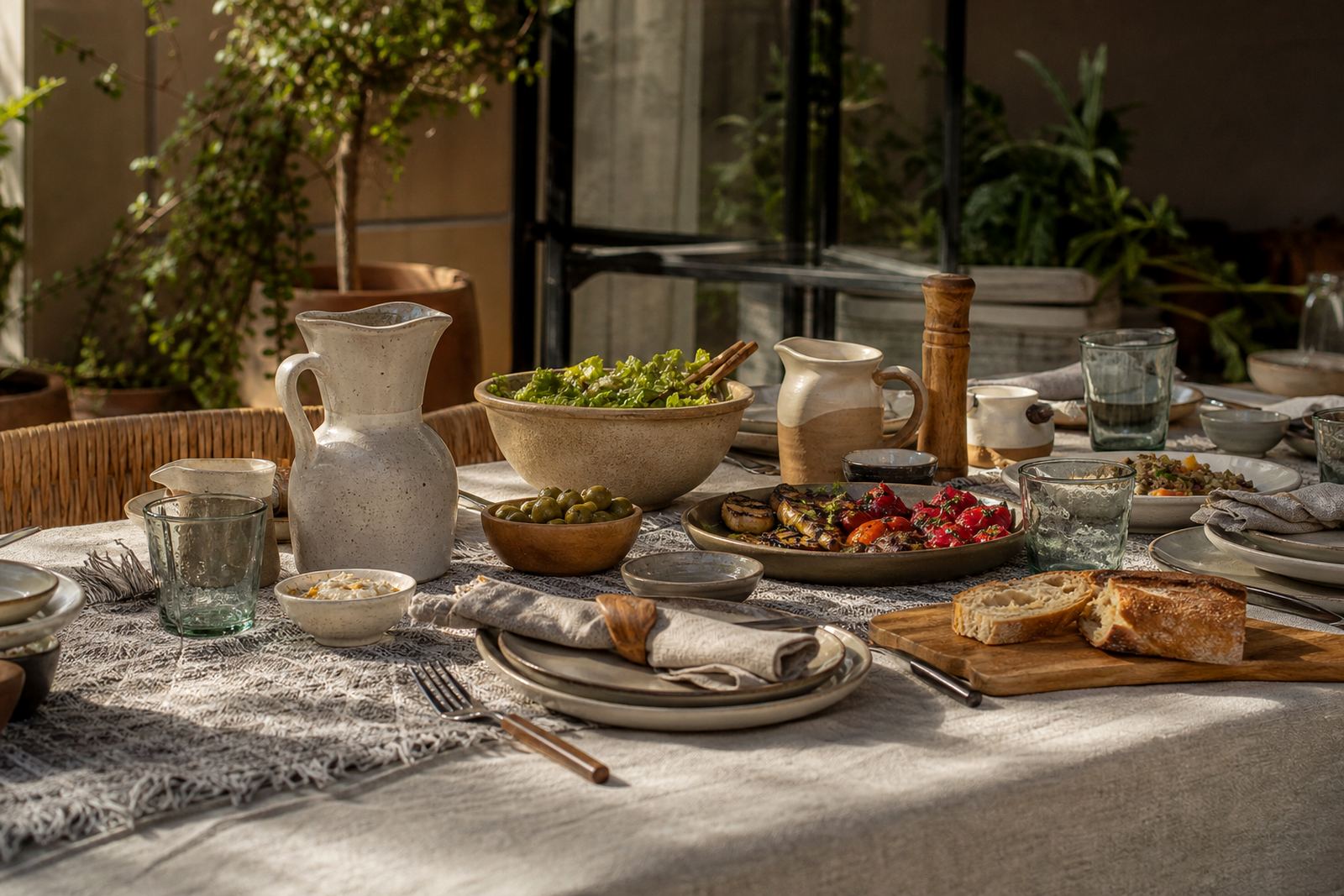
- Ceramics: small bowls, vessels and serving pieces for table and shelf use
- Textiles: woven storage, soft covers and layered fabric accents
- Wood: slim trays, organisers and hanging details
- Decor: compact objects chosen to add interest without taking over surfaces
Delivery coordination and fitting across the week plan
The project ran over three weeks from specification to placement. The first week was for measuring, confirming the homeware mix and checking the visual balance of the proposed items. The second week covered supply, packing and careful delivery coordination to Johannesburg. The final week was used for positioning, small adjustments and a practical review of how the items worked in daily use.
Because the home was a studio, delivery timing mattered. Large unpacked items would have created more disruption than necessary, so the pieces were grouped logically and labelled for easy sorting on site. That reduced handling and helped the client move straight into using the storage and display items without having to reshuffle the room multiple times.
- Project duration: 3 weeks
- Delivery area: Melville, Johannesburg
- On-site focus: placement, access and daily usability
- Pack strategy: grouped items by room function
Results in a room that needed to stay open
The finished studio felt calmer and more settled. Wall hooks took pressure off surface storage, small containers cleared clutter from the kitchenette and bedside areas, and the mixed natural materials gave the room a warmer finish. The owner could keep everyday items visible but tidy, which matters in a studio where every shelf and ledge tends to carry more than one job.
The strongest result was not just the storage gain, but how the pieces changed the room’s rhythm. Instead of one crowded zone, the studio now had distinct places for hanging, storing and displaying items. It read as a home, not a holding space. The handcrafted character also brought enough personality to the room that no extra decoration was needed.
- Better use of vertical space
- Clearer separation between living and storage zones
- Less surface clutter
- More visual warmth from natural materials
What suited this project well
The key lesson from this Melville studio was that small spaces need disciplined choices, not a lot of extras. Pieces with more than one function worked best, especially where a hook, tray or basket could replace a larger storage item. Simple shapes and natural finishes also helped keep the room feeling open.
If a similar home came through again, we would keep the same approach: measure first, keep the mix tight, and choose handmade items that earn their place. That way the homeware supports the room instead of competing with it. For compact Johannesburg living, that practical balance makes all the difference.
- Use vertical storage before adding floor pieces
- Keep ceramics and textiles in a restrained colour range
- Choose items that can move between rooms if the layout changes