
Small cups made for a proper short pour
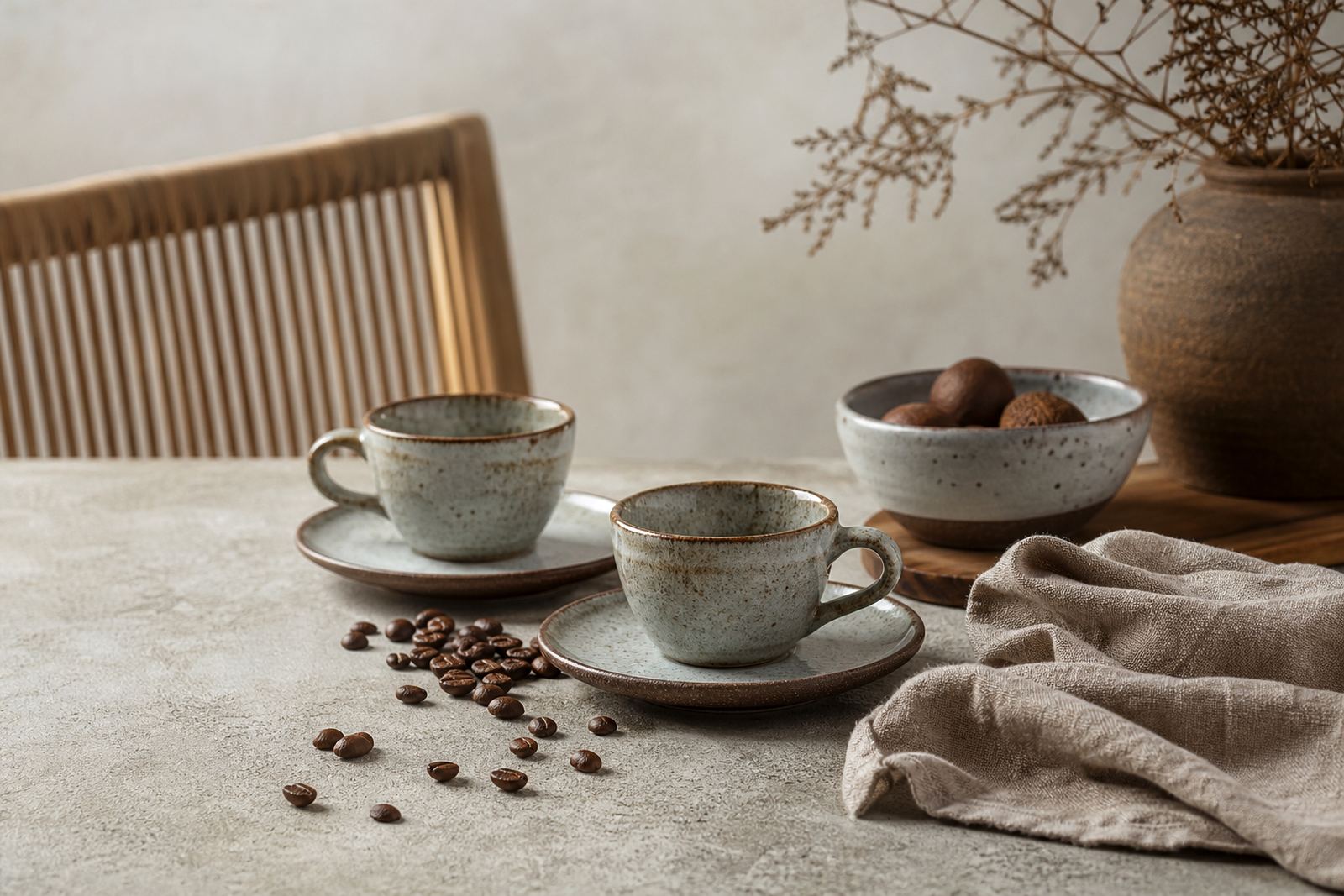
Espresso cups are the small ceramic cups used for single or double espresso, macchiato style servings, and tasting pours. The usual working size sits between 60 ml and 90 ml, with some makers shaping them a little larger for a double shot or a longer crema. In practical use, the cup should feel balanced, sit comfortably under a machine spout or moka pot, and hold heat well enough for the coffee to stay lively from first sip to last.
Handmade versions often show slight differences from cup to cup. That is part of the appeal of crafted ceramics. You may see a softer rim, a small variation in glaze depth, or a foot that is turned by hand. These details give each cup character, while the core shape stays useful for everyday coffee service. For a home set, two cups are often enough, but many customers choose sets of four or six for guests and gifting.
- Common capacity: 60 ml, 70 ml, 80 ml, or 90 ml
- Typical height: 5 cm to 7 cm
- Typical top diameter: 5.5 cm to 7 cm
- Material: glazed ceramic, stoneware, or earthenware depending on maker
Finishes, pairings, and the feel in your hand
Most espresso cups in this range are made from stoneware or similar fired clay, then finished with a food-safe glaze. A smooth glazed interior helps the coffee pour cleanly and makes washing easier. Some cups have an unglazed base or a matte outer wall for a more natural look, while others are fully glazed for richer colour and easier wiping. On the outside, the cup may feel satin smooth, softly textured, or slightly grainy if the maker has used a more tactile surface treatment.
These cups suit a range of interiors, from a compact apartment kitchen in Woodstock to a family home in Stellenbosch or a coffee station in a Johannesburg office. They also pair neatly with saucers, small spoons, and plated biscuits. Because the cups are handmade, matching sets may vary slightly in tone, which works well when you want a softer collected look instead of a factory-perfect set.
- Glaze styles may include gloss, satin, matte, speckled, or two-tone finishes
- Some makers offer matching saucers or gift-boxed pairs
- Colours often lean to cream, clay, charcoal, green, blue, or natural earth shades
Where these cups fit into daily coffee service
Espresso cups are useful anywhere short coffee servings are part of the routine. At home, they suit a morning machine shot, a mid-afternoon coffee break, or a small after-dinner serve. In guest spaces, they help present coffee neatly without taking up much cupboard room. For small hospitality counters, tasting tables, and private entertaining, the compact size keeps serving tidy and the stack height manageable.
They are also well suited to gift bundles, wedding gifting, and housewarming sets. A pair of handmade espresso cups with a gift note feels personal without being bulky, and they work with many homeware styles. If the cups are being ordered for a corporate gift, the cleaner shapes and neutral glaze tones tend to suit a wide range of offices and client spaces.
- Good for home espresso machines, moka pots, and short pour methods
- Useful in coffee corners, guest trays, and small serving stations
- Popular for gifting, registry bundles, and paired sets
Fit, stack, and shelf space details to check
There is no fitting work involved, but the cup size should still be checked against how you use it. If the cups need to sit under a machine spout, measure the clearance from drip tray to spout and compare it with the cup height. If you plan to stack several cups, note both the diameter and the foot shape, because some handmade cups stack neatly while others are best stored side by side. A slightly flared rim can also affect how well a saucer sits underneath.
If you are ordering for a set or for gifting, it helps to confirm whether you want exact matches or a more mixed handmade look. Some buyers prefer perfectly matched glaze tones, while others like the small differences that come with craft production. For bulk orders, check whether the maker can repeat a shape across the full set, and whether the cups should be packed individually or grouped in pairs.
- Check cup height against machine clearance if using a spouted espresso setup
- Confirm stackability if storage space is tight
- Ask whether saucers are included or ordered separately
- For bulk or gifting orders, confirm quantity, colour mix, and pack style
Care for ceramic cups in everyday use
Most handmade espresso cups are easy to care for if they are treated gently. Wash with warm water and mild dish soap, then dry with a soft cloth to reduce water spotting. If the cup has a lighter glaze, coffee oils may leave a faint mark over time, so regular washing is useful. For matte or textured surfaces, avoid abrasive pads that can dull the finish. If the maker has used a fine crackle glaze, staining can be reduced by rinsing soon after use.
Handmade ceramics can usually handle normal daily use, but sudden temperature changes should be avoided. A cup taken from a very cold cupboard and filled immediately with boiling liquid may be more likely to craze or crack, especially with thinner walls. It is also best to check whether the maker recommends dishwasher use or hand washing only. Microwaving depends on the clay body and glaze, so that detail should be confirmed per product.
- Use mild soap and a soft sponge
- Dry after washing to reduce marks from hard water
- Avoid harsh scourers and sudden temperature shock
- Confirm dishwasher and microwave suitability before ordering
What to confirm before placing the order
For espresso cups, the useful order details are quite specific. Confirm the capacity in millilitres, the height, whether the cup is tapered or straight-sided, and whether a saucer is part of the set. It also helps to confirm the glaze colour, finish, and any variation expected because of the handmade process. If you are matching an existing set, send the details carefully so the shape and tone are as close as possible to what you already use.
LocalMaker delivers across Cape Town, Johannesburg, Durban, Pretoria and Stellenbosch, with delivery coordination across Woodstock, the Southern Suburbs and the Atlantic Seaboard as well. For larger orders, gift boxes, or mixed homeware bundles, it helps to note the final quantity, the preferred packing style, and any gift note wording needed at checkout. If replacement help is needed for a chipped item or an issue in transit, the team can work from the order details and photos supplied through the contact form.
- Capacity in ml
- Height and diameter
- Glaze colour and finish
- Saucer required or cup only
- Quantity for single, pair, or bulk order
- Any gift wrapping, note, or registry detail
Key facts
| Product type | Handmade ceramic espresso cup |
|---|---|
| Typical capacity | 60 ml to 90 ml |
| Typical dimensions | 5 cm to 7 cm high, 5.5 cm to 7 cm across |
| Material | Ceramic, stoneware or earthenware depending on maker |
| Finish | Food-safe glazed, matte, satin or gloss |
| Care | Hand wash recommended unless the maker states dishwasher safe |