
Woven length for tables that need a softer finish
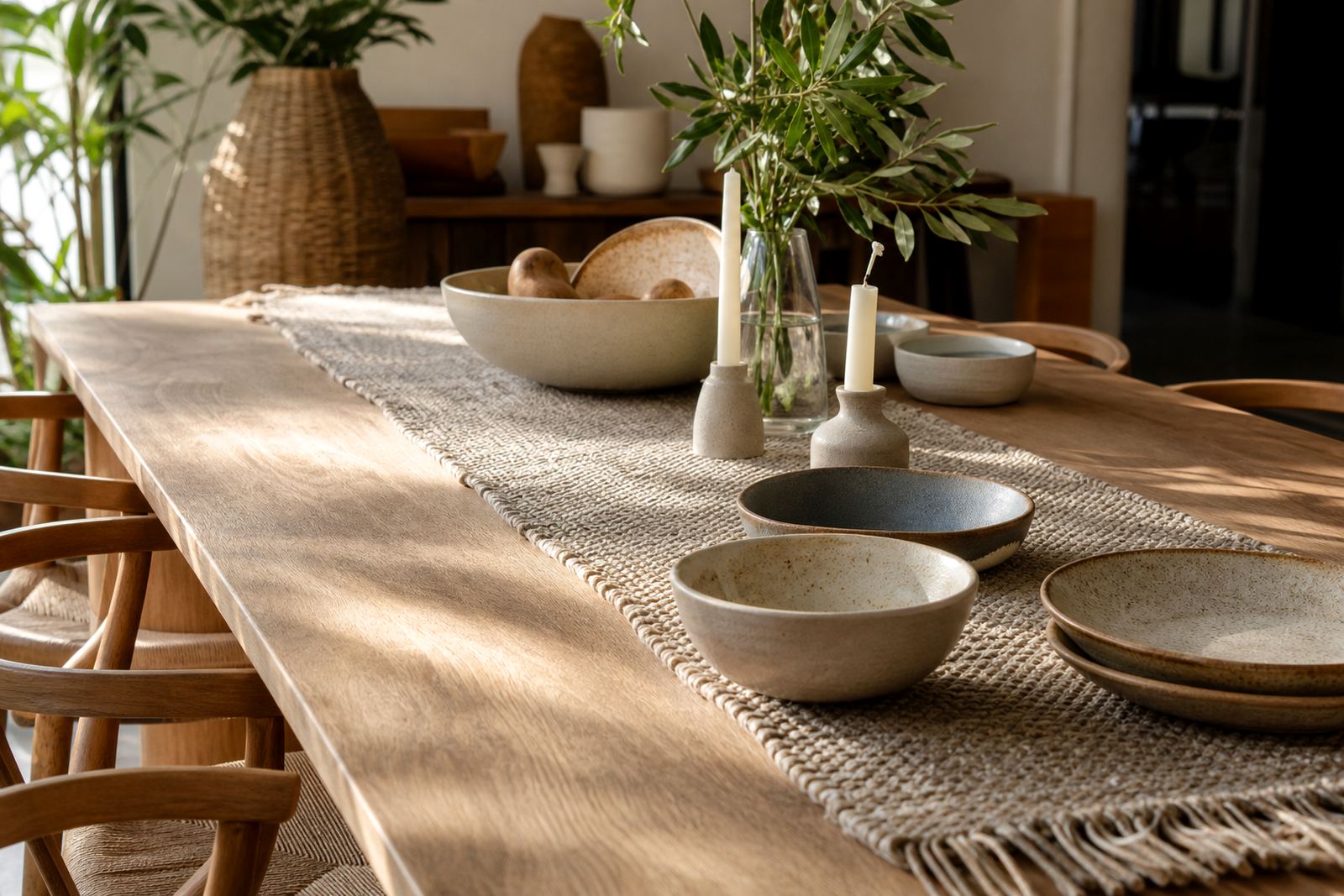
Table runners are the strip of fabric or woven textile that sits along the centre of a table and frames serveware, candles and flower vases. A good runner gives the table a settled look without covering the full top, so the grain of timber, the cool feel of stone or the sheen of sealed surfaces still shows through. For open-plan dining rooms and kitchen islands in Cape Town apartments or larger family homes in Johannesburg, they are an easy way to bring pattern onto the table without making the setting feel busy.
Our runners are made by South African artisans in small runs, so texture and finish may vary slightly from piece to piece. That is part of the appeal, but it also means it is worth checking the weave density, edge finish and exact length before ordering. Some runners are tightly woven for a sharper look, while others have a looser drape with a more relaxed fall.
Sizes, fibres and the way they sit on the table
Most runners are cut to suit standard dining settings, but the right size depends on the table shape and what you plan to place on top. For long rectangular tables, a runner that drops neatly at each end often works best. For round tables or square settings, shorter runners or narrow decorative pieces are often a better fit. In homes with heavy use, a tighter weave can help the runner lie flatter and stay neat through regular setting and clearing.
- Typical widths: 30 cm to 45 cm
- Typical lengths: 150 cm, 180 cm and 200 cm
- Custom lengths may be available on selected handmade pieces
- Common fibres: cotton, linen, wool blends, jute and recycled textile yarns
- Surface feel: smooth woven, textured slub, braided or lightly fringed
Natural fibres suit everyday dining, while thicker textured runners work well on sideboards, console tables and serving areas where you want a more tactile finish.
Best places to use them in the home
A table runner is useful far beyond the dining room. In coastal homes around Durban or the Atlantic Seaboard, they can warm up pale stone and tile surfaces. In Stellenbosch homes with timber tables, they soften the visual weight of the wood and help a centrepiece stand out. They also work well on a hallway console, a sideboard in the lounge or under a serving tray for a wedding table or housewarming setup.
They suit casual family meals, formal dining, breakfast tables and gift tables at events. If the runner is being used with hot dishes, confirm the fibre and weave first. Some thicker woven pieces handle serving wear better than lighter decorative runners, and a backed textile may lie more steadily on polished surfaces.
Fitting, drape and table-ready details
Table runners are placed flat down the centre of the table, with the ends aligned to the table edge or left to drop slightly beyond it. No fixed installation is needed, but the measurements matter if you want the runner to hang evenly. For a narrow table, a runner that is too wide can crowd the place settings. For a long table, a runner that is too short can look unfinished and interrupt the line of the setting.
- Check table length and width before ordering
- Confirm whether you want an overhang or a flush finish
- Note if the table is round, rectangular or square
- Check the edge finish: hemmed, frayed, braided or stitched
- Ask about reverse side finish if the runner may be moved often
For curved or very long tables, slight adjustment during placement is normal. A heavier weave will settle more neatly, while a light textile may need a little smoothing after each setting.
Caring for handmade fibres and stitched edges
Care depends on the fibre and the maker’s finish. Cotton and linen runners often do well with a gentle cold wash or hand wash, then air drying flat or on a line out of direct harsh sun. Wool blend and textured woven pieces may need more careful handling. Jute, braided fibre and mixed material runners are usually best treated with spot cleaning and light brushing rather than soaking. In coastal conditions, allow the runner to dry fully before storage so moisture does not linger in the weave.
To keep the shape tidy, roll or fold the runner with the grain of the weave. If it creases, a cool iron on the reverse side may help on suitable fabrics. Avoid rough scrubbing on printed sections or decorative stitched borders, as the handwork can lift with hard wear.
Details to confirm before placing an order
Because each runner is handmade, it helps to confirm the practical details that affect fit and use. That includes the exact length, width, fibre content, colour tone and whether the ends are finished with hems, tassels or a raw edge. If the runner is going onto a dining table used daily, ask about weave tightness and stain visibility. For gifting, confirm whether the piece can be folded into a gift box or needs a larger wrap format.
- Table size and preferred overhang
- Colour tone, including natural variations in dyed fibres
- Care method recommended by the maker
- Any matching placemats or coordinated textile pieces
- Delivery area, especially for Cape Town, Johannesburg, Durban, Pretoria and Stellenbosch
LocalMaker also assists with gift wrapping, gift notes, curated gift boxes, wedding gifting, corporate gifting and bulk orders. If a runner is part of a larger order, it is worth noting the delivery destination and whether you need the items grouped together or packed separately.
Key facts
| Product type | Handmade table runner |
|---|---|
| Materials | Cotton, linen, wool blends, jute and mixed textile fibres |
| Typical sizes | 30 cm to 45 cm wide, 150 cm to 200 cm long |
| Finish options | Hemmed, fringed, braided, stitched or raw edge |
| Care | Gentle wash or spot clean depending on fibre; air dry fully |
| Use | Dining tables, sideboards, console tables and gifting |