
Mugs with a hand-finished feel
Handmade mugs are chosen for the way they sit in the hand as much as for how they look on the shelf. The clay body, the curve of the rim and the pull of the handle all matter, because a mug is handled several times a day and must feel steady from the first pour to the last sip. Small differences in glaze movement, surface texture and footprint are part of the appeal, with each piece carrying the marks of a maker’s process rather than a factory stamp.
Most mugs in this range are made from stoneware or similar durable ceramic bodies, then glazed and fired for everyday use. You may see smooth glossy finishes, satin glazes, speckled clay, brushed colour or a more matte surface with a tactile touch. Some mugs feel slightly heavier and grounded, while others are thinner walled and lighter in the hand. All of these details affect how the mug performs with tea, coffee or hot chocolate, especially if you prefer a warmer, more substantial cup.
Because these are handmade pieces, slight shifts in size, glaze tone and handle shape are normal. That is not a fault. It is the part that tells you the mug was made by a person, not pressed from a mould in a uniform run.
Sizes, forms and what to look for
Handmade mugs are usually offered in a few practical sizes, so you can match the mug to the drink and the way you serve it. A smaller cup suits espresso or a short flat white, while medium and larger mugs work well for filter coffee, tea or a generous mug of rooibos. Some buyers choose a matching set for the kitchen, while others mix shapes and finishes for a more collected look.
- Small mug: about 180 ml to 220 ml, suited to short coffees and smaller tea servings.
- Standard mug: about 250 ml to 320 ml, a common everyday size for most households.
- Large mug: about 350 ml to 450 ml, useful for bigger drinks and slower mornings.
- Handle styles: rounded loop handles, open handles with more finger room, or compact handles for a tighter grip.
- Finish options: glossy glaze, matte glaze, speckled clay, two-tone surfaces or textured bands.
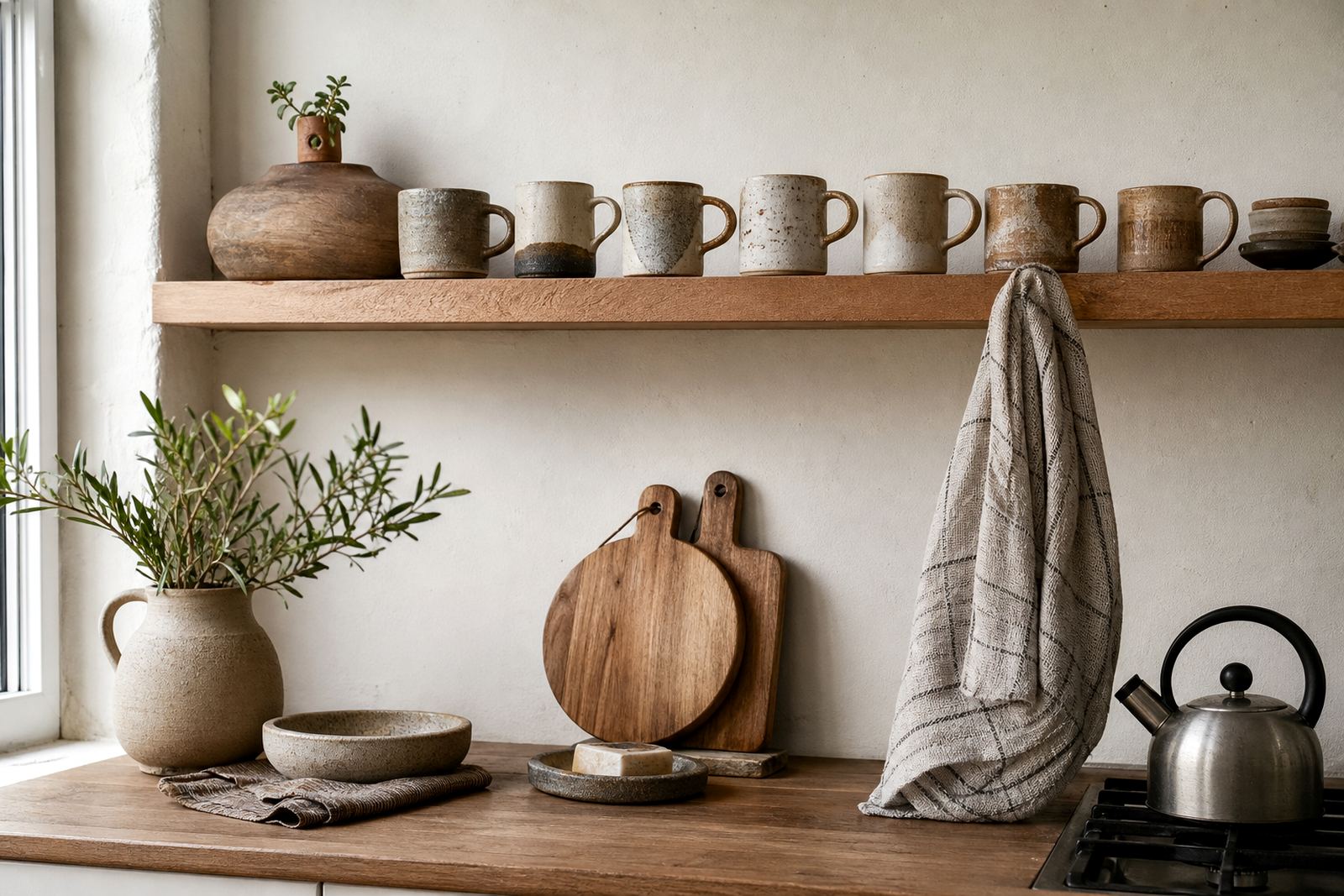
When comparing mugs, pay attention to the rim. A slightly thinner rim feels refined on the lips, while a fuller rim can feel more solid and traditional. The base should sit flat and stable on a tabletop, and the handle should leave enough space for your fingers without feeling narrow or sharp. In Cape Town homes with open shelving, many buyers also prefer mugs that look good when stacked or displayed, because storage can be part of the choice too.
Where these mugs fit best in the home
Handmade mugs suit kitchens, coffee corners, office tea stations and guest cupboards. They also work well in gift sets for housewarmings, weddings and corporate gifting, especially when you want something that feels thoughtful without being overly formal. In a home with neutral ceramics and timber furniture, a mug with a soft glaze can bring warmth. In a brighter setting, a bolder piece can anchor the table setting with a bit of contrast.
These mugs are often chosen for daily use rather than display only. They hold up well in mixed households where people want something practical but not plain. In coastal areas such as Woodstock, the Atlantic Seaboard and Durban, buyers often prefer tighter-glazed pieces that are easier to keep clean in humid conditions, especially where kitchen shelves sit near windows and sea air moves through the room.
- Morning coffee and tea routines at home
- Guest use in kitchens and dining rooms
- Gift boxes for weddings, birthdays and housewarmings
- Corporate gifting with a local, handmade feel
- Retail shelves, guest lodges and small hospitality spaces
Key facts
| Material | Handmade ceramic, usually stoneware or similar fired clay body |
|---|---|
| Capacity range | About 180 ml to 450 ml depending on the shape |
| Finish | Gloss, matte, speckled or mixed glaze surfaces |
| Handle type | Loop, open or compact hand-formed handles |
| Use | Tea, coffee, hot chocolate and everyday serving |
| Care | Gentle washing recommended; check each piece for microwave, oven or dishwasher suitability |