
Start with one tray that holds the whole story
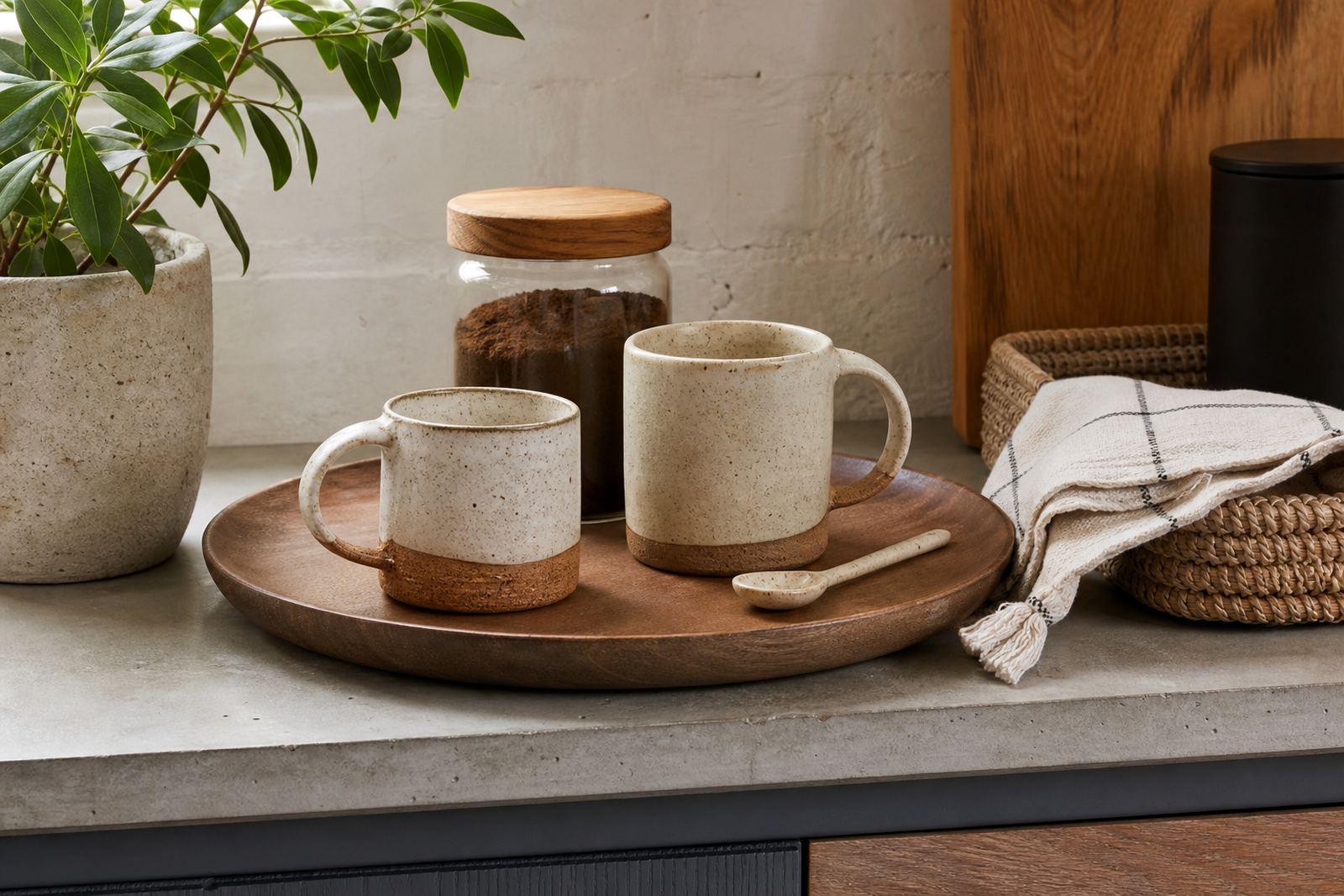
A tray gives the coffee corner a boundary, which matters more than people expect. It keeps mugs, sugar, teaspoons and a tin of coffee grounds together on one surface, so the counter does not end up scattered with small items by midweek.
For a compact kitchen in Woodstock or a flat in the Southern Suburbs, a tray around 30 to 40 cm wide is usually enough for two mugs, a jar and a small bowl for spoons. Wood trays bring warmth, while ceramic or metal trays suit tighter spaces where spills are more likely. If your surface is near a window, choose materials that can handle daylight and daily wiping without looking tired too quickly.
- Use a tray with a low rim so items do not slide off when you move it.
- If you prefer a lighter look, choose pale timber, cream ceramic or woven textures.
- For darker counters, a contrast tray can make the whole arrangement easier to notice and keep tidy.
Choose mugs that feel good in the hand
Mugs are the part people use most, so shape matters just as much as appearance. Handmade ceramics often have small variations in glaze, thickness and handle shape, and those details are part of the appeal. A mug with a comfortable handle and a slightly thicker base tends to hold heat well and feels steady on the tray.
For a coffee corner that gets used every day, mix two or three mugs rather than a full shelf of matching pieces. That makes washing up simpler and gives the space a collected look instead of a staged one. Stoneware and earthenware both work well for coffee, though heavier mugs can be easier to balance if you are standing and reaching for sugar, milk or a teaspoon in a hurry.
- Keep the number of mugs small enough that each one has a regular place.
- Look for a glaze that wipes clean after drips, especially with milk based drinks.
- If you like espresso, choose one or two smaller cups as well as standard mugs.
Storage jars that keep the counter calm
Plain storage jars do a lot of quiet work in a coffee setup. They hold beans, sugar, tea bags or stirrers and stop packaging from taking over the counter. Glass jars let you see when supplies are low, while ceramic jars hide contents and can soften the look of a busy kitchen.
In Cape Town homes where sea air and humidity can affect dry goods, a lid that closes properly is worth having. A snug-fitting wooden or ceramic lid helps keep coffee fresh for longer, and a silicone seal can be useful if the jar is used often. Keep labels simple if you use them, especially when you want the corner to feel uncluttered. One jar for coffee, one for sugar and one spare container is often enough.
- Store only what you use regularly, not every dry ingredient in the cupboard.
- Pick jars with wide openings if you spoon contents out every morning.
- Wipe the outside of glass and ceramic jars so fingerprints do not dull the finish.
A small arrangement for a Cape Town kitchen
Picture a narrow counter in Woodstock, with a kettle, a mug stack and a window above the sink. A simple coffee corner can still look complete if each item has a job. Place the tray closest to the kettle, set the mugs on one side and keep the jars at the back, where they are visible but not in the way. Add a small cloth or woven mat underneath if the counter is stone and gets splashed often.
This kind of setup works well in open plan homes too. When the coffee area sits near a living space, the pieces need to look tidy from several angles. That is where handmade items help, because texture and slight variation stop the arrangement from feeling flat. A ceramic mug, a wooden tray and a glass jar can sit together without competing for attention.
Materials that handle everyday use
For coffee corners, practical care matters more than anything showy. Ceramic mugs and jars are easy to rinse and generally cope well with daily use. Wood trays need a dry cloth after washing and should not sit in standing water. Textile items, such as napkins or a small runner, should be chosen for texture and washability, because coffee splashes happen even in a careful kitchen.
If your setup is near a sunny patch, think about fading as well. Natural fibres and some glazes can change colour over time, especially in bright western light. A balanced mix of materials lets you refresh the space without replacing everything at once. That is helpful for homes in Durban too, where humidity can be part of the routine and open storage needs a bit more attention.
- Dry wood by hand after wiping it with a damp cloth.
- Use textile pieces that can be washed without losing their shape.
- Check ceramic rims and jar lids for chips before moving pieces into daily use.
Gift-ready without making it fussy
A coffee corner also works well as a gift idea. A tray, two mugs and a pair of jars make a practical set for a wedding, housewarming or office kitchen. If you are putting one together for someone else, keep the colours calm and the sizes useful rather than choosing too many decorative details. A set that is easy to use will be appreciated long after the wrapping is removed.
Gift wrapping can suit these items neatly, especially when the pieces are grouped by function. A note card adds a personal touch, and a custom bundle makes it easier to keep the selection consistent. For corporate gifting, simple materials and neutral tones usually travel well and fit into many spaces.
A final check before the first pour
Before using the coffee corner every day, stand back and check whether the items are easy to reach. The tray should slide in and out without catching, the mugs should be close enough for morning use, and the jars should open cleanly with one hand if needed. If a piece feels awkward after a week, move it rather than forcing the setup to stay fixed.
The best coffee corners are the ones that stay useful on busy mornings. They are neat, but not precious. They hold what you need, look good enough to leave out and make a small part of the kitchen feel intentional without taking over the room.