
The places baskets earn their keep
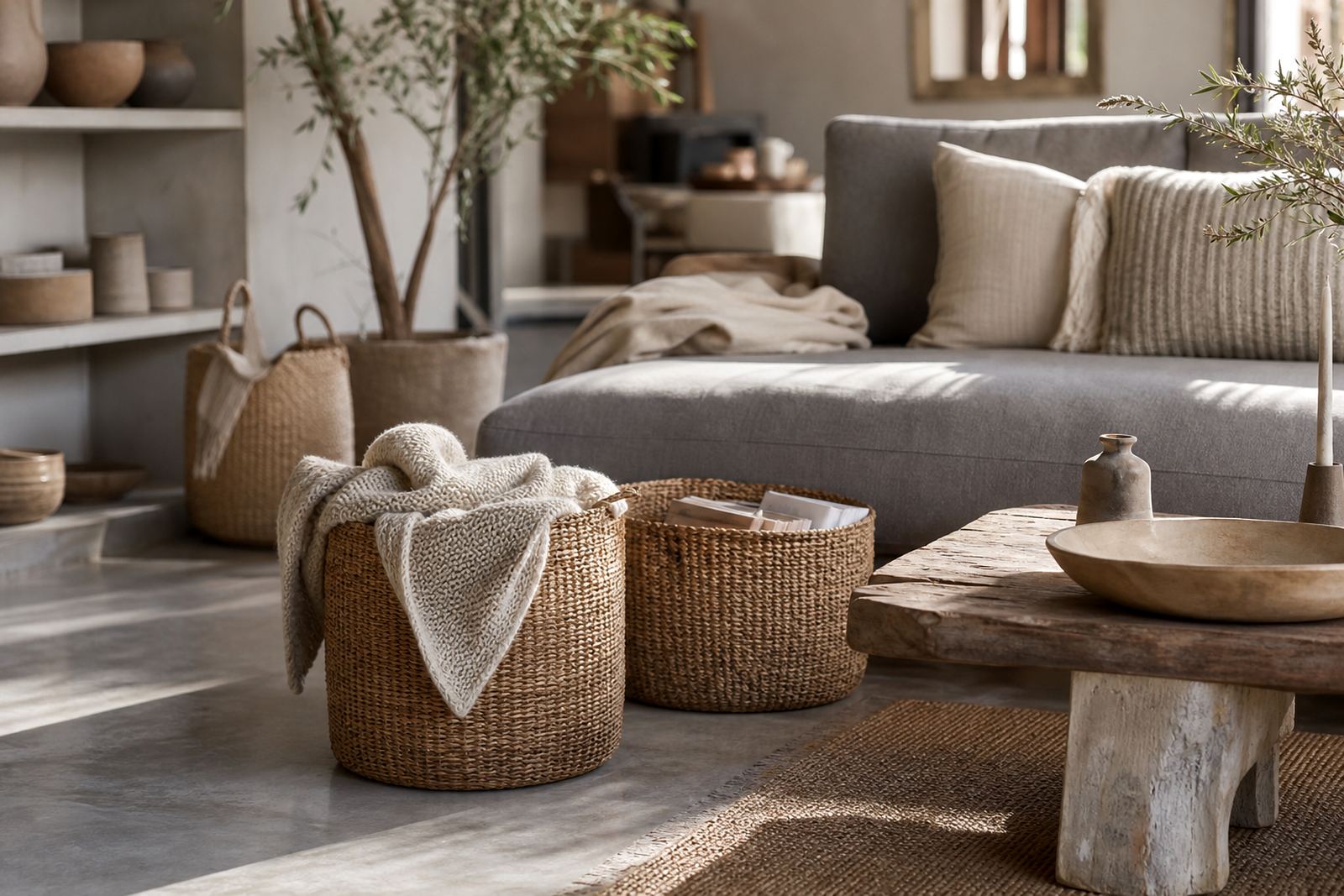
A good basket does more than hold things. It gives a room a place to land, which matters in homes where living areas do double duty and one corner may hold blankets, books, charging leads and a child’s puzzle all at once. In a Cape Town flat in Woodstock, a woven basket beside the sofa can take two folded throws and a few cushions, while a deeper lidded basket in the passage keeps shoes or school bags out of sight.
Choose the basket to match the job. Wide baskets suit soft items that need to breathe, like knit blankets and beach towels. Taller baskets are better for toys, laundry or spare cushions. If the basket will sit in a busy area, look for handles that feel secure and a base that sits flat on the floor. That helps when the basket is moved from one room to another, or when it is packed full after a weekend with family in from the suburbs.
- Low, open baskets for throws, magazines and remotes
- Deep baskets for toys, laundry or extra linen
- Lidded baskets for items you want to hide quickly
- Handled baskets for moving things between rooms
How to match basket materials to real life
Handmade baskets are often made from natural fibres, reed, grass, rope, cane or woven plant material, and each material behaves a bit differently. In a coastal home in Durban, where humidity can be high, a tightly packed basket with good airflow is useful for towels and linen because it helps things dry out properly. In a drier inland home, the same basket may be used more for decor and storage of softer items.
Wood-framed or wood-trimmed baskets can add structure, while softer woven baskets work well in bedrooms and family rooms. Textured baskets bring a bit of warmth to plain shelving and keep things from looking too clinical. If you are using baskets in a bathroom or near a window, keep direct splash zones in mind. Natural fibres last longer when they are kept dry and out of harsh sun for long stretches.
- Natural fibre baskets: best for light to medium storage and a relaxed look
- Sturdier woven baskets: better for heavier household use
- Wood details: useful where a firmer shape is needed
- Textile-lined baskets: good for small items that can catch on weave
A basket plan for each room
Think about baskets room by room rather than buying them as stand-alone pieces. A bedroom basket might hold a spare duvet, reading books or folded nightwear. In a child’s room, one large basket can make toy clean-up quicker and less stressful. In the lounge, a pair of matching baskets can bring order to throws and scatter cushions without making the room feel overly arranged.
In kitchens and sculleries, baskets can collect citrus, napkins or packaged dry goods, though they should stay clear of damp counters. At the entrance, a small basket catches keys, gloves and post before they spread through the house. A basket in a guest room can hold rolled towels, a water carafe and a spare blanket, which is helpful when relatives stay over for a long weekend in Stellenbosch or Pretoria.
- Bedroom: spare linen, chargers, books, seasonal clothing
- Living room: throws, cushions, magazines, toys
- Bathroom: rolled towels, toilet rolls, toiletries in neat groups
- Entrance: keys, post, hats and small grab-and-go items
Keeping baskets useful instead of cluttered
The risk with baskets is filling them too quickly, then the basket becomes the clutter rather than the fix. Set one rule for each basket and keep it there. If a basket is for throws, only throws go in. If it is for children’s toys, keep the top layer easy to lift so items do not get buried. That small discipline keeps the room working better and makes cleaning simpler.
It also helps to match the size of the basket to the size of the shelf or corner. A basket that is too large tends to swallow everything, while one that is too small gets overstuffed and loses shape. In a compact apartment, two medium baskets often work better than one large one. In a larger home, a cluster of baskets in similar tones can hold different items while still looking calm.
If the basket is used daily, give it a quick shake-out every week and wipe it with a dry cloth. That is usually enough for most handmade pieces. For stubborn dust, a soft brush works well. Avoid soaking the basket unless the maker has said it can handle that. Natural materials last longer when they are treated gently, and a basket that is cared for properly can serve a home for years.
A local example from Woodstock to the coast
Picture a family home in Woodstock with a small stoep, a lounge that opens onto the kitchen and a hallway that carries most of the traffic. One basket sits by the front door for shoes and scarves, another near the couch for throws, and a third in the bathroom for rolled towels. The house feels less crowded, but not stripped back or cold.
That same approach travels well across South Africa. In Cape Town, baskets help when summer and winter storage need to swap places. In Johannesburg, they make it easier to keep jackets and blankets close at hand. In Durban, they help corral towels and swimming gear. The point is not decoration for its own sake, but storage that fits the way people actually live. When baskets are chosen well, they support a home quietly and do not ask for much in return.
Handmade baskets also carry a local feel that mass-produced storage often misses. Small irregularities in weave, colour and shape are part of the charm. They remind you that a real person made the piece, and that is part of what makes the room feel lived in rather than staged.
Care notes that keep the weave in shape
Most handmade baskets prefer dry care. Dust them with a soft cloth, shake out crumbs and keep them away from prolonged damp. If a basket has a fabric lining, remove it if possible and wash it according to the fabric care label. For wood details, a dry wipe is usually enough. Do not leave baskets in a hot car or on a wet patio, because both can distort natural fibres over time.
If you notice a basket losing shape, empty it and let it rest empty for a day or two. That helps fibres recover after heavy use. For baskets stored in a cupboard, a bit of air now and then helps too. In homes near the coast, this matters even more, because salty air and humidity can affect natural materials faster than people expect.
Well-made baskets are practical, but they are also part of how a home feels from one room to the next. Used properly, they keep everyday life visible enough to reach, yet neat enough to live with.