
What a glaze really changes on a handmade piece
Ceramic glaze is the glassy coating applied to fired clay, and it shapes both appearance and function. A glossy finish can throw more light and make colour read a little brighter, while a matt or satin finish softens the look and often gives the piece a quieter presence on a shelf or table. On handmade work, glaze movement may show around rims, handles and curved surfaces, because every piece takes the coating slightly differently.
When you are choosing for a home in Cape Town or a gift headed to Johannesburg, it helps to think about where the piece will live. A mug used every morning, a serving bowl for weekend lunches, or a decorative vase near a bright window can each benefit from a different finish. The best choice is not only about colour, it is about the feel you want in the room and how much visual variation you are happy to welcome.
- Glossy glaze: brighter reflection, deeper colour impression, easier to wipe clean.
- Matt glaze: softer look, less shine, can suit calm interiors and earthy palettes.
- Satin glaze: sits between the two, with a smooth hand feel and less glare.
Reading colour variation without overthinking it
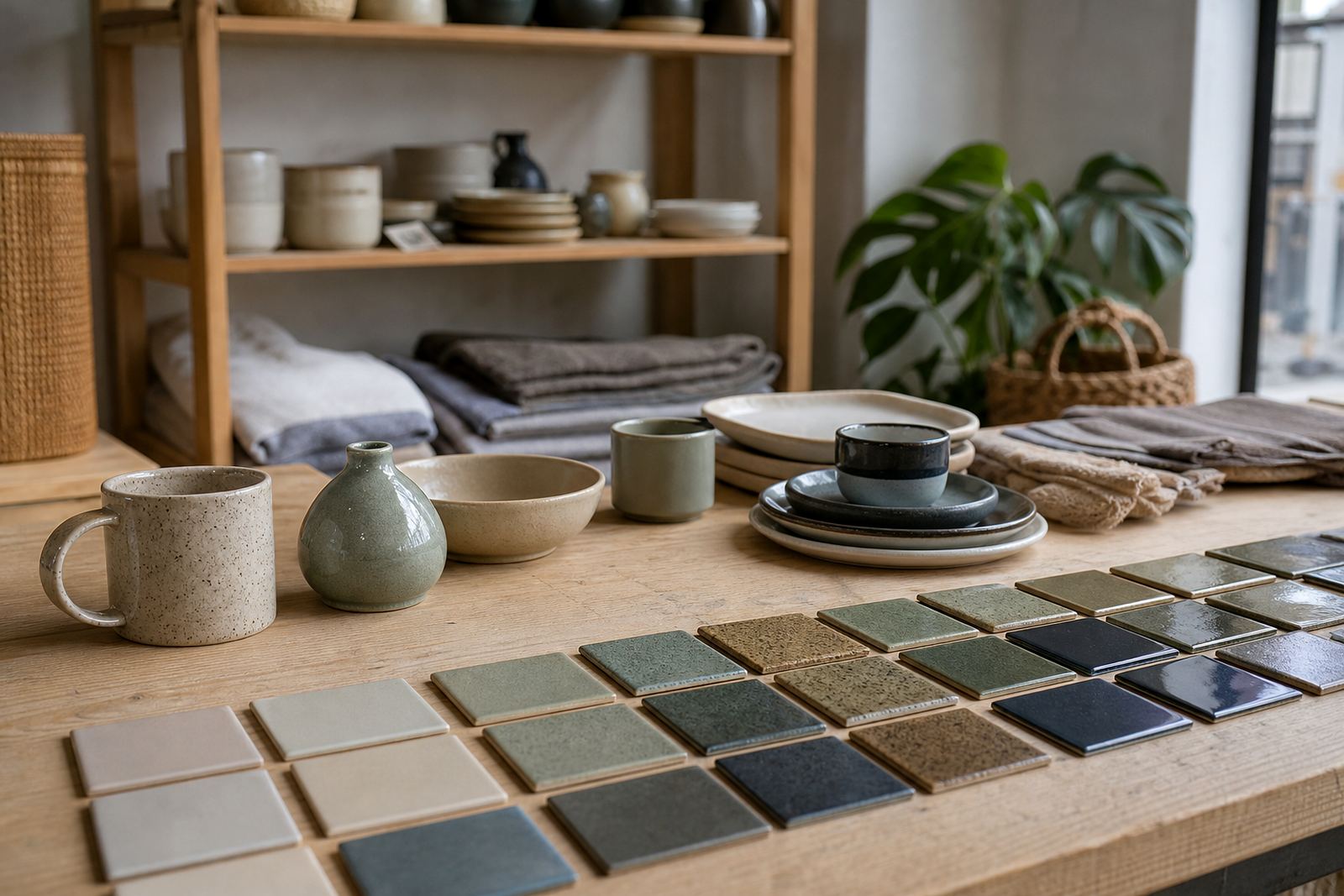
With handmade ceramics, the same glaze recipe can produce different results from one firing to the next. Heat, placement in the kiln and the clay body all affect the final tone. A sea-green bowl may lean bluer in one batch and a touch greyer in another, while a speckled beige cup may show stronger flecks on one side than the other. That variation is part of the charm, not a fault.
In practice, it is worth deciding how much variation feels right for you. If you prefer a matched setting for a dining table, look for pieces described as being from the same glaze family or same batch where possible. If you enjoy a collected look, small shifts in shade can make the table feel warmer and more personal. In a Woodstock apartment, for instance, a shelf of handmade mugs in related greens and creams can sit comfortably beside timber and linen without looking too rigid.
- Look for notes on whether the glaze is matte, glossy or reactive.
- Check if items in a set are intended to match exactly or vary slightly.
- Expect slight changes in speckling, pooling and edge shading.
The beauty of small irregularities
Handmade ceramics often carry tiny signs of the maker’s hand. A line that sits a fraction off centre, a foot ring that is not perfectly uniform, or a glaze edge that pools more heavily in one area can all tell you the piece was formed and finished by a person, not pressed into sameness. These marks are usually subtle and they matter most when you want something with character rather than factory repetition.
Small irregularities are best understood as part of the object’s personality. If you are buying a jug for fresh flowers, you may not mind a slightly uneven lip because the shape still pours well and the surface has more life. For a housewarming gift, those details can feel thoughtful and grounded, especially when paired with local textiles or a carved wooden tray. The mix of materials gives the room depth without trying too hard.
That said, there is a line between character and poor finish. A handmade piece should still feel balanced, sit flat where it needs to, and be comfortable to hold. It should show considered making, not carelessness.
Matching glaze finish to use in the home
Different rooms place different demands on ceramics. A mug, butter dish or small plate used every day needs a finish that tolerates regular washing and handling. A decorative vessel on a sideboard can take a more dramatic glaze with stronger variation or drips. In coastal homes around Durban or the Atlantic Seaboard, humidity may make some surfaces feel slightly different in storage, so a well-fired piece with a properly cured glaze is a sensible choice.
If you are buying for a kitchen or dining area, think about grip, wipeability and how the glaze works with other surfaces already in the room. Gloss can reflect window light in a bright kitchen, while matt pieces may suit more muted settings and hide fingerprints better. The right finish depends on use, not trend. For a gift registry or a wedding set, a mix of practical pieces and one special decorative item can work well.
- For daily tableware, choose a finish that feels smooth and comfortable in the hand.
- For decorative pieces, you can lean into texture and stronger colour movement.
- For mixed sets, keep one shared detail, such as tone or shape, so the collection feels linked.
How to care for glazed ceramics properly
Good care starts with knowing the finish. Most glazed ceramics clean easily with warm water and a mild dish soap. A soft cloth or sponge is usually enough, and it is better to avoid harsh scouring pads on glossy surfaces because they can dull the shine over time. For matt glazes, gentle washing helps prevent build-up in the tiny surface texture that can sometimes catch residue.
Some handmade pieces are more suitable for handwashing than for repeated rough handling in a packed sink. If a glaze has a very natural finish or visible texture, treat it kindly and dry it soon after washing. Stacking should be done with care, especially where rims may rub. A tea towel between plates can help when cupboard space is tight.
- Wash with mild soap and warm water.
- Avoid abrasive cleaners unless the maker specifically notes they are suitable.
- Dry well before storing, especially in humid coastal conditions.
A local example from a Cape Town home
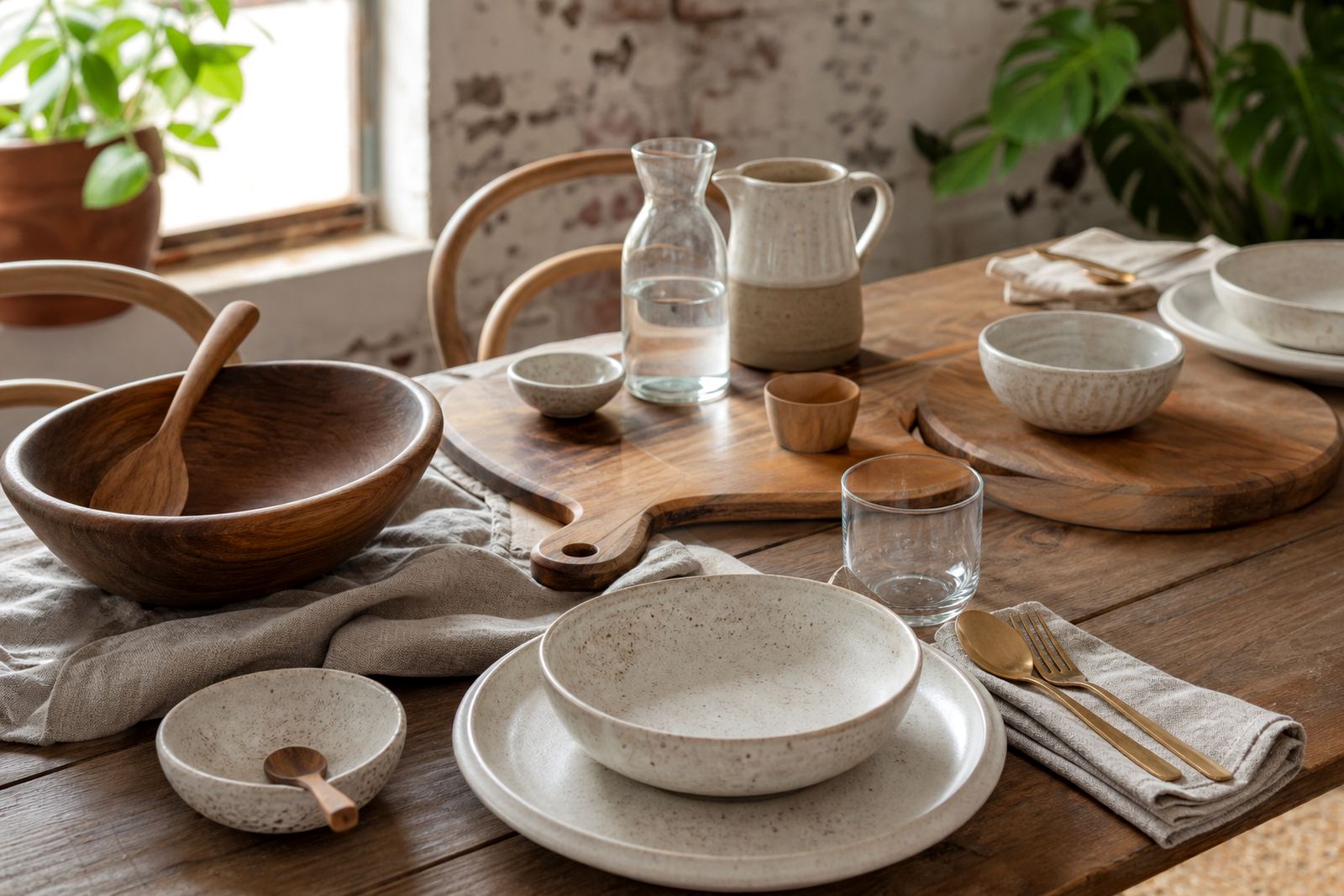
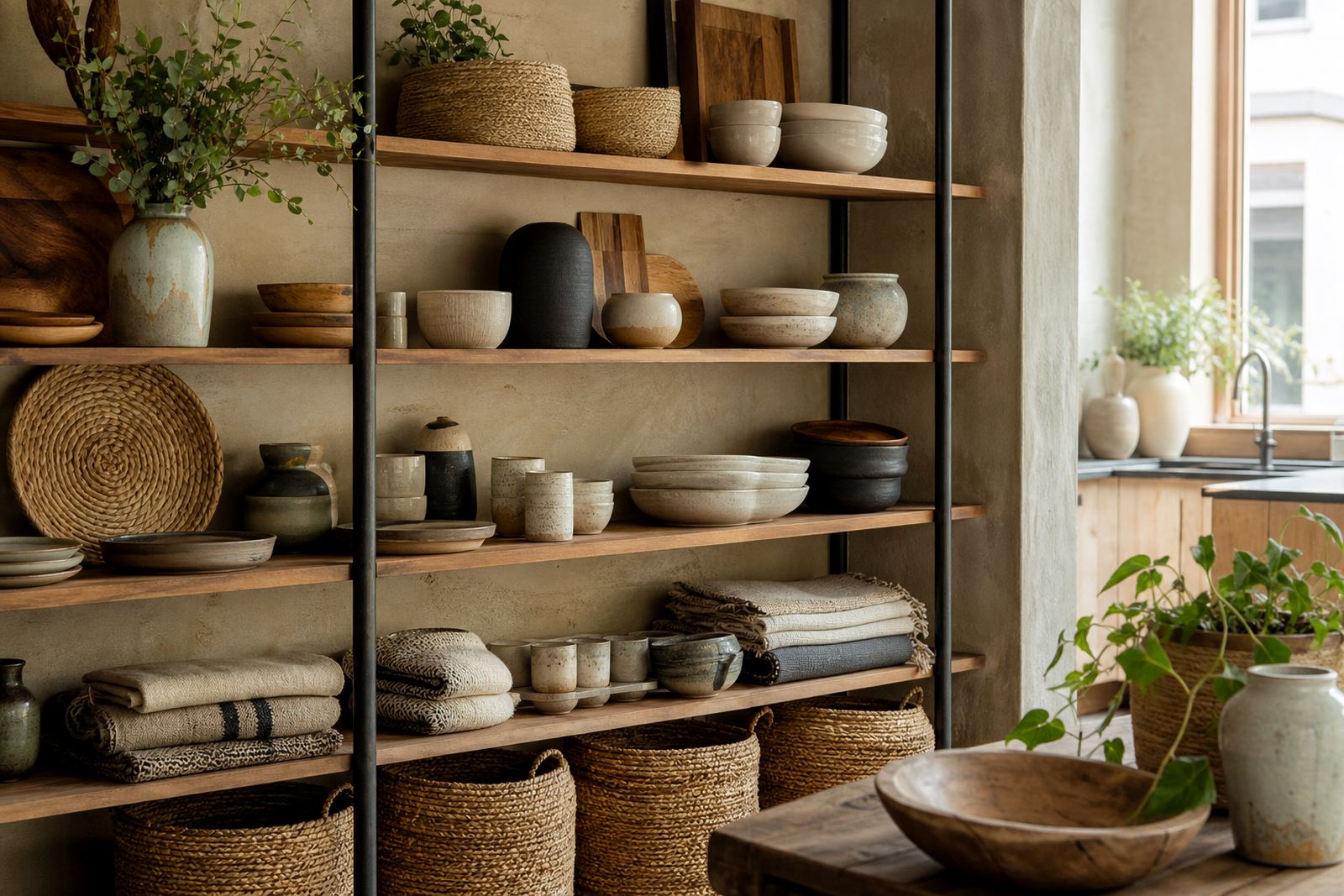
Picture a kitchen in Woodstock with open shelves, a timber prep board and a few textile runners in natural cotton. A set of handmade bowls in soft white glaze with slight speckling can sit beside a deeper brown serving dish and still feel intentional. The variation between pieces gives the room warmth, while the shared clay base and glaze family hold the set together. On sunny mornings, the glossy bowl catches the light; in the evening, the matt serving dish reads more quietly.
This is where handmade homeware feels especially fitting. It lets a room carry local character without becoming fussy. A ceramic fruit bowl, a woven textile napkin set and a simple wooden tray can work together because each material brings a different surface and tone. When you choose glazes with a little variation and an eye for how they will live in your home, the result feels lived in from the first day.
For delivery across South Africa, from Cape Town and Stellenbosch to Pretoria, Durban and Johannesburg, the same rule holds: choose pieces that suit real use. A little irregularity, handled well, is often the detail that makes a handmade ceramic worth keeping out in view.