
Why wood changes the whole setting
A wooden board or tray does more than hold food. It adds warmth beside ceramic bowls, linen napkins and glassware, and it takes the sharp shine out of a table that feels too formal. In a Cape Town flat, a family braai spread on a timber board can feel relaxed without looking careless, while in a Stellenbosch dining room a long server makes shared bread or cheese look properly arranged.
Wood also suits the pace of real meals. It can move from counter to table, from indoor lunch to balcony snacks, and it does not ask for fuss. The grain, knots and colour shifts are part of the appeal, so two pieces may look related but never exact. That small difference is often what makes a table feel personal.
Choosing the right shape for the food you serve
The best wooden piece is the one that fits the way you eat. A narrow board works well for sliced bread, biltong or cheese. A wider server handles roast vegetables, toast, pastries and shared starters. A tray with a raised rim is useful when carrying drinks or breakfast from kitchen to table, and it is steadier for heavier crockery.
- Long boards suit shared platters, sliced loaf and grazing spreads.
- Round boards work well for small cheeses, fruit, or a pot of jam.
- Handled trays make serving easier when you are moving cups, glasses or small bowls.
- Deep-rimmed pieces help keep crumbs and small items in place.
In a Durban home near the coast, a board used for morning toast and supper cheese will also meet more humidity than one in Pretoria, so the finish and after-care matter more than the shape alone.
What good timber feels like in the hand
Quality wooden tableware usually feels balanced rather than heavy. The edges should be smooth, the surface even, and the grain easy to see without rough patches. Hardwoods are often chosen for boards and servers because they stand up well to regular use, while lighter woods can be suitable for trays and decorative carrying pieces. The finish should protect the wood without leaving it tacky or overly glossy.
With handmade pieces, slight variations are expected and welcome. One board may show a darker strip through the centre, another a fine line of grain near the edge. These are not faults. They are the marks that tell you the piece was shaped individually, not pressed out in a hurry.
Care that keeps wood useful for years
Wood does not need complicated treatment, but it does need steady habits. Wipe it after use, dry it properly and keep it away from long soaking. A little food-safe oil now and then helps slow drying and keeps the surface looking cared for. If a board starts to look pale or tired, that is usually a sign it is ready for attention rather than replacement.
- Wash by hand with mild soap and warm water, then dry at once.
- Do not leave wooden pieces standing in the sink or under running water.
- Store them in a dry cupboard or on an open shelf with air movement.
- Apply a suitable oil lightly when the grain looks dry.
- Keep them out of direct heat from ovens and hot pans.
In coastal areas like the Atlantic Seaboard, a tray left damp in a closed cupboard can pick up a stale smell or slight movement in the grain. That is why drying properly matters so much in summer.
How to set a table without making it formal
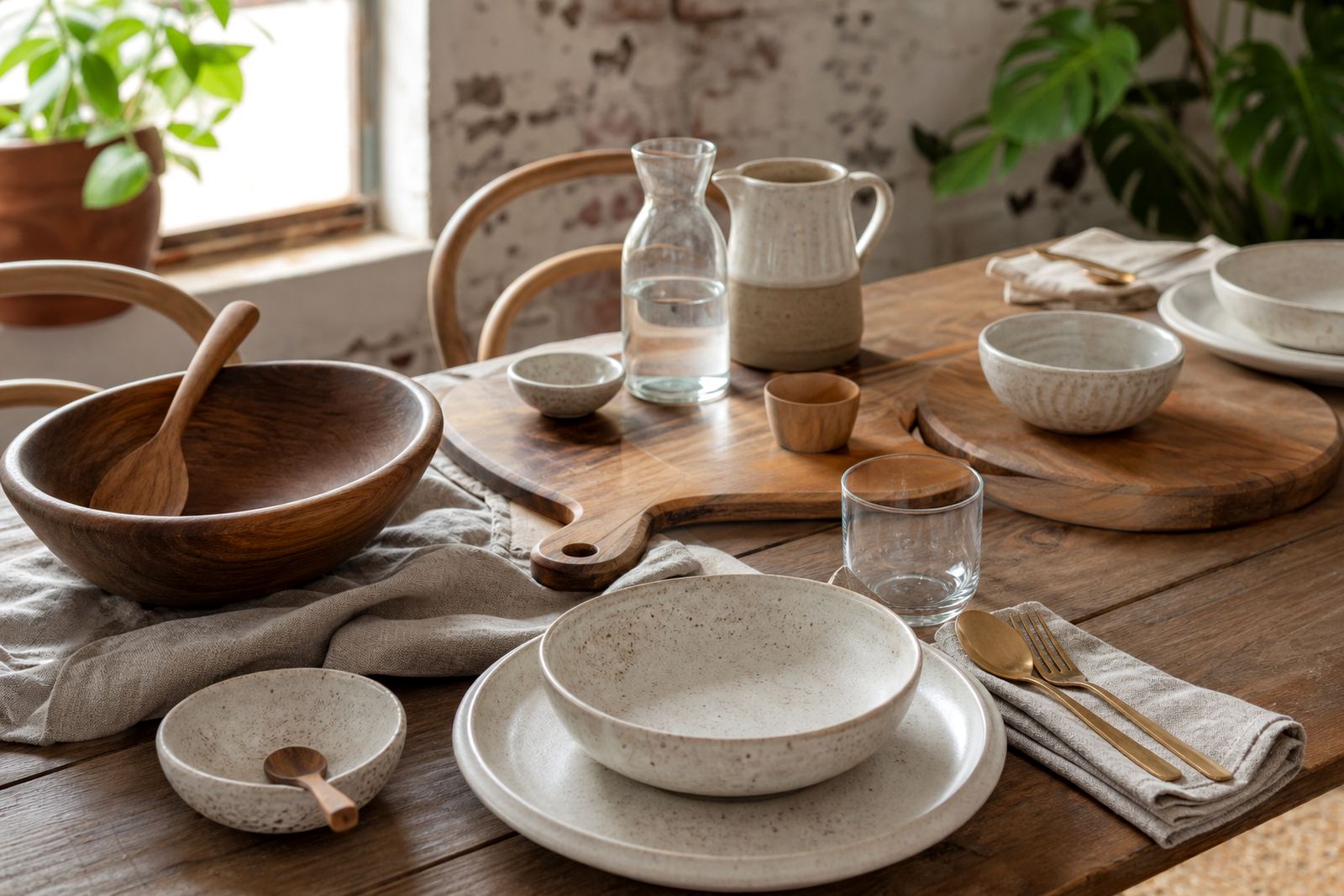
Wood works best when it is allowed to look natural. Pair it with stoneware, woven textiles or plain glass rather than filling the table with too many matching items. A single board under a loaf, a serving tray with folded napkins, or a long wooden platter at the centre can be enough to make the arrangement feel considered.
For a housewarming in Johannesburg, a custom bundle might include a serving board, a tray for coffee, and a small note tucked inside the wrapping. For a wedding gift in Woodstock, a pair of serving pieces can sit well beside linen tea towels and a ceramic jug. The mix should feel useful first, decorative second.
A Woodstock lunch table, made practical
Think of a Saturday lunch in Woodstock, with neighbours dropping by and the table set near an open window. A wooden tray carries glasses and a jug of water, while a long board holds bread, olives and sliced cheese. Nothing is overdone, but the table still feels looked after. The wood connects the items and gives the whole spread a calmer rhythm.
That is where these pieces earn their place. They are not only for special occasions. They move through everyday meals, from quick breakfasts to long Sunday suppers, and they often look better after a few years of use than they did on the first day.
- Use one statement board rather than several competing pieces.
- Mix wood with ceramics for contrast in colour and texture.
- Choose a tray with enough depth for real carrying, not just display.
When wood is selected well and cared for properly, it settles into a home quietly. It does not shout for attention, it just keeps serving well.