
Start with the cloth under the meal
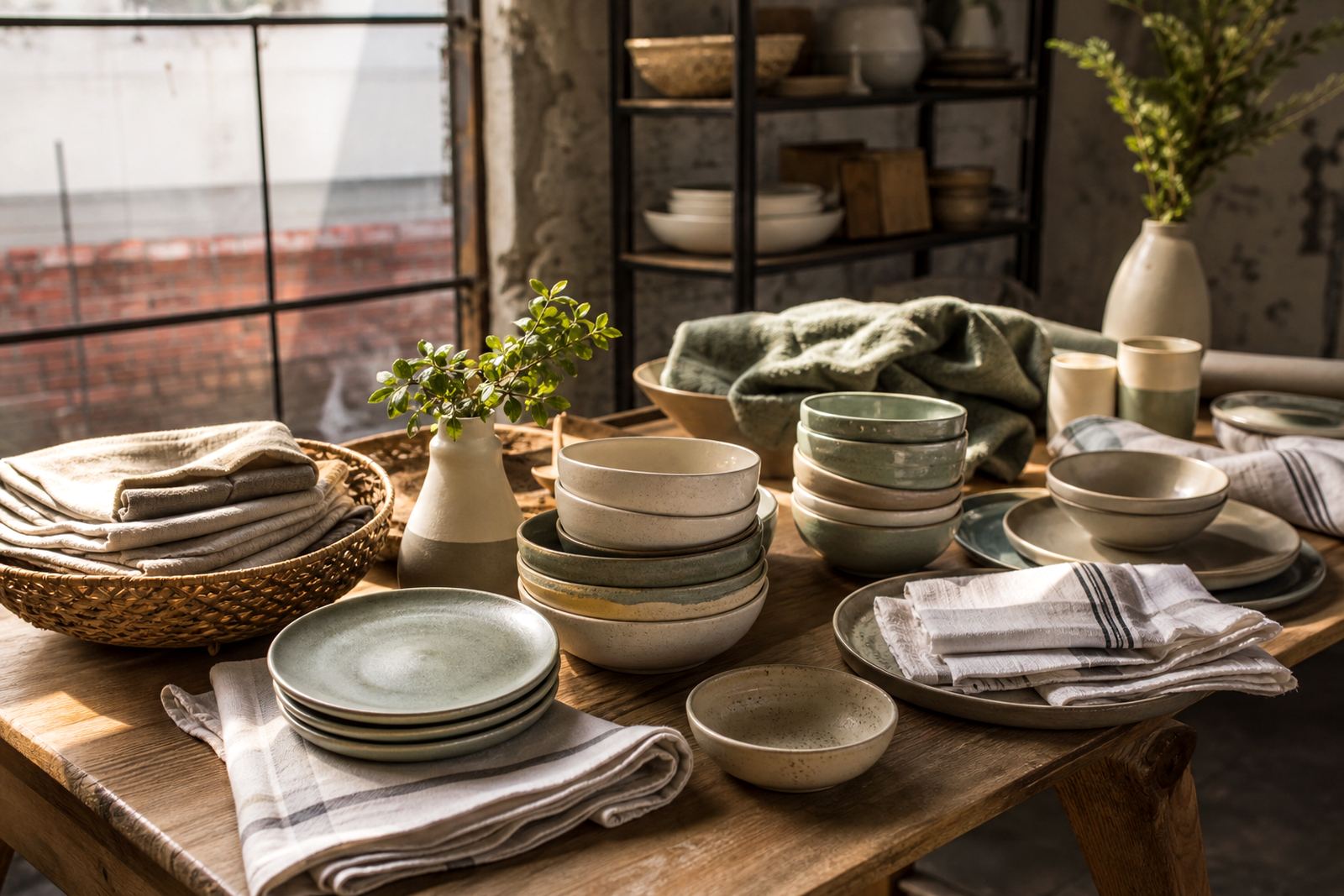
Begin with the surface that carries everything else. A tablecloth, runner or set of placemats in natural cotton, linen or woven fibre can soften a dining area and give the rest of the setting a clear colour direction. For a room that gets strong summer light in Cape Town or holds the cooler grey mornings of Johannesburg, plain fabrics in oat, clay, olive or indigo are easy to live with and shift gently through the seasons.
Handmade textiles often show small weave changes, slubs or slight colour variation, which is part of the character. That works well on a table because the eye reads texture before it reads perfection. If your table is solid wood, a runner can show the grain. If the table is pale, a deeper cloth gives more contrast and keeps the setting from feeling too light.
- Use a runner when you want the timber surface to remain visible.
- Choose placemats for quick weekday clearing and layered place settings.
- Keep one neutral cloth and one patterned option for easy switching through the year.
Add greenery without crowding the plates
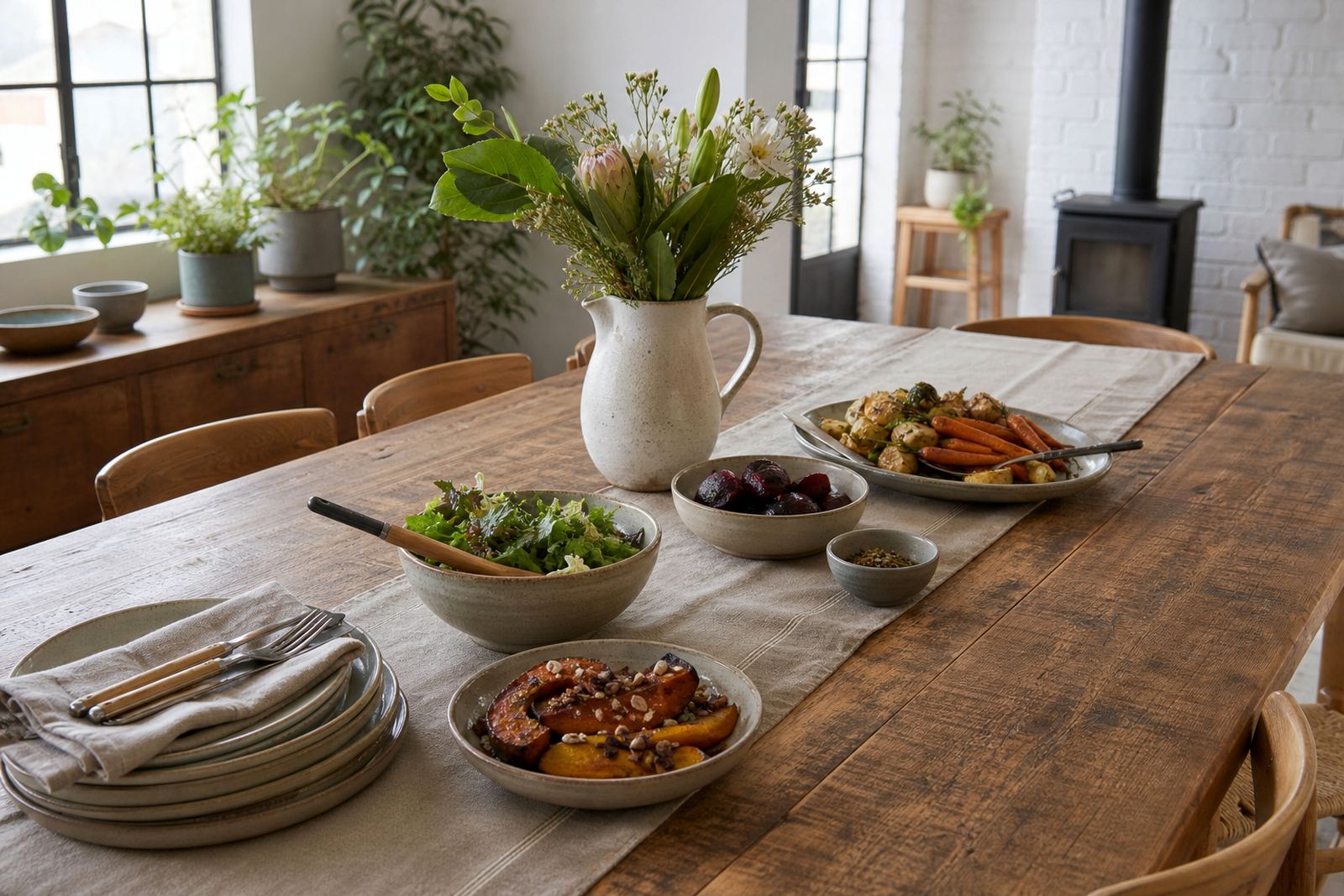
Fresh greenery gives a table life without demanding much space. A few stems in a low bowl, a simple sprig beside each plate or a narrow garland down the centre works better than a tall arrangement that blocks conversation. In Durban, where humidity can shorten the life of some blooms, leafy branches and hardy foliage often hold up better than delicate flowers. In drier inland homes, a small jug of water nearby helps keep stems from drooping before the meal is done.
The trick is to keep the line low and the movement loose. Eucalyptus, fern, olive leaves and herbs all sit well with handmade ceramics and wooden serving pieces. If you are setting a long table in Stellenbosch or a smaller apartment space in Woodstock, one central strip of green can be enough to tie the whole thing together.
- Keep foliage below eye level so people can talk across the table.
- Mix one or two types of greenery rather than many different stems.
- Pair greenery with plain stoneware or matte-glazed bowls for a calm look.
Choose serving pieces that move from day to night
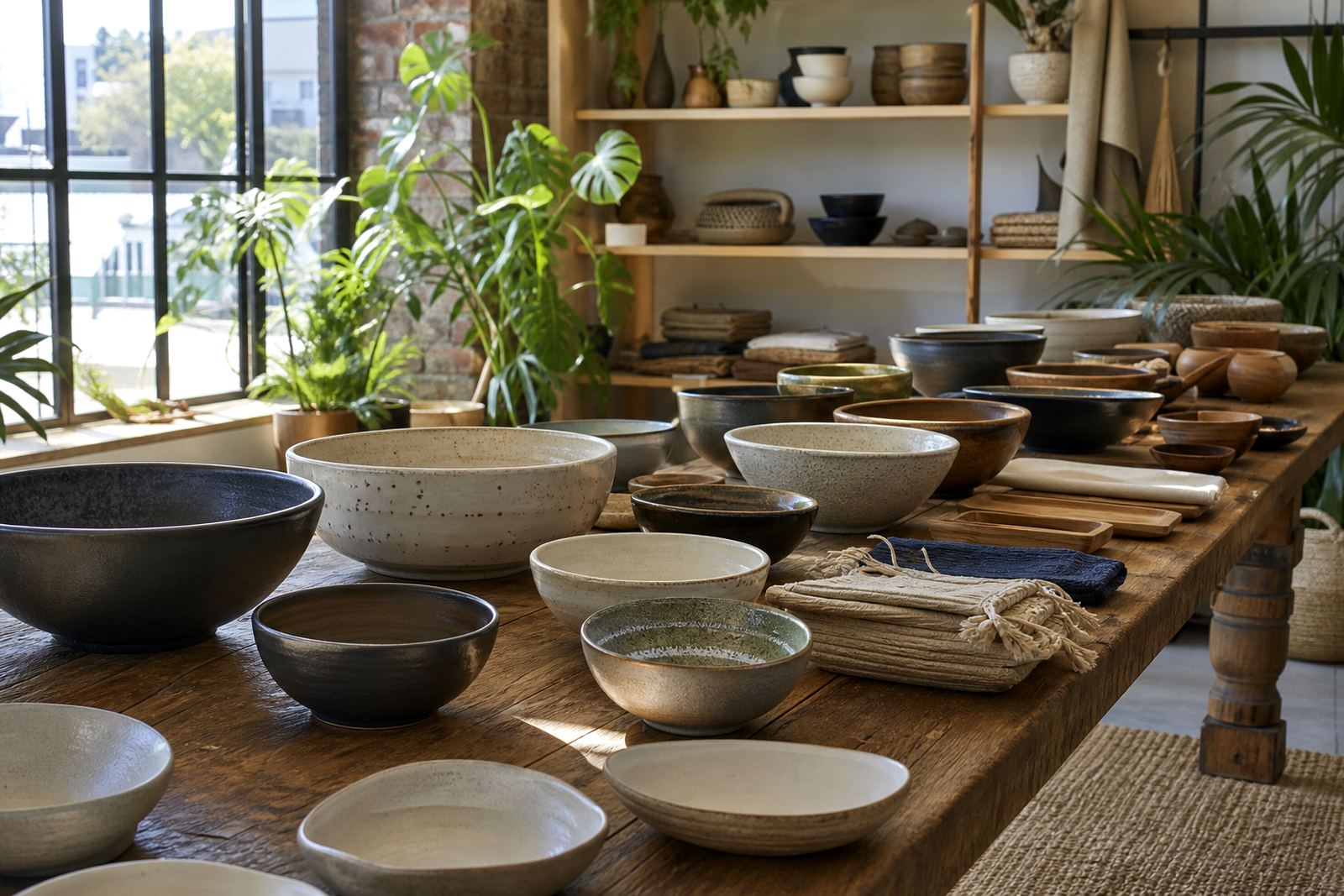
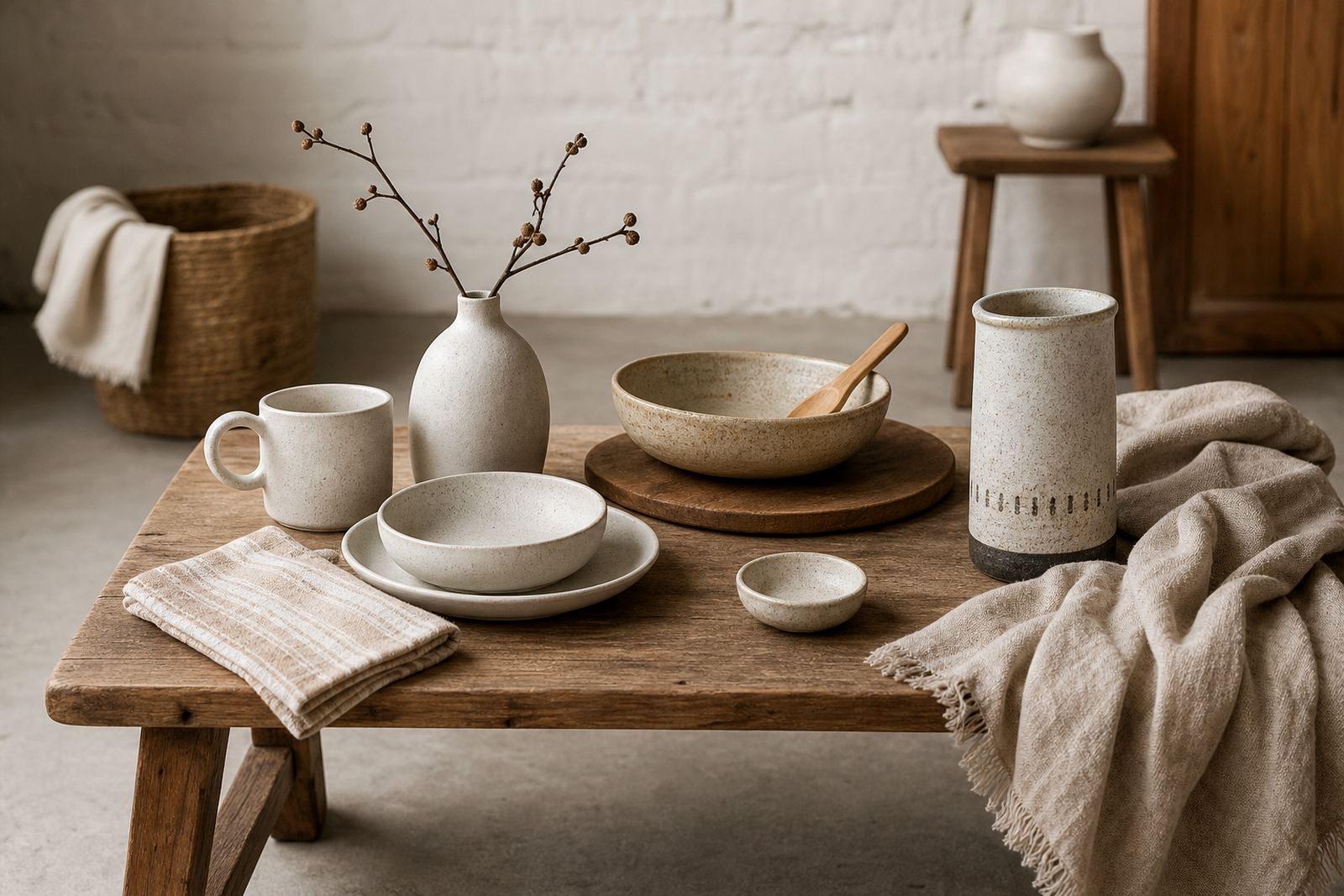
Versatile serving pieces do the heavy lifting in a seasonal table refresh. A shallow ceramic platter, a wooden board, a small bowl set and a jug can handle salads, bread, fruit, condiments and dessert. When those pieces are handcrafted, they carry texture and colour that make even simple food feel considered. The aim is not a crowded spread, only a few items that can move between breakfast, lunch and supper without looking out of place.
Look for shapes that stack neatly and surfaces that are easy to wipe after use. A slightly uneven rim or hand-thrown curve is part of the appeal, but the piece still needs to sit firmly on the table. If you often host in a breezy Atlantic Seaboard flat or an open-plan home in Pretoria, stable, low-profile servingware is easier to manage than tall, fussy items.
- One large platter can serve roast vegetables, sliced bread or a cheese selection.
- Small bowls are useful for salt, sauces, nuts and olives.
- A jug can hold water, flowers or a simple punch, depending on the meal.
Build a colour story that feels local
Seasonal tables work best when the colours feel connected to the setting. Soft terracotta, sand, moss, charcoal and deep blue sit naturally with South African interiors because they echo earth, stone, sea and garden. In a sunlit Cape Town home, a cool-toned table can balance strong light. In a warmer interior in Durban or the Southern Suburbs, muted greens and natural fibres keep the table grounded.
There is no need to match everything exactly. A cream textile, a grey ceramic bowl and a wooden board can sit together comfortably if the finish and tone are close. Handcrafted pieces often have slight variation, which helps the table feel lived in rather than staged. If you prefer a brighter look for spring, add one accent colour only, such as mustard, teal or rust, and let the rest stay calm.
Care that keeps the pieces useful
Good care helps handmade homeware last through many meals. Most ceramics are fine with gentle washing and a soft cloth, while raw wood benefits from a light food-safe oil from time to time so it does not dry out. Textiles should be washed according to the fibre and air dried where possible, especially if they are dyed by hand. Strong scrubbing and harsh chemicals can flatten the finish on both ceramics and wood, so a softer approach usually works better.
For tables that are set often, keep storage practical. Fold textiles so they do not crease sharply, stack plates with a soft separator if the glaze is delicate, and store serving boards in a dry place away from damp walls. Coastal homes in particular need a bit more attention to humidity, especially for wood pieces and woven runners.
- Wipe ceramics soon after use to avoid staining from tomato, spice or wine.
- Dry wood fully before storing it away.
- Rotate table linen so one set is not used and washed too often.
A Woodstock table set for a Sunday lunch
Picture a narrow table in Woodstock on a warm Sunday. A natural runner runs down the centre, with low greenery in a small ceramic bowl and a pair of wooden boards holding bread and cheese. Each place has a folded textile napkin and one small handcrafted plate for starters. The table feels relaxed, not overworked, and the pieces can move from starter to pudding without needing to be replaced mid-meal.
That kind of set-up is useful because it suits both a quiet family lunch and a larger group. If a guest brings dessert, the same ceramic bowls can hold berries. If the meal turns simple, the serving pieces still carry the table. A seasonal refresh works best when every item earns its place, and still leaves enough space for plates, glasses and easy conversation.