
Start with the quiet base, then let texture speak
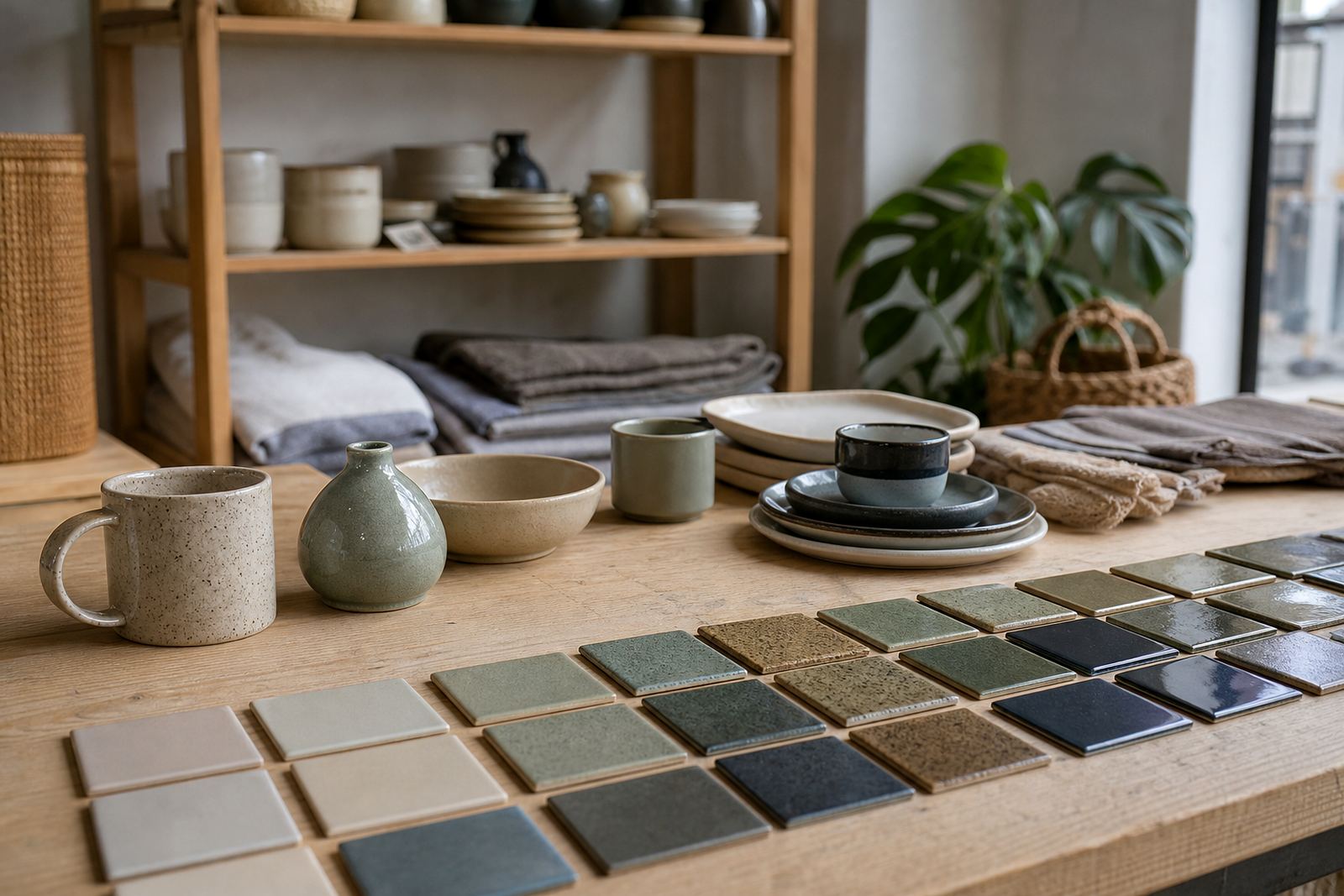
A calm palette works best when colour stays soft and the interest comes from touch. Think off-white, sand, oat, stone and pale timber, then layer in the different finishes of cloth, clay and wood so the room feels lived in, not stripped bare.
In a Cape Town flat with strong afternoon light, a pale sofa can look sharp at midday and cold by evening if every accessory is smooth. A linen throw, a carved wooden tray and a matte ceramic vase soften that effect. The trick is to keep the colours close and vary the surface, not the shade.
- Use one main neutral, then two supporting tones that sit beside it naturally.
- Mix matte with slightly polished finishes so the eye keeps moving.
- Repeat one timber tone more than once so the room feels settled.
Linen that relaxes the room without feeling fussy
Linen brings a dry, slightly crumpled look that suits a neutral interior better than fabrics that stay too neat. It works well on cushions, runners, napkins and light curtains because it gives softness without heavy pattern. In coastal areas such as the Atlantic Seaboard, linen also suits the easy air of a home that gets salt in the breeze and strong daylight through the windows.
For daily use, choose mid-weight linen where you can. Very thin cloth can look limp, while a heavier weave sits better on a bench, a dining chair or a layered bed. Natural fibres shift with use, so a little wrinkling is part of the character, not a fault.
- Wash in cool water with mild detergent to help the fibre hold its shape.
- Dry out of harsh sun where possible, especially if the room gets full western light.
- Press only where needed, since a soft crease often looks more natural in a calm interior.
Ceramic pieces that anchor the palette
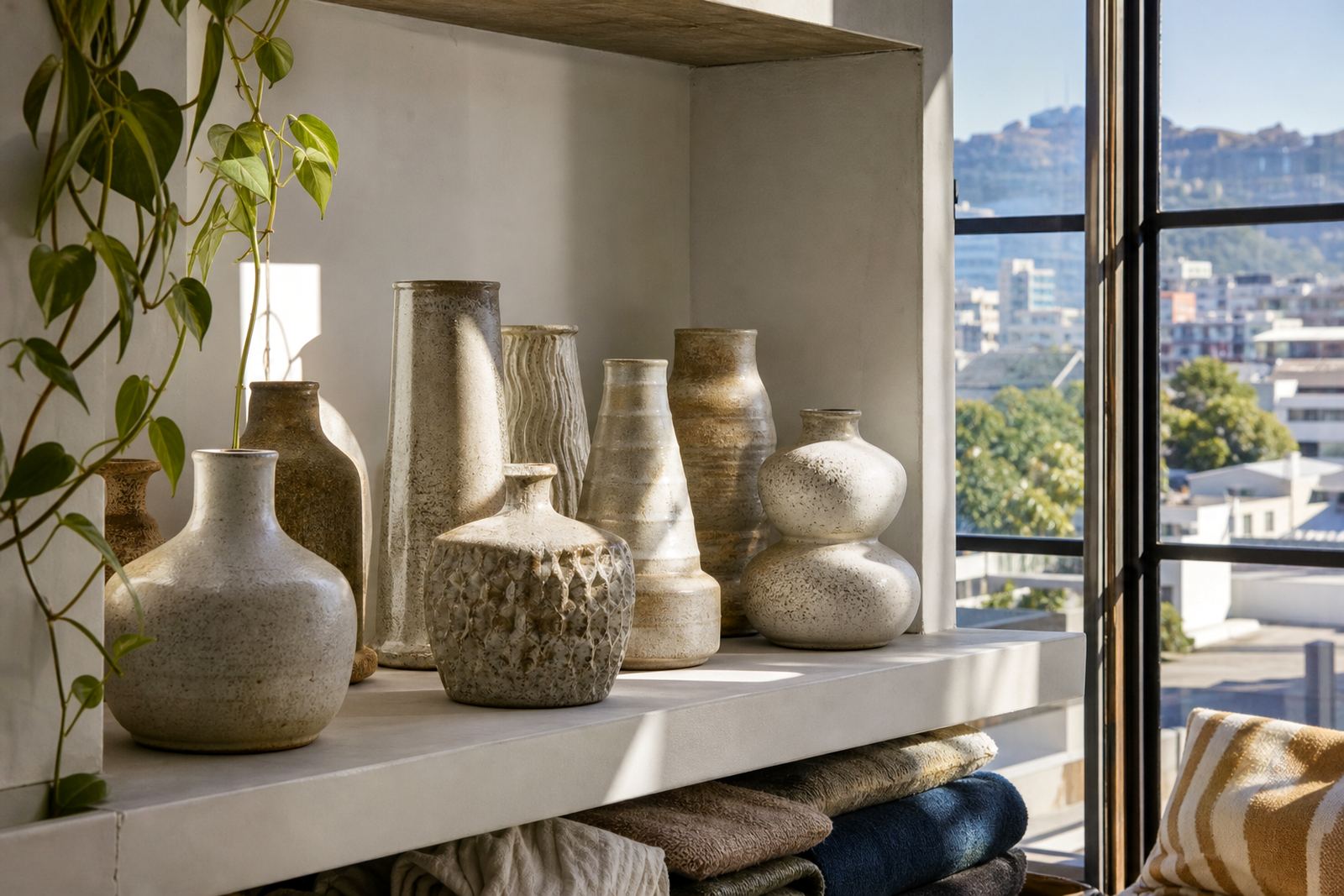
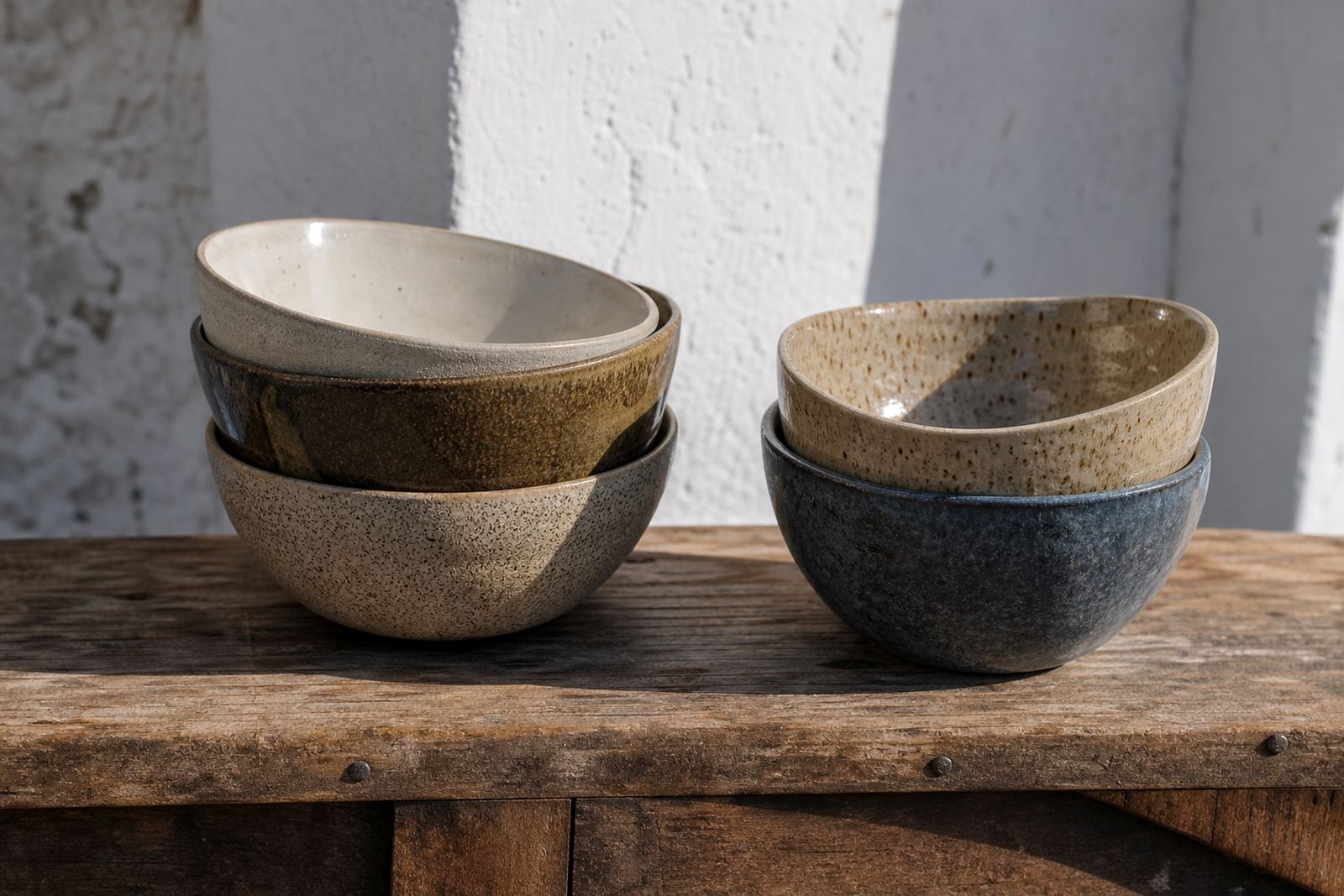
Ceramics give a neutral room weight. A handmade bowl, vase or serving piece can stop a light room from floating away visually. The slight changes in glaze, rim and form are useful because they add detail without introducing a busy pattern. On a shelf or sideboard, one ceramic object with a generous shape can do more than several small items.
For everyday homes in Johannesburg, Pretoria or Stellenbosch, ceramic pieces also work well because they move easily between display and use. A large serving bowl can hold fruit one day and rest empty on a table the next. Choose shapes with a stable base and a finish that suits your table surface, especially if you use wood or stone.
- Match the ceramic finish to the room: matte for softer spaces, glazed for a little reflection.
- Keep groupings uneven in height so they do not look lined up like stock.
- Leave some breathing space around each piece so the texture stands on its own.
Wood adds warmth where the room needs it most
Wood is the bridge between all the other neutrals. It brings warmth to a room that might otherwise feel a bit cool, especially where white walls and tiled floors are common. A timber stool, tray, frame or bowl introduces grain and colour changes that make the room feel grounded.
In homes near the coast, wood benefits from regular dusting and a little more care because humidity can affect the surface over time. That does not mean avoiding it. It just means choosing solid, well-finished pieces and wiping spills promptly. If the grain is visible, even better, as it gives the room another layer of detail.
- Use wood as the middle tone between linen and ceramic, not the dominant feature.
- Repeat one timber finish in two or three places so the room feels connected.
- Keep wooden items out of standing water and wipe them with a soft cloth after use.
How to build depth on a coffee table or shelf
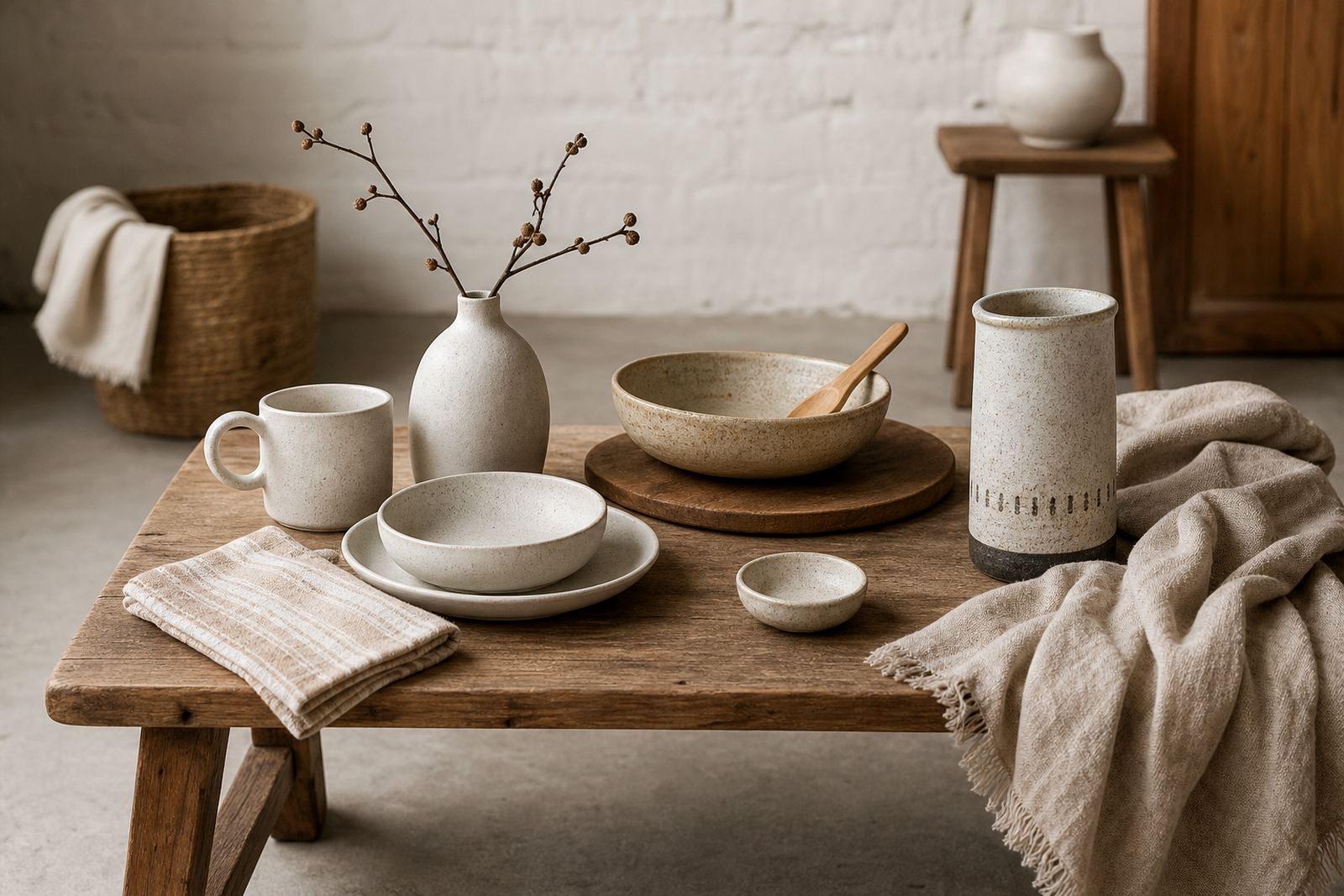
When a room needs more interest, build it from the surface upwards. Start with a textile base such as a folded runner, then add a wooden tray, then place a ceramic vessel or small bowl on top. This creates layers in both look and height. The room still reads as neutral, but it no longer feels flat.
A useful rule is to combine one soft element, one firm element and one object with a hand made finish. A linen placemat, a wooden dish and a ceramic cup can sit on a shelf together without competing. If a surface begins to feel crowded, remove one item rather than adding another. Neutral interiors need space as much as they need texture.
- Work in odd numbers for small groupings, usually three items at most.
- Vary height and weight so each piece has a clear role.
- Use empty space as part of the composition, not as something to fill.
A Woodstock table setting with a local feel
Picture a Sunday lunch in Woodstock, Cape Town: a pale timber table, unbleached linen napkins, a hand made ceramic serving plate and a small bowl for olives or salt. Nothing is loud, yet the table feels considered. The textures carry the mood, and the room works hard without looking overdone.
That kind of setting suits everyday eating too. It can shift from a family meal to a small gathering with very little effort. Gift wrapping, gift notes, curated gift boxes and housewarming sets are useful here because neutral homeware makes practical gifting easier. A wedding registry or corporate order can follow the same logic: choose pieces that will be used, not just displayed.
If care advice is needed, it helps to match the material to the routine. Linen can be washed and folded back into place. Wood needs drying after cleaning. Ceramics should be handled with a steady hand, especially if the glaze is delicate or the rim is thin. Those small habits keep a neutral interior looking calm for longer.