
Why an empty vase still holds a room together
In many homes, a vase is treated as a temporary holder for stems, then pushed aside when the flowers fade. That misses half the value of the piece. A well-made ceramic vessel has its own line, weight and surface, so it can sit neatly on a console, dining table or open shelf and still give the room something to look at.
In Cape Town apartments with smaller living areas, that matters even more. One hand-thrown vase in a sand, clay or off-white glaze can settle a bright room without taking over it. On a sideboard in Woodstock or a narrow shelf in a Southern Suburbs flat, the form itself becomes the feature. It can be quiet, but not dull.
Choosing a shape that works with your furniture
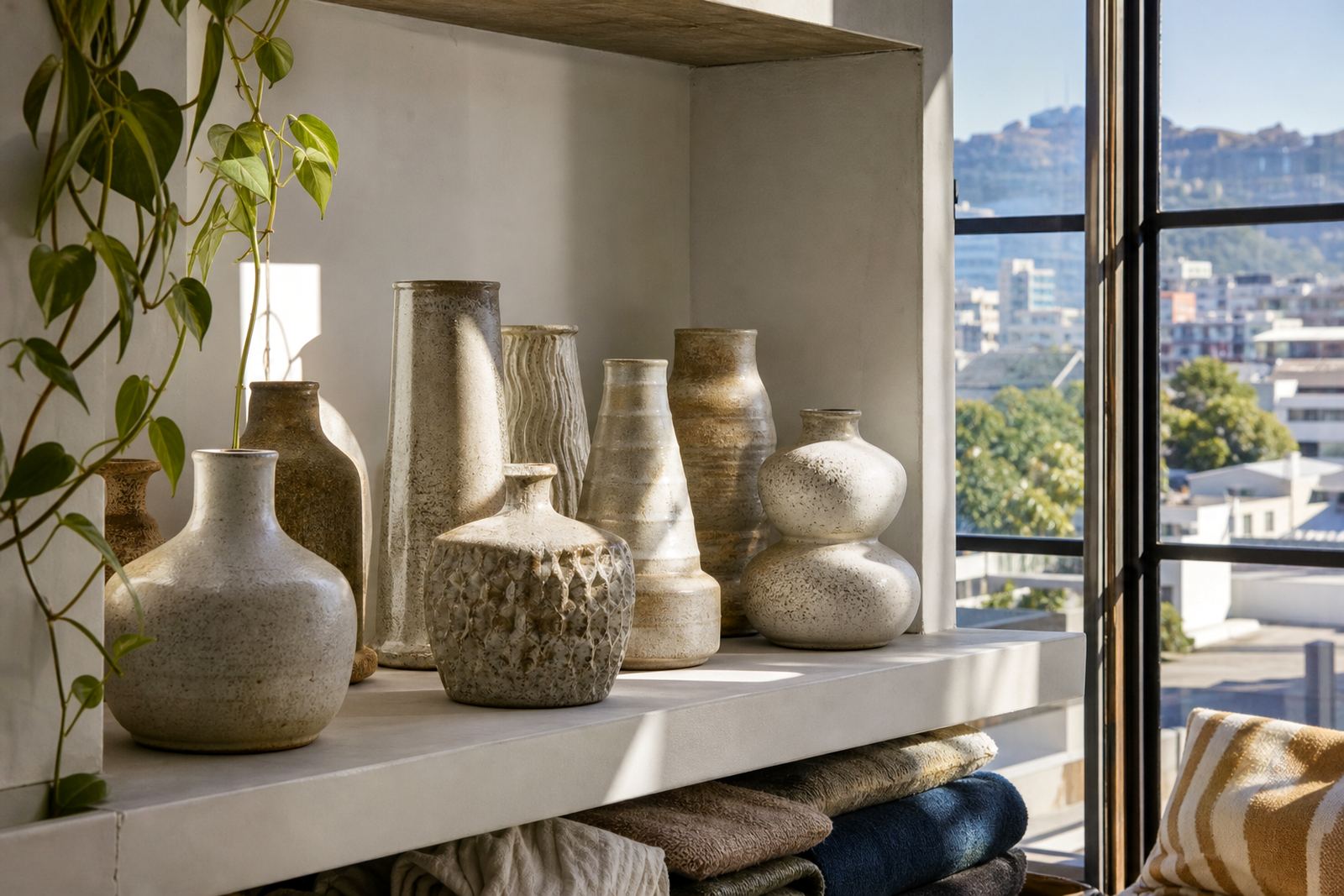
Shape is the first thing to get right. Tall necks draw the eye upward, while rounded bodies feel softer and more grounded. A narrow opening suits a single stem or a few branches, while a wider mouth works better for fuller arrangements or for leaving the piece empty with the rim clearly visible.
- Use tall, slim vessels beside stacked books or framed art so the grouping does not feel heavy.
- Place lower, wider vases on coffee tables where sight lines matter.
- Choose a pair of smaller pieces for shelves rather than one oversized centrepiece.
- Mix one matte surface with one glazed piece if the rest of the room is plain.
If you are styling a table in Durban where the light is strong for much of the day, a vessel with a softer finish can keep glare down. In Cape Town homes near the coast, that same matte surface also helps the piece feel calm against bright, reflective windows.
Materials that suit South African homes
Handmade homeware often shows the maker’s hand most clearly in the material. Ceramic vases can be smooth or textured, glazed or left with a more natural finish. Timber vessels or decorative wood forms bring warmth, while textile-wrapped objects and woven accents add softness beside harder surfaces.
For homes that deal with sea air in places like Muizenberg, Blouberg or the Atlantic Seaboard, ceramic and wood both need sensible care. A vessel should be kept dry after cleaning, and wood should not sit in damp corners for long periods. Textile pieces are best placed where they will not pick up constant direct sun, which can dull colour over time.
- Ceramic: wipe with a soft cloth and mild soap if needed.
- Wood: dust regularly and keep away from standing water.
- Textiles: spot clean where possible and air dry flat.
- Mixed material pieces: handle by the base or strongest section, not by a thin neck or handle.
Styling a vase when there are no stems inside
An empty vase needs a bit of intention. It should not be left in the middle of a surface with nothing around it, because then it can look accidental. Try treating it like a sculptural object and give it a support act. A book stack, a candle, a bowl or a small tray can make the setting feel complete.
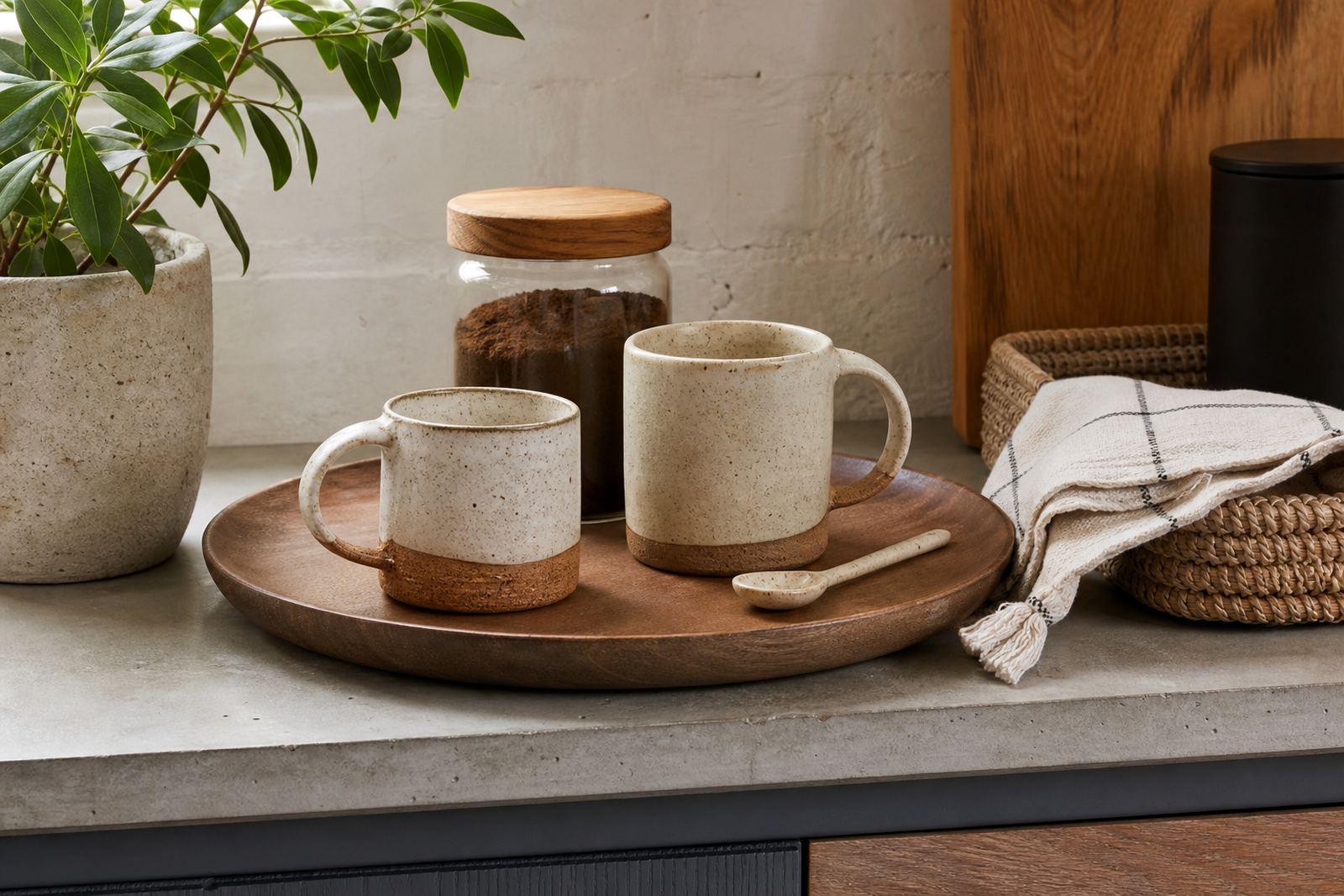
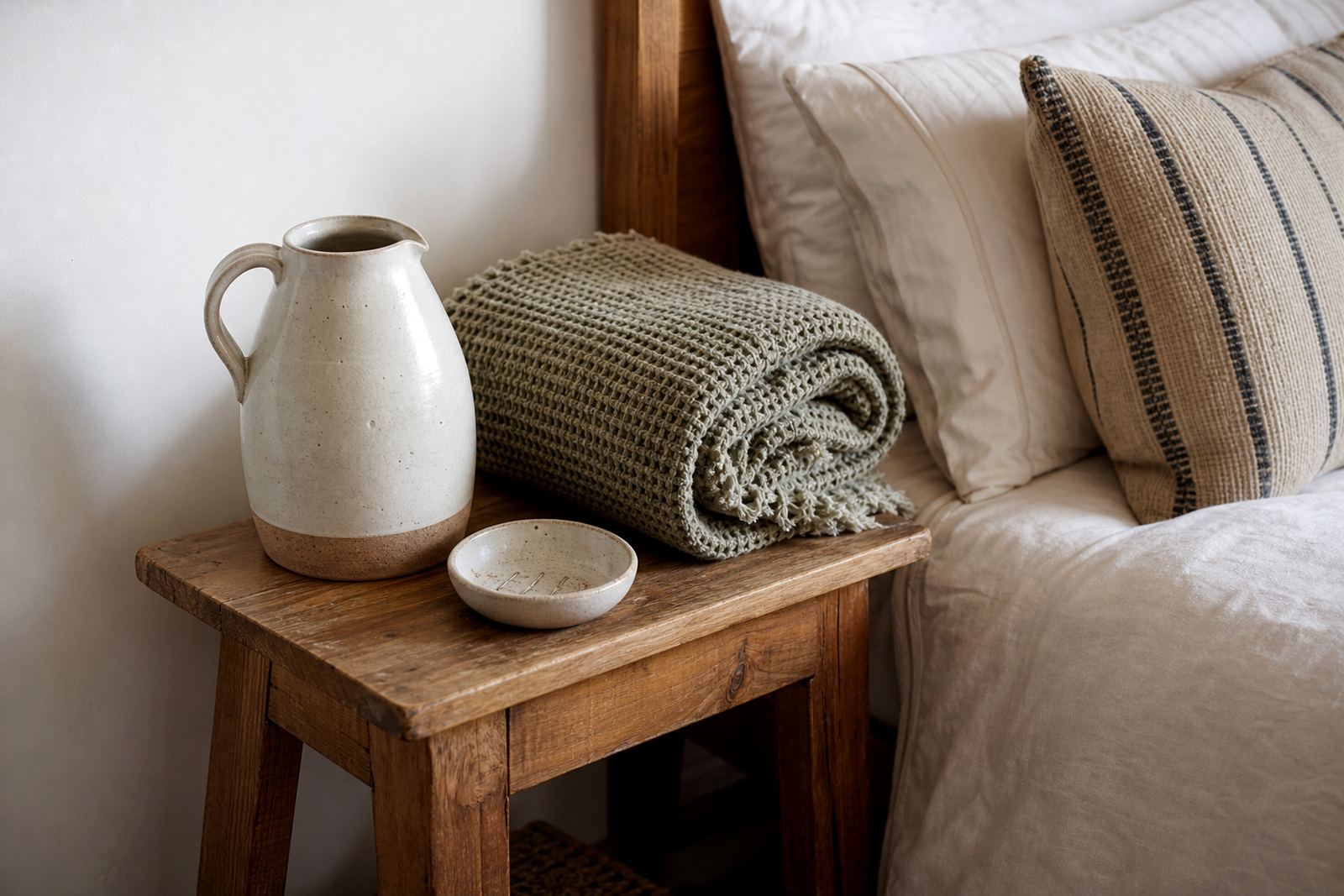
One useful method is the rule of three. Place the vase with two other items of different heights and finishes. For example, a ceramic vase, a wooden tray and a folded textile runner can hold a dining table together without clutter. On a shelf, you can repeat a colour or material in a smaller way so the eye moves naturally across the space. It is a small thing but it changes the whole feel of the room.
- Keep the vase slightly off centre for a looser look.
- Match one tone in the vase to another item in the room.
- Leave enough open space around it so the shape can breathe.
- Use odd numbers when grouping pieces on shelves or side tables.
A Woodstock example with a local touch
Think of a compact flat in Woodstock with pale walls, mixed timber furniture and a window that catches afternoon light. A hand-built ceramic vase in a warm grey glaze could sit on a narrow ledge near the dining area, unfilled and still feel right. Add a woven placemat, a small stack of art books and one other ceramic piece nearby, and the whole corner reads as finished without being crowded.
That is the kind of styling many Cape Town homes respond to. The pieces do not need to match perfectly, and they do not need to shout for attention. A vessel made by a South African maker can bring in local character while staying practical for everyday use. It also works well in homes that entertain often, because the vase can shift from display piece to flower holder when needed.
Care, gifting and the small details that matter
Good care helps handmade pieces last. Keep ceramics on stable surfaces, especially if children or pets move through the room. If a vase has an unglazed base, place it on felt or a mat so it does not mark timber. For gifting, a vase is useful because it suits many homes and styles, whether the recipient lives in Pretoria, Stellenbosch, Durban or Johannesburg.
LocalMaker handles gift wrapping, gift notes, curated gift boxes, housewarming sets, wedding gifting, corporate gifting, gift registry help, bulk orders, custom bundles, delivery coordination, care advice and replacement help. That makes it easier to send a piece that feels personal without having to overthink the pairing. A vase on its own can be enough, especially when the shape is strong and the finish is well chosen.
For homes near the coast, or in humid weather, check the piece now and then for dust in the rim or base. A quick wipe keeps the surface looking clean and stops dull build-up. It is a small habit, but it helps the vase stay part of the room instead of fading into background clutter.
The case for keeping one vase empty
A vase does not lose value because it is not holding flowers. In many rooms, leaving it empty gives the shape more room to speak. That works especially well with handmade ceramics, where slight variations in curve, glaze and thickness give the object its own character. The piece can sit on a shelf, a mantel or a table and still carry the room with quiet confidence.
For South African homes that mix old and new furniture, this is a practical way to style without adding more stuff. One considered object can do a lot. And if you do decide to add stems later, the vase is ready for that too.