
Start with the items that earn their place
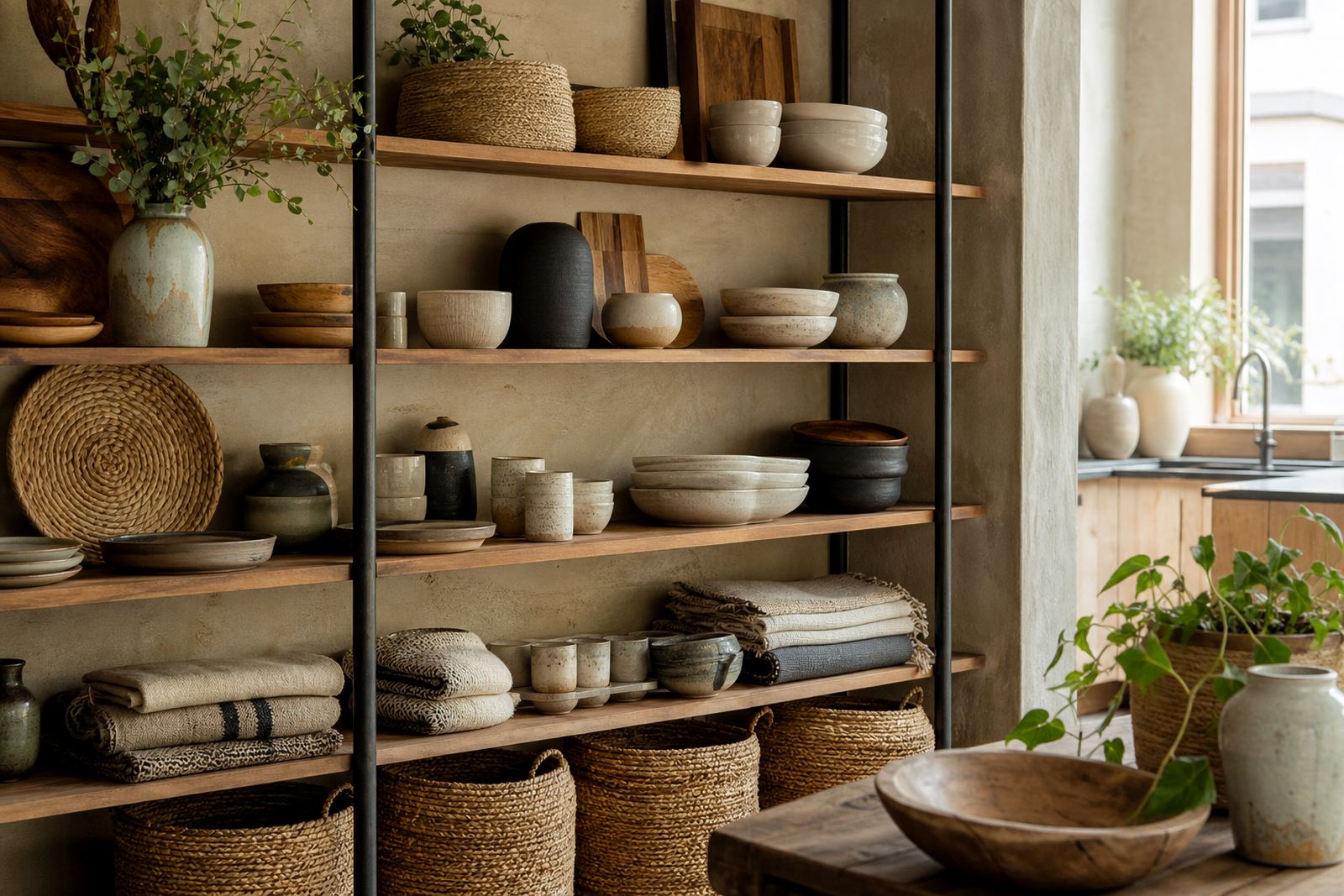
Open shelving should do a job first. A stack of mugs, a bowl for fruit, folded napkins, jars for tea, or a wooden tray for small items all make sense because they are used often. When you begin with practical pieces, the shelves feel honest and the room stays easier to keep tidy.
Handmade ceramics and wood work well here because they carry enough texture to stand alone. In a Cape Town kitchen with limited counter space, two or three useful objects on each shelf are often enough. Leave some empty space around them so the eye can rest and the shelves do not look packed from edge to edge.
- Choose pieces you reach for weekly, not only on special occasions.
- Keep daily items at eye level or within easy reach.
- Group by use, such as drinks, breakfast, or serving pieces.
Use height, shape and texture together
Good shelf styling usually comes down to contrast. A tall bottle, a low bowl and a folded textile create more interest than five similar objects standing in a row. Handmade pieces help here because small variations in glaze, weave or grain give the shelf a bit of movement without making it busy.
Try mixing a ceramic jug with a linen tea towel and a carved wood board. If everything is the same height, the shelf can feel flat. If everything is ornate, it can feel noisy. The balance sits somewhere in the middle, where useful items still look considered.
- Combine one tall item, one medium item and one low item on a shelf.
- Repeat a colour or material twice to tie the group together.
- Use closed storage below the open shelves for the less attractive bits and pieces.
Keep a working shelf easy to live with
An open shelf near the kitchen, passage or dining area gets dusty and needs regular straightening. That is normal. For that reason, it helps to keep only items that can be wiped clean or washed without fuss. Glazed ceramics, sealed wood and woven textiles that are easy to fold are practical choices.
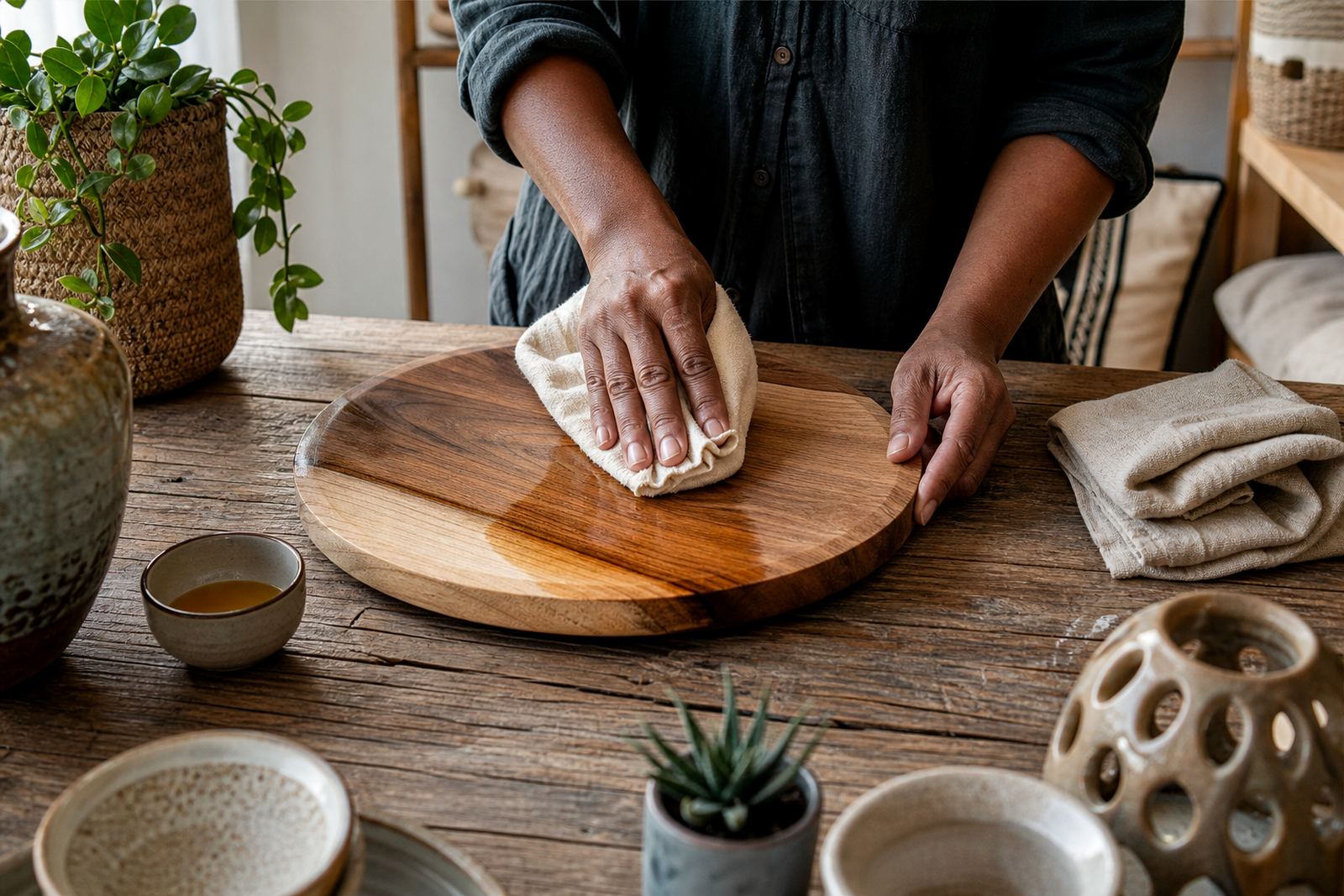
If your shelves sit near a window in Durban or a humid coastal spot, choose materials that tolerate moisture and dry quickly after cleaning. Ceramics can be rinsed and dried with a soft cloth, while textiles should be folded so they do not sit in damp piles. Wood should be kept dry and wiped after cleaning, not left wet on the shelf.
- Wipe shelves before you restyle them, not after they are already cluttered.
- Store heavier items on lower shelves for safer handling.
- Rotate pieces seasonally so everything gets used.
Build small groupings that feel intentional
Instead of filling every shelf from end to end, create small clusters with space between them. A cluster might be two mugs beside a sugar bowl, or a stack of folded napkins beside a serving plate. On a long run of shelving, these small groups keep the room from feeling stiff.
LocalMaker pieces suit this kind of styling because handmade homeware often has slight differences in tone and finish. Those details make the arrangement feel personal. In a Johannesburg apartment, for example, a simple row of shelves can hold breakfast items on one side and a few decorative books and vessels on the other, with room in the middle for breathing space.
- Keep odd numbers in mind: three items often feel more natural than four.
- Let one object be the hero and the others support it.
- Repeat a material once or twice so the grouping feels connected.
Add textile softness without crowding the shelf
Textiles soften open shelving and stop it from looking too hard or shiny. A folded runner, a neatly rolled tea towel, or a stack of cloth napkins can sit beside ceramics and wood without taking over the display. The key is to fold carefully and keep the pile small.
Textiles also work well in homes where shelves are meant to serve more than one space. In Stellenbosch, for instance, a shelf near the dining area can hold serving bowls, a basket of napkins and a small tray for candles or cutlery. The shelf stays useful for ordinary meals and still looks ready for guests when needed.
- Choose natural fibres where possible for a calm, tactile look.
- Fold textiles to the same width so the shelf lines stay neat.
- Use one textile colour as the link between different objects.
Style for real South African homes, not showrooms
Open shelves in South African homes have to cope with family life, shared kitchens and regular use. That is why practical styling matters more than matching sets. A shelf can hold a ceramic cereal bowl, a wood board, a glass jar and a folded cloth if the grouping makes sense for the way you live.
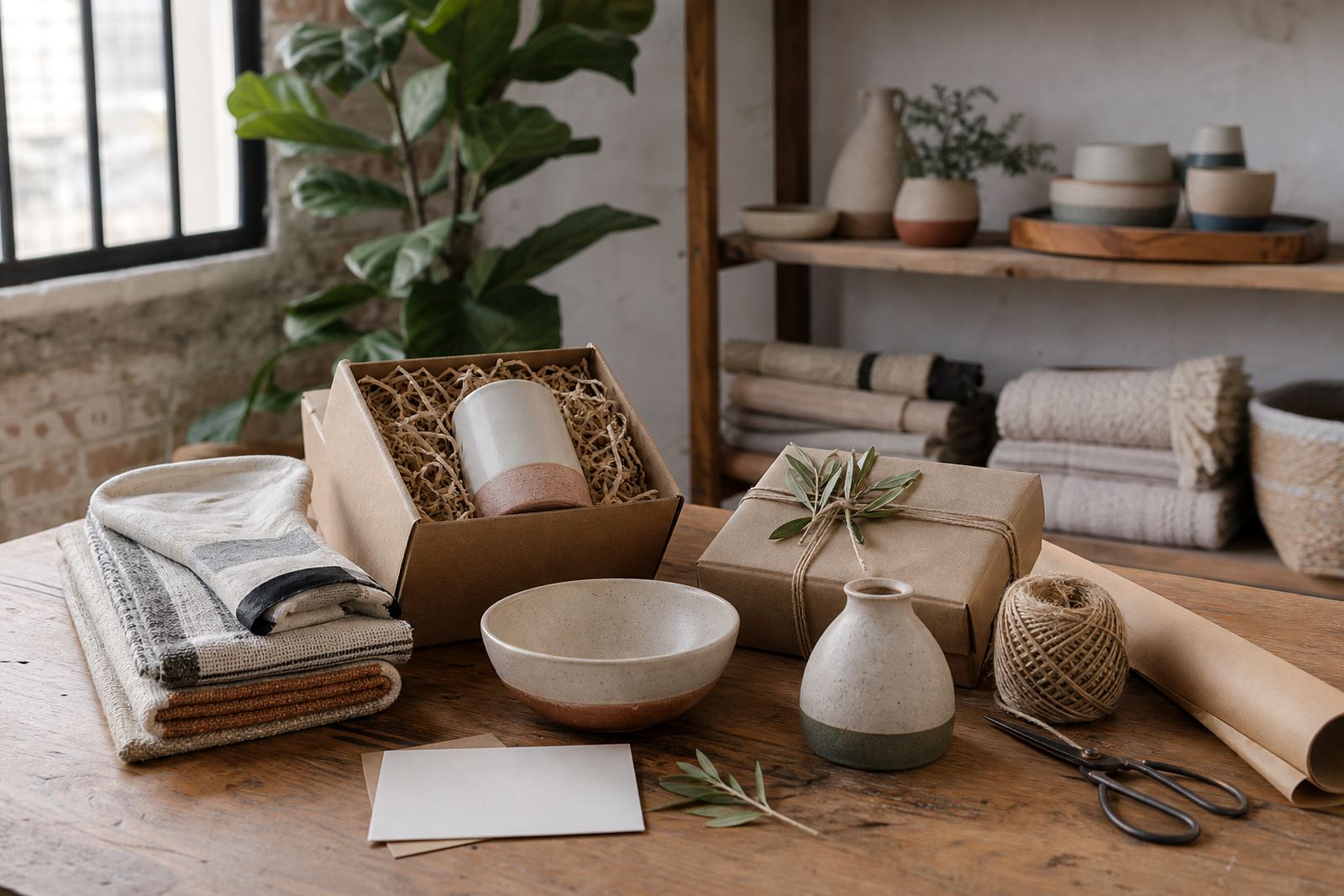
For a Pretoria home, think in terms of daily routines. Breakfast items can live together, serving pieces can sit on the next shelf, and a small gift box or wrapped bundle can be stored ready for a housewarming or birthday. The aim is not perfection. It is a shelf that works hard and still looks thoughtful.
When you shop handmade pieces, look at shape, weight, finish and how often each item will be handled. A shelf styled with useful objects feels calmer, and it is easier to keep that way over time.