
Start with one landing point, not five
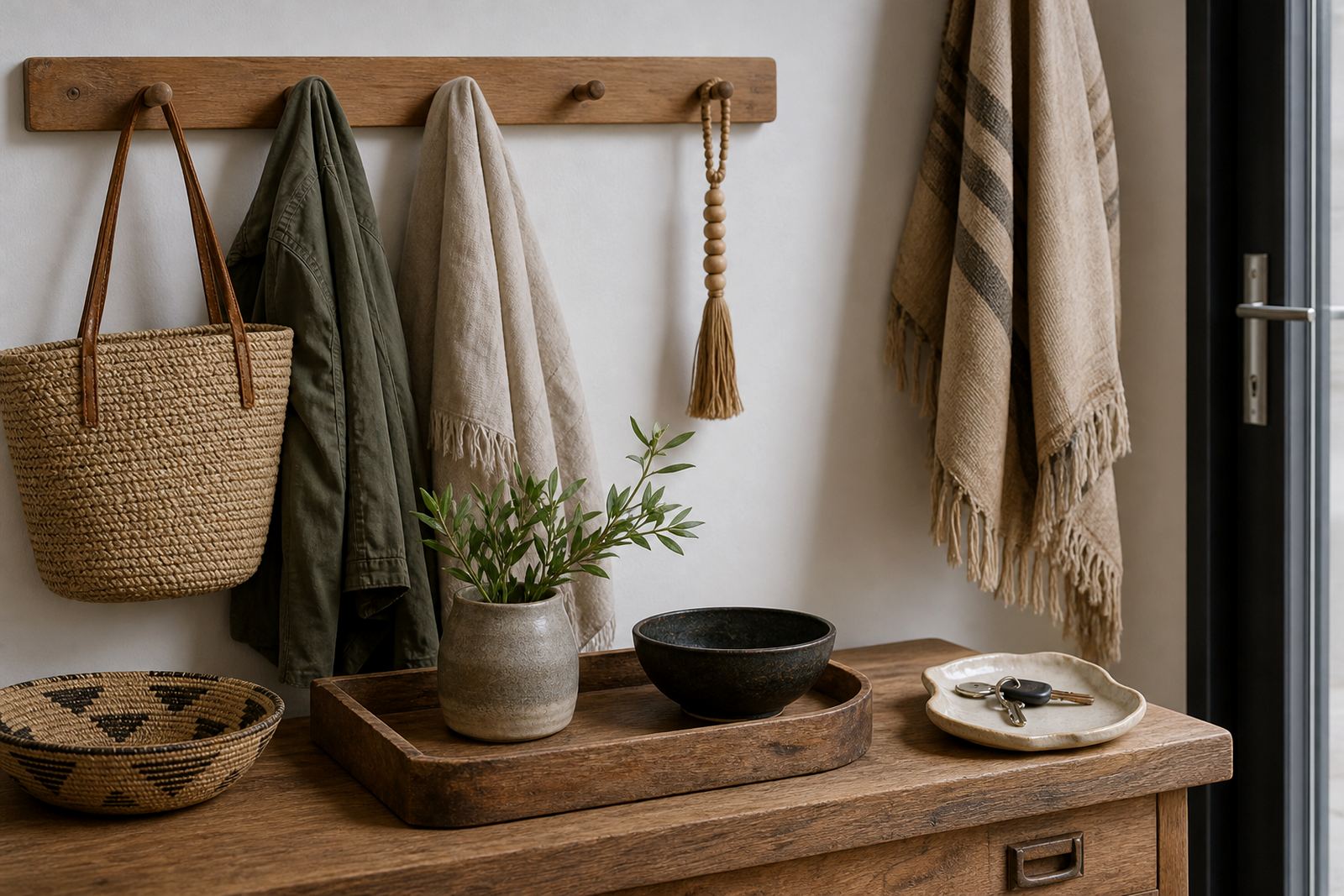
An entryway becomes calmer when every object has one place to wait. A wall hook for hats or tote bags, a shallow tray for keys and loose change, and a basket for shoes or scarves already remove most of the visual noise. Handmade pieces work well here because they have weight and texture, so they feel intentional even in a small flat or passage.
In a Woodstock apartment, for example, a narrow wall shelf with a ceramic tray below it can handle the daily rush without taking over the space. Keep the layout simple: one place to drop, one place to store, one place to hang.
Choose materials that can handle daily hands
Entryways take a beating. They get dust, damp umbrellas, salty air in coastal areas and the occasional knock from bags or school shoes. That makes material choice important. Glazed ceramics are useful for trays and small catchalls because they wipe clean with a damp cloth. Natural fibre baskets help soften the look and are good for gloves, scarves or dog leads. Hardwood hooks and small shelves bring structure and age well if treated properly.
- Use glazed ceramics for keys, coins and sunglasses.
- Choose woven baskets for softer items that do not need a rigid shape.
- Pick oiled or sealed wood for hooks and shelves in busy households.
- Keep textiles out of direct rain if the door opens straight onto a stoep.
If your home is near the coast in places like Muizenberg or Blouberg, drying time matters. Natural materials can cope well, but they should not sit wet for long. A quick wipe now and then keeps mould and odour from settling in, ja.
Use baskets to hide the stuff nobody wants to stare at
Not everything in an entrance deserves to be on view. A basket is the easiest way to hide the practical bits while still keeping them close. Think school forms, cable chargers, dog harnesses, shopping bags or spare candles for load-shedding when the entrance also doubles as a corridor. The goal is not to store everything there, only the items that need to be found fast on the way out.
- One lidded basket can hold gloves, umbrellas and small seasonal items.
- A low open basket works for shoes in a family home.
- A slim handled basket is useful for post, flyers and parcels.
- Line delicate woven pieces with a removable cloth if you want easier cleaning.
Good baskets do not shout for attention. They just keep the floor from becoming a catch-all for the day. That quiet order is what makes the entrance feel settled.
Trays set the tone in a very small space
When there is hardly any room, a tray can do more work than a cupboard. A ceramic or wooden tray gives one clear boundary for the everyday bits: keys, a lip balm, a padlock, or the little ring of remotes that always seems to travel. It is also useful for guests, because people know exactly where to place things when they arrive.
For a compact entrance in Pretoria or Stellenbosch, a tray on a wall shelf keeps the surface tidy without asking for extra depth. Choose a shape that matches the space. A round tray softens a narrow corner, while a rectangular one suits a long console ledge. If the surface is smooth, a felt pad or rubber feet can stop scratching.
Hooks should be strong enough for real life
Hooks are easy to underestimate. In a busy house, they need to carry more than a light jacket. School bags, market totes, dog leashes and heavy coats all end up there. Handmade wooden or metal hooks, fixed properly into a solid wall, can be both useful and good-looking. The trick is spacing them so items do not bunch together and make the wall look crowded.
In a Cape Town family home with a narrow passage, three well-spaced hooks often work better than a row of six. Leave enough room under each hook for the bag to hang freely. If children use the entrance too, place a lower hook within reach so they can put things away without help.
- Keep heavier items on the strongest hook positions.
- Use fewer hooks than you think you need, then add only if the space asks for it.
- Match finishes lightly, so wood, ceramic and woven textures do not clash.
A local example from a Woodstock doorway
A small entrance in Woodstock can carry a surprising amount of daily movement. Picture a painted wall, a timber stool near the door, a ceramic tray for keys and mail, two carved hooks for bags, and a woven basket tucked underneath for shoes. Nothing is fancy, but every item earns its place. The result is calm because the route in and out is clear.
This kind of layout also works for people receiving parcels, sending gifts or managing a household with a few different routines going at once. The entrance becomes a working part of the home rather than a dumping spot. That is especially helpful in flats and shared spaces where the first view sets the tone for the whole day.
Care keeps handmade pieces useful for longer
Handmade homeware usually lasts well when it is cared for properly. Dust ceramic trays with a soft cloth and wash them with mild soap if they pick up marks. Woven baskets do best with light vacuuming or a gentle shake outside. Wooden pieces should stay dry and be wiped promptly if they catch moisture from umbrellas or damp bags. If a textile lining is included, check the care label and wash it before grime settles in.
When an entryway is looked after in this way, it stays tidy without needing constant effort. The pieces do the work quietly, and the space keeps its shape even on busy weekday mornings.