
Start with the grain, not the drama
Wood is a living material in the sense that it responds to heat, moisture and handling. A serving board that looks dry after a few weeks may only need a light oiling, not a heavy treatment. The best routine is plain and regular: wash gently, dry well and store it where air can move around it.
Handmade boards and trays often show natural variation in colour and grain. That is part of their character, and it also means one piece may need a little more attention than another. If a tray is used for daily drinks or snacks, it will age differently from a decorative bowl on a shelf.
- Wash by hand with mild soap and lukewarm water.
- Dry straight after washing with a soft cloth.
- Keep out of prolonged direct sun to reduce fading and cracking.
- Store flat if possible, so the wood does not warp.
What to do after serving food
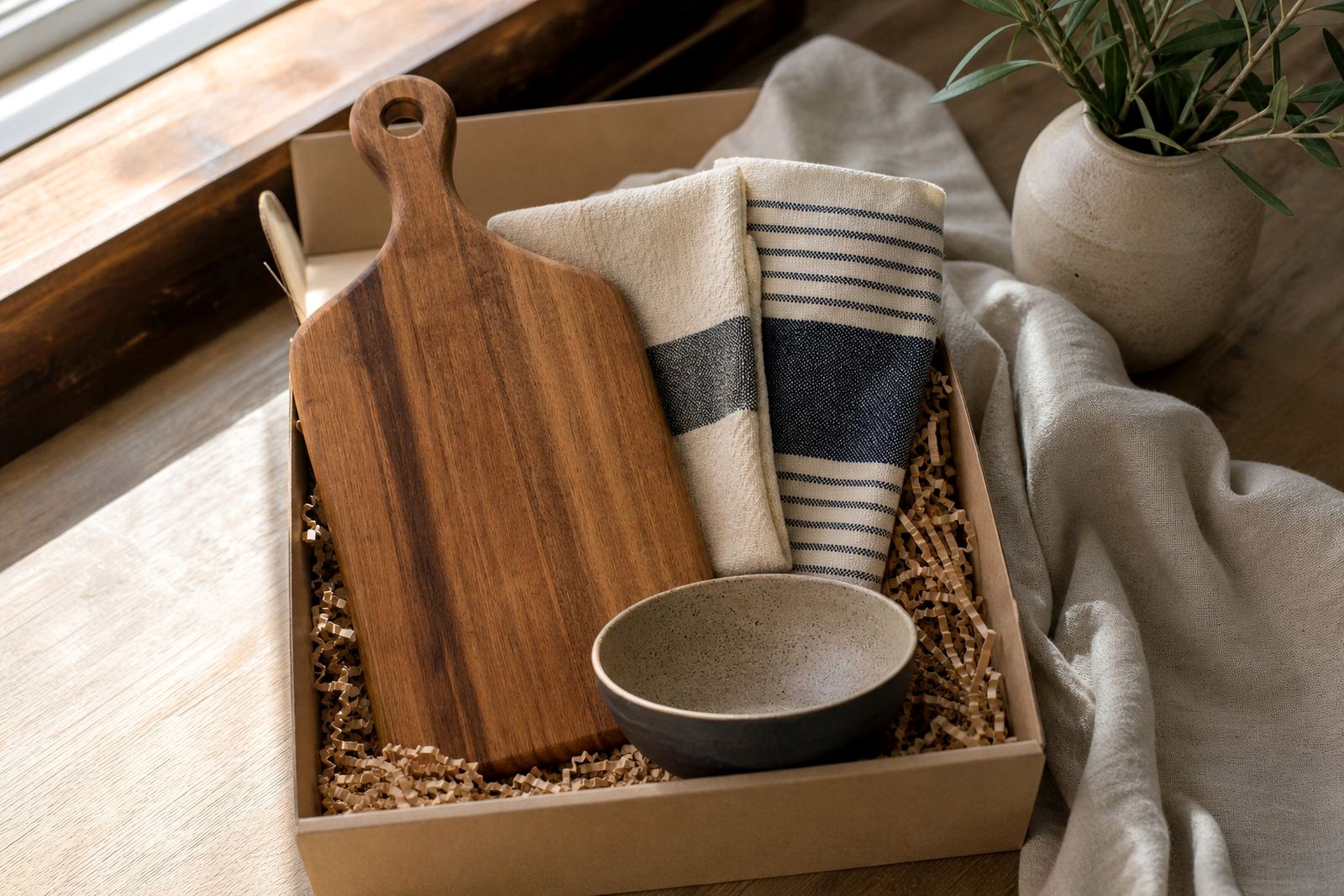
Boards used for bread, fruit, cheese or dry snacks need attention soon after use. Crumbs and food oils can settle into the grain and leave marks if they sit too long. A quick wipe after serving goes a long way, and it helps the board keep a clean finish for longer.
For sticky residue, use a soft sponge rather than anything scratchy. Avoid soaking the piece in water, because that can swell fibres and lift joins on a laminated board. If a board has grooves or carved edges, dry those areas carefully too, since water likes to hide there.
- Wipe off food residue first.
- Use a soft sponge with mild soap.
- Rinse quickly, then dry fully.
- Stand the board upright for air drying if it is safe to do so.
Oil keeps the surface honest
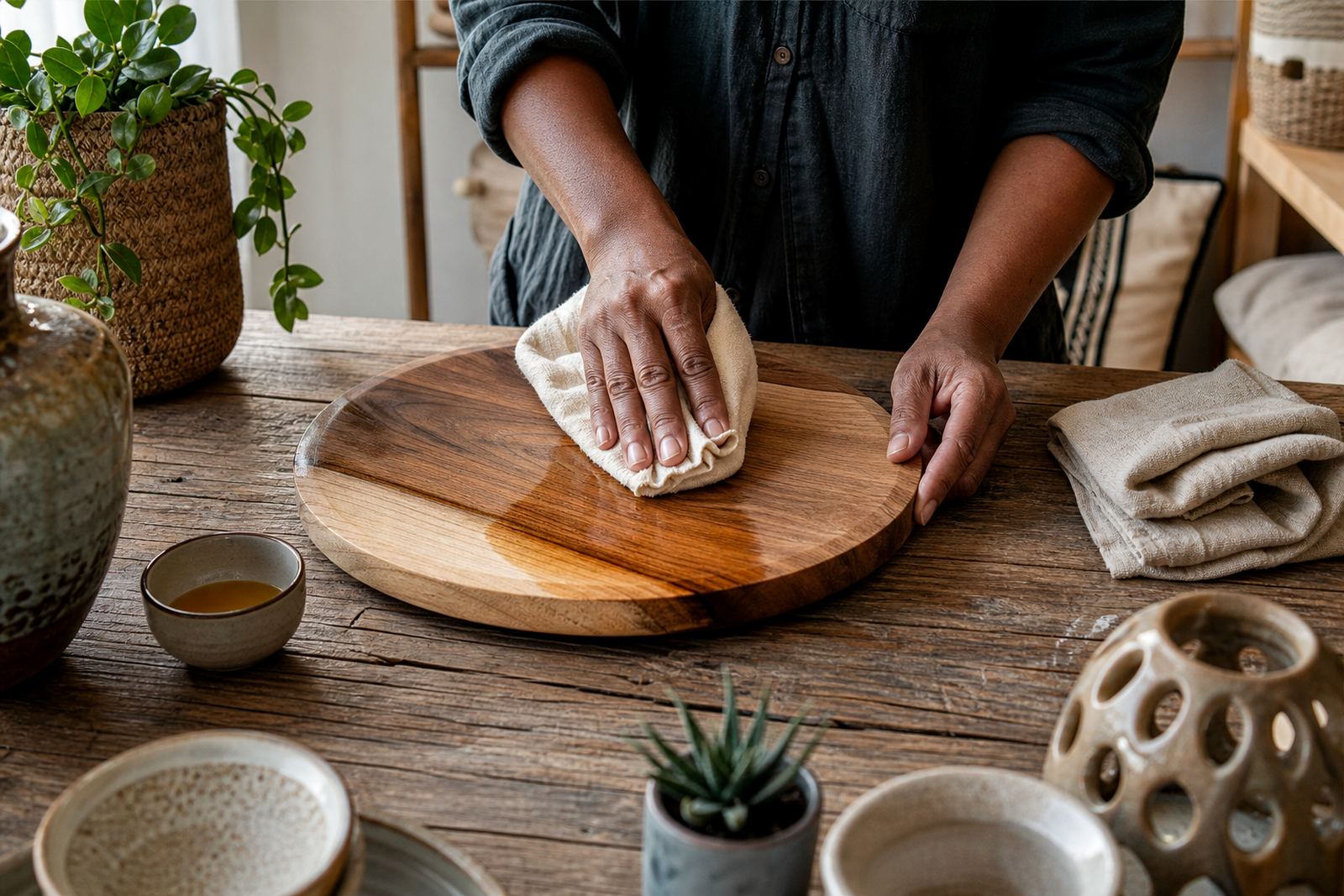
Many wooden kitchen pieces benefit from a food-safe oil from time to time. Oil helps slow down drying, reduces the look of dull patches and supports the finish on open-grain timber. You do not need to flood the piece. A thin coat applied evenly is usually enough, then let it rest and wipe away any extra.
If the wood starts looking pale, thirsty or patchy, that is often the sign it wants oil. In a salty coastal area like Woodstock or the Atlantic Seaboard, air can dry wood out a bit faster than inland. In Johannesburg the bigger concern may be indoor heating and dust. Different conditions, same principle: check the piece by touch and look rather than by the calendar.
- Use a clean lint-free cloth for application.
- Apply a light coat and let it soak in.
- Buff off excess after the resting time.
- Repeat when the surface looks dry or loses its soft sheen.
Heat, sun and wet towels are the troublemakers
Most damage comes from everyday habits, not dramatic accidents. A hot casserole dish placed on a wooden server can leave marks. A wet dishcloth left under a tray can cause staining. Strong sunlight through a window may fade darker timber or make finishes look tired. These are ordinary home risks, so the answer is ordinary care.
For decorative pieces in living rooms or entry spaces, keep them away from heaters and damp corners. If a tray is used in a bathroom or near a sink, wipe it down often. Even simple items need breathing space. Leave them on a dry shelf or hook instead of stacking them while still damp.
Wood in Cape Town homes needs a bit of coastal sense
Woodstock, the Southern Suburbs and the Atlantic Seaboard can all bring humidity changes into the house, especially when windows are opened for sea air or closed during colder weather. That movement can make boards expand and contract a little. It is not a fault, it is wood doing what wood does.
If a serving board is used often in a busy family kitchen, check it for fine surface dryness, small lifts in the grain or slight bowing. Treat those signs early and the piece will stay useful for much longer. In a Stellenbosch or Durban home the same care applies, although the humidity feels different. Local conditions change the rhythm, not the basics.
- Keep wood away from constant damp.
- Do not leave pieces in a closed car on hot days.
- Let items dry naturally before storage.
- Wipe condensation off trays and boards after use.
Repairs are easier when the damage is small
A light scratch on a handmade wooden board is often part of normal use. Deep cracks, however, need proper attention. If a surface has opened at a join or the finish has worn through in one spot, stop using harsh scrubbing methods and do not try to sand aggressively unless you know the piece well. Gentle handling is safer than a quick fix that removes too much material.
Minor care can still rescue a piece that looks tired. A clean cloth, a little oil and patient drying often improve the appearance far more than people expect. The aim is not to make the item look new, because handmade wood should show a bit of its life. The aim is to keep it attractive and steady for normal use.
A practical routine for trays, boards and servers
If you only remember a few steps, make them these. They work for breakfast trays, chopping boards, serving paddles and decorative wood pieces in most South African homes. They also suit mixed households where the same item might be used for serving one day and display the next.
Simple care is usually enough, and it fits real kitchens better than a complicated routine. A board that is washed gently, dried properly and oiled when needed will last well and look better on the table too.
- Clean soon after use.
- Dry completely before putting away.
- Oil lightly when the surface looks dry.
- Keep in a cool, dry place with good air movement
That is the real discipline behind good wood care: little habits, done often. It keeps handmade pieces ready for serving, gifting and everyday use without fuss or unnecessary handling.