
Start with one quiet base, not a full matching set
A table feels easier to live with when it begins with one steady base. That might be a plain runner in cotton or linen, a woven placemat, or even bare wood if the surface is already warm and interesting. The point is to let one material lead the setting, then build around it with a few handmade pieces rather than filling every inch.
In Cape Town, where many homes shift between bright coastal light and cooler evenings, a natural base works well because it does not fight with the room. It also gives handmade ceramics and wooden serveware space to stand out. If your table is small, keep the base narrow and let the sides breathe a little. A crowded table often feels formal by mistake, while a bit of open space keeps things calm.
- Choose one fabric or surface as the starting point
- Keep colours close to nature: clay, sand, off-white, olive, charcoal
- Leave enough room for serving dishes and passing plates
Mix ceramic shapes so the table feels lived in
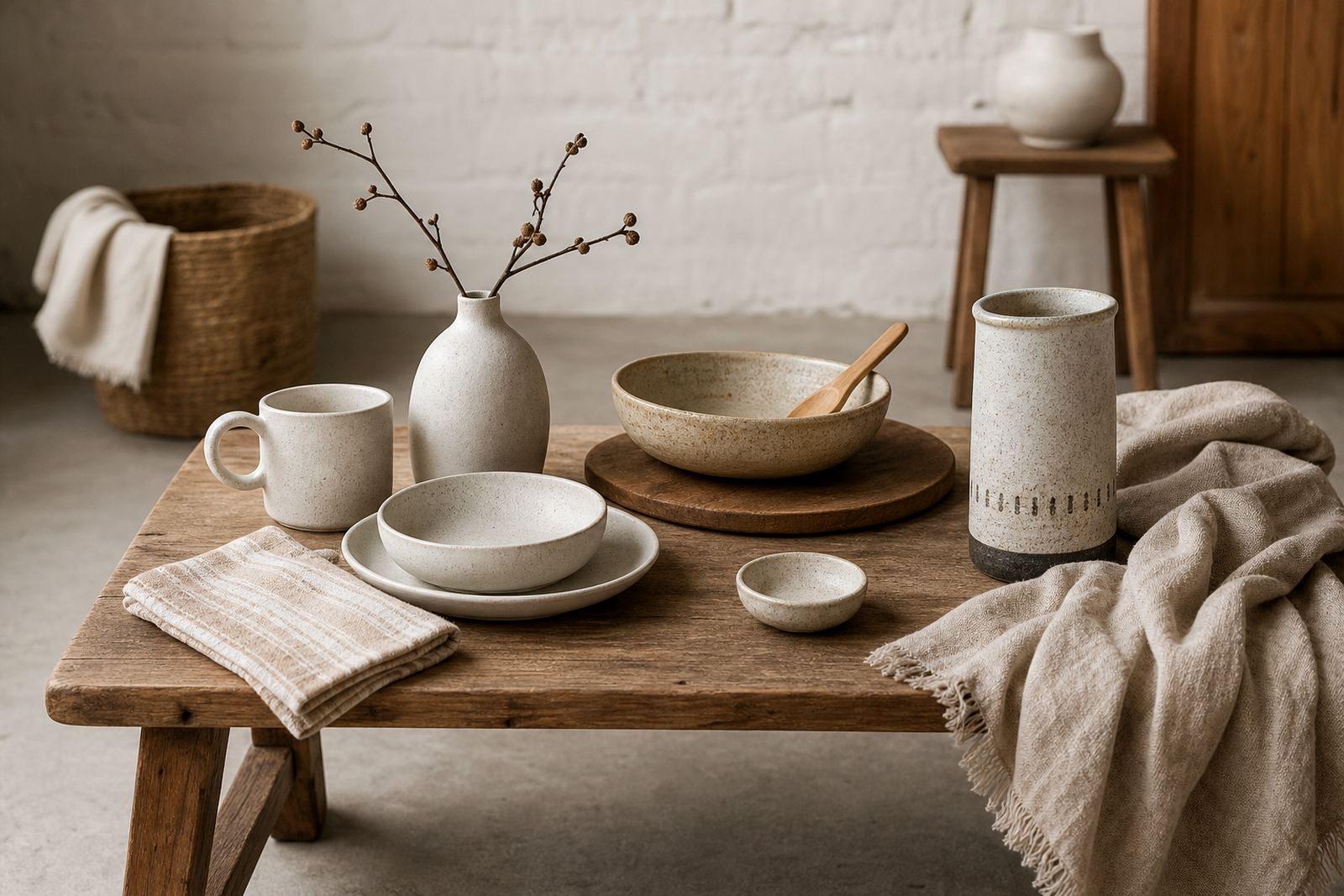
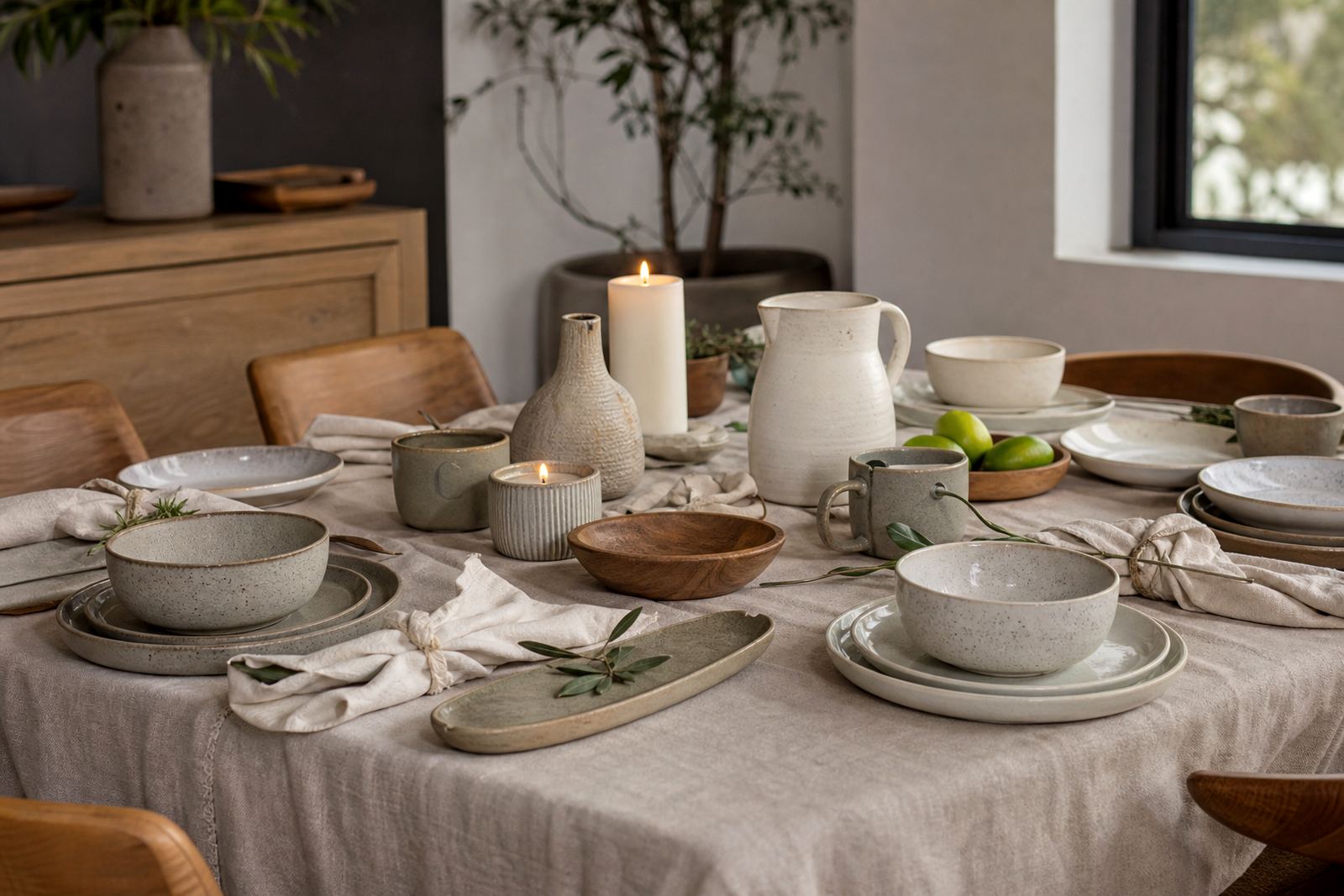
Handmade ceramics work best when they are not treated like a showroom set. A shallow bowl next to a deeper one, a mug with a slightly different glaze beside a plain tumbler, or plates that vary a little in tone can make the table feel personal. These small shifts are part of the charm. They tell guests that the setting was arranged by hand, not copied from a catalogue.
For relaxed meals, choose pieces that handle everyday use as well as weekend hosting. Stoneware with a sturdy feel is useful for dinner, while lighter cups and small serving bowls suit breakfast tables or afternoon tea. If the glaze is matte, it often shows marks less visibly. If it is glossy, it can brighten the table in a room with softer light. Either way, the look should feel easy to use, not precious.
- Use two or three ceramic shapes rather than many different styles
- Mix glazed and unglazed surfaces for texture
- Keep a few small bowls ready for condiments, nuts or olives
Bring in textiles that soften the edges
Textiles do a lot of quiet work at the table. A runner can lengthen a narrow dining table. Cloth napkins make a setting feel more thoughtful without becoming formal. A woven or stitched textile under serving dishes can soften the look of hard surfaces, especially on glass, tile or painted wood. In humid coastal areas, breathable natural fibres are often better than heavy synthetics because they feel lighter and are easier to wash and dry.
Patterns should support the meal, not compete with it. A striped cloth, a checked napkin or a subtle handwoven texture is usually enough. If the ceramics are bold, keep the cloth quieter. If the plates are plain, a stronger textile can add interest. The balance is what keeps the table relaxed. It should look like something people can sit down to without feeling they must behave carefully.
- Use napkins in cotton, linen or a cotton blend for easy washing
- Pick one patterned textile and keep the rest plain
- Fold napkins loosely instead of pressing them into rigid shapes
Wooden pieces add warmth without crowding the meal
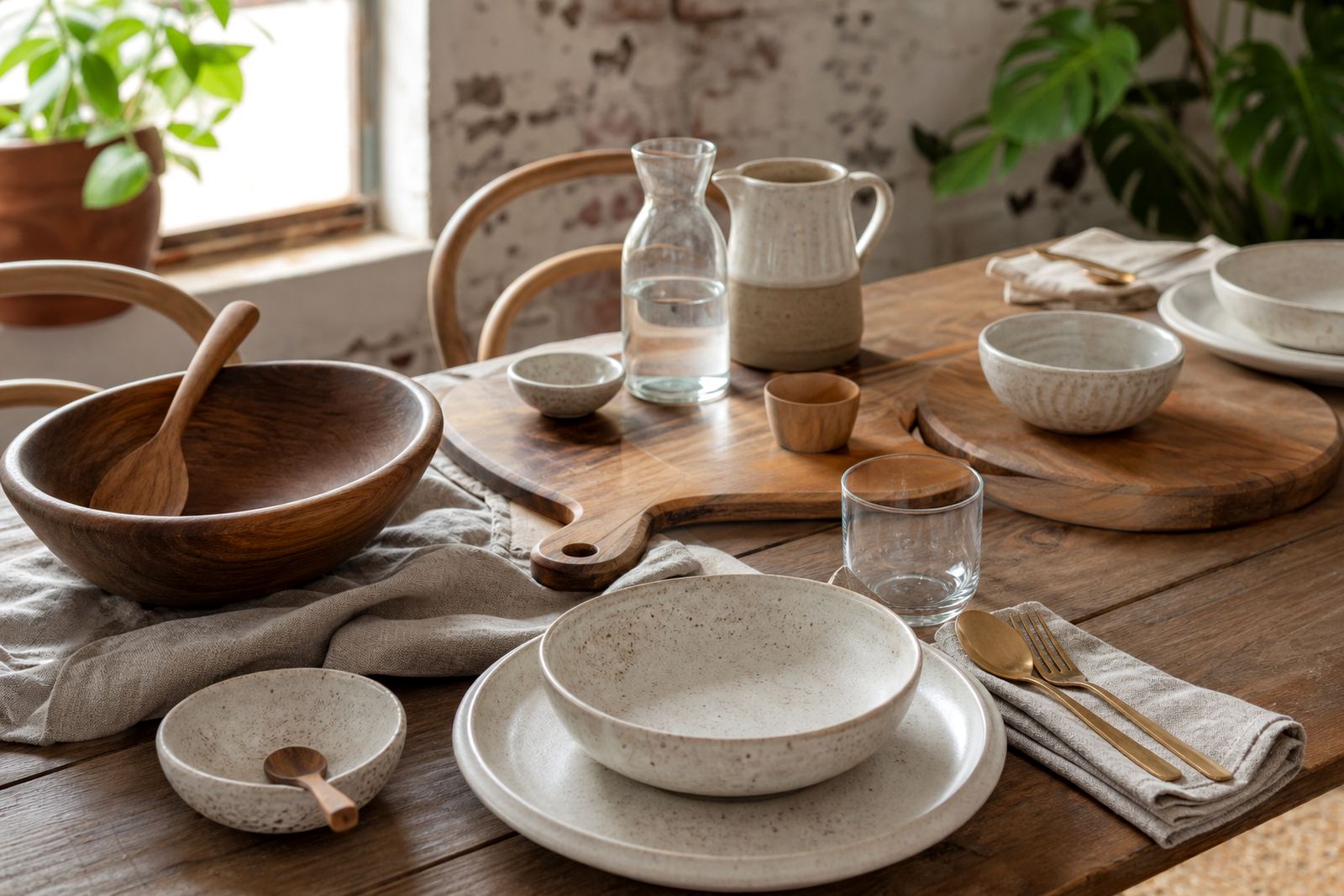
Wood is useful on a relaxed table because it brings warmth straight away. A wooden board for bread, a small tray for condiments, or a serving spoon set can soften the harder lines of plates and glasses. It is especially handy for sharing dishes, which suits many South African meals that move naturally from one platter to the next.
If you are using wood, keep the finish natural and well cared for. Light oiling when needed helps the grain stay healthy, but the piece should still look like something that belongs in daily use. Avoid overfilling the table with boards and stands. One or two wooden elements are enough to make the setting feel grounded. Too much can make the table look cluttered, and that defeats the point of keeping things easy.
For a family lunch in Woodstock or a casual supper in Stellenbosch, a bread board, a carved spoon and a small serving platter can do more than a whole stack of decorative extras. They are useful first, decorative second, which is usually the right order for a table that is meant to be enjoyed.
A local Cape Town table, kept informal
Picture a Saturday lunch in Woodstock after a trip to the neighbourhood market. The table is set with a plain runner, two handmade ceramic serving bowls, folded cotton napkins and a wooden bread board. There is no need for matching tumblers or perfectly even placements. A jug of water sits slightly to one side, a bowl of lemons near the centre, and the food arrives in the same pieces that will be passed around the table.
That sort of setting feels at home in Cape Town because it matches how people actually eat. Lunch may stretch into late afternoon, the weather may shift, and guests may move between indoors and outside. A relaxed table copes with that. It does not need to be rearranged every five minutes. It only needs enough care to feel inviting.
- Keep the centre low so people can talk across the table
- Use serveware that can move from kitchen to table without fuss
- Add one fresh element such as herbs, fruit or a small vase of local flowers
Care that keeps handmade pieces useful
Relaxed tableware should be easy to live with, so care matters. Most handmade ceramics are best washed by hand with mild soap and a soft sponge. Sudden temperature changes can stress some clay bodies, so it helps to let hot dishes cool before washing. Textiles do best with gentle washing and a straight dry line, while wooden pieces prefer a light clean and thorough drying rather than long soaking.
When the basics are looked after, the table stays ready for both weekday meals and slower gatherings. A relaxed setting is not about treating objects casually. It is about using materials that age well and developing a table that feels personal over time. Small marks, worn edges and softened cloth are part of the story, not a sign that the pieces have failed.
If you are putting together a gift box, a housewarming set or a wedding present, these are the kinds of items that work well together. They are practical, quiet and suited to homes across South Africa, from Durban apartments with salt in the air to Pretoria homes where meals may happen indoors for most of the year.