
A relaxed pool house for family gatherings
The brief came from a private homeowner in Constantia, Cape Town who wanted the pool house to feel lived-in rather than stiff. The kitchen and lounge needed items that worked for casual lunches, post-swim snacks and weekend entertaining, with materials that could stand up to moisture, sunscreen, sand and regular handling. The look had to feel South African without leaning too formal.
We worked with a simple palette of natural clay, off-white textiles, pale timber and muted patterned accents. The result sits easily beside the pool and garden, with pieces that can move between the indoor prep area and the covered lounge. The owner wanted low-fuss items that still carried the hand-made character of local craft, and that shaped every decision we made.
What had to work in Constantia conditions
Pool houses in Cape Town take a lot of wear. The space gets bright light, damp towels, open doors, dust from the garden and the odd splash from the pool edge. We had to choose finishes that would not look tired after a few weekends of use. Easy-wash fabrics, sealed ceramic surfaces and timber pieces with a practical finish were essential.
- Textiles needed to handle regular washing and drying without losing shape too quickly.
- Ceramics had to be suitable for serving, stacking and carrying between the kitchen and lounge.
- Wood items needed a smooth finish and sensible proportions for a compact room.
- Decor pieces had to stay useful, not just decorative clutter.
The room itself was not large, so storage mattered as much as style. We kept the selection tight and chose pieces that could be grouped neatly on open shelving and side surfaces. That helped the room feel calm, even when it was being used hard.
Ceramics, cloth and timber with practical detail
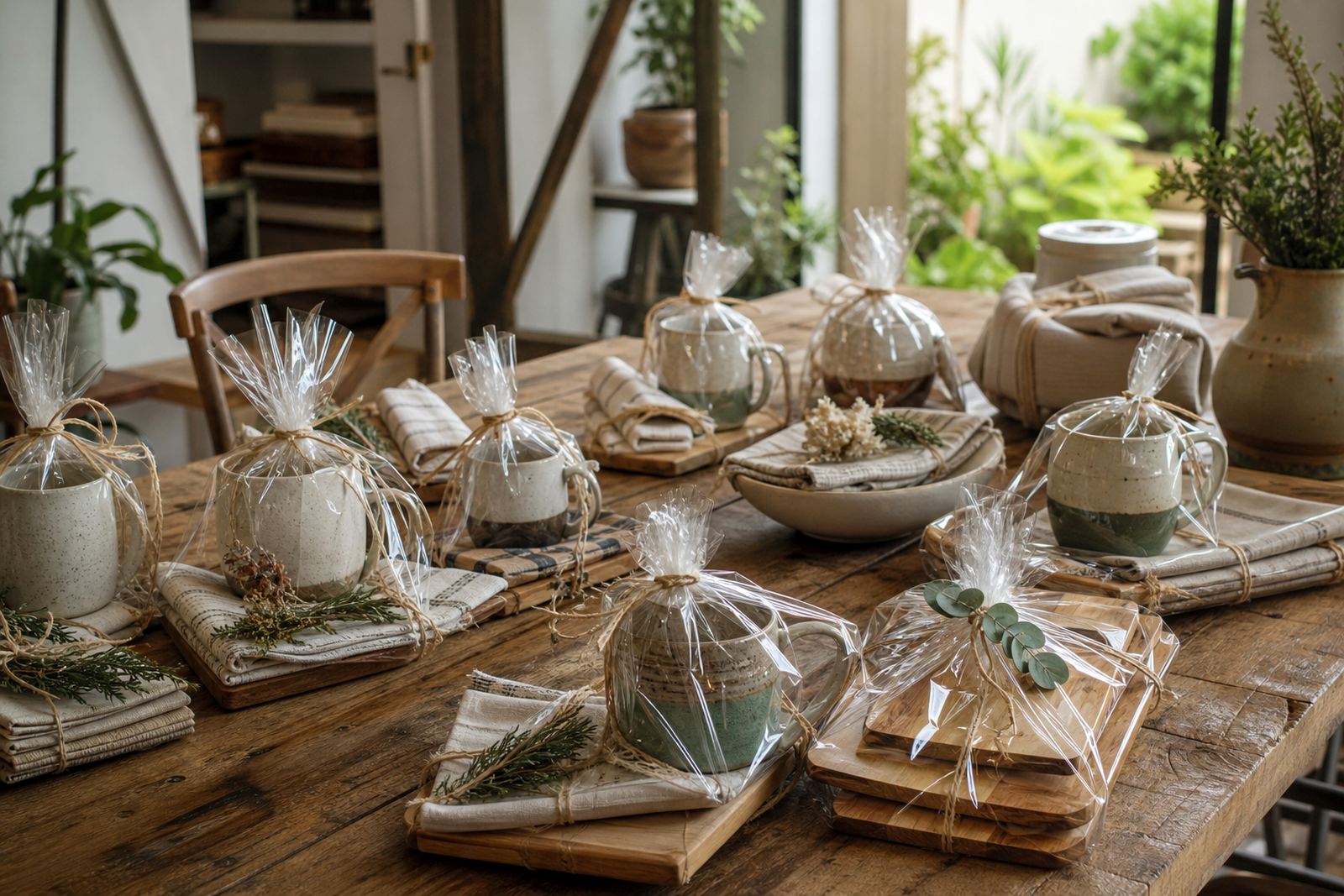
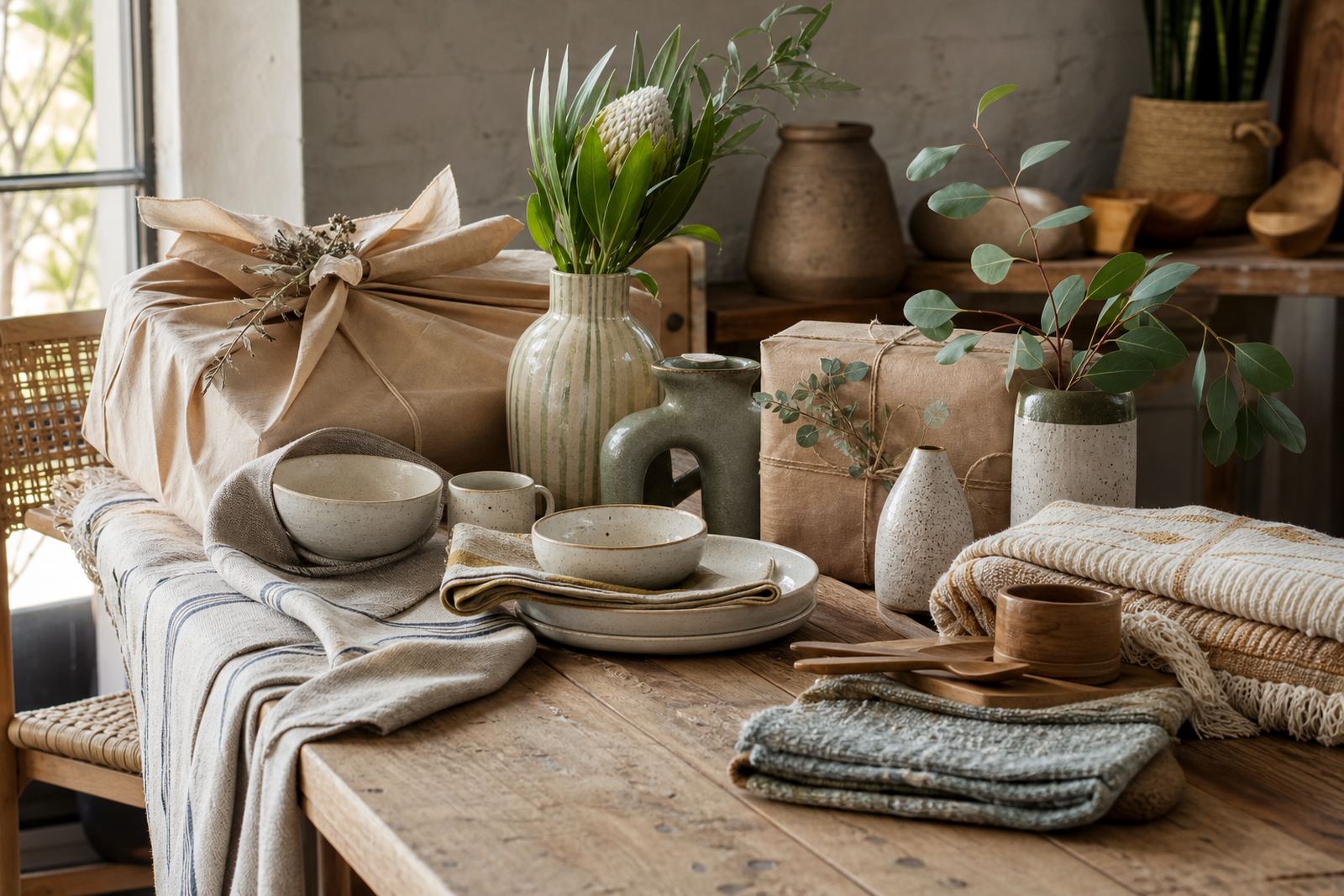
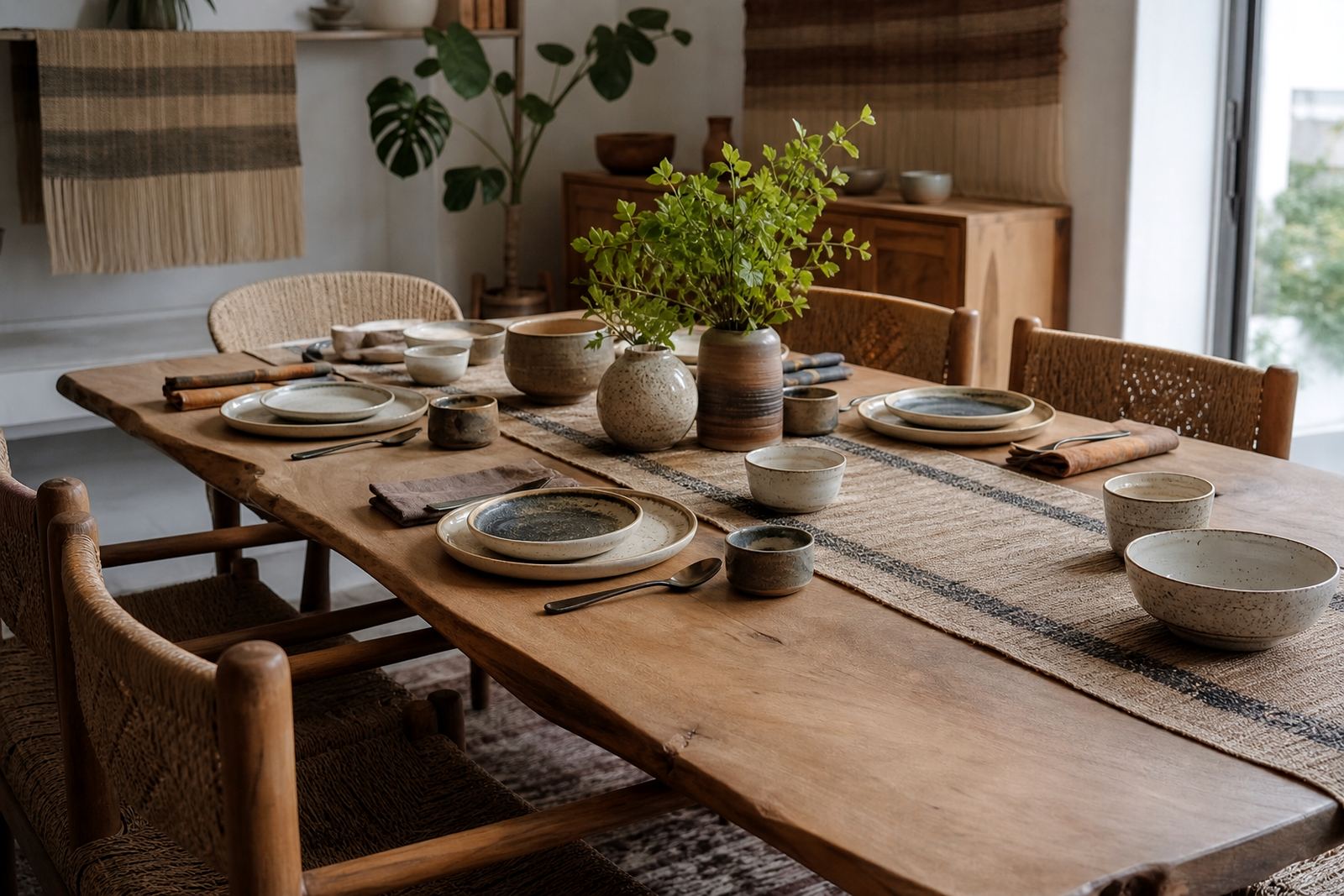
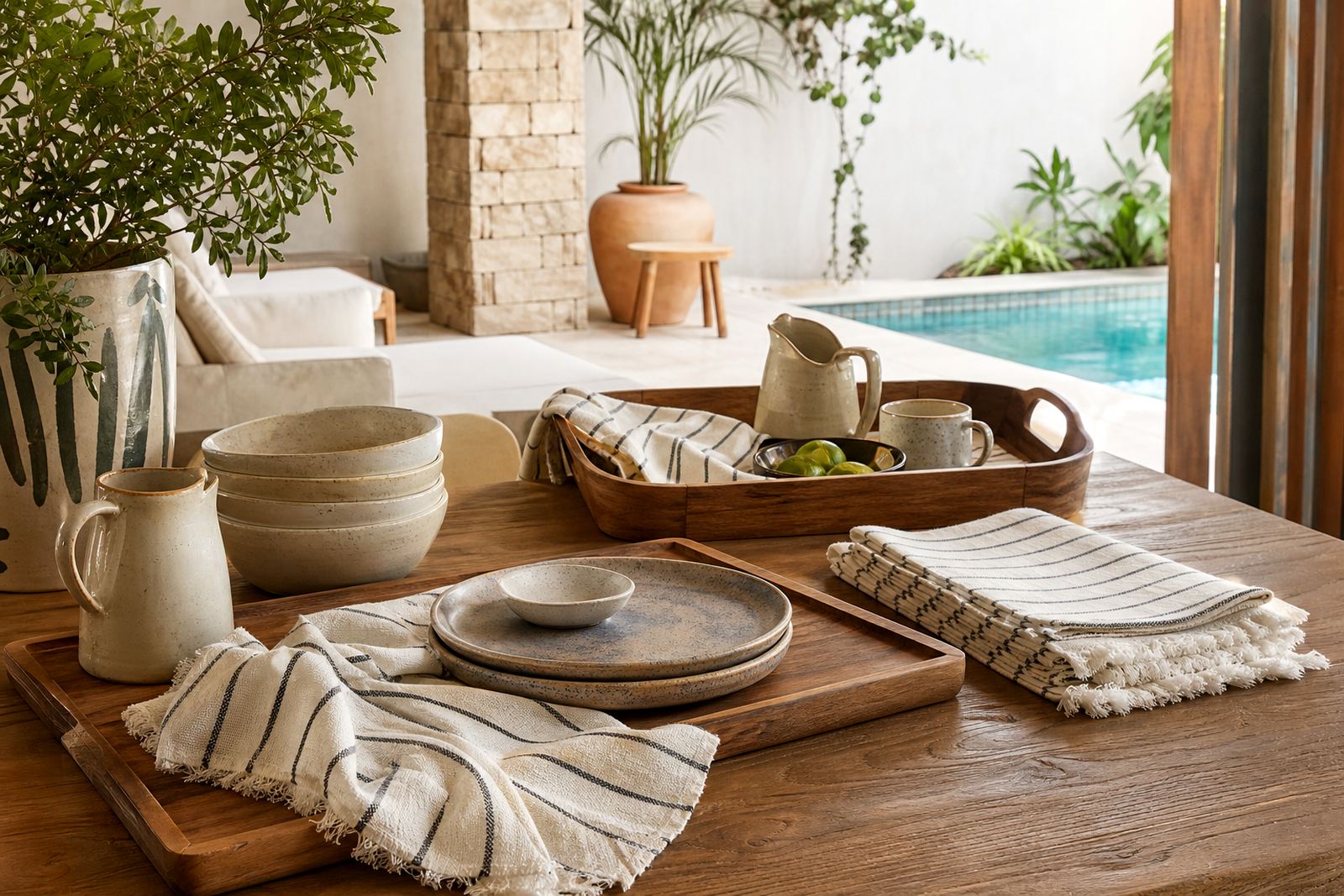
For the kitchen side, we supplied handmade ceramic bowls, serving platters, mugs and smaller dish pieces in simple shapes. The glazes were chosen for their varied but controlled finish, with nothing overly glossy or busy. These items were used for fruit, snacks, salads and casual serving, so the sizes had to be sensible and comfortable to lift.
On the textile side, we selected table linen, tea towels and soft furnishing pieces in durable cotton and cotton-linen blends. The colours stayed within a natural range that worked with the Constantia light and did not show marks too quickly. The textiles were pre-shrunk where possible, with finishes suited to repeated washing. For the lounge, we added cushions with removable covers so the owner could keep the seating area neat without too much effort.
We also brought in a few timber accent items, including trays and small utility pieces with smooth edges and a hand-finished feel. These were useful for carrying drinks, grouping serveware and keeping the lounge surfaces organised. The mix of materials gave the room a grounded feel, with enough variation to stop it becoming too plain.
- Handmade ceramic serving ware in mixed sizes
- Washable table linen and tea towels
- Removable cushion covers for the lounge
- Timber trays and small utility accents
How the project was put together
The project ran over four weeks from first brief to final delivery coordination. In the first week we confirmed the room use, the size of the surfaces and the kind of entertaining the owner planned. In week two we narrowed the material palette and matched the ceramics and textiles to the tone of the existing finishes. Week three was used for curation, packing and checking quantities. Week four covered delivery coordination to Constantia and final presentation notes for the household team.
Because the space was used for both kitchen prep and lounging, we paid attention to how items would be stored and handled day to day. We grouped pieces so the owner could keep a tidy rotation of serving ware and textiles, with no need to overfill the shelves. The process was straightforward but careful, which suited the way the room would be used.
- Brief review and measurements
- Material and colour selection
- Item curation and packing
- Delivery coordination to the property
The room after the reset
Once the pieces were in place, the pool house felt more settled and easier to use. The ceramics added a handmade note without making the room feel precious, and the textiles softened the hard surfaces in a way that still suited a wet-foot traffic area. The timber details linked the kitchen and lounge together so the whole space read as one room instead of two separate bits.
The owner was looking for a pool house that could host people without constant rearranging, and that is exactly what these pieces supported. Snacks, drinks and towels all had a place. The serving items were easy to move from counter to table, and the textiles could be washed and returned to use without drama. It looked relaxed, but not untidy, which is often the hardest balance in a space like this.
What we would keep for a similar build
If we were putting together another pool house in Constantia or elsewhere in Cape Town, we would follow the same practical pattern. Start with the use of the room, then narrow the palette and choose items that can handle regular handling and cleaning. Keep the ceramic selection useful, keep textiles washable, and make sure the timber details are finished in a way that suits indoor-outdoor living.
For a similar brief, we would again prioritise pieces that work as a set without matching too tightly. That gives the space more life and makes it easier to replace or add items later without breaking the look. We would also keep delivery and packing organised from the start, especially where the room forms part of a larger home used for entertaining.
- Choose a limited palette for easier styling
- Mix hand-thrown ceramics with plain functional shapes
- Use textiles that can be washed often
- Leave room for storage and rotation
Key facts
| Project type | Pool house kitchen and lounge styling |
|---|---|
| Location | Constantia, Cape Town |
| Client type | Private homeowner |
| Timeline | 4 weeks |
| Materials supplied | Handmade ceramics, cotton and cotton-linen textiles, timber accents |
| Use case | Casual serving, lounge comfort and easy-care entertaining |