
A dining room in Tokai that needed to feel lived in
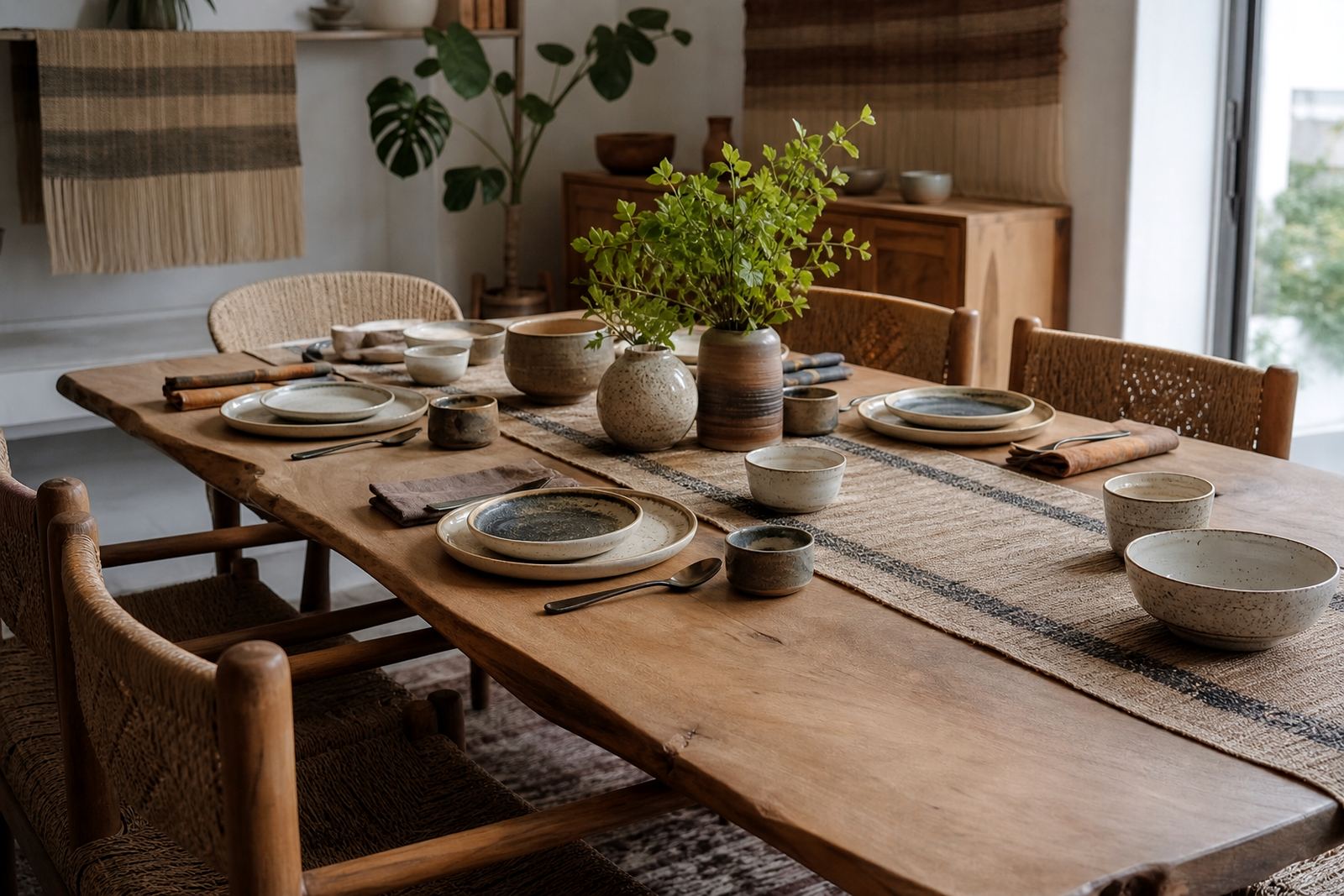
The brief came from a family in Tokai, Cape Town, who wanted their dining table to carry more texture and less formality. The room already had good light and a long timber table, so the new pieces needed to sit comfortably with that base and not crowd the space. The family wanted a setting that worked for weekday suppers, weekend lunch and the odd birthday spread, with enough variety to mix pieces without making the table look busy.
The strongest instruction was that everything had to be handmade and usable, not just decorative. The family wanted pieces with slightly different surface marks and natural variation, but the setting still had to feel collected and calm. We planned the table around a shared colour story of stone, clay, soft white, muted green and warm wood, which suited the sunlit room and kept the table from feeling too cold.
- Location: Tokai, Southern Suburbs, Cape Town
- Setting: long family dining table with room for 8 to 10 seats
- Look: natural textures, soft glaze variation and plain woven runners
What we had to work around
The main constraint was balance. The table was long, but the room itself was not oversized, so we had to avoid overloading it with tall centre pieces or too many colours. We also had to keep the setting practical for family use, which meant selecting ceramics with enough depth for pasta, salads and fruit, plus textile pieces that could be lifted and cleaned without fuss.
Another consideration was the coastal air in Cape Town. For that reason we steered away from anything that would mark too easily or show wear quickly. The wood items needed a sealed finish, and the textiles had to be easy to shake out or spot clean after a meal. The family also asked for a few pieces that could move from table to kitchen shelf, so each item needed to earn its place.
- Keep the centre low so conversation across the table stayed easy
- Choose ceramics with enough weight for daily use
- Use runners that added pattern without competing with the plates
- Limit the palette to a few steady tones
The pieces we supplied and set out
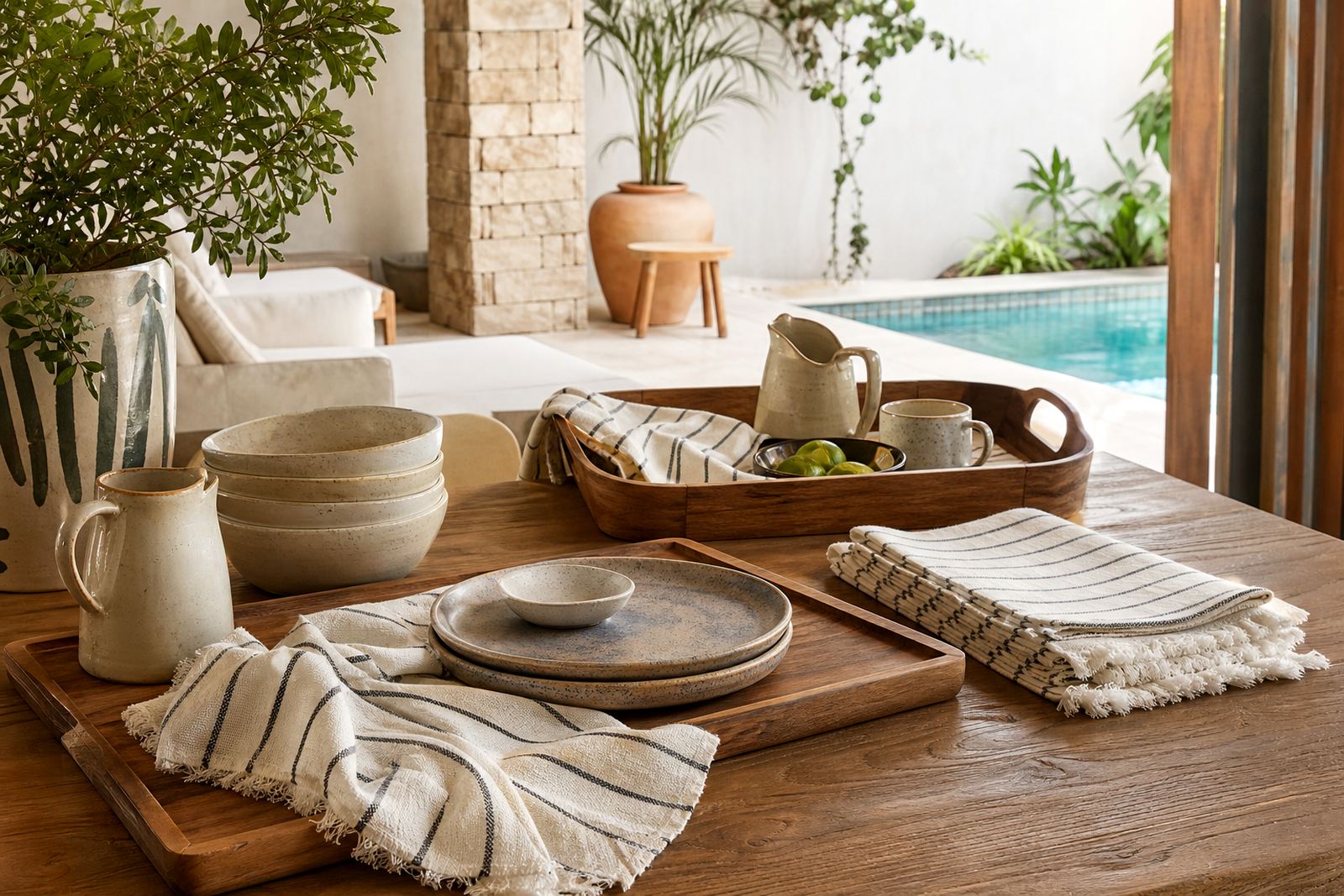
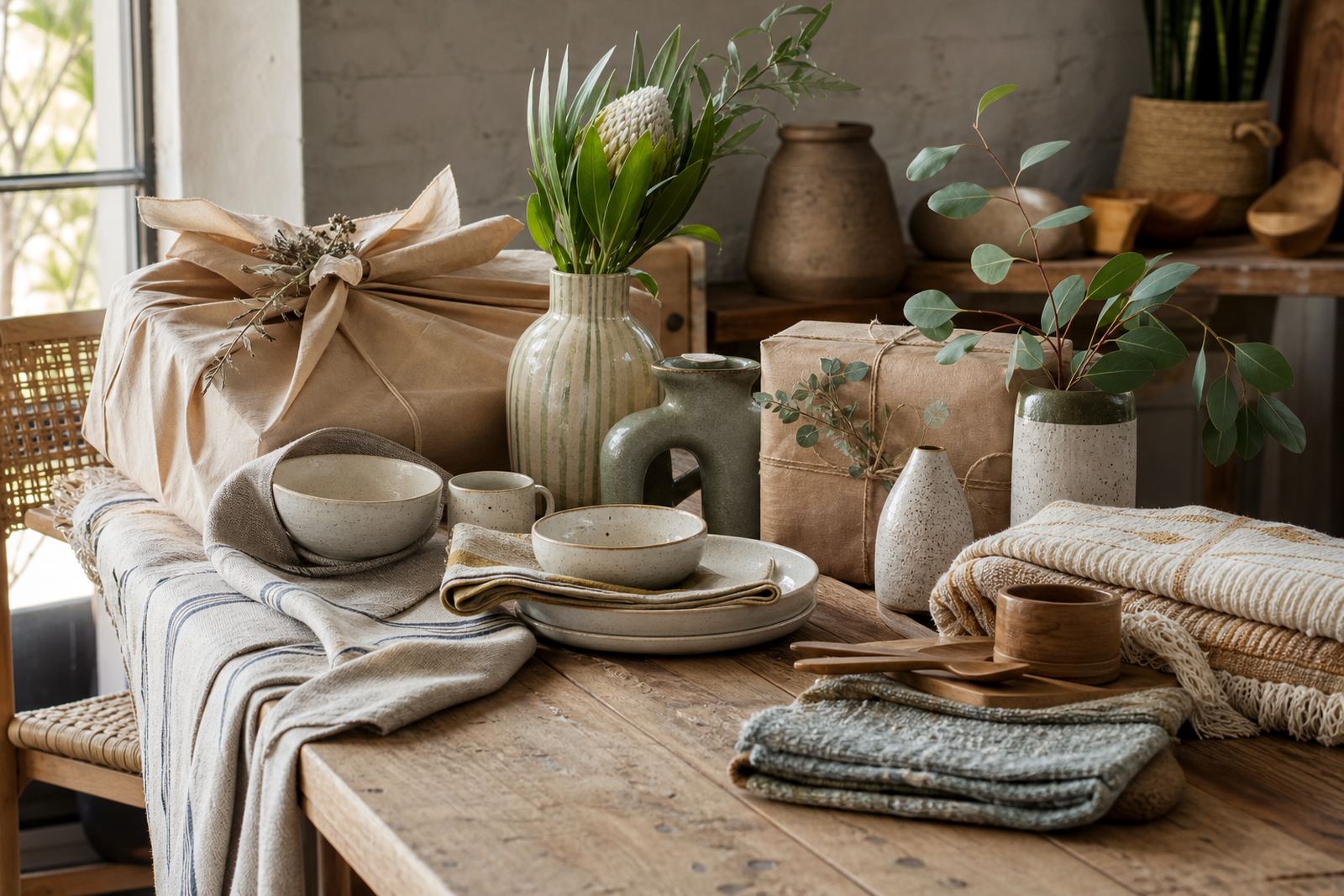
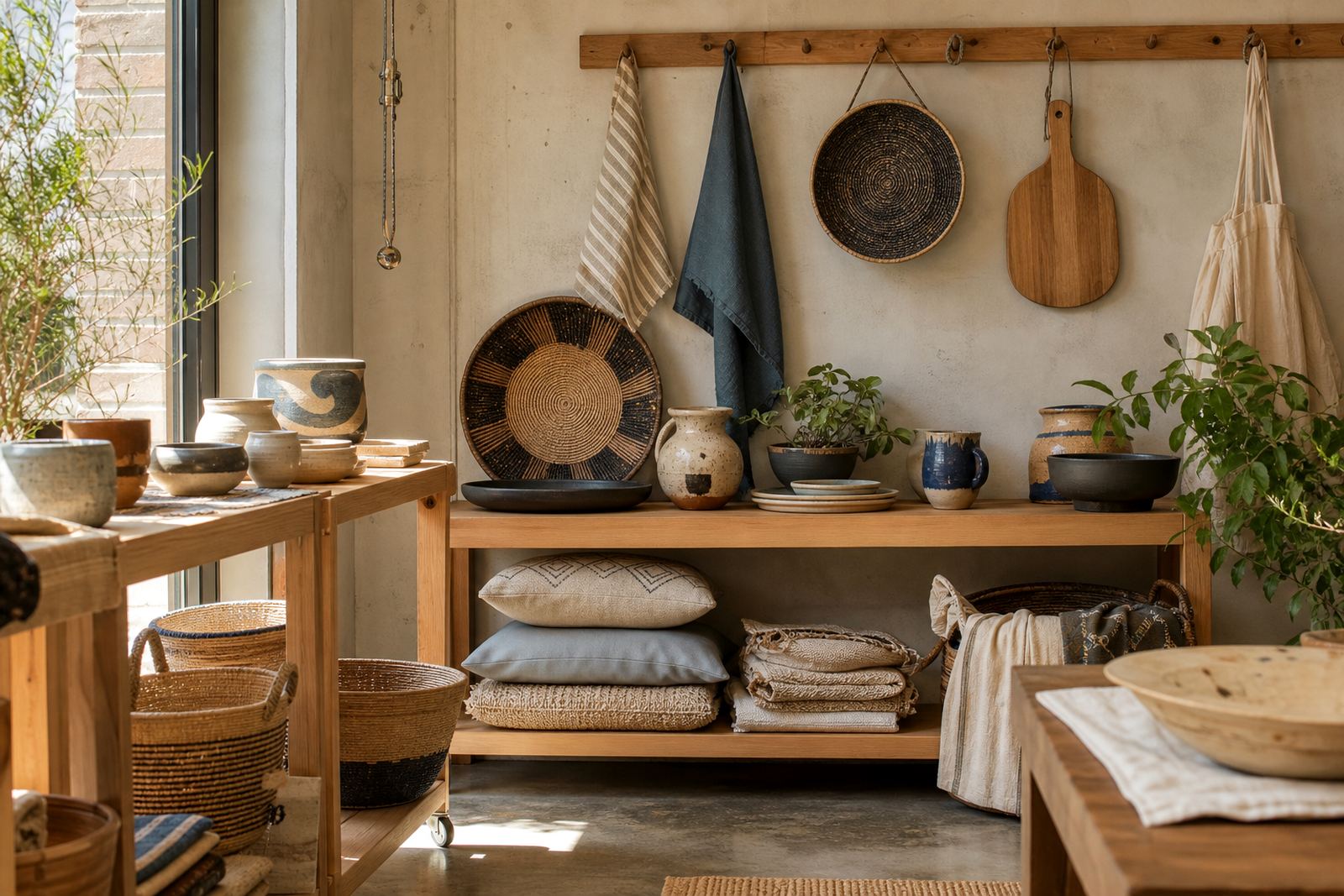
We supplied a mix of handmade ceramics, woven textiles, wooden serving pieces and a few understated decor items. The ceramics included dinner plates, side plates and fruit bowls with hand-finished edges and slight differences in glaze flow. The woven runners were simple, with a natural fibre look that softened the timber table without hiding it. We also included a couple of wooden serving boards and shallow bowls for bread, fruit and shared dishes.
Each part of the setting was chosen to work with the next. The plates sat well on the runners, the fruit bowls gave height without blocking sightlines, and the wood brought warmth to the cooler tones of the ceramics. We kept decorative pieces small and useful, so the table felt styled but still ready for actual meals. Nothing needed to look staged, it just had to sit well and hold up to repeated use.
- Ceramics: plates, side plates and fruit bowls with handmade variation
- Textiles: woven table runners in a neutral fibre blend
- Wood: serving boards and small bowls with sealed surfaces
- Decor: low, table-safe pieces that did not interrupt the meal
Timeline and coordination across three weeks
The project ran over three weeks from first brief to final delivery coordination. In week one, we narrowed the palette and checked size requirements against the table length. Week two focused on selecting the ceramic groupings and matching the runners to the wood tones. In week three, we packed the order, confirmed the delivery address in Tokai and arranged placement so the set arrived as a single table-ready grouping.
The family wanted the pieces delivered together rather than in separate parcels, which made coordination important. We grouped fragile items with extra wrapping, separated the textile pieces from the ceramics, and labelled each section so the unpacking process was straightforward. The result was a table setting that could be laid out quickly and still felt intentional.
- Week 1: brief, measurements and colour direction
- Week 2: product selection and final combinations
- Week 3: packing, delivery coordination and final set-out
The table once everything was in place
Once the pieces were on the table, the room felt more grounded. The handmade plates gave the setting its character, while the fruit bowls and runners stopped it from feeling too plain. Because the palette stayed restrained, the family could add fresh fruit, candles or linen napkins without upsetting the look. The setting worked for weekday meals and also held together when more people joined the table on weekends.
The family feedback was practical and direct. They wanted something that looked thoughtful without needing constant fuss, and that is what the table delivered. The ceramics felt sturdy in the hand, the runners sat flat, and the wooden pieces brought enough warmth to make the whole room feel more finished. It was a good fit for a home that gets used properly.
- Better visual flow across the length of the table
- A softer, more inviting surface for family meals
- Pieces that could move between dining and kitchen use
What we would do for a Tokai table
For a similar family dining setting in Tokai or elsewhere in Cape Town, we would keep the same approach of fewer, better matched pieces. A long table needs breathing room, and handmade work shows best when each item has space to be seen. We would again start with the plates and bowls, then layer in runners and serving pieces once the core setting is right.
We would also keep the care conversation practical. Ceramics need careful handling when stacked, woven runners do best when stored flat or rolled, and sealed wood is best wiped clean and dried promptly after use. Those details matter in a real home, especially where a dining table gets regular use and not just display.
- Start with the table size and seating plan
- Choose a restrained palette before adding accent pieces
- Keep care and storage needs in mind from the start
Key facts
| Project | Tokai Family Dining |
|---|---|
| Town | Tokai, Cape Town |
| Scope | Handmade dining table setting |
| Materials | Ceramics, woven textiles, sealed wood and small decor pieces |
| Timeline | 3 weeks |
| Delivery coverage | Cape Town, with national delivery available |
| Use case | Family dining, entertaining and housewarming use |