
What the Pretoria family wanted from the shelves
The home was a family kitchen in Pretoria with open shelving already in place, but the shelves felt busy and uneven. The owners wanted a calmer layout with mugs, jars, boards and prep items grouped in a way that made sense for cooking and for guests. They also wanted the room to feel lived in, not over-styled.
The main brief was practical. Keep the most used pieces close at hand, use handmade items that matched in tone rather than in perfect uniformity, and bring in textiles and wood so the hard surfaces did not feel cold. The family preferred pieces that could move between shelf display and everyday use without needing special treatment.
Constraints that shaped the layout
The kitchen had a limited amount of shelf depth, so every item had to earn its place. Some shelves were slightly deeper than others and the natural light changed through the day, which made lighter glazes and pale timber more useful than darker finishes. Pretoria’s dry climate also meant dust settled quickly on open shelving, so we avoided fussy styling that would need constant rearranging.
- Shelf depth: shallow to medium, with clear front edges for safe stacking
- Pieces needed to suit daily handling, not only display
- Mix of matte and glazed surfaces to stop glare under kitchen lighting
- Textiles had to soften the room without adding visual clutter
- Storage had to stay practical for a family cooking most days
What we supplied and arranged
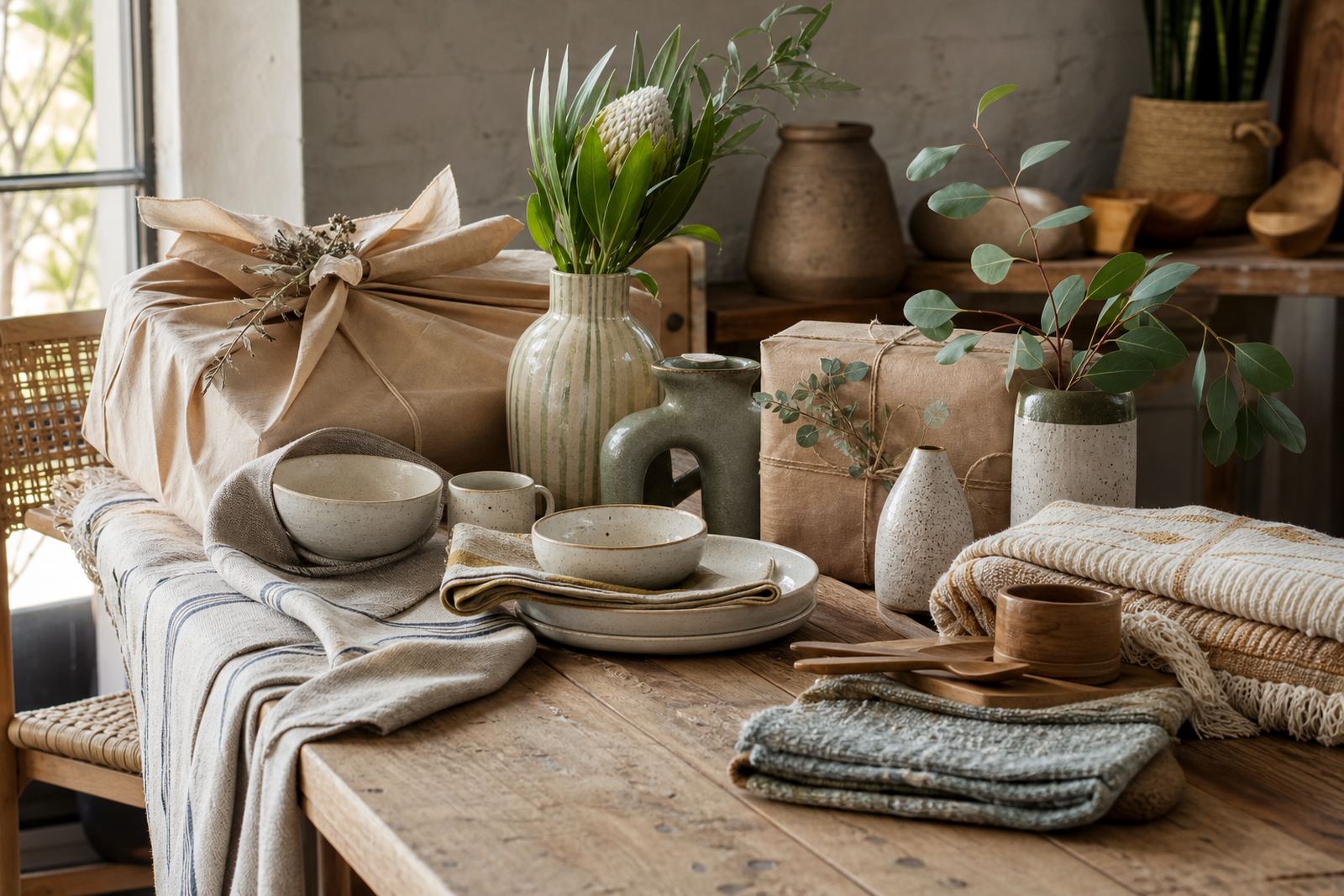
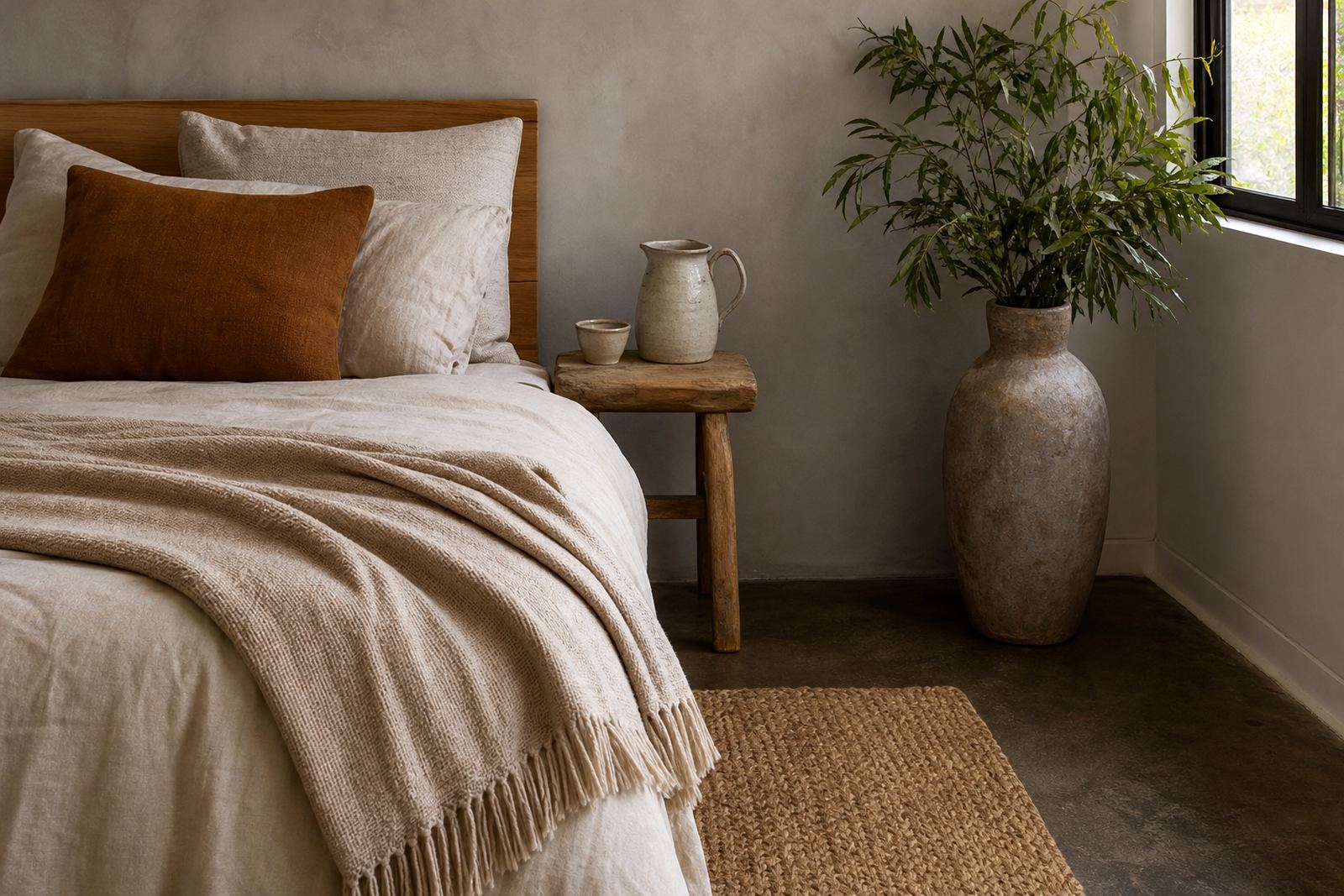
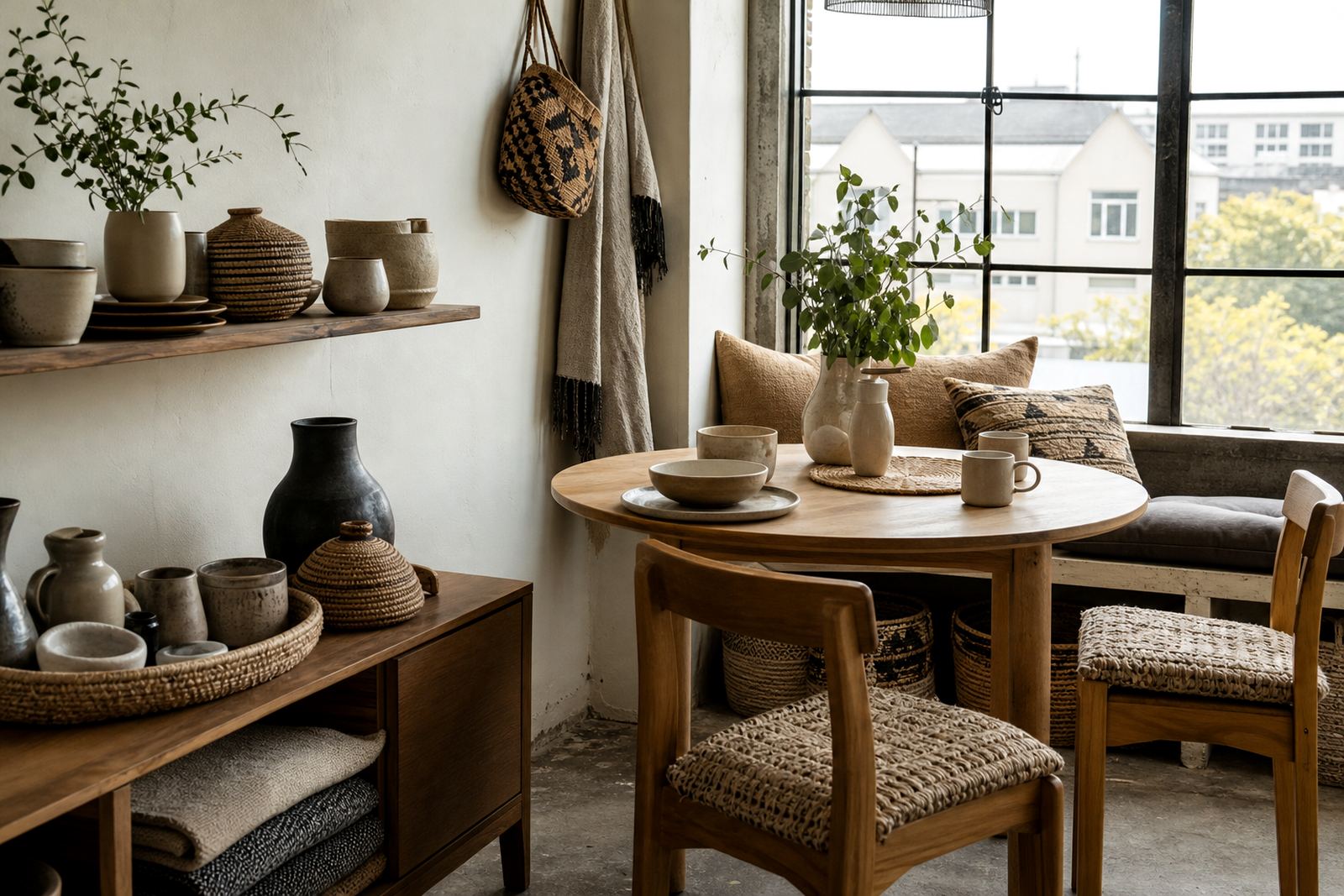
We supplied a curated set of handmade ceramics, woven textiles, timber boards and a few small decor pieces to balance the shelving. The ceramics included mugs, canisters, serving bowls and lidded jars in muted neutrals and grounded earth tones. The wood pieces were chosen for grain variation and everyday durability, while the textiles added colour and texture in small measured doses.
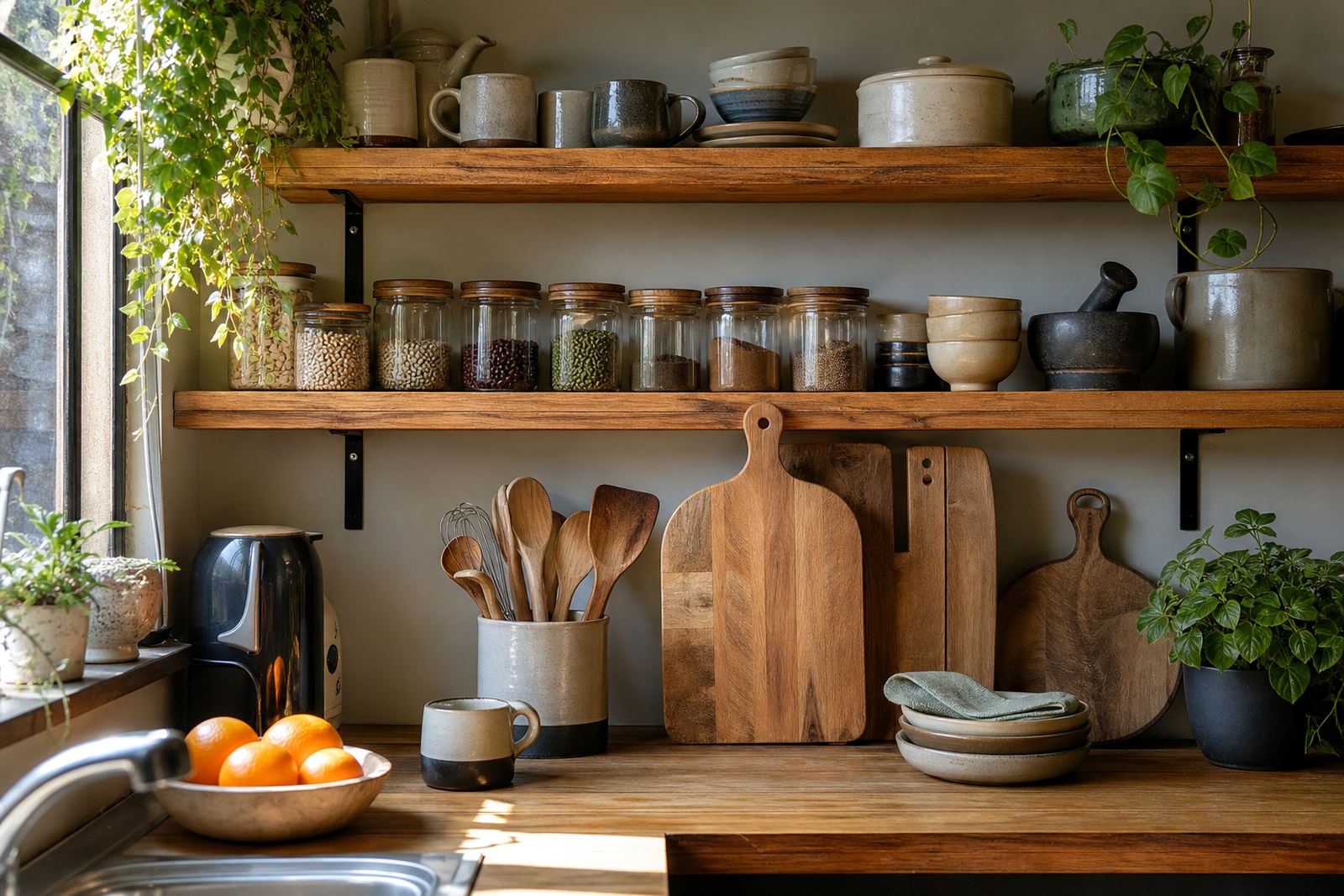
On the shelves, the display was arranged in clear groups. Mugs sat together by size, jars were lined up by height, and the boards were layered vertically so they could be lifted out without disturbing the rest. A folded tea towel and a small runner helped break up the harder lines of the shelving. The result was tidy, but not stiff.
- Ceramics: mugs, jars, small serving bowls and a few lidded containers
- Wood: chopping boards and serving boards with visible grain
- Textiles: tea towels and a narrow runner for shelf softness
- Decor: small vessels and low-profile objects for balance
Materials and care in a family kitchen
The pieces were selected for materials that suit regular use. The ceramics were finished for everyday handling and wiping down, with glazes that work well in a kitchen where hands are often moving between washing up, cooking and serving. The timber pieces were left with natural variation, which suits handmade work and makes small marks less noticeable over time. Textiles were chosen for easy laundering and for holding up in a room where steam and splashes are part of daily life.
Care was kept practical. Wipe ceramic pieces with a damp cloth, dry timber boards straight after washing, and wash textiles with similar colours to keep tones steady. In Pretoria, where indoor dust can gather on open shelving fairly fast, a quick dusting routine keeps the display looking clean without needing to rearrange the whole shelf every week.
Timeline and coordination on the project
The project ran over three weeks from brief to final shelf arrangement. The first week was spent confirming what the family used most often and measuring shelf heights and depths. The second week covered selection and coordination of the handmade pieces, with a focus on scale, colour and handling. The final week was used for grouping, placement and a few small adjustments so the shelves worked both visually and in daily use.
- Week 1: brief, measurements and shelf planning
- Week 2: item curation and coordination
- Week 3: final grouping and practical placement
Because the kitchen was used every day, the layout had to be settled without unnecessary change. That meant keeping the system simple enough for the family to maintain on their own, with items returned to the same places after washing or serving.
What changed once the shelves were reset
The finished shelves felt lighter and easier to use. The mugs no longer sat in mixed stacks, the jars had a clear home, and the boards were stored where they could be reached quickly during prep. The room still looked personal, but the visual noise was reduced. The handmade pieces gave the kitchen more character without making it feel crowded.
For the family, the biggest change was how often the open shelving could be used without becoming messy. The storage now works as part of the room instead of sitting apart from it. There is a stronger sense of order, and the mix of ceramics, wood and textiles gives the kitchen a warmer feel than plain storage would.
What we would keep for a similar kitchen
In a similar Pretoria kitchen, we would use the same approach: measure carefully, keep the palette restrained, and choose handmade pieces that can move between display and daily service. Open shelving works best when the objects on it are actually useful. That is where the room gains its shape.
We would also repeat the mix of materials, because it gives a family kitchen enough variety without pushing it into clutter. Ceramics handle the visible storage, wood brings warmth, and textiles soften the hard edges. When the balance is right, the shelves stay useful and the room feels settled rather than staged.
Key facts
| Project | Pretoria Family Kitchen |
|---|---|
| Town | Pretoria |
| Client type | Private family household |
| Project duration | 3 weeks |
| Core materials | Handmade ceramics, timber, woven textiles |
| Key outcome | Open shelving organised for daily use and display |