
A tight apartment with a strong brief
The client was a private homeowner in Woodstock, Cape Town, working with a one-bedroom apartment that needed to feel calmer and more personal. The rooms already had good light and solid bones, but the surfaces were feeling hard and a little sparse. The brief was straightforward: add warmth, create a lived-in feel, and keep the space practical enough for everyday use.
The apartment had limited floor space, a narrow entrance, a compact lounge and an open-plan kitchen corner. That meant each item had to earn its place. We planned for pieces that could soften the room without clutter, with natural materials, useful storage and a colour range that would sit comfortably against the existing walls and flooring.
- Location: Woodstock, Cape Town
- Property type: compact urban apartment
- Style direction: layered, relaxed, practical
- Main materials supplied: ceramic, woven fibre, linen and wood
What the room needed to feel complete
The biggest constraint was scale. Large decor would have crowded the apartment and made the walkways feel tight. We kept to smaller groupings and chose items with quiet texture rather than heavy pattern. Another practical issue was day-to-day use: the client wanted pieces that could be moved around, cleaned easily and still look good after regular handling.
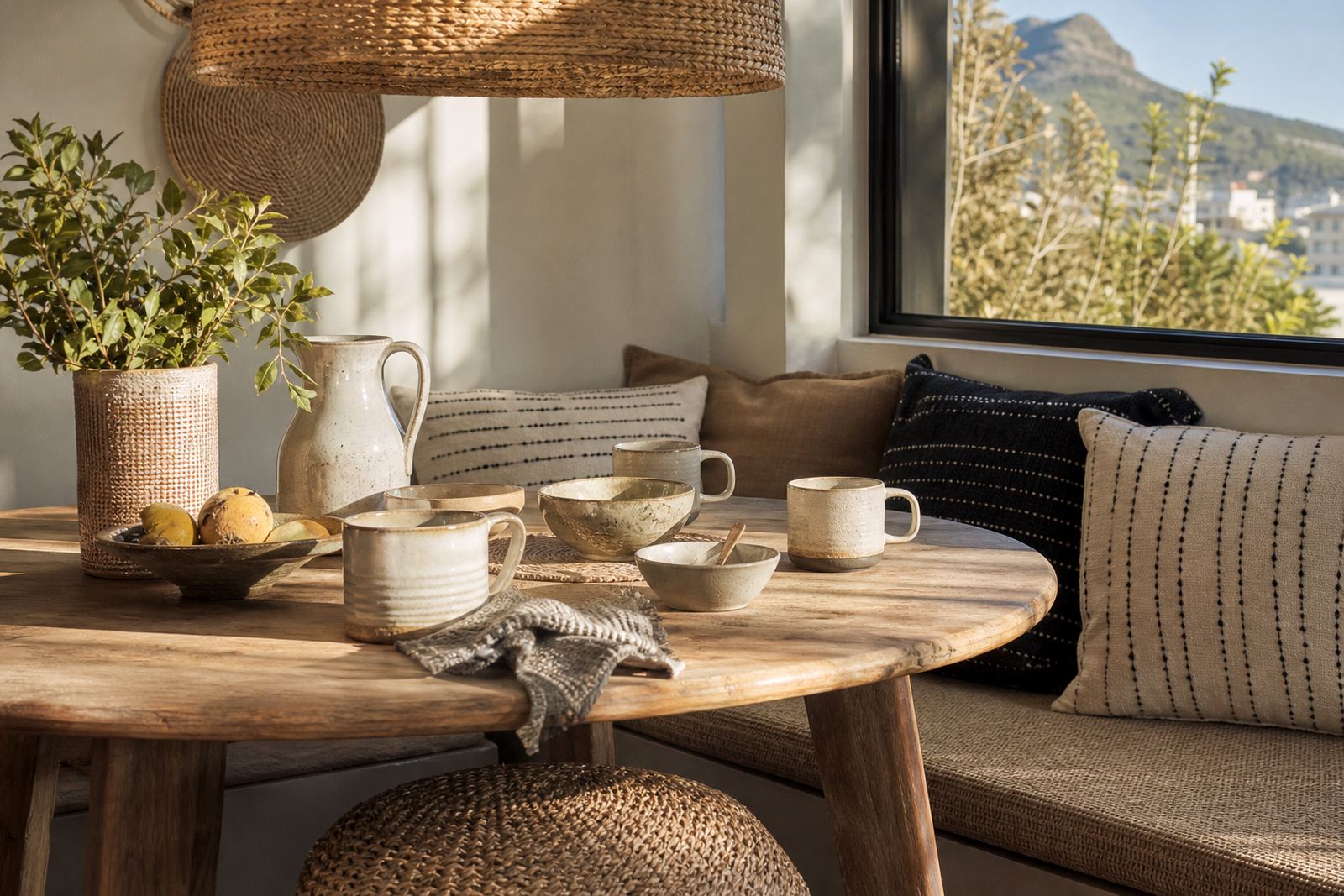
We also had to work around the apartment’s strong natural light, which can make pale finishes feel flat if they are not balanced with texture. So the selection leaned into matte glaze, handwoven detail and soft linen folds. Nothing needed to shout. The result had to feel collected, not staged.
- Low-profile styling to protect circulation space
- Soft finishes to balance the apartment’s bright light
- Easy-care materials for regular use
- Pieces chosen in sets, not in oversized singles
The pieces we supplied and placed
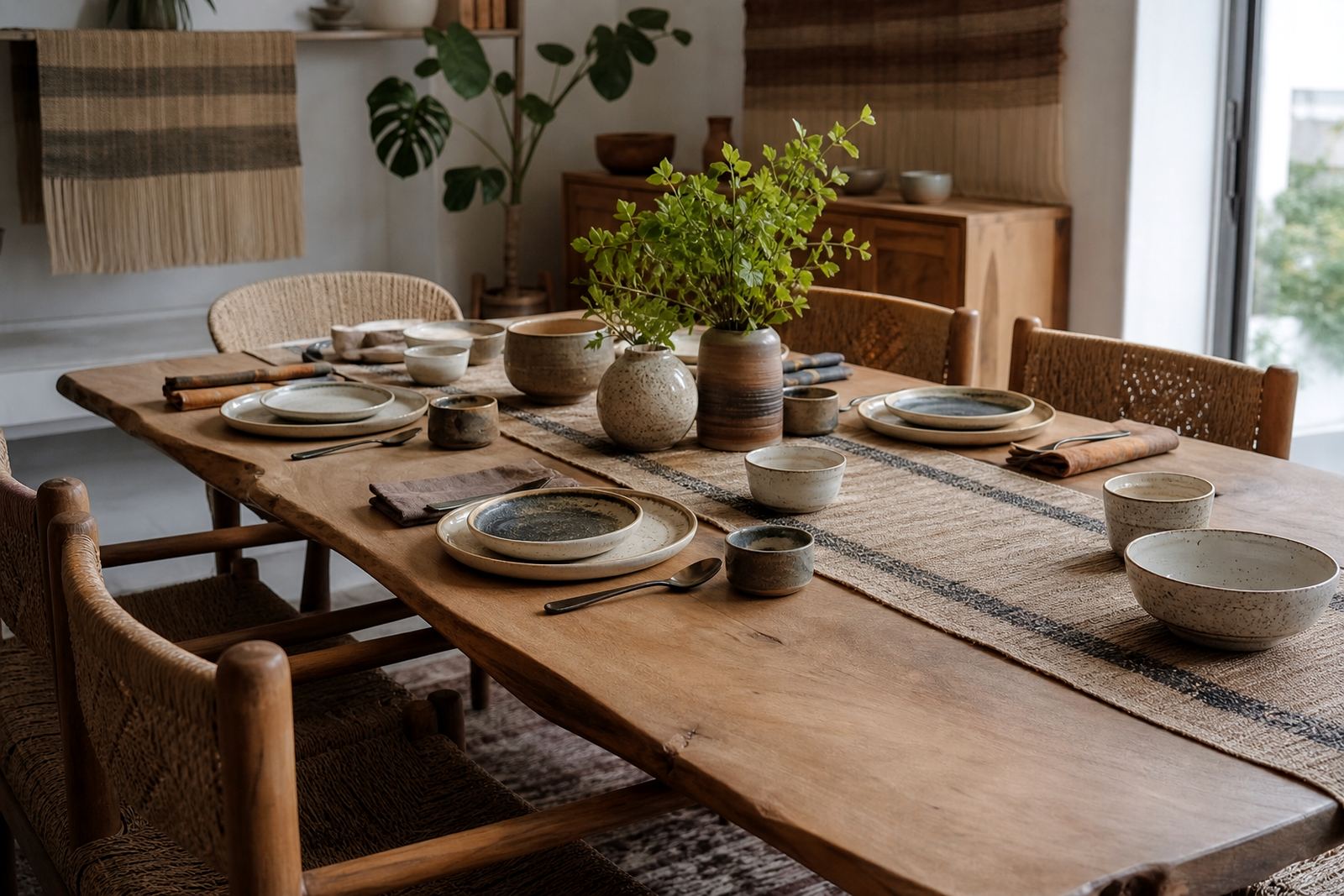
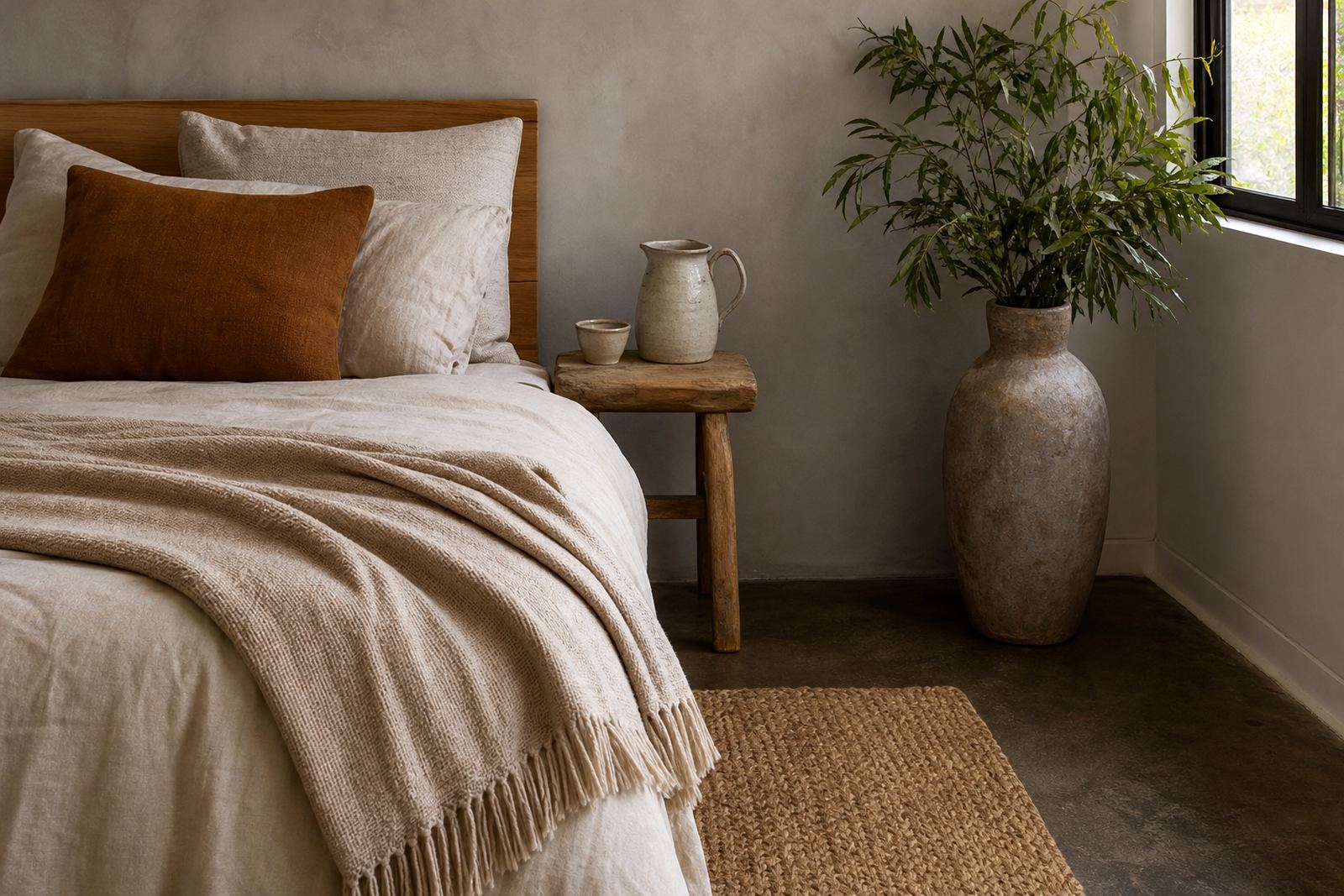
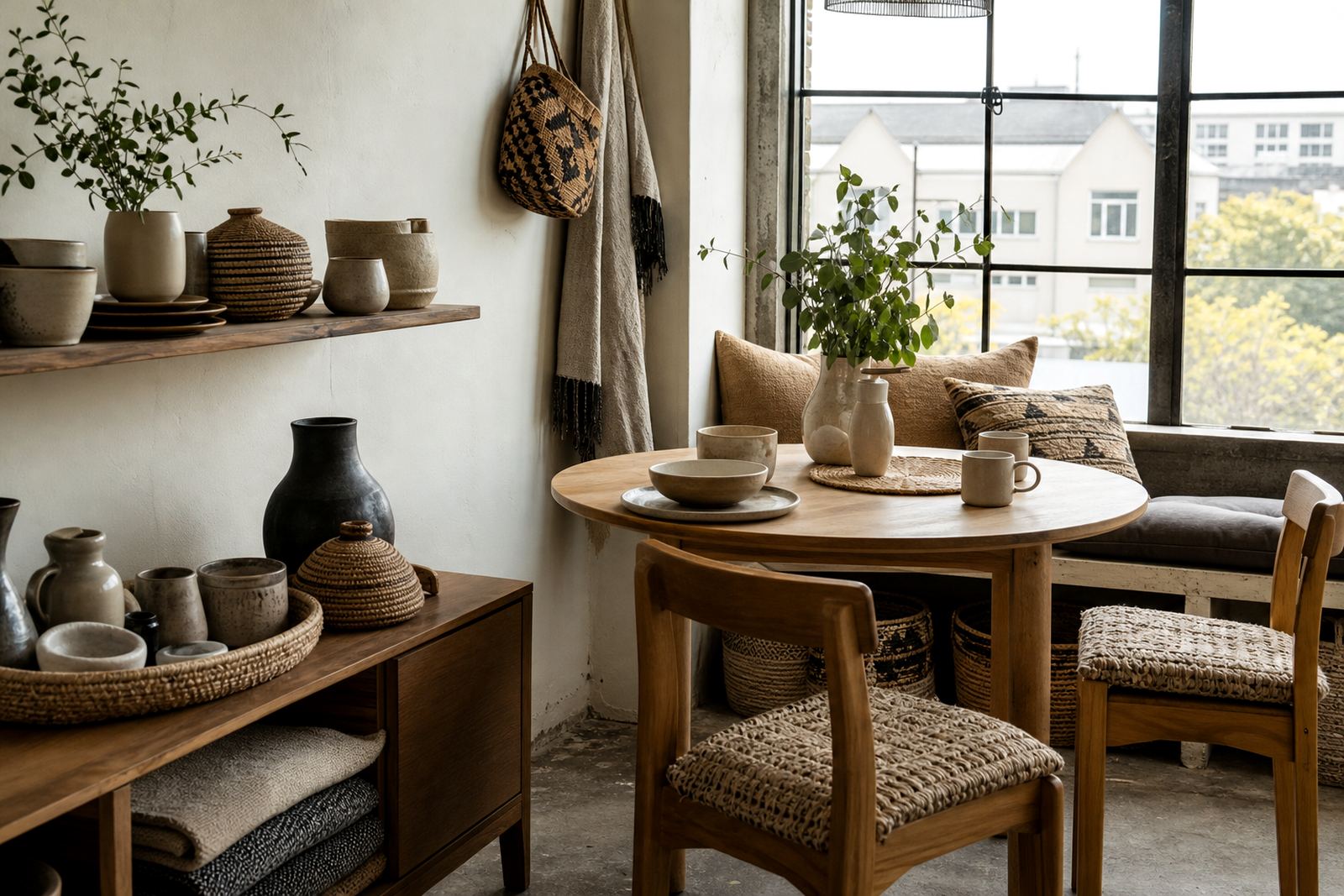
We supplied a small mix of handmade ceramics, woven baskets, linen accessories and carved wood decor. The ceramic pieces included a tray, a pair of vessels and a low bowl, all chosen for their shape and surface rather than showy colour. The woven baskets were used for throw storage and general tidying, while the linen added softness on the sofa and bed without making the rooms feel heavy.
For the wood accents we kept to simple forms with a natural finish. That helped bring in a warmer note and tied the ceramics and textiles together. In a compact apartment, the mix of materials matters as much as the individual pieces. Too many hard surfaces can make the place feel cold, while too much fabric can look untidy. We kept the balance steady.
- Ceramics: matte and lightly glazed pieces for shelves and tabletops
- Textiles: linen cushion covers and a throw for tactile layering
- Woven storage: baskets sized for blankets, mail and small household items
- Wood decor: small accent pieces for warmth and contrast
Measurements, care and placement choices
The styling was planned around the apartment’s existing surfaces, with the largest decor group kept under 40 cm wide so it would not overwhelm the side table and shelf ledges. The baskets were chosen in two sizes, one for display and one for hidden storage. Linen pieces were cut for soft drape rather than a stiff finish, which helped the room feel less formal.
Care advice was part of the handover. For the ceramics, we recommended a soft cloth, mild soap and no abrasive pads on the glazed surfaces. The woven pieces were kept away from damp corners, especially important in Cape Town where coastal humidity can affect natural fibres over time. Linen was selected because it wears well and can be refreshed easily with regular washing. The wood accents only needed a dry dusting and an occasional light oil treatment where appropriate.
- Display group width: under 40 cm
- Basket pair: two practical sizes for storage and styling
- Finish guidance: matte, lightly glazed, natural fibre, untreated or lightly finished wood
- Care note: keep woven items dry and out of constant direct moisture
Project timing across three weeks
The refresh ran over three weeks from first brief to final placement. The first week was for selection and confirmation of the mix. The second week covered sourcing, packing and coordination, with a final check on sizes and breakage risk for the ceramic items. The last week focused on delivery coordination and placement support so the apartment could be styled in a single pass.
Because the apartment was occupied, the work had to be tidy and efficient. We kept packaging manageable and grouped the items by room so the client could unpack in a sensible order. This mattered in a small home where clutter can build quickly if every item arrives separately.
- Week 1: brief, measurements and material selection
- Week 2: sourcing, packing and coordination
- Week 3: delivery planning and final placement
What changed once the pieces were placed
The apartment immediately felt more settled. The ceramics added a sense of handwork to the shelving, the linen softened the main living area and the baskets gave the client a place to hide everyday items without bringing in bulky furniture. The rooms stayed light and open, but they no longer felt bare.
In practical terms, the client gained more usable storage, a better flow between rooms and a warmer everyday atmosphere. In visual terms, the space now has layers that make sense together. Nothing was added just for display. Every item had a use, even if that use was partly visual. That is usually the right balance in a compact urban home.
- More texture without crowding the apartment
- Clearer storage for soft goods and small household items
- A warmer, more lived-in feel across the main rooms
- A consistent palette across ceramics, linen and wood
What we would keep on a similar job
If we were styling a similar apartment again, we would keep the same approach: fewer pieces, better chosen, with an emphasis on natural materials and useful scale. In a small Cape Town home, it is easy to overbuy and end up with surfaces that feel busy. The better route is to select items that work hard in more than one way.
We would also use the same sequence of planning, because it kept the project under control. Measuring first, grouping items by room, and checking how the light falls in the apartment all made a difference. The final result was calm, useful and easy to live with, which was the real brief from the start.
- Keep the palette narrow and the textures varied
- Use baskets and linen for practical warmth
- Choose ceramic pieces that are useful as well as decorative
- Plan placement around light, movement and storage
Key facts
| Client type | Private homeowner |
|---|---|
| Town | Woodstock, Cape Town |
| Project duration | 3 weeks |
| Materials supplied | Handmade ceramics, woven baskets, linen textiles and wood decor |
| Key constraint | Compact floor plan with limited surface area |
| Delivery areas | Cape Town Delivery, Woodstock Delivery, Southern Suburbs Delivery |