
What the weekday breakfast table needs
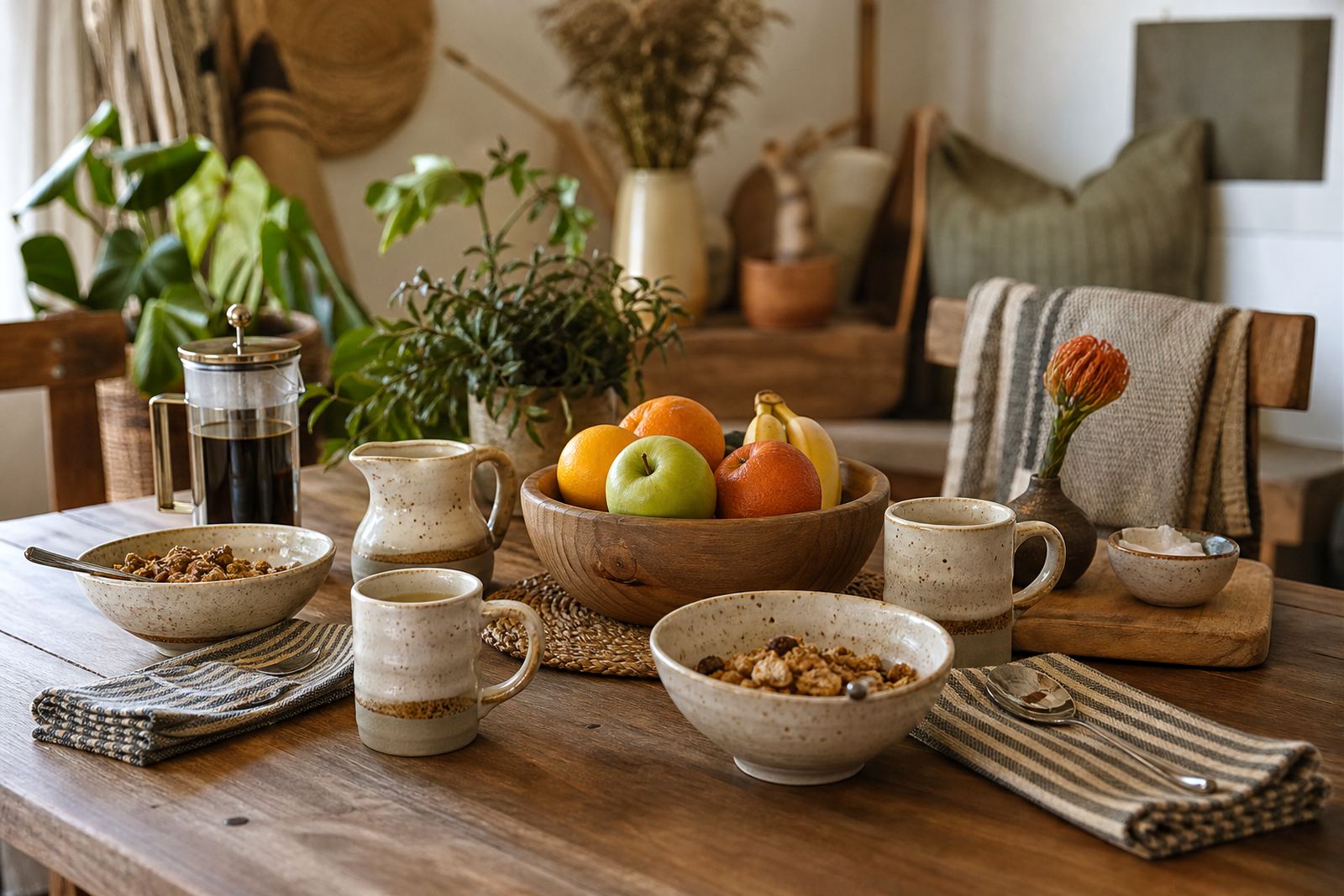
For most homes, breakfast is about speed and a steady routine. A small set of plates, bowls, mugs, serviettes and a runner can keep the table tidy while still feeling personal. In a Cape Town flat, a family home in Johannesburg or a townhouse in Pretoria, the best pieces are the ones that work every morning and do not need special handling.
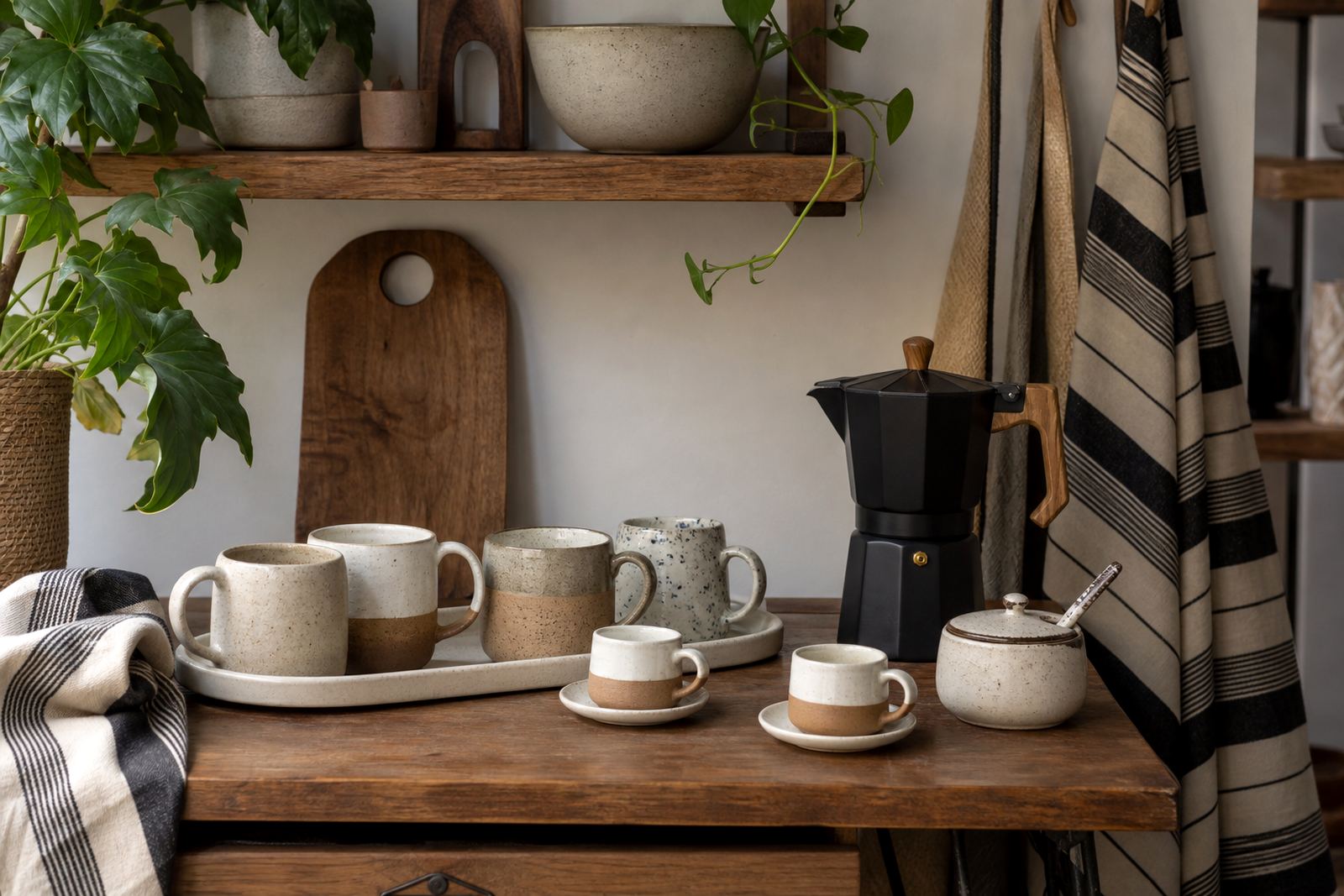
Local handmade ceramics suit this use well because the sizes are practical and the surfaces feel comfortable in the hand. A shallow bowl for oats, a side plate for toast, and a mug with enough room for tea or coffee go a long way. Textiles such as cotton napkins, table runners and placemats soften the look and help protect wood or stone surfaces from crumbs and hot cups.
A useful starter set for breakfast service
You do not need a large collection to set up a weekday breakfast area. A tight mix of ceramics and textiles is usually enough, especially in smaller kitchens or open-plan spaces where storage is limited.
- 4 to 6 mugs for tea, coffee and hot chocolate
- 4 to 6 side plates for toast, fruit and eggs
- 4 bowls for oats, yoghurt and cereal
- 2 to 4 textile placemats or a single runner
- Cloth napkins for daily use or special mornings
- A tray or basket for sugars, spoons and condiments
In coastal homes, especially around Durban and the Atlantic Seaboard, choose textiles that dry fairly quickly and ceramics with a glaze that handles daily washing well. In drier inland areas, a heavier mug or bowl can feel more comfortable in early winter when mornings are cold.
How to lay it out so mornings move faster
Breakfast works best when the pieces live close to where they are used. If the kettle, toaster and fridge are far apart, the table should still be set so each person can reach their own cup, bowl and napkin without asking for help. Keep the most-used items on the same shelf or in the same cupboard, with mugs in front and bowls stacked where they can be lifted easily.
If your dining area is part of the kitchen, a narrow runner can mark the breakfast zone without taking over the room. For larger homes in Stellenbosch or Southern Suburbs dining spaces, a bigger set of placemats and a shared serving bowl can help the table feel organised, even on busy school mornings.
- Use open shelving for the daily set and closed storage for spare pieces
- Keep breakfast items in matching or near-matching tones for a calmer look
- Choose one serving bowl that can hold fruit, muesli or bread rolls
- Leave space for a tray so condiments do not spread across the table
Materials that hold up to everyday washing
Handmade ceramics are a good fit for breakfast because they can move from table to sink with little effort. Stoneware is often chosen for daily use since it feels solid and usually handles heat well. Glazed surfaces are easier to clean after porridge, honey or butter, while unglazed feet and natural textures can add character underneath without affecting the eating surface.
For textiles, cotton and linen blends are common choices. Cotton napkins are easy to wash and press, while linen gives a slightly firmer feel and dries nicely after use. A thicker woven runner can sit well on wood furniture, while lighter cloths work better where space is tight and the table needs to be cleared quickly. If a piece is hand dyed or has a printed surface, it is worth washing it separately at first so the colour stays even.
Common mistakes when setting up breakfast ware
The most common problem is buying pieces that look good but are awkward at the table. Too-small mugs spill easily, very deep bowls can feel clumsy for cereal, and oversized platters take up more storage than most homes have. Another issue is mixing too many colours and patterns, which can make a simple breakfast area feel busy before the day has even begun.
It also helps to think about how the pieces will be used by different people. A child may need a lighter cup with a steadier base, while an older family member may prefer a handle that is easier to grip. In homes with limited cupboard space, avoid odd-shaped items that do not stack neatly. That extra sculptural plate might look good on a shelf, but it can become a nuisance if it only works for special occasions.
- Do not choose mugs that are too small for tea or coffee
- Avoid buying more bowls than your cupboards can hold neatly
- Skip very delicate textiles for daily spill-prone use
- Do not mix every pattern you like in one setting
- Check that stackable pieces actually stack without wobbling
Budget ranges that make sense in Rand
For a modest breakfast refresh, a practical budget in Rand can start with a few key pieces rather than a full table set. A small selection of mugs, bowls, side plates and a couple of textile items can sit in the lower range, especially if you are replacing worn pieces one at a time. A more complete set for a family home, guest cottage or short-stay property will usually sit higher because you need more duplicates and a wider mix of serving pieces.
As a rough guide, a starter breakfast set may sit around R900 to R2 500, depending on the number of pieces and the finish. A fuller set for everyday family use can range from about R2 500 to R6 500. If you are adding curated gift boxes, wedding gifting, housewarming sets or custom bundles, the total will rise with the number of items and the wrapping chosen. Delivery across South Africa is part of the planning too, especially when sending to Johannesburg, Durban, Pretoria or Stellenbosch from Woodstock, Cape Town.
Where replacement pieces are needed, it is worth choosing a style that can be built up over time. That makes it easier to add matching mugs or bowls later, rather than starting over if one piece chips or is misplaced.
Care that keeps the table ready for tomorrow
Daily care does not need to be difficult. Most glazed ceramics can be washed with warm water and a mild detergent, then dried before stacking. Textiles should be shaken out after use and washed before crumbs settle into the weave. If a runner or napkin has a more natural finish, avoid harsh bleaching products, as they can strip colour and wear down fibres faster.
For homes near the coast, moisture can linger in cupboards and on textiles, so air drying helps. In inland homes, dust can build up quickly on open shelves, so a quick wipe before the morning rush keeps the set looking fresh. A breakfast table that is easy to clean usually gets used more often, and that is the real measure of whether the set is working.