
A small coffee corner that feels collected over time
A coffee corner usually starts in a kitchen, but it can sit on a sideboard, in a scullery, or on a shelf near a window where the morning light lands well. For many homes in Cape Town, Johannesburg or Stellenbosch, it is the one part of the house that gets used every day and still needs to look tidy. Handmade pieces suit that role because they are practical, but they also soften the hard edges of appliances and tiled surfaces.
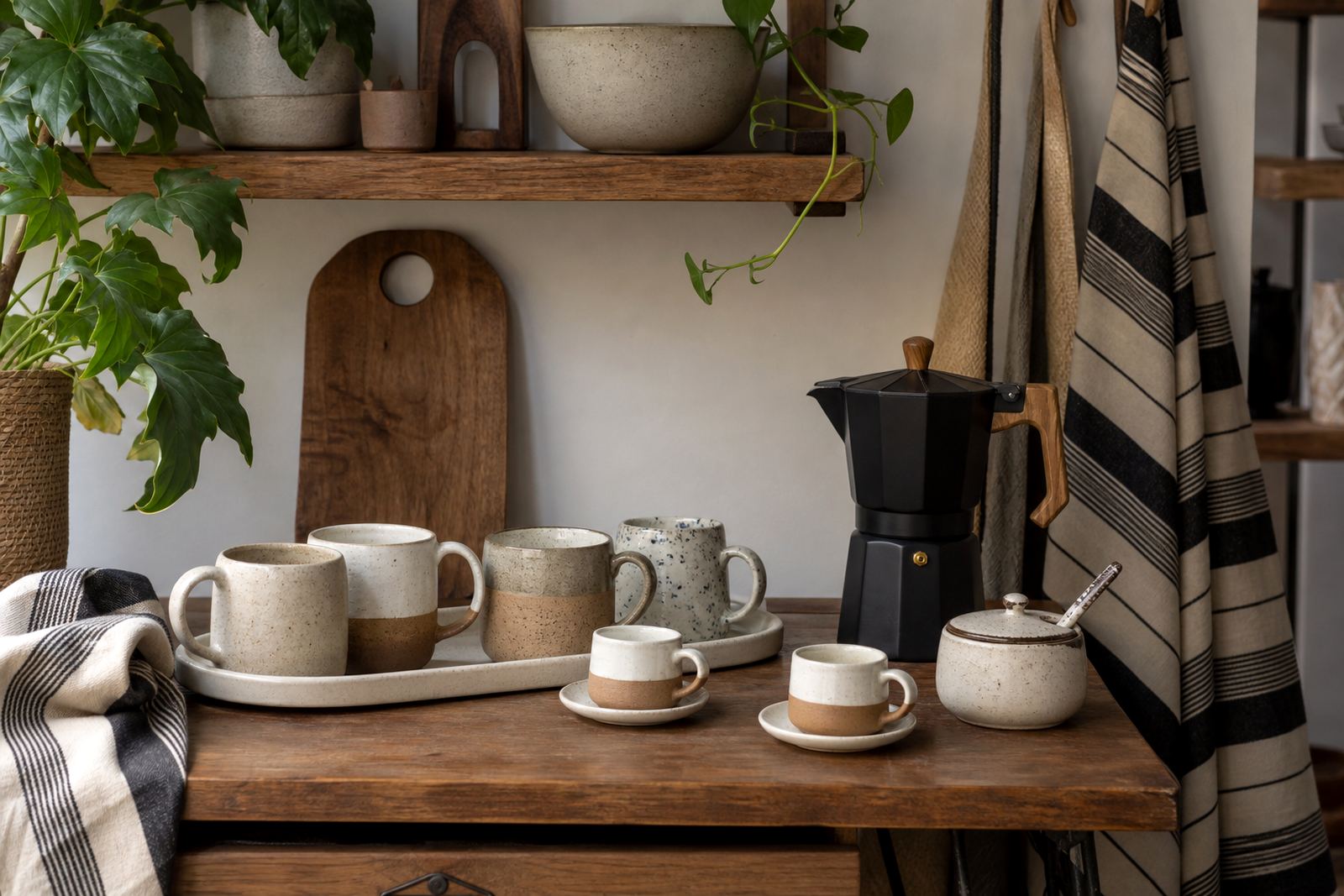
For this use case, think in layers. A tray gives the area shape, mugs keep the colour story together, and a small bowl or two holds teaspoons, sugar packets or wrapped sweets. If the space is very tight, one tray and four to six mugs can be enough. If you entertain often, add espresso cups, a milk jug and a second bowl for biscotti or rusks. The aim is not to overfill the surface. It is to make the setup easy to use when the kettle is on and people are moving through the room.
- Best for apartment kitchens, studio spaces and family homes with a daily coffee habit
- Works well on a counter, narrow shelf, bar cart or sideboard
- Can be kept neat with one tray, a mug set and a few small serving pieces
Pieces that earn their place in a daily coffee setup
Handmade ceramics bring weight and character to a coffee corner. A mug with a comfortable handle matters more than a perfect match, especially if several people will use the same set. Small espresso cups work well when space is limited, and they are useful for quick servings after supper or when guests pop in. Trays in wood, woven fibre or glazed ceramic help group everything so the corner does not drift into clutter.
Small bowls are often overlooked, yet they do a lot of work. They can hold sugar cubes, tea bags, wrapped chocolate or spoon rests. In a home where the coffee corner shares space with breakfast items, bowls also help separate dry goods from mugs and serving bits. Textiles have a place too, especially a folded runner or a cloth napkin under a tray if the surface scratches easily. In humid coastal homes, wood and textile finishes need a bit more care, so it helps to choose pieces that suit the room they sit in.
- Mugs for everyday use, ideally with a comfortable lip and handle
- Espresso cups for short coffee servings and compact spaces
- Trays to hold the main set and keep the area organised
- Small bowls for sugar, snacks, teaspoons or garnish pieces
How to plan the layout so it stays practical
Good layout is mostly about movement. Keep the kettle, grinder or coffee machine close to the main tray if the corner is used often. Leave enough room for one person to make a cup without shifting every item around. If the surface is slim, place taller items at the back and keep the cups in front. A stack of mugs looks neat, but if they are used often, single rows are easier to reach and less likely to chip.
For a shared home in Pretoria or Durban, it can help to separate the display from the working pieces. Store overflow mugs in a cupboard and keep only the favourites visible. On a larger counter in a family kitchen, use two trays instead of one, one for brewing and one for serving. That keeps the corner from turning into a catch-all for post, keys and school notes. A small hook rail nearby can work for cloths or measuring spoons, but only if it does not crowd the area.
If the coffee corner is also a display point, vary the heights gently. A mug stack, a jar, and one small bowl create rhythm without making the setup look fussy. The best coffee corners are the ones that can be used during load-shedding, a weekday rush or a slow Sunday morning without needing to be rearranged first.
Common mistakes that make the corner feel busy
The most common mistake is buying pieces that are too large for the available surface. Oversized mugs and trays can make a neat nook feel cramped, especially in smaller Woodstock flats or narrow townhouse kitchens. Another mistake is mixing too many surface finishes. Gloss, matte, wood, glass and metal can all work together, but not all at once. Too much variety makes the corner look busy rather than considered.
It also helps to avoid fragile pieces where they will be handled all day. A delicate cup with a very thin handle might look lovely, but if the corner is used by children or is placed near a sink, it may not be the best choice. In coastal homes, unsealed wood can mark quickly if wet cups are left on it. Textiles can also start to look tired if they are always damp or are used to catch drips instead of drying properly. Small habits matter here more than expensive items.
- Do not overcrowd the tray with too many cups and jars
- Do not mix every pattern in one corner unless the room is very plain
- Do not leave wet textiles folded under ceramic pieces
- Do not place fragile items where they will be knocked during busy mornings
Budget bands for a handmade coffee corner
Budget depends on how complete you want the corner to be. A modest setup can begin with a tray, two mugs and one small bowl, then grow over time. That approach suits a first flat, a guest room or a small office nook. A fuller set is better for a main kitchen where the coffee area is used every day and needs to serve guests without extra searching.
As a rough guide, a starter coffee corner often sits in the R450 to R900 range if you are choosing a few handmade pieces carefully. A more developed setup with four to six mugs, espresso cups, a tray and a couple of serving bowls can sit between R1,200 and R2,500. Larger gifting sets, or mixed material setups with textiles and extra serving pieces, can run higher depending on finish, quantity and whether the set is being made up for a home, wedding or corporate gift. Delivery across South Africa is often easier to plan when the items are grouped into one order instead of added one at a time.
Keeping the pieces in good shape day after day
Handmade homeware lasts well when it is treated with ordinary care. Most ceramic mugs and cups can be washed by hand in warm water with a mild detergent, then dried fully before stacking. If a piece has a raw base, it is better not to leave it sitting in water. Wooden trays need gentle wiping and should not be soaked. Textile runners or napkins should be washed according to their fibre type and dried properly before being folded away.
In homes near the coast, moisture and salt air can dull finishes faster if items are stored damp. In inland homes, dust is more of a concern, especially if the coffee corner is open on a shelf. A quick wipe down once the area is reset keeps the setup looking fresh. If a chip, stain or mark appears, it is best to separate the item from daily use so it does not worsen. That way the corner stays tidy and the pieces keep their character instead of looking worn out.
- Wash ceramic pieces gently and dry them before stacking
- Wipe wood with a dry or slightly damp cloth, then let it air properly
- Keep textiles clean and fully dry before storing
- Move chipped or marked items out of daily rotation