
Start With the Shelf, Not the Shopping
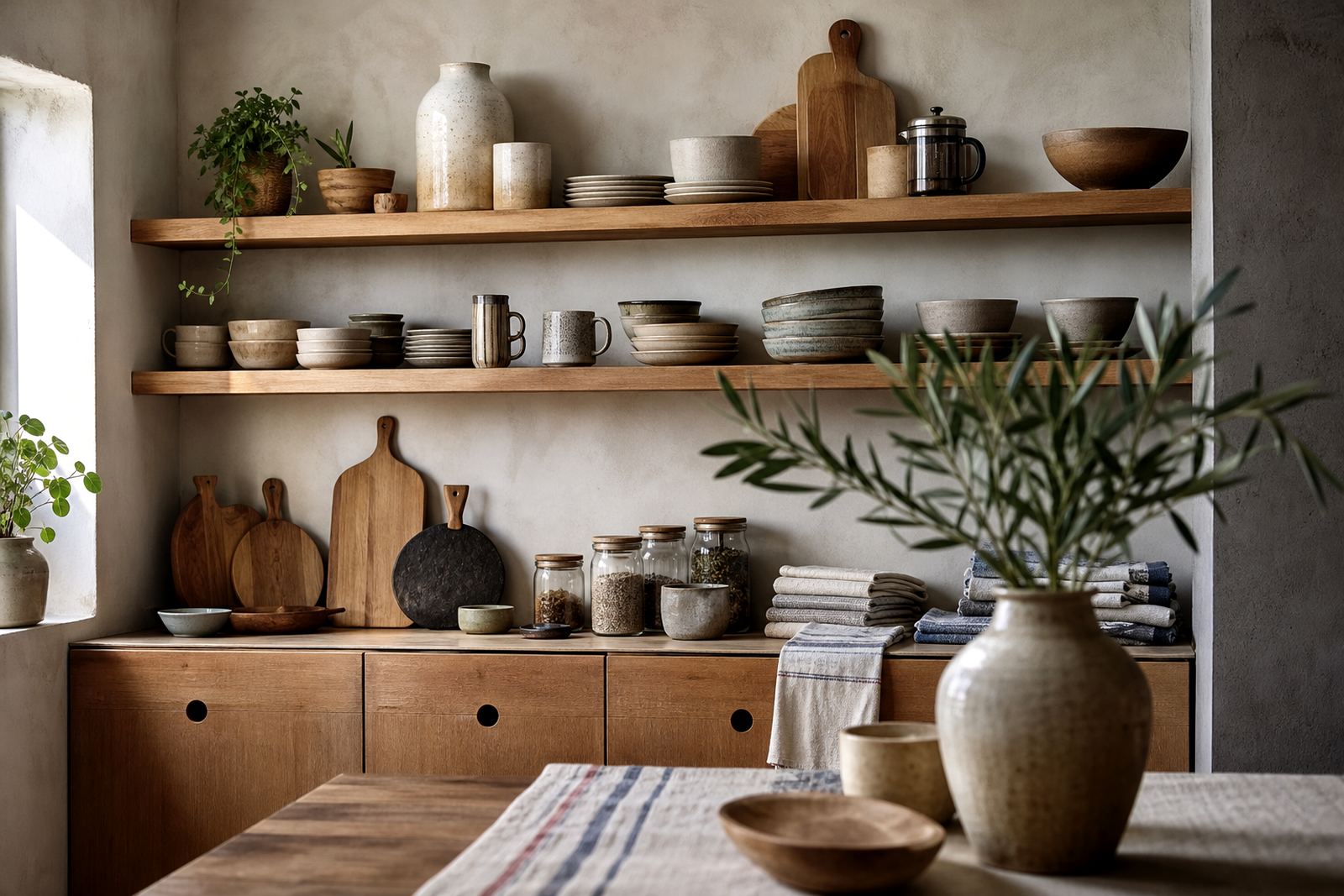
Good shelf styling begins with the cupboard or wall shelf you already have. Measure the length, depth and height between shelves before you buy anything, then decide what must sit there every day and what can rotate in and out. In many Cape Town kitchens, especially in compact flats and older homes in Woodstock or the Southern Suburbs, the trick is to keep the display useful so it does not feel crowded.
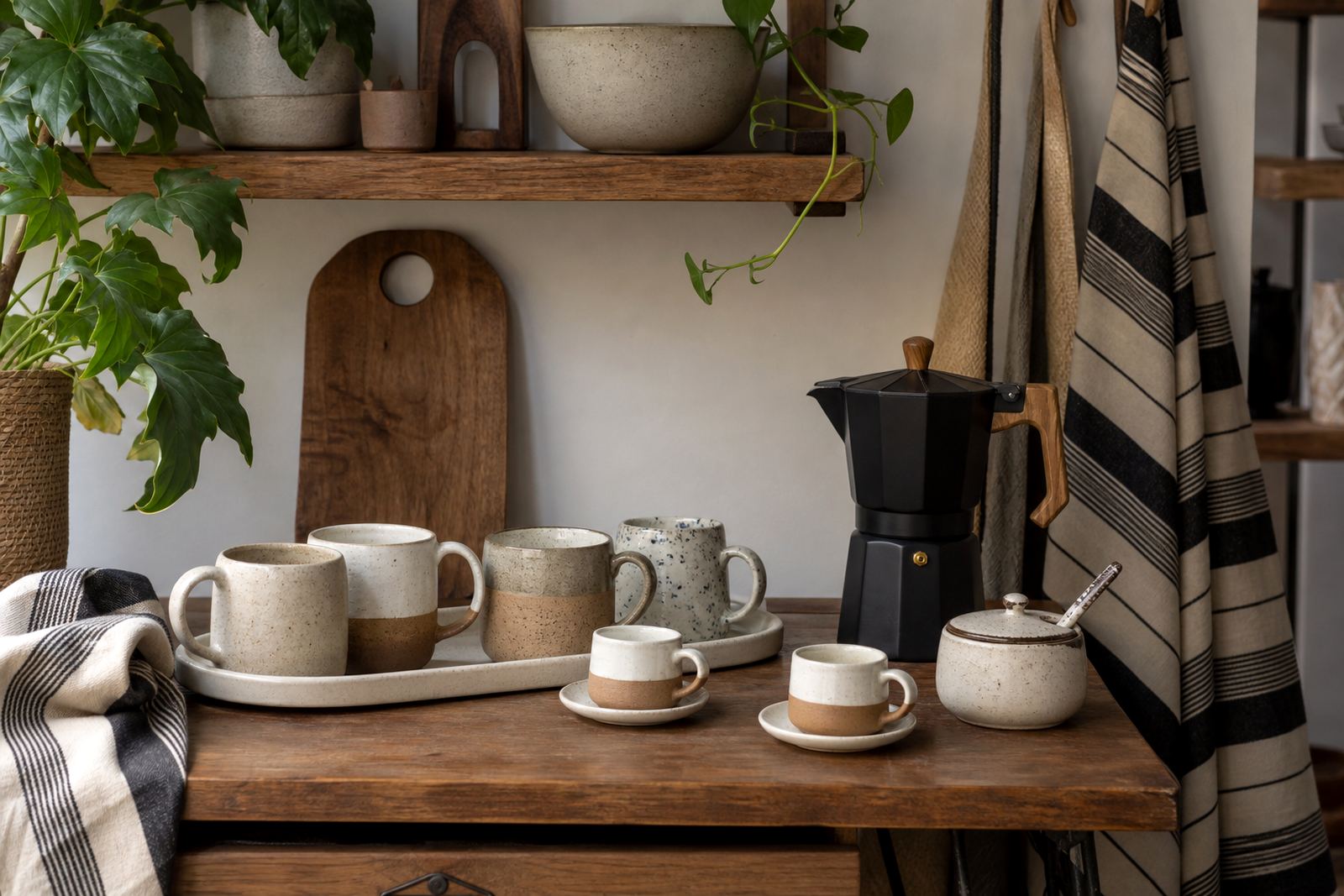
For a practical open-shelf set, think in groups: mugs for daily tea and coffee, storage jars for flour or rusks, one or two serving boards, a butter dish, a jug, and a few bowls that can move from shelf to table. Handcrafted pieces with slight variations in glaze, grain or weave often work better than identical sets because they soften the look of hard cabinetry and tiled walls.
- Leave at least 3 to 5 cm of breathing room above taller pieces
- Keep heavier items on lower shelves for safety and easier lifting
- Mix closed storage with open display so the shelves do not become cluttered
Useful Pieces That Hold Their Own
The best shelf items are things you will actually reach for. Handmade ceramics are useful because mugs, bowls and jugs can handle everyday use while adding colour and texture. A matte mug beside a glossy jar or a speckled bowl against raw timber creates contrast without needing many objects.
Textiles matter too. A folded linen tea towel, a runner draped loosely over a shelf edge, or a small handwoven cloth under a stack of bowls can stop the arrangement from looking bare. Wood brings warmth, especially in cooler kitchens with stone or tile, and works well as a board for bread, fruit or serving. Keep decorative items in the same family of tones if the kitchen gets a lot of morning light, because strong sunlight can make a shelf look busy fast.
- Ceramic mugs, bowls, jugs and canisters
- Wooden boards, trays and small risers
- Tea towels, napkins and runners in cotton or linen
- Small decor pieces like a vase, pinch pot or candle holder
Build the Shelf in Layers
Layering helps the eye move across the shelf without confusion. Start with the largest pieces at the back or one side, then step forward with medium items and finish with smaller accents. A stack of plates can sit behind a row of mugs, while a jar or bottle adds height at the end of the line. If your shelf is long, break it into two or three visual zones rather than trying to cover every centimetre.
In a kitchen where the shelves are near a stove or sink, choose items that can tolerate a bit of everyday handling. Glazed ceramics are easier to wipe down than raw finishes, and sealed wood is better for repeated use in humid coastal areas. In Durban or on the Atlantic Seaboard, moisture can creep into unsealed timber and textile fibres, so allow airflow and avoid packing things too tightly.
- Use odd numbers where possible, such as three mugs or five jars
- Repeat one colour or material twice to tie the shelf together
- Leave one open area so the display can breathe
Common Mistakes That Make Shelves Feel Heavy
The most common mistake is overfilling. Too many small objects make even a beautiful shelf look restless. Another problem is mixing every finish at once: shiny ceramics, dark wood, patterned textiles and clear glass can compete if there is no visual thread linking them. A third mistake is using display pieces that are too tall for the shelf height, which makes the whole arrangement feel squeezed and awkward.
Many people also forget the daily rhythm of the kitchen. If you have to move five things every time you want a mug, the shelf will stop working. Keep the most used items at shoulder height or below, and reserve higher levels for less frequent pieces. Avoid placing delicate items directly above the kettle or hob where steam and grease can mark them over time.
- Do not fill every inch of the shelf
- Do not mix too many bright colours in one row
- Do not hide everyday items behind display pieces
- Do not place untreated wood where it will take constant steam
A Practical Budget for a Finished Look
Kitchen shelf styling does not need a full room revamp. A small refresh with a few handmade pieces can change the feel of the space without a large spend. For a modest update, many homes start with two or three mugs, a bowl, a jar and a tea towel set. A fuller shelf refresh might include serving boards, a jug, storage canisters and a small decorative piece.
As a working guide, budget around R450 to R900 for a light update, R1 000 to R2 500 for a more considered shelf arrangement, and R2 500 plus if you are styling several shelves or putting together a giftable kitchen set. Delivery across South Africa makes it easier to send a selected set to Johannesburg, Pretoria, Stellenbosch or Durban without trying to source everything locally in one trip.
- R450 to R900 for a small refresh
- R1 000 to R2 500 for a fuller shelf set
- R2 500 plus for multiple shelves or gifting bundles
When the Shelf Needs to Work as a Gift
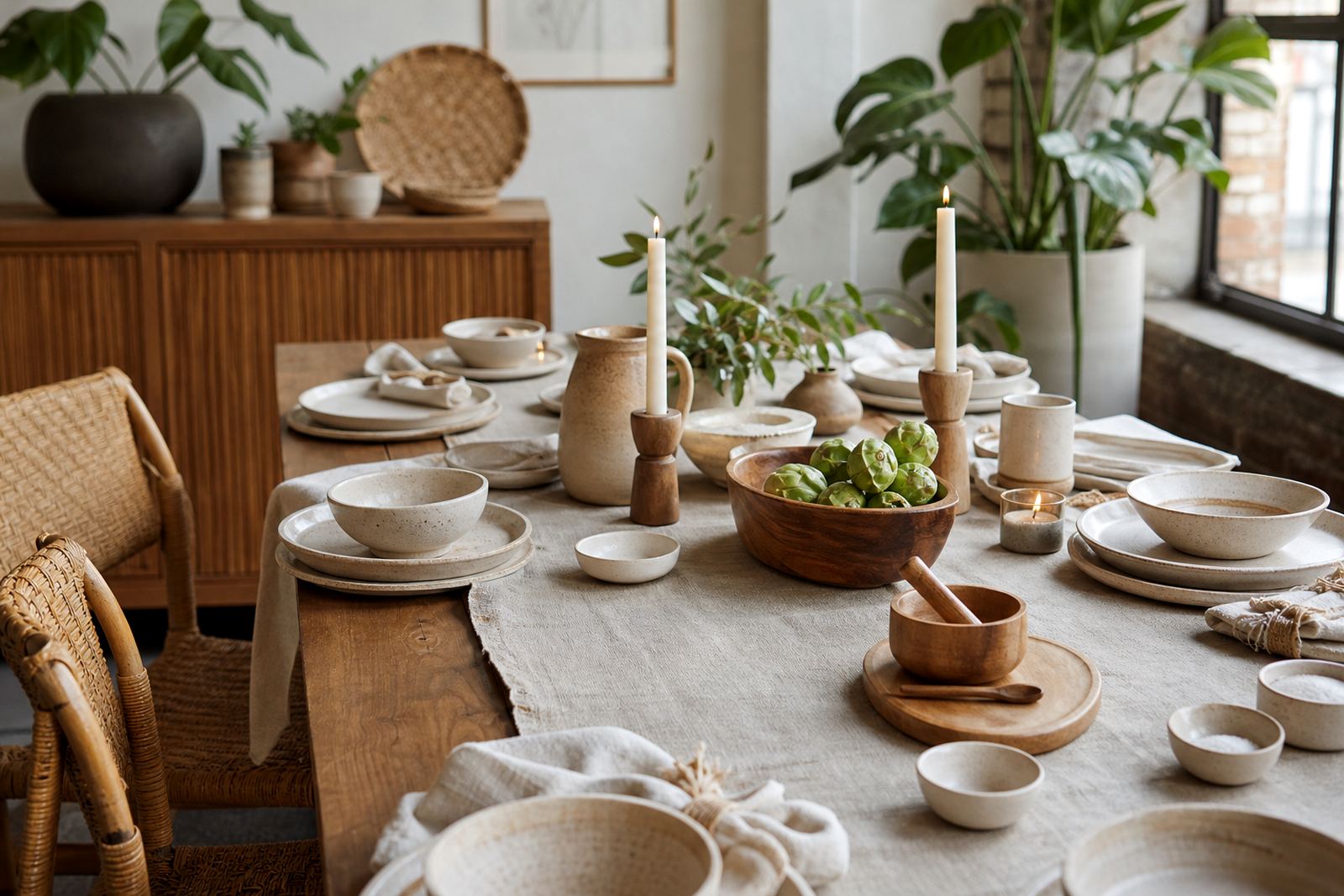
Open shelf styling also makes sense for housewarmings, weddings and corporate gifting because the pieces are useful from day one. A neat set of mugs, a wooden board, a jar and a folded cloth gives someone a ready-made start without forcing them to match a whole kitchen in one go. For gift registry help, custom bundles or bulk orders, the aim is to keep the selection practical and easy to unpack.
Care matters as much as the first impression. Ceramic pieces usually need gentle washing and careful stacking, while wood should be dried well after cleaning and kept away from standing water. Textiles should be laundered according to the weave and dye, with darker items washed separately if needed. If a shelf set is chosen well, it works in daily life and still looks settled when the kitchen is quiet.
For enquiries, please use the contact form on our contact page.