
A table built for passing dishes
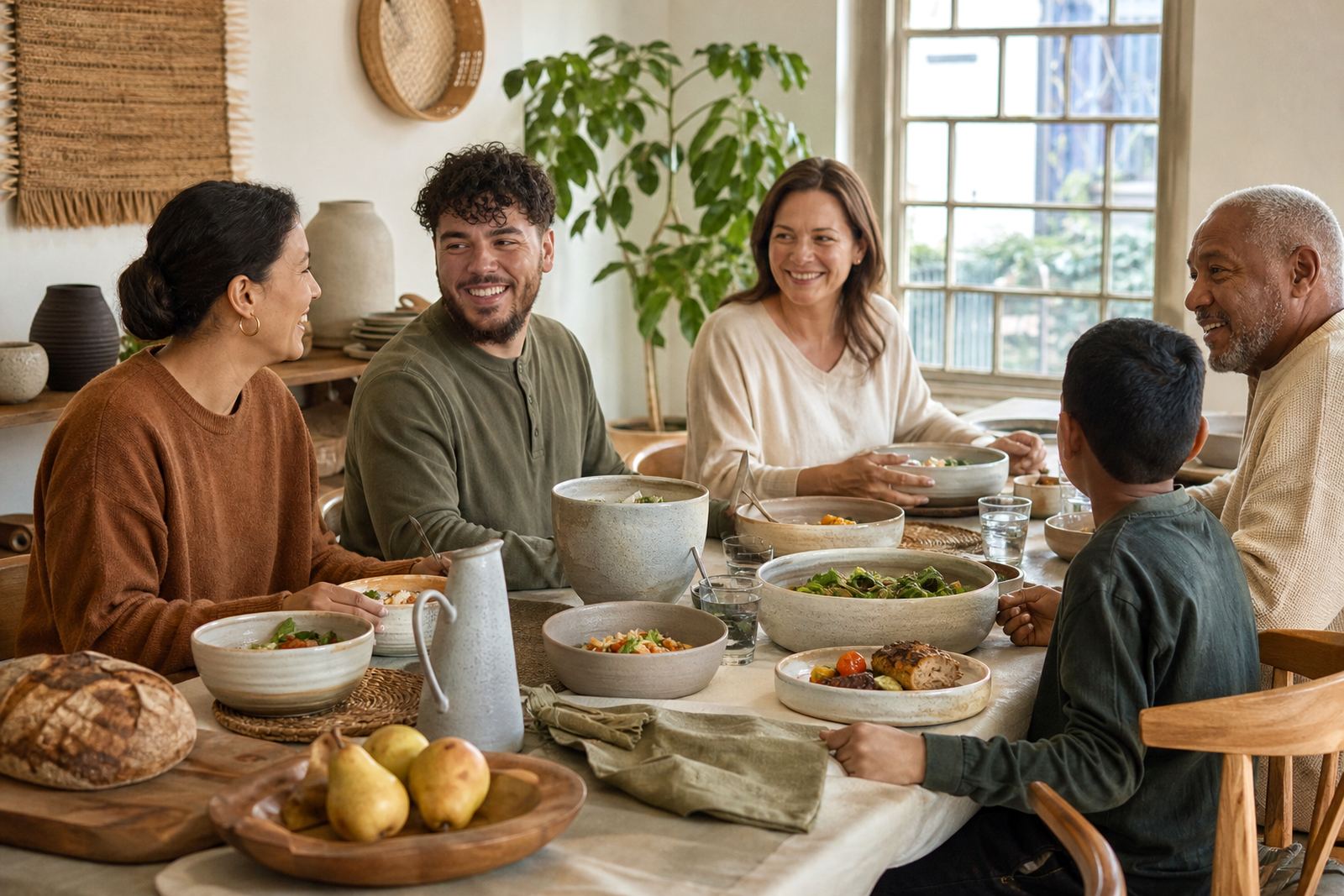
A Sunday lunch table usually needs more surface than you first think. One main platter for the roast or roast vegetables, two or three serving bowls for sides, a jug for water or juice, and enough smaller pieces for salt, sauces and condiments. Handmade ceramics work well here because they hold heat a little longer and give the table weight, while wood adds warmth under bowls and platters.
If you are setting up for family in Woodstock, the Southern Suburbs or the Atlantic Seaboard, keep the arrangement easy to reach from both sides of the table. Place the larger shared pieces down the centre first, then leave gaps for serving spoons, napkins and a few smaller dishes. A table that looks full can still feel calm when the pieces are spaced with care.
Pieces that earn their place
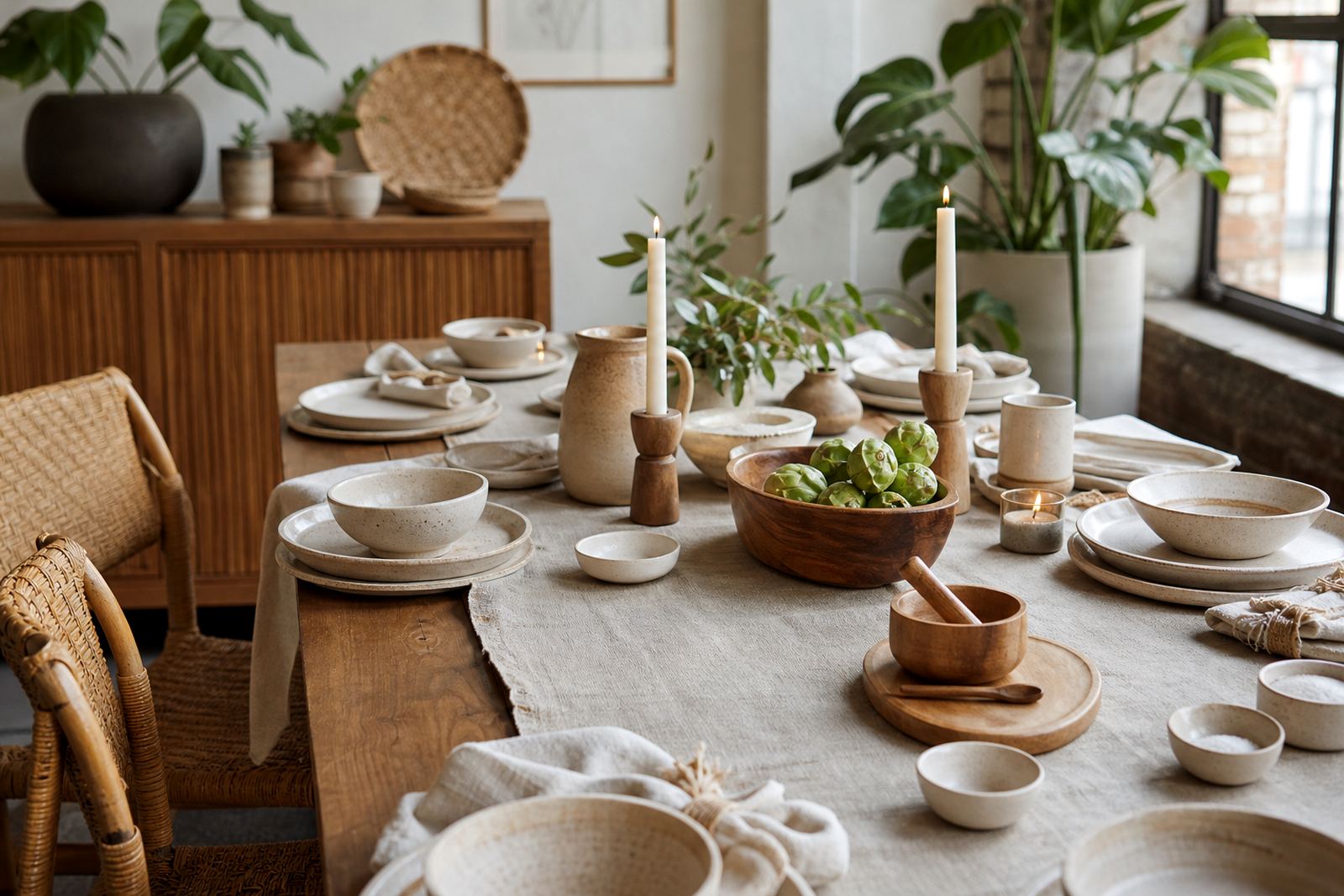
The best Sunday lunch tables do not need many items, only the right mix. Ceramics, textiles and wood all have a place, especially when the colours are kept close together. Natural clay tones, off-white glaze, deep blue, charcoal and soft green sit neatly alongside linen or cotton runners. A wooden board can break up the shine of glazed pieces and stop the whole table feeling too formal.
- 1 large serving platter for the main dish or bread
- 2 to 4 medium bowls for vegetables, salads and sides
- 1 pitcher or jug for drinks or gravy
- 4 to 8 smaller bowls for condiments, olives or butter
- 1 runner or tablecloth in cotton or linen
- 2 or 3 wooden boards for hot or shared items
For a smaller table, choose fewer larger items instead of many little ones. It reads as intentional and makes serving easier when there are busy hands around the table.
Texture does the quiet work
Shared meals often feel more welcoming when the table has texture in more than one place. A woven runner, a slightly uneven ceramic rim, a carved wooden spoon and a folded napkin each change the feel of the setting without needing much colour. In coastal homes around Cape Town, humidity can make some fabrics feel heavy if they are stored damp, so dry textiles fully before packing them away.
Mixing textures also helps if the table is otherwise plain. A smooth white plate on a coarse linen runner, or a dark ceramic bowl on pale wood, gives contrast without making the table look crowded. Keep shiny and matte finishes in balance. Too much gloss can feel cold, while too many rough surfaces can look unfinished.
Layout that keeps serving easy
For a lunch table that will be passed around, height matters. Keep the tallest item, usually a pitcher or vase, away from the centre if people need to see one another across the table. Build low in the middle and place tall stems or branches only if the table is wide enough. On a long table, repeat shapes rather than colours so the setting feels joined together.
- Start with the runner or cloth and centre it first
- Place the largest serving pieces where they can be reached from both sides
- Keep hot dishes on wooden boards or trivets where needed
- Leave space for hands, serving spoons and shared condiments
- Use one repeated colour across ceramics, napkins or glassware to tie it together
When the table is for a bigger group in Johannesburg or Pretoria, it helps to set the sideboard or kitchen counter with extra bowls ready to rotate in. That keeps the main table tidy and prevents a tight squeeze.
Common table-setting mistakes
The most common mistake is buying too many separate pieces that do not sit well together. Another is choosing one large statement item and forgetting the smaller things that make lunch flow, like serving spoons, bread boards and a proper water jug. A third mistake is using fragile decorative items in the middle of the service area, where they can get knocked.
Practical care matters too. Handmade ceramics should not be shocked from hot to cold water, and glazed pieces can chip if stacked too tightly. Wood needs dry storage and the occasional food-safe oil if the maker recommends it. Textiles should be washed according to their fibre type, then stored flat or folded cleanly so they do not crease badly before a meal.
Budget ranges for a proper South African lunch table
Budget depends on how many people you are feeding and how much of the table you want to refresh at once. A modest update for a family lunch, with a runner, one platter and a few bowls, can start from about R900 to R1,800. A fuller set with several serving bowls, a jug, wooden boards and coordinated textiles may sit closer to R2,500 to R4,500.
If you are putting together a wedding gift, housewarming set or a corporate gifting order, choose pieces that can be used beyond one meal. Neutral ceramics, practical pitchers and durable wood are easier to gift because they suit different homes. For delivery to Cape Town, Durban, Stellenbosch, Johannesburg or Pretoria, it helps to group items in one order so the whole table can be styled together instead of piecing it together later.
A table that feels lived in
A Sunday lunch table should look like people are expected, not like it was arranged for display only. The best handmade pieces do that well. They carry small marks of the maker, slight variation in glaze or weave, and enough character to make the meal feel personal. That is often the difference between a table that looks set and one that feels ready.
LocalMaker works with South African makers and curates homeware that suits shared meals, gifting and everyday use. If you are planning a long lunch at home, or need help choosing a set of serving pieces for a gift box or bulk order, use the enquiry form on our contact page and tell us what you need for the table.