A tea table that feels welcoming from the first pour
A good tea table is usually set for conversation, small bites and relaxed serving rather than a formal spread. In a Cape Town home, or at a function in Woodstock, that often means keeping the surface clear enough for cups, plates and a teapot, while adding just enough texture to make the table feel inviting.
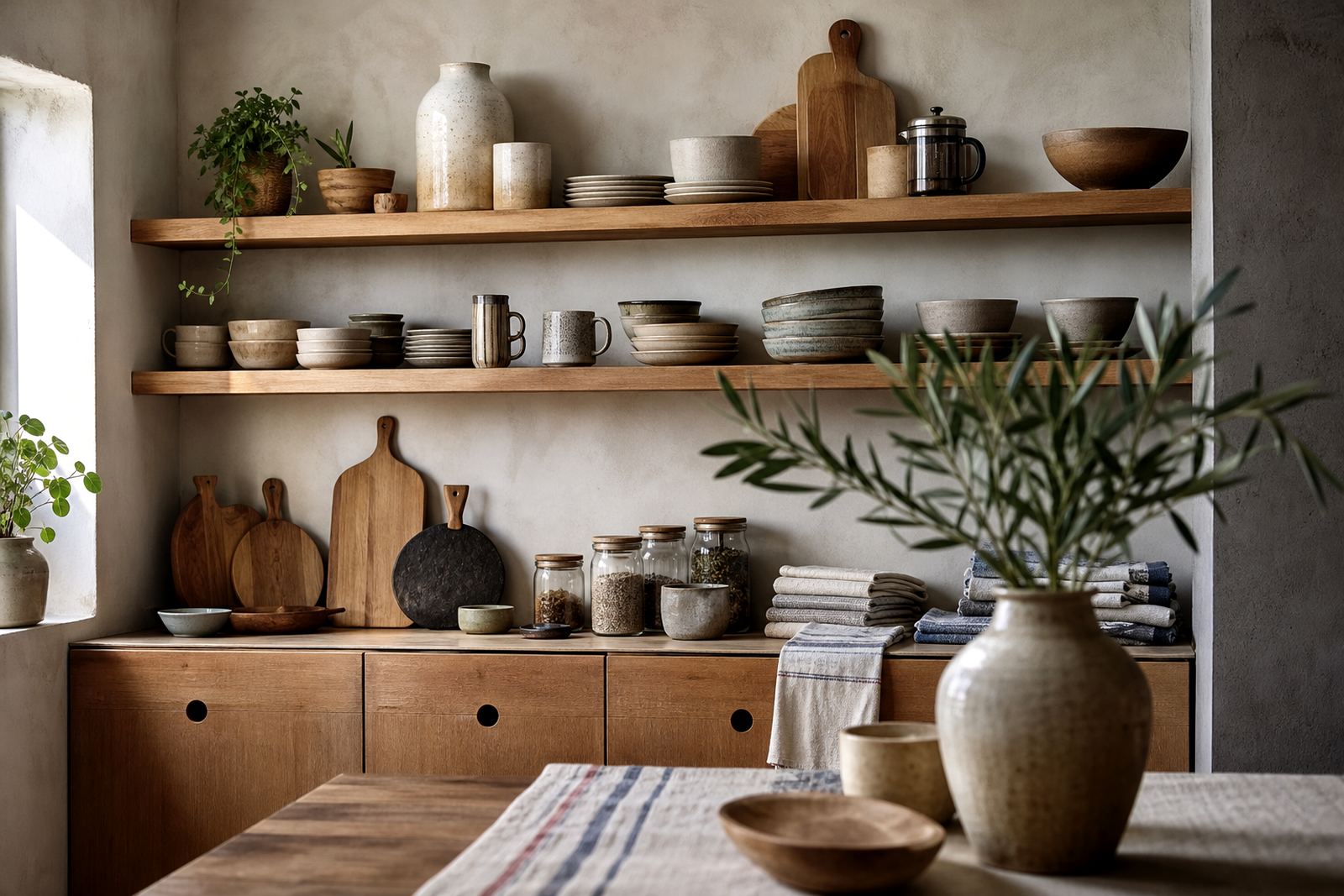
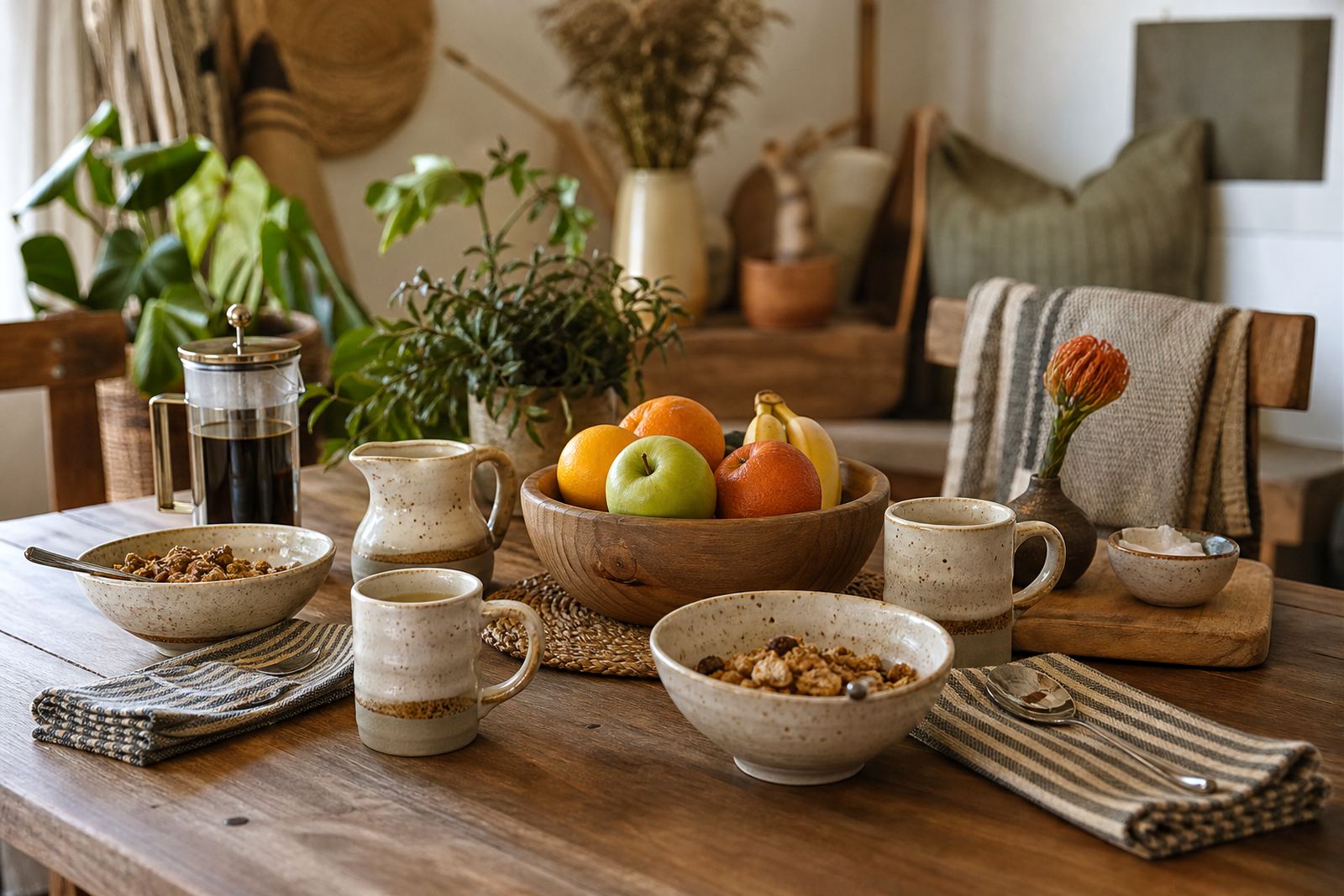
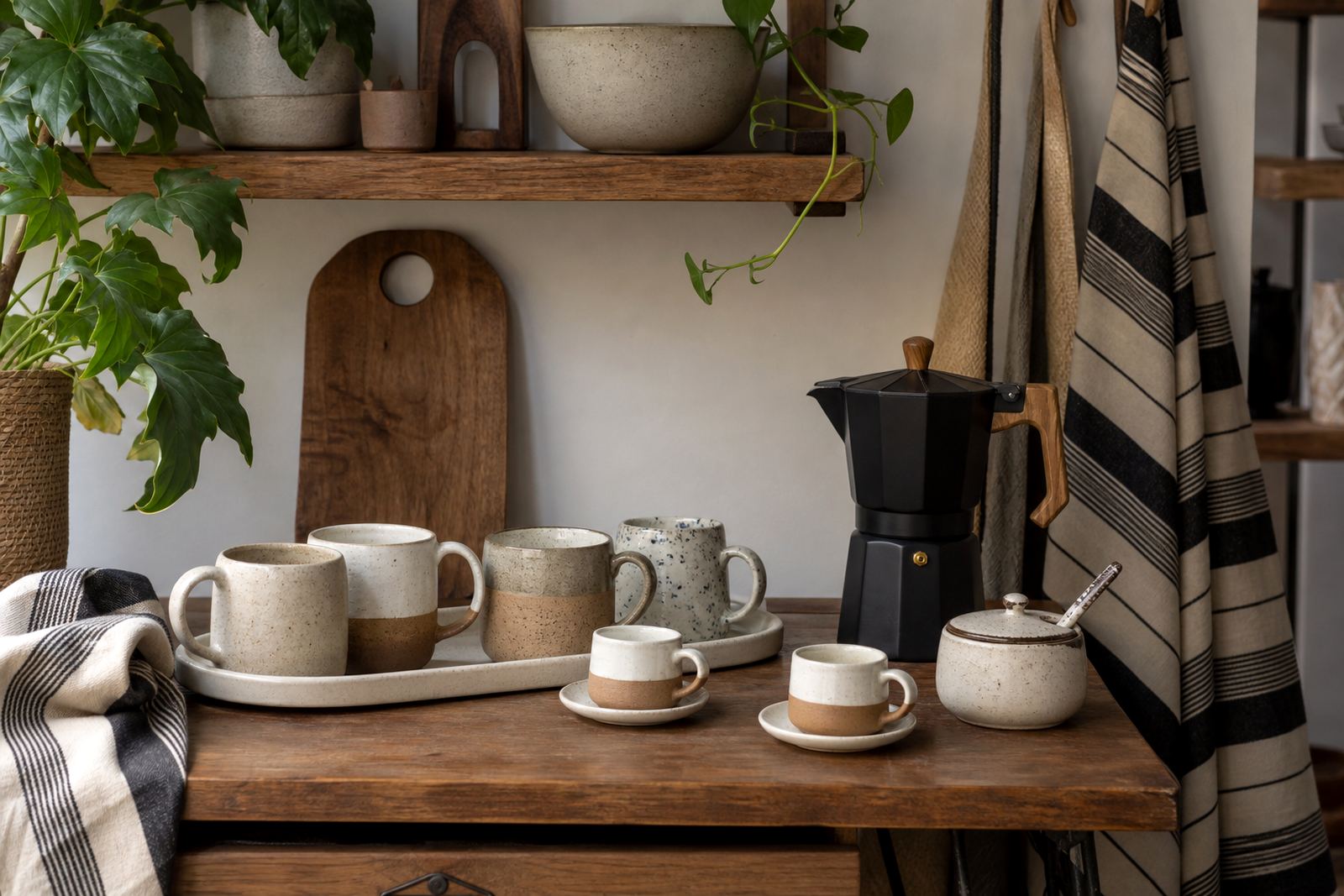
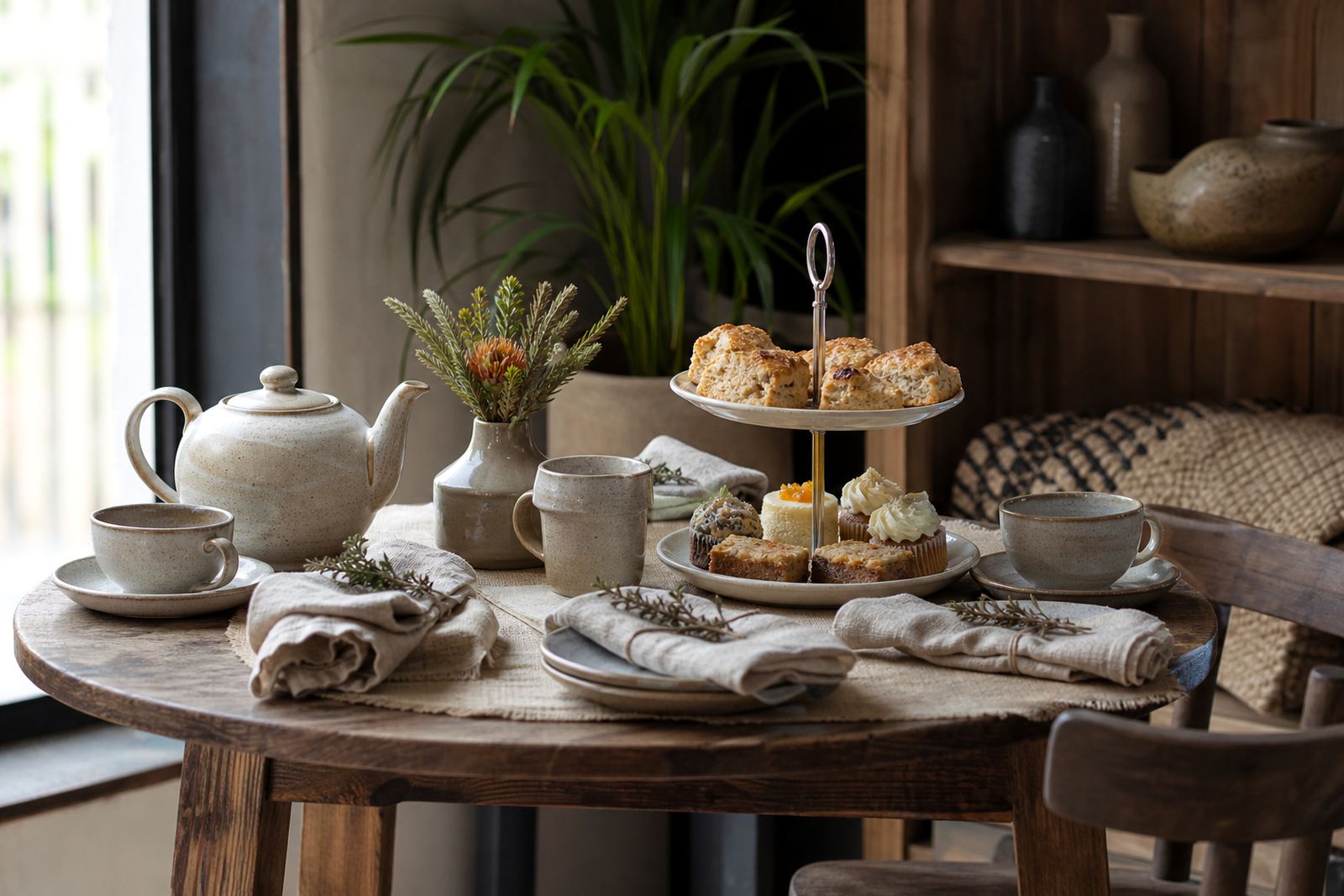
For this use case, think in terms of mixed materials that work together: glazed ceramics for the serving pieces, woven or printed linen for softness, and a wooden tray or board to hold the smaller items. Handmade pieces suit tea service well because the slight variation in shape and finish gives the table a lived in feel. A set does not need to match perfectly, but it should share the same colour family or surface tone so the layout looks settled.
The pieces that usually make up the set
Most tea table setups use a handful of core items, then add extras depending on the occasion. A simple home tea table may need only cups, a teapot, a small jug, side plates and a cloth, while a wedding or corporate tea station often needs a cake stand, labels, serving bowls and a second tray for refills.
- Teapot or infuser pot in ceramic or stoneware
- Tea cups or mugs with saucers or small plates
- Cake stand, platter or serving board for slices and biscuits
- Table runner, napkins or a folded linen cloth
- Wooden tray for moving cups, sugar and spoons
- Small bowls for sugar, tea bags, lemon or teaspoons
For a polished look, keep the number of shapes limited. Rounded cups, one statement pot and a single raised stand often work better than a table full of separate items that compete for attention.
How to plan the layout without crowding the surface
The best tea tables are easy to use from both sides. Place the tallest item, usually the teapot or cake stand, slightly off centre so the eye has a clear point of focus but there is still space for movement. Put cups close to the edge where guests can reach them comfortably, and keep the sugar, milk and teaspoons grouped on one tray.
On longer tables, divide the setup into sections. One end can hold the hot drinks, another the cake and snacks, and a central runner can tie the whole arrangement together. In humid coastal areas like Cape Town's Atlantic Seaboard, linen that breathes well and dries quickly is practical, especially if the table is being reset during the day.
- Leave enough space between cups so handles are easy to grab
- Keep taller pieces away from the edge to reduce knocks
- Use one main colour and one accent colour for a calm finish
- Choose a runner that is long enough to anchor the table, not just cover the centre
Materials that suit everyday tea service
Handmade ceramics work well for tea because they hold warmth and feel steady in the hand. Stoneware is common for mugs and teapots as it is durable for regular use, while lighter earthenware can suit decorative cake stands and smaller serving bowls. Glazes may be glossy, matt or speckled, and each finish changes the mood of the table.
Linen is a strong choice for napkins, runners and tea towels because it softens with use and brings a natural texture that pairs well with ceramic surfaces. Wood is useful for serving boards and trays, especially where you want a warmer tone against white crockery. For care, wash glazed ceramics by hand if the pieces are delicate or hand painted, and dry wooden items well after use to prevent marking. Linen usually benefits from a gentle wash and air drying, then a light press if you want a neater finish.
Common mistakes when setting up a tea table
The most common problem is overfilling the table. Too many bowls, jars and extra plates can make the area feel busy and hard to use. Another issue is using pieces that are too small for the guest count, which leads to constant refilling and interruptions during service. A third mistake is mixing finishes without a shared colour story, which can make handmade items look accidental rather than considered.
It also helps to think about the type of gathering. A casual afternoon tea in Stellenbosch may only need a few shared platters, while a corporate gifting table for a Cape Town event may require a more ordered layout with matching cups and coordinated wraps. If the table will be photographed, keep reflective surfaces, busy patterns and clutter to a minimum so the ceramics and linen read clearly in the frame.
Budget ranges for a tea table in Rand
Tea table budgets depend on whether you are buying for one home setup, a special occasion, or a larger guest list. A modest home tea table can start at around R450 to R900 if you already have basic plates and only need one or two new ceramic pieces, plus linen and a tray. A more complete set with a teapot, four to six cups, a cake stand and matching soft goods often sits in the R1 200 to R2 800 range.
For events, gifting or a curated housewarming set, the total can move higher depending on quantities, wrapping and delivery coordination. Bulk sets, custom bundles and gift boxes may sit between R3 000 and R8 000 or more, especially when multiple table settings are needed across Johannesburg, Durban, Pretoria or Cape Town. The best value usually comes from choosing a few durable core pieces first, then adding accent items as needed.
- Start with one strong teapot and enough cups for your usual guest count
- Add a single raised serving piece before buying extra small bowls
- Choose linen that can be used on both tea tables and dining tables
- Order coordinated pieces together if you want a consistent colour finish
Gifting, wrapping and delivery for tea table pieces
Tea table pieces make practical gifts for housewarmings, weddings and business gifting because they are useful and easy to personalise with a note or wrapping style. A curated bundle might include cups, a small ceramic dish, linen napkins and a wooden serving board, with the pieces selected to suit the recipient's home style rather than a single matching set.
LocalMaker arranges delivery across South Africa, including Cape Town, Johannesburg, Durban, Pretoria and Stellenbosch, with area coverage for Woodstock, the Southern Suburbs and the Atlantic Seaboard. For gift wrapping, gift notes, registry help, replacement help or a custom bundle, clients can use the enquiry form on the contact page. If you are building a tea table for a shared space, that route also helps when the order needs careful coordination or a mix of sizes and materials.