
Start With the Table You Already Have
Dining table styling works best when the table itself is allowed to lead the arrangement. A narrow rectangular table in a Cape Town apartment needs a lighter layout than a large family table in a Stellenbosch home, and the same applies to round tables in open-plan flats or coastal homes where humidity can affect natural fibres. Measure the tabletop before buying so runners, placemats and centre pieces sit comfortably, with enough space for serving dishes and elbows.
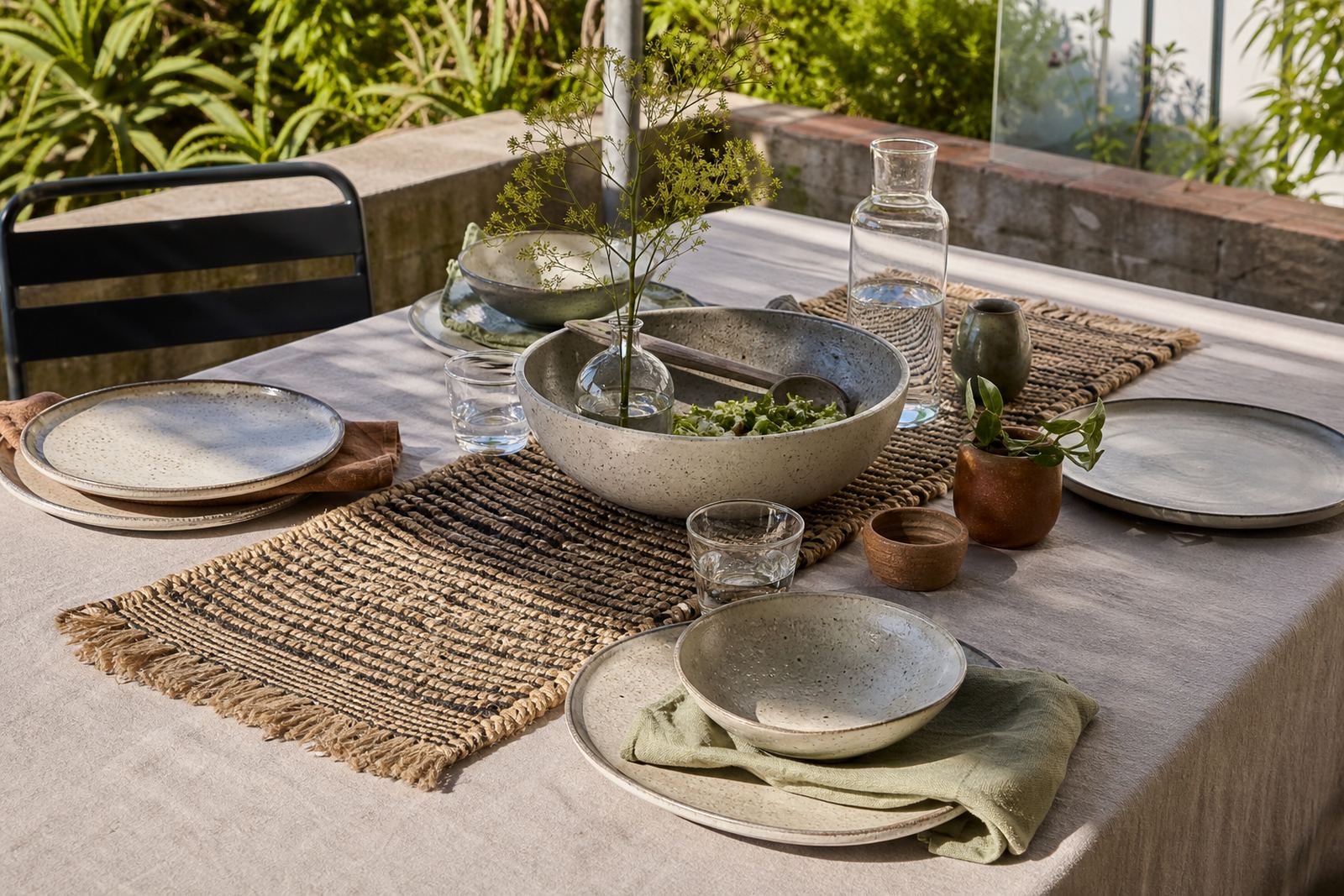
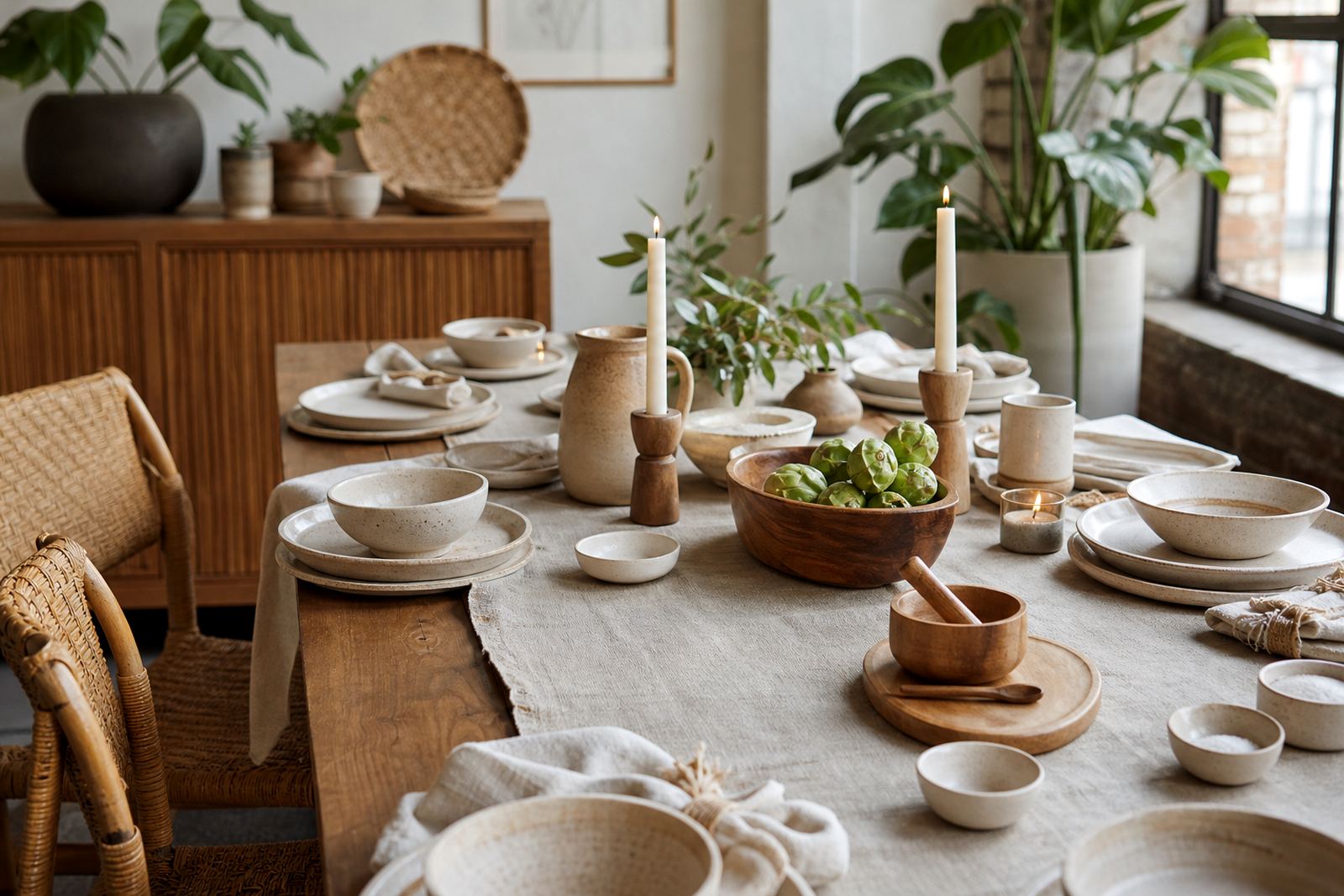
For everyday use, a layered table usually begins with a textile base, then plates and bowls, then a centre line of candleholders or a low decorative piece. If you entertain often, keep the shape practical so the table can move from breakfast to dinner without needing a full reset each time. Handmade items give the table character, but the arrangement still needs to feel easy to live with.
- Round tables suit one central arrangement with 4 to 6 dining seats.
- Rectangular tables usually work best with a runner placed lengthwise.
- Leave clear space for serving bowls, salt, water glasses and shared dishes.
The Core Pieces That Carry the Look
The usual set for this kind of styling includes handmade plates, bowls, a runner, cloth napkins, candleholders and one or two decorative objects in wood or ceramic. A calm setting often uses one material as the main anchor, then adds two supporting textures. For example, a neutral ceramic plate can sit well with a textured linen napkin and a carved wooden bowl. In warmer coastal homes, lighter tones and washed fabrics feel right, while richer earth shades suit winter gatherings inland.
Handmade ceramics rarely match perfectly and that is part of the appeal. Small variations in glaze, rim shape and colour are natural. Textiles bring softness and help reduce the hard look that can happen when a table has only plates and glassware. Wood adds warmth, especially on pale tables or glass surfaces. Candleholders should stay low enough for conversation across the table.
- Ceramic dinner plates for the main setting and serving.
- Side plates or small bowls for starters, bread or dessert.
- Runner or placemats in cotton, linen or woven fibre.
- Cloth napkins for each place setting.
- Candleholders in ceramic, wood or metal for height and mood.
How to Build the Layers Without Overcrowding
A dining table needs rhythm, not too many objects. Start by deciding whether the eye should move along the length of the table or gather around a central point. On a long table, a runner with repeated candleholders can create that line. On a square or round table, a compact centre grouping is usually more practical. Keep taller items away from the middle of the line of sight, especially when you are serving guests on a busy Friday evening or during a Sunday lunch that runs long.
Try to balance hard and soft surfaces. A ceramic bowl beside a folded napkin and a wooden tray feels more layered than several matching objects all in the same finish. If the table already has a strong grain or dark colour, choose lighter textiles so the arrangement does not feel heavy. If the table is plain, introduce a bolder runner or a deeper glazed bowl to stop the setting from feeling flat.
One useful rule is to repeat colour no more than three times across the table. That keeps the look connected without making it too busy.
Common Mistakes That Make a Table Feel Off
The most common mistake is buying pieces that are the right style but the wrong scale. A small runner on a large table can look lost, while oversized candleholders can block sightlines and take over the whole surface. Another issue is mixing too many glaze colours, textile patterns and decorative shapes at once. Handmade homeware should feel collected, not crowded.
Another trap is forgetting daily use. A table that looks good for photographs can become awkward if the settings leave no room for serving platters or water jugs. In homes where the dining table also doubles as a working surface, the pieces need to pack away neatly and be easy to wipe down. This matters even more in busy households where meals, homework and guests all share the same area.
- Avoid tall centrepieces if guests need to speak across the table.
- Do not mix every pattern you own in one setting.
- Do not choose textile sizes that hang too far and catch on chairs.
- Keep fragile items away from the table edge where they can be knocked.
Care Notes for Ceramics, Textiles and Wood
Handmade homeware lasts well when it is cared for properly. Most ceramic pieces can be washed by hand with mild soap, especially if they have a textured glaze or a hand finished rim. Textiles should be shaken out after use and washed according to the fibre type, with cotton and linen usually needing gentler treatment to keep their shape. In humid areas like the coast, let fabrics dry fully before storing them.
Wooden pieces need a little attention to keep them from drying out or marking. Wipe them clean with a damp cloth, then dry them straight away. Avoid soaking wood or leaving it in standing water. Candleholders should be cleaned after use so wax does not build up and change their shape. If a piece is chipped or scuffed, it does not always need replacing. Small marks are normal in handmade pieces and often add to the character of a dining table.
Budget Ranges for a Handmade Dining Table Setting
Dining table styling can be done in stages, which makes it easier to plan a budget in Rand. A small refresh for one table might include a runner, four napkins and a pair of candleholders, while a fuller setting could add plates, bowls and a decorative centre piece. The final spend depends on the number of seats and whether you are building for everyday meals, special dinners or a gifting occasion such as a housewarming or wedding.
As a practical guide, a simple update can start around R600 to R1 200 for textiles and a few accent pieces. A more complete setting for four to six seats often sits between R1 500 and R3 500, depending on the materials and how many ceramic items are included. Larger tables, custom bundles or gifting sets can move higher, especially if you want matching layers across multiple place settings. Delivery across South Africa, including Cape Town, Johannesburg, Durban, Pretoria and Stellenbosch, helps if you are putting together a full order from Woodstock or sending a table gift to another city.
- R600 to R1 200 for a modest refresh.
- R1 500 to R3 500 for a fuller layered table.
- Higher budgets suit larger tables, gift sets and matched place settings.