
The brief for a calm room without hard edges
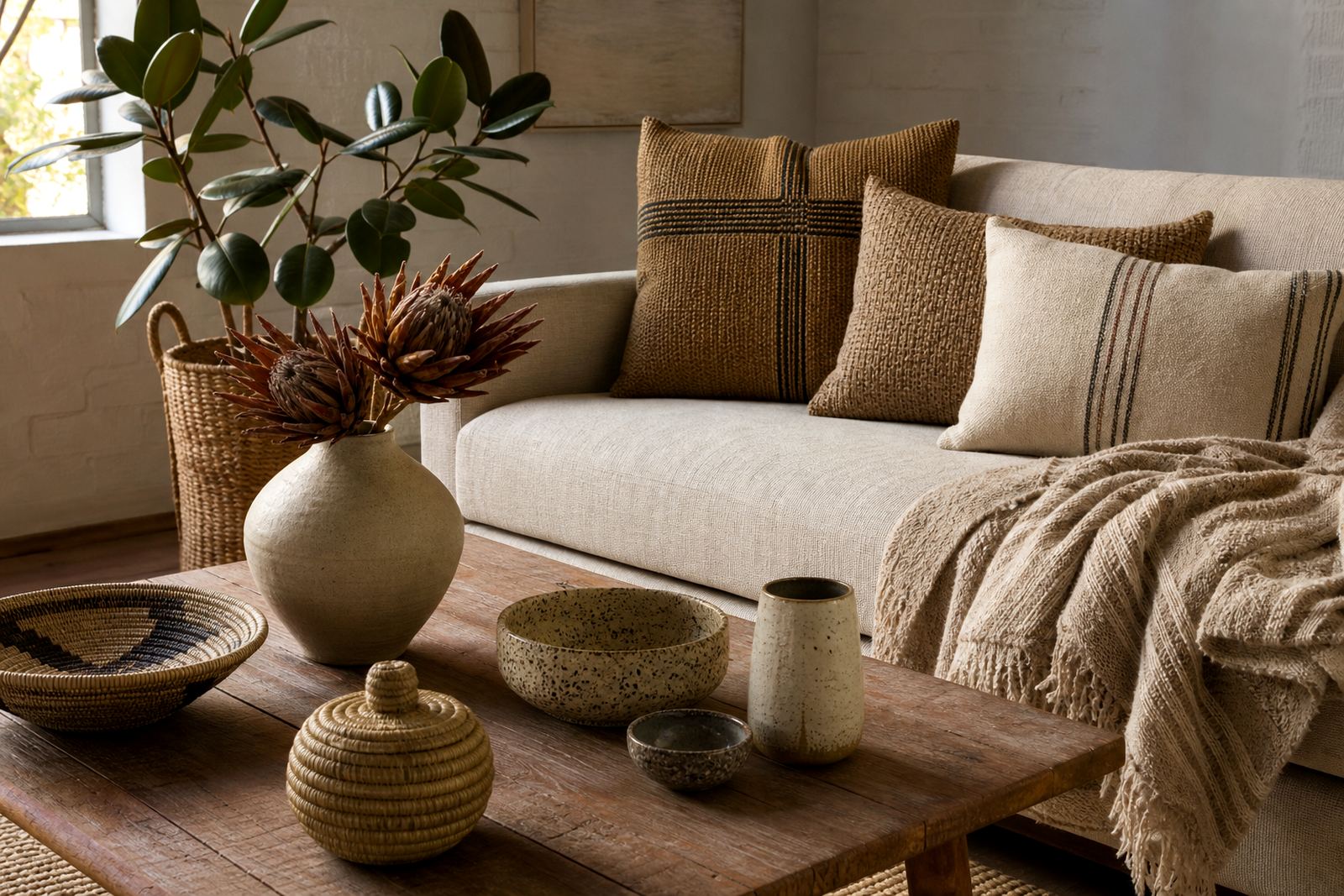
Neutral home styling is often a fit for people who want a room to feel settled, light and lived in without a lot of contrast. In practice, that usually means muted whites, sand, oat, charcoal, clay and softened grey tones, with natural materials carrying the interest. A glazed ceramic bowl, a woven throw or a timber tray can shift a room from plain to considered without changing the whole layout.
LocalMaker pieces suit this kind of styling because the finish is not overly uniform. Small variations in glaze, weave or grain give the room movement, while staying easy to mix with existing furniture. That matters in open-plan homes too, where the same items may need to work in a lounge, dining area and entrance space.
Pieces that usually anchor the look
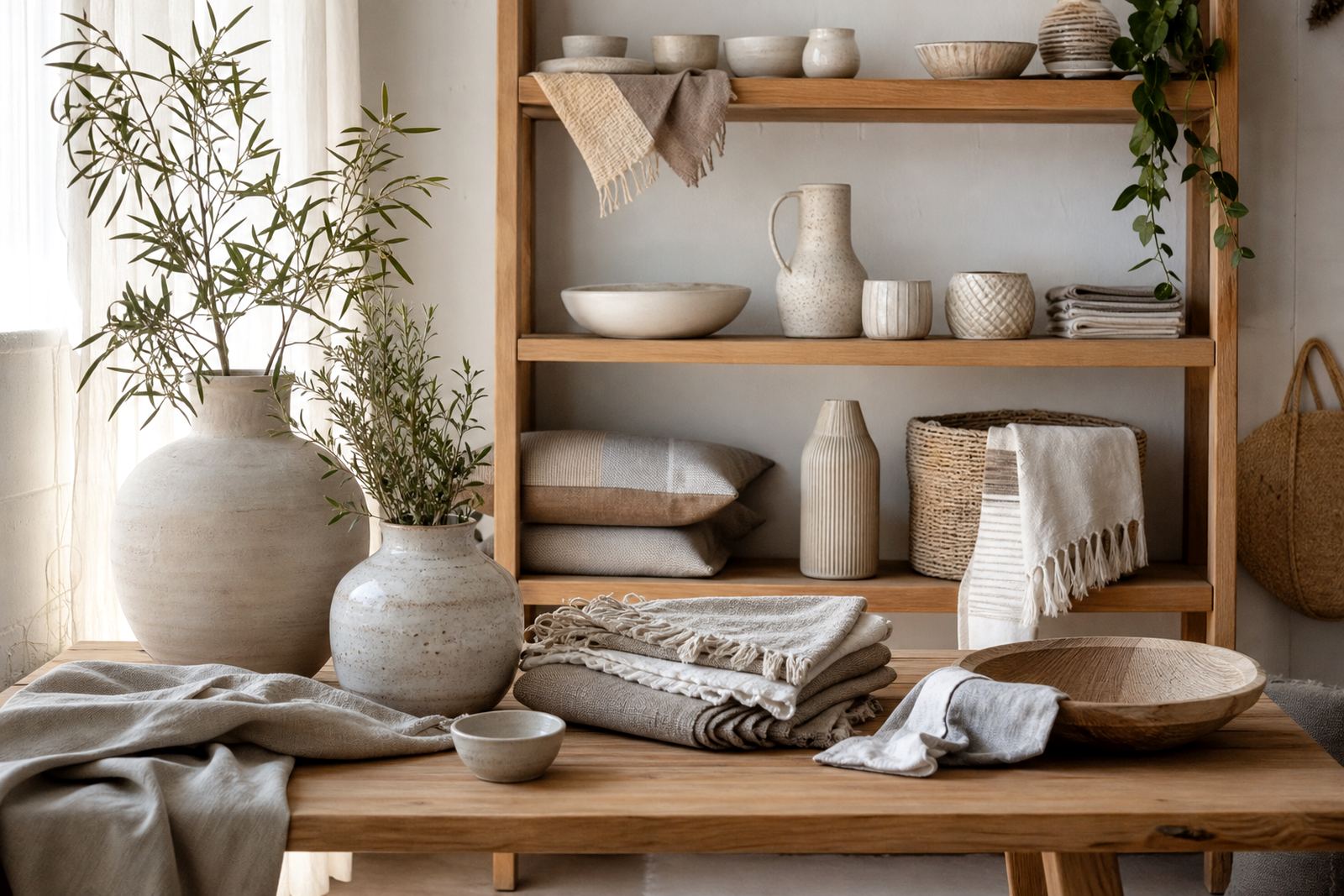
For neutral styling, the most useful items are the ones that can repeat across rooms. Keep the forms simple and let material, shape and tone do the work. A group of handmade pieces can feel cohesive even when they are not matched exactly.
- Ceramic vases, bowls, tumblers and serving dishes with matte or softly glazed finishes
- Table runners, cushions, throws and napkins in linen, cotton, wool or woven blends
- Timber trays, sculptural objects, side pieces and serving boards in natural or lightly finished wood
- Decor accents such as woven baskets, candle holders, wall pieces and small display items
When mixing materials, keep one colour family steady and vary the texture. For example, a pale ceramic vase beside a woven basket and a timber tray creates enough contrast without making the room feel busy.
How to place the items so the room feels settled
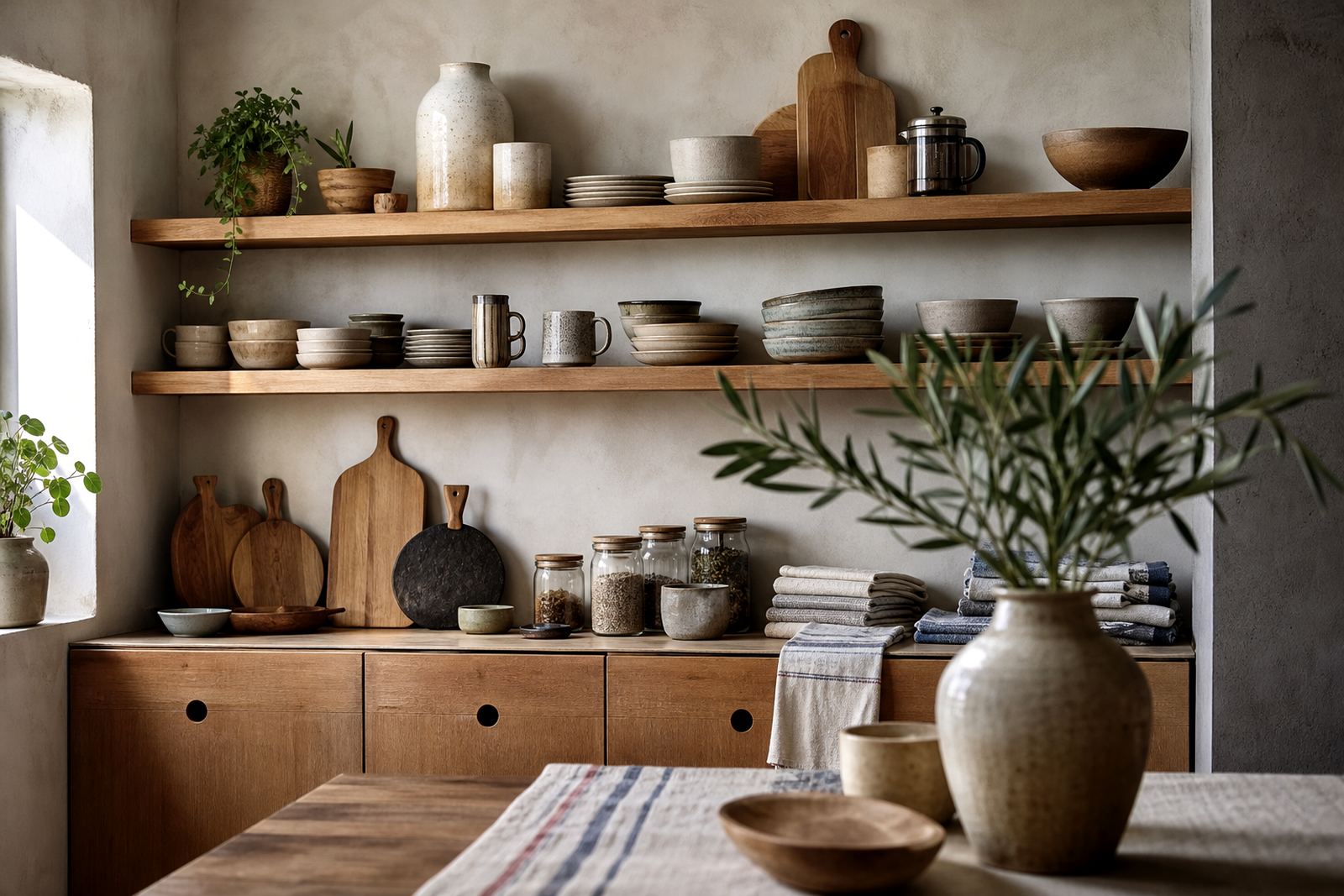
Layout matters as much as the objects themselves. In a neutral room, clutter shows quickly, so it helps to group pieces in odd numbers and leave enough breathing space around them. On a dining table, one low bowl, one medium vase and a folded textile runner can be enough. On a shelf, mix closed storage with a few open items, then repeat the same tone in another corner of the room.
Use height in small steps rather than a single tall statement. A low ceramic vessel, a mid-height lamp or vase, and a taller branch or sculptural form will feel calmer than many competing shapes. In Cape Town homes, especially near the coast, soft finishes also help reduce the stark look that strong sunlight can create on glossy surfaces.
- Repeat one material in more than one room for continuity
- Keep large furniture plain if the decor has texture
- Use one main accent colour only if the room needs warmth
- Leave open space on shelves, tables and side units
Care and upkeep for handmade materials
Handmade homeware lasts best when care is matched to the material. Ceramics should be handled carefully, especially if they have fine rims or reactive glaze. Most glazed pieces wipe clean with a soft cloth and mild soap, then dry well before storing. Textiles such as linen and cotton should be washed according to the fibre, with cooler water preferred when the weave is delicate. Timber pieces do well with dry dusting and the occasional light oiling if the finish calls for it.
In humid areas such as Durban, keep textiles dry and aired between uses. In coastal homes around the Atlantic Seaboard, store timber away from prolonged damp and avoid leaving ceramics on wet surfaces. A little care helps the pieces keep their colour and shape, and it also keeps the room looking neat instead of tired.
Common styling slips that make neutral rooms feel flat
Neutral does not have to mean empty or pale in every corner. The usual mistake is relying on too many smooth surfaces and not enough texture. Another is buying one item at a time with no plan, which often leaves a room with too many similar beige tones and no point of focus. A third error is choosing decor that is too small for the space, so the room feels scattered instead of calm.
It helps to work from a short list before ordering:
- Measure shelves, tables and wall spaces before selecting decor
- Choose one dominant texture, then two supporting ones
- Balance soft items with harder forms such as timber or ceramics
- Check that gift pieces, display pieces and practical pieces can work together
If the room already has patterned upholstery or a coloured rug, keep the decor quieter. If the furniture is plain, the handmade pieces can carry more of the visual weight.
Budget bands for a considered room in Rand
Neutral home styling can be built in stages, which makes it easier to manage spending. A small refresh for one room might only need a few well-chosen pieces, while a fuller styling plan can cover the lounge, dining area and entryway together. Pricing depends on size, materials and whether items are single pieces or part of a coordinated gift set.
As a working guide, a modest update can start around R800 to R1,500 for a small mix of ceramics and textiles. A mid-range room refresh often sits between R1,500 and R4,000 when you include a few display items, a runner and one or two timber accents. A fuller home styling order with gift wrapping, custom bundles or multiple room sets can move beyond R4,000, especially if you are outfitting a larger home or buying for corporate gifting.
For homes in Johannesburg, Pretoria, Cape Town, Durban and Stellenbosch, delivery coordination can be planned around the room list so the order arrives in a useful sequence, not as random pieces that are hard to place.
Ordering for a home that already has its own character
Neutral styling works best when it respects what is already in the room. That might be a dark timber table, a tiled floor, a painted feature wall or a plain sofa that needs softening. LocalMaker’s handmade ceramics, textiles and decor can be used to link those elements together without forcing everything into one look. If you need help matching items into housewarming sets, wedding gifting or a larger custom bundle, the enquiry form on the contact page can be used to outline the room, the colours already in place and the type of finish you prefer.
Because the pieces are made by South African makers, small variation is part of the appeal. That means a neutral room can still feel personal rather than cold, with enough texture to stay interesting over time.