
What a South African patio table usually needs
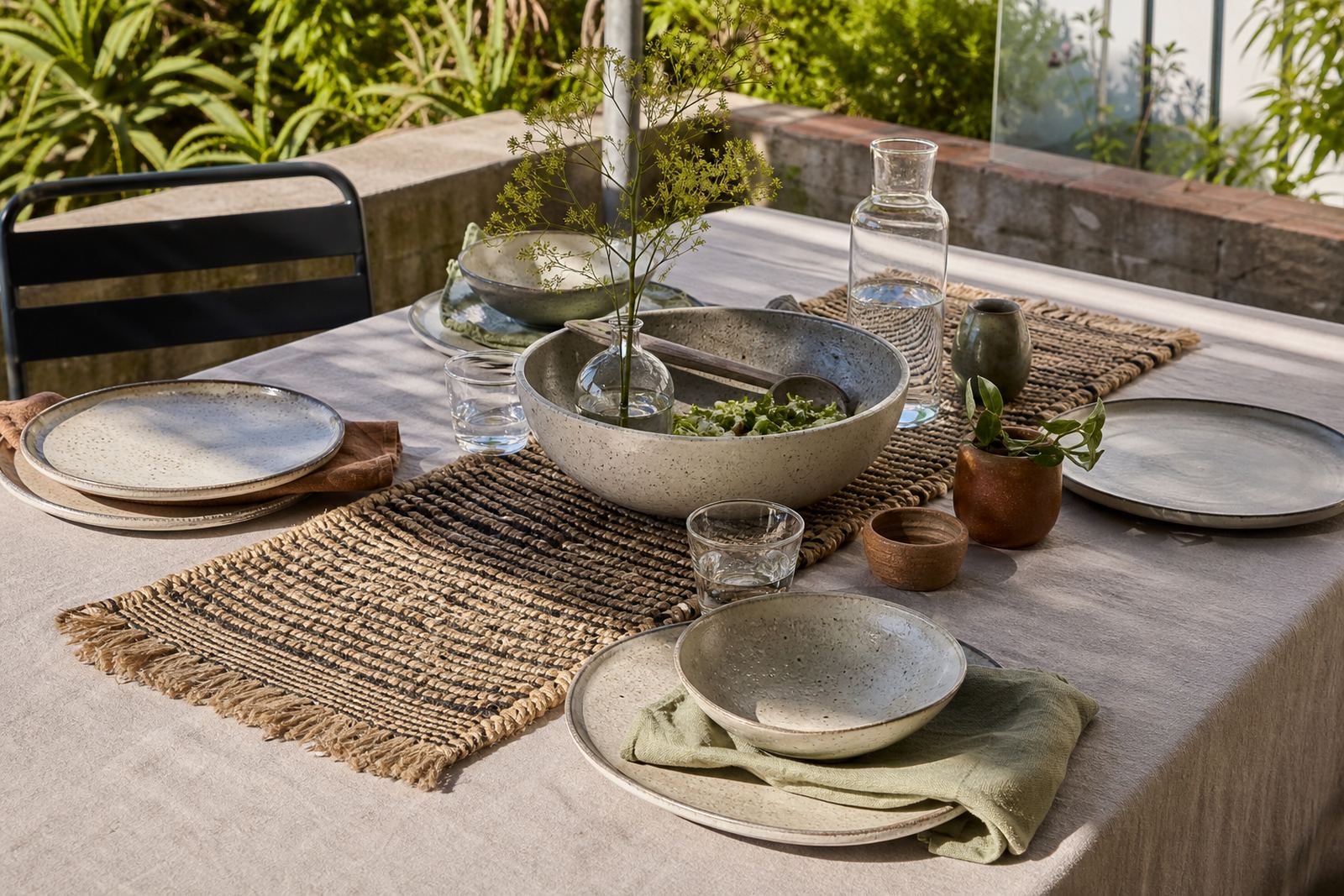
For a patio table in Cape Town, Durban or Pretoria, the usual starting point is a mix of sturdy serving pieces and easy-care textiles. Think a ceramic serving bowl, a couple of platter sizes, placemats, napkins and one or two table accents in wood or woven fibre. If the table is used often for lunch or braais, it helps to keep the set light enough to carry in and out, but solid enough to stay put when the wind picks up.
Coastal homes often prefer pieces with simple forms and less fussy detail, because salt air and damp evenings can be hard on finishes. Inland patios may need more protection from strong sun. Either way, a good set should feel practical first, then beautiful.
- Ceramic bowls for salads, sides and fruit
- Wooden boards for bread, cheese and snacks
- Textile napkins and runners for colour and texture
- Small decor pieces for a centre of the table
How to build a useful outdoor set
A table used for casual meals does not need a full matching set. It works better with a few coordinated pieces in similar tones, then one or two items that give the table character. Handmade ceramics are useful because each item can be slightly different and still feel considered. Textiles soften the look, while wood adds warmth and keeps the table from feeling too formal.
For four to six people, a common set might include 4 to 6 placemats, 6 napkins, 1 runner, 2 serving bowls, 1 platter and 1 board. For bigger gatherings, add spare napkins and a second serving bowl so food can be spread out across the table instead of crowding one end.
- Choose 2 or 3 colours rather than many mixed tones
- Keep one surface mat or runner in a washable fabric
- Use one strong centre item instead of several small objects
- Leave space for dishes, drinks and serving spoons
Layout advice for patios, balconies and braai corners
On a compact balcony in Woodstock or Sea Point, the table should stay clear at the centre and leave enough room for plates to move without knocking candles or jars. On larger patios in Stellenbosch or the Southern Suburbs, you can layer a runner, place settings and a centre bowl without crowding the surface. The trick is to let the food stay the focus.
If the table sits near a braai, place textiles a little away from direct heat and ash. If it is exposed to afternoon sun, avoid leaving ceramics in harsh heat for long stretches, especially glazed items that shift temperature quickly. A shaded edge, shelf or trolley nearby can help keep extras close but out of the way.
- Measure the table top before choosing runners or placemats
- Leave at least a hand span around shared dishes
- Keep delicate decor away from the busiest serving zone
- Use a tray for salt, sauces and small condiments
Materials that hold up outdoors
Handmade ceramics are a strong choice for a patio table because they carry weight and suit hot or cold dishes. Glazed pieces are easier to wipe clean, while matte finishes can look softer but may need a little more care. Textiles in cotton or cotton blends are useful for napkins and runners, especially when they are washed often and need to dry well in Cape Town humidity or a Durban summer.
Wooden boards and serving pieces should be kept dry after use and stored out of direct rain. Natural fibres can work well for placemats and basket details, although they are better under a roof or covered stoep. Pieces that are made and finished well usually last longer, but they still need sensible handling.
- Wipe ceramics with warm water and mild soap
- Wash textiles according to the care label and dry fully
- Oil wooden boards when the surface starts to look dry
- Store woven items away from damp corners
Mistakes that make patio tables feel awkward
The most common mistake is using indoor pieces that look good at first but feel out of place outside. Another is loading the table with too many decor items, which makes serving difficult and can leave no space for a bread board or extra glasses. A third issue is choosing textiles that stain badly or take too long to dry, especially when meals run late and the table needs clearing before evening moisture sets in.
It also helps to avoid very fragile objects if children, pets or a busy serving rhythm are part of the household. A patio table should feel easy to use, not precious. Good pieces can still feel special without needing careful supervision all the time.
- Do not overcrowd the middle of the table
- Avoid fabrics that trap crumbs and spill marks
- Do not mix too many patterns at once
- Keep breakable decor away from the edge
Budget ranges for a table that feels finished
For a modest patio refresh, many households start with one runner, 4 placemats, a small ceramic bowl and 2 napkins per person, which can sit in the lower hundreds of Rand depending on the materials and maker. A mid-range set with extra serving pieces, matching textiles and a wooden board often moves into the low thousands. Larger gifting sets, custom bundles or curated housewarming pieces can go higher when there are several items in one order.
If you are planning for regular outdoor meals, it is usually better to buy fewer pieces with stronger finish and better balance, rather than filling the table with items that do not work well together. LocalMaker can also help with curated gift boxes, housewarming sets, wedding gifting and bulk orders for patios that need a more complete look.
- Entry set: runner, napkins and one ceramic serving piece
- Mid set: place settings, serving bowls and a wooden board
- Gift set: mixed ceramics, textiles and decor in a coordinated bundle