Grain, edge and finish that do the work
A wooden tray is one of those pieces that earns its place fast. It gathers a mug, sugar jar and spoon for morning tea, keeps a carafe steady on a sideboard, or gives candles and a small vase a neat boundary on a coffee table. In a Cape Town home, where salty air and everyday use can show up on surfaces quickly, the right finish matters just as much as the shape.
We source trays made from solid hardwoods and timber offcuts where appropriate, with each piece showing natural variation in grain, knots and tone. A well-made tray should feel balanced in the hand, with clean edges, comfortable carry points and a base that sits flat. Some makers leave the timber lightly oiled for a more natural look, while others use a sealed finish for easier wiping. Small colour shifts are normal and part of the appeal, not a fault.
- Common material choices include ash, oak, teak, beech and similar hardwoods.
- Finishes may be oil, wax, clear sealant or a combination suited to daily handling.
- Expect natural grain movement, slight tone differences and occasional tiny tool marks on handmade pieces.
Sizes that suit coffee tables, counters and bedside use
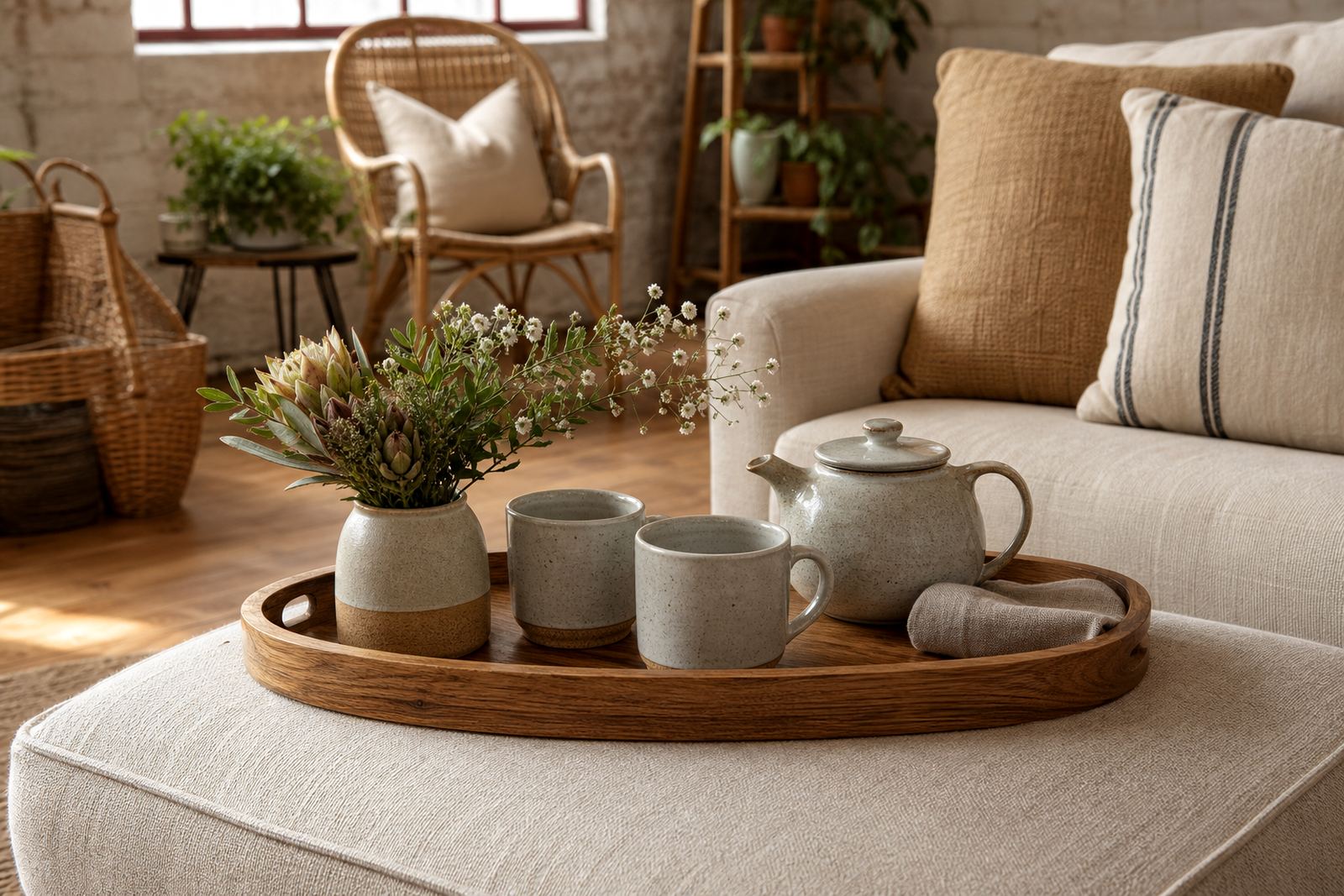
Wooden trays come in useful sizes for small homes, larger family spaces and gifting. A compact tray works well on a bedside pedestal or bathroom shelf, while a medium tray carries a teapot, cups and a jar of biscuits. Larger trays are better for serving at the table or grouping a few decor objects without making the surface feel crowded. If you are styling a long ottoman or a wide kitchen counter, the length of the tray should leave a little space around it so it does not look squeezed in.
When ordering, check the usable inside area, not only the outside measurement. A tray with raised sides or chunky handles may look larger than the flat base it actually offers. If you plan to use it on a narrow shelf, measure the shelf depth and any overhang at the front. For layered styling, the tray should still leave room for books, a lamp or a vase beside it, otherwise the surface can feel cramped.
- Small trays are often around 30 x 20 cm, suited to bedside items and single-serve use.
- Medium trays commonly fall near 40 x 30 cm, useful for tea service and coffee tables.
- Large trays may reach 50 x 35 cm or more for serving, gift sets and grouped styling.
Where wooden trays fit in the home
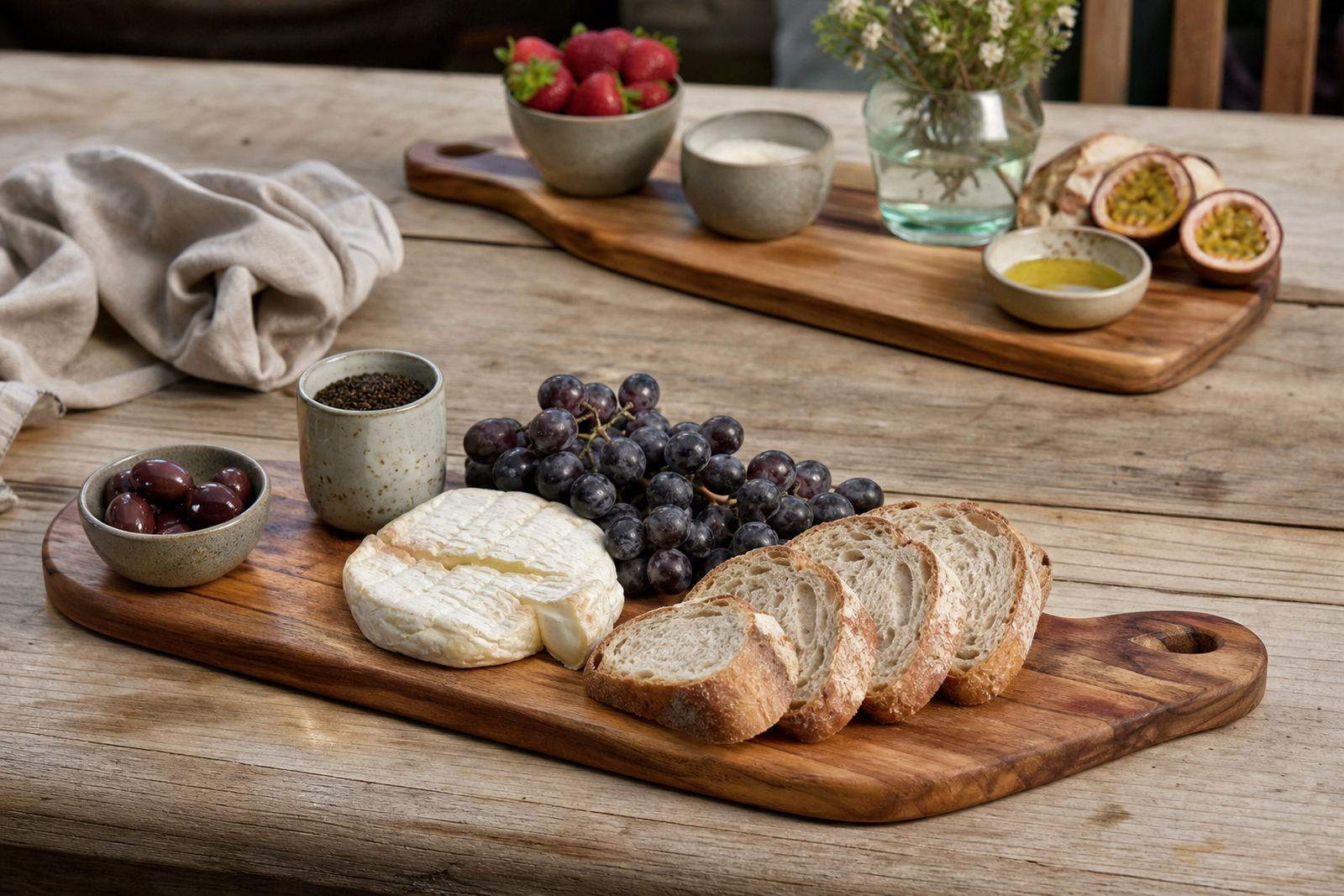
These trays suit living rooms, bedrooms, dining rooms and covered patios. On a coffee table, a tray gives loose items a proper boundary and makes cleaning simpler when visitors leave cups and serviettes behind. In a bedroom, it keeps glasses, lotion and a reading light together without looking untidy. In a kitchen or scullery, it can hold oil bottles, salt, pepper and a small dish for spoons, especially where counter space is limited.
For hospitality use, wooden trays work well for guest bedrooms, boutique stays and corporate gifting because they feel personal without being fussy. In Durban and other coastal areas, stored items may sit in more humidity, so a sealed finish is worth considering if the tray will be handled often. In Johannesburg and Pretoria, drier indoor air can still dry out untreated timber over time, so simple care is worth keeping up with.
- Good for coffee service, breakfast-in-bed, sideboard styling and welcoming guest rooms.
- Also useful for grouped decor, candles, diffusers and small plant pots on a stable base.
- Choose a shape that matches the setting: round for soft decor, rectangular for tables and shelves.
Details to confirm before placing an order
Because each tray is handmade, it helps to confirm a few practical details before ordering. The maker’s timber choice, the height of the sides, the depth of the handles and the type of finish all affect how the tray feels in daily use. If you need a tray for serving food often, check whether the finish is suitable for occasional contact with cups, plates and dry snacks, and whether the surface has been sealed on all sides or only the top face.
It also helps to confirm whether the base is smooth, grooved or fitted with feet. A flat base is best for stacking and shelf storage, while feet can improve airflow and protect polished tables. If you want several trays for a set, ask whether the grain and tone will match closely or whether each one will differ, as handmade timber pieces are rarely identical. That variation is part of the charm, but it can matter when you are buying for a hotel room or a corporate hamper.
- Confirm the overall length, width and usable internal space.
- Check side height, handle cut-outs and the weight of the tray when empty.
- Ask about sealant type, food-contact suitability and whether the underside is finished.
Looking after timber in a busy South African home
Wooden trays last well when they are treated as everyday pieces rather than forgotten decor. Wipe them with a soft, slightly damp cloth after use, then dry them straight away so moisture does not sit in the grain. If the tray was oiled, a little food-safe oil now and then can help keep the timber from looking dry. Avoid soaking, dishwashing or leaving it standing in water, as this can cause warping or surface marks.
Direct sun through a window can fade timber over time, and repeated heat from mugs or pots can leave pale rings. If your tray is used for hot serving, place a coaster or cloth under very warm items. In homes near the coast, let the tray dry fully before storing it in a closed cupboard. A clean shelf, a dry cloth and a bit of care go a long way, and the piece will usually age well with a softer patina over time.
- Dust with a dry cloth or wipe with barely damp microfibre, then dry immediately.
- Re-oil only when the surface looks tired, using a product suited to timber care.
- Keep away from long soaking, sharp scrubbing pads and harsh chemical cleaners.
Gift use, delivery and service around the tray
Wooden trays make practical gifts for housewarmings, weddings, client hampers and thank-you packs because they are useful long after the wrapping comes off. A tray can hold coffee sachets, biscuits, candles, a notebook or bath items, depending on how you want the gift to feel. For corporate sets, a plain timber tray gives a calm base for branded items without taking over the whole arrangement.
LocalMaker arranges delivery across South Africa, including Cape Town, Johannesburg, Durban, Pretoria and Stellenbosch, with attention to packaging so the tray arrives in good order. If you need gift wrapping, a gift note, a curated box or a custom bundle, those can be arranged around the tray selection. For replacement help, care advice or bulk orders, our team in Woodstock handles the practical side and keeps the details clear.
- Useful for housewarming sets, wedding gifting and corporate packs.
- Can be paired with mugs, linen napkins, candles or small decor items.
- Best suited to customers who want a hand-finished piece with natural variation.
Key facts
| Product type | Handmade wooden tray |
|---|---|
| Common sizes | Approx. 30 x 20 cm, 40 x 30 cm, 50 x 35 cm |
| Material options | Hardwood, reclaimed timber, timber offcuts where suitable |
| Finish options | Oil, wax, clear sealant or sealed timber finish |
| Use areas | Coffee table, bedside, kitchen counter, sideboard, guest room |
| Care | Wipe clean, dry after use, re-oil when the surface looks dry |