
Why earthy tones keep working in real homes
Earth-led palettes are forgiving, which matters when a home is built up over time. Cream, clay, sand, olive, terracotta and muted brown tones can sit beside light timber, black metal, white walls and older pieces without looking forced. In a Cape Town flat with strong afternoon light, these colours soften glare. In a Johannesburg home with deeper winter light, they stop a room from feeling cold and bare.
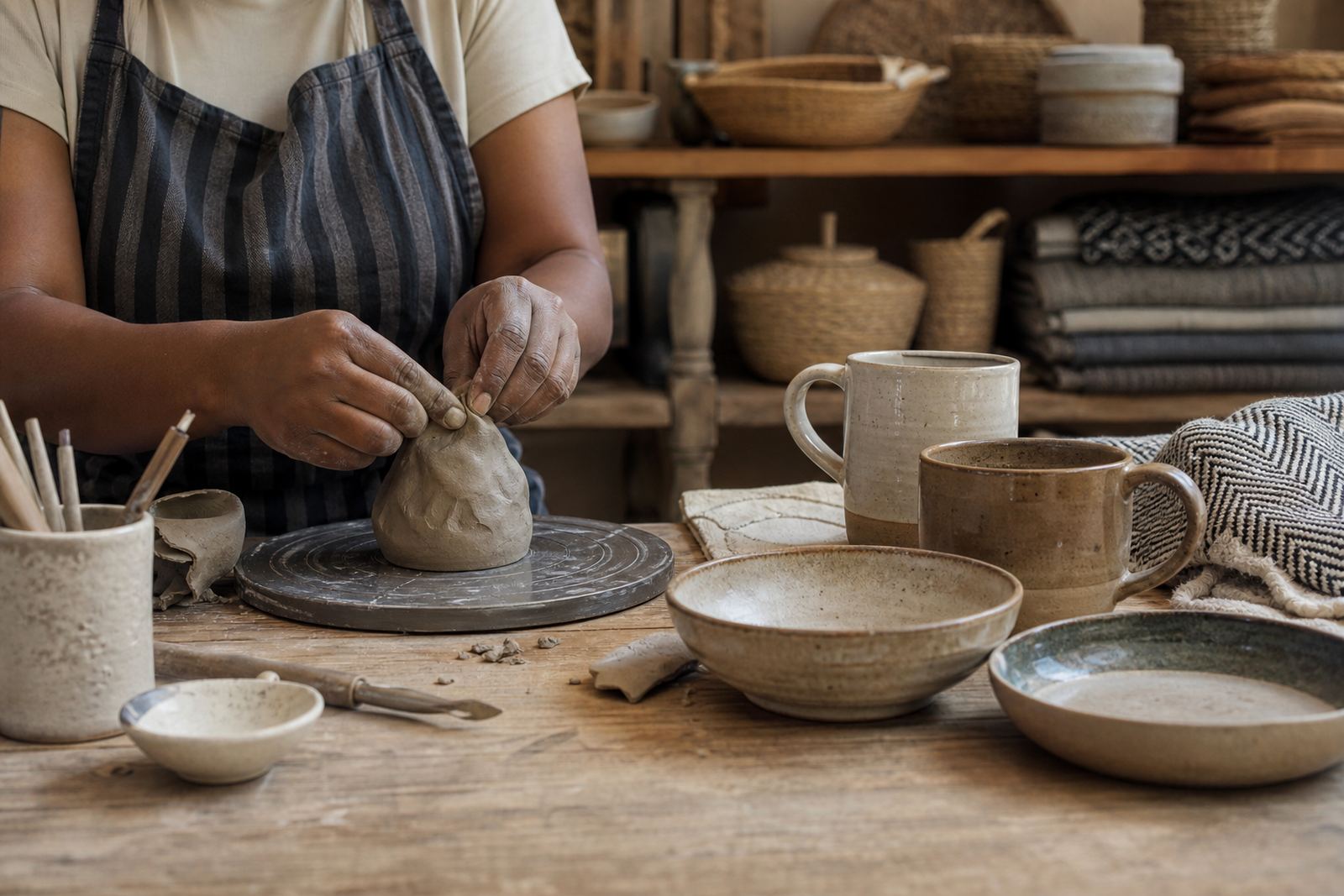
Handmade homeware benefits from this kind of palette because no two pieces are identical. Small differences in glaze, weave or grain look intentional when the colours are grounded. A bowl with a speckled finish, a woven throw in ochre and a wooden tray with visible knots can all work together if the undertones are close. The result is a room that feels collected over time, not rushed.
Build a palette from one starting point
It helps to choose one anchor piece first, then let the rest of the room follow. That could be a ceramic vase, a woven cushion, or a serving bowl that will be on view most days. Once the main tone is set, the other pieces can stay within the same family and add only a little contrast. You do not need every item to match exactly, in fact that can flatten the room.
- Choose one dominant tone, such as clay, oat or charcoal brown.
- Add one lighter support shade like bone, flax or soft grey.
- Use one deeper accent, for example rust, forest green or umber.
- Repeat the same tone in more than one material so the room feels linked.
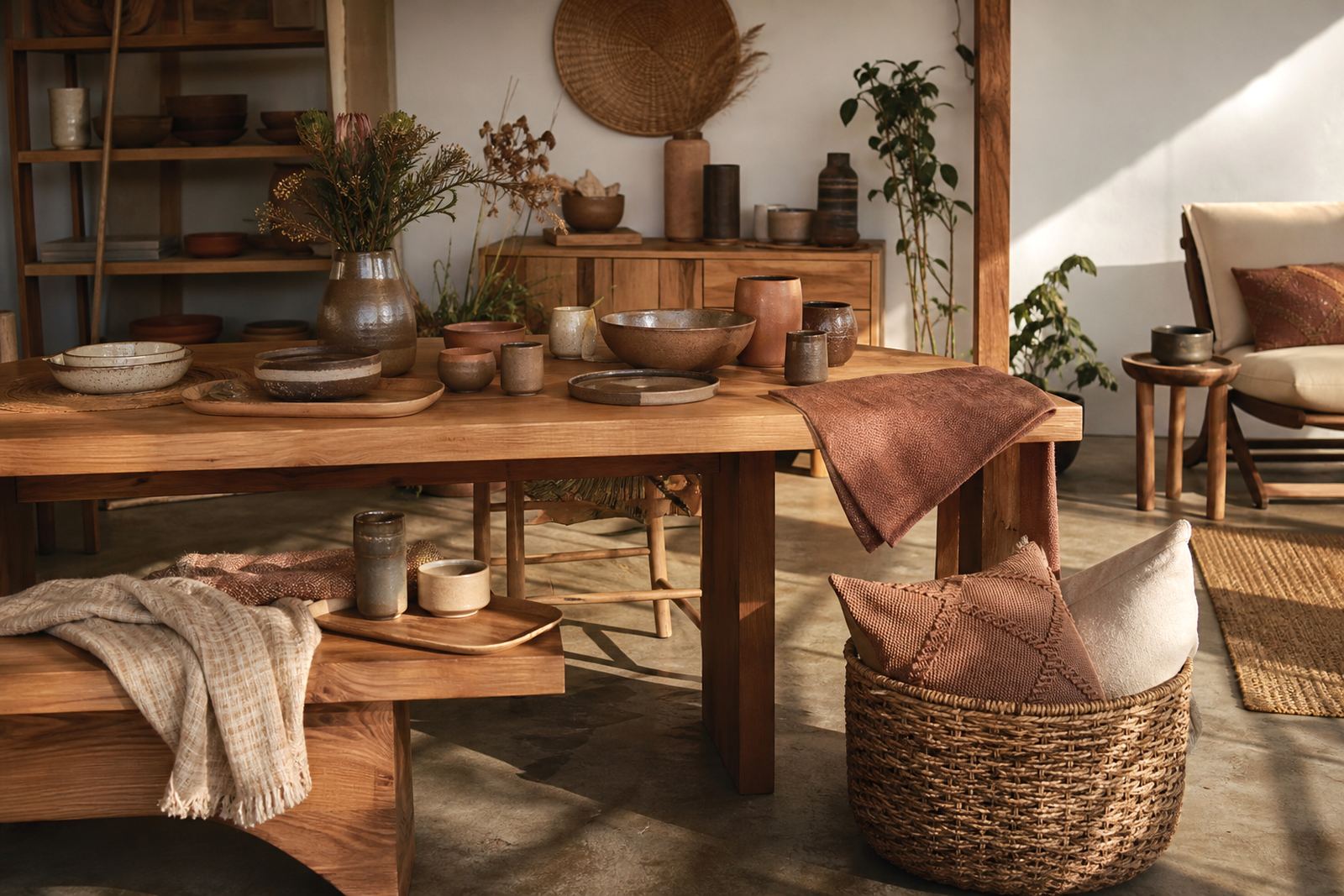
A living room might use a sand-coloured throw, a matte ceramic lamp base and a wooden coffee tray. A dining area could pick up similar notes through table linen, handmade plates and a centrepiece bowl. The trick is repetition with small shifts, not a perfect set.
Ceramics, textiles and wood in the same room
These three materials do most of the work in an earthy home because each one carries colour differently. Ceramic holds colour with a smooth, grounded finish. Textile picks up light and brings movement. Wood introduces grain and warmth. When they are handled well, the mix feels natural and not overdone.
Glazed ceramics in warm neutrals work well with stoneware textures, especially for kitchens and shelves. Textiles such as cotton, linen and woven blends add softness through cushion covers, runners and throws. Wood pieces bring balance through serving boards, candle holders and small decorative objects. If one material is busy, keep the others calmer. A patterned woven cushion can sit with plain ceramics and a simple wooden bowl, for example, so the room still feels steady.
In coastal homes around Woodstock, Salt River or the Atlantic Seaboard, humidity and salt air can affect how materials age. Natural fibres may need a little more care, and unfinished timber can show marks faster, so it is worth keeping pieces dry and dusted. A small bit of care goes a long way, and keeps the finish looking clean rather than worn out.
Room-by-room colour moves that feel lived in
Earthy tones work best when they answer the room they are in. A kitchen usually needs colours that can handle daily use and show food beautifully. A bedroom can lean softer and quieter. A living area can take more contrast because it often holds more layers already.
- Kitchen: use stone, oat and warm grey for plates, mugs and serving pieces.
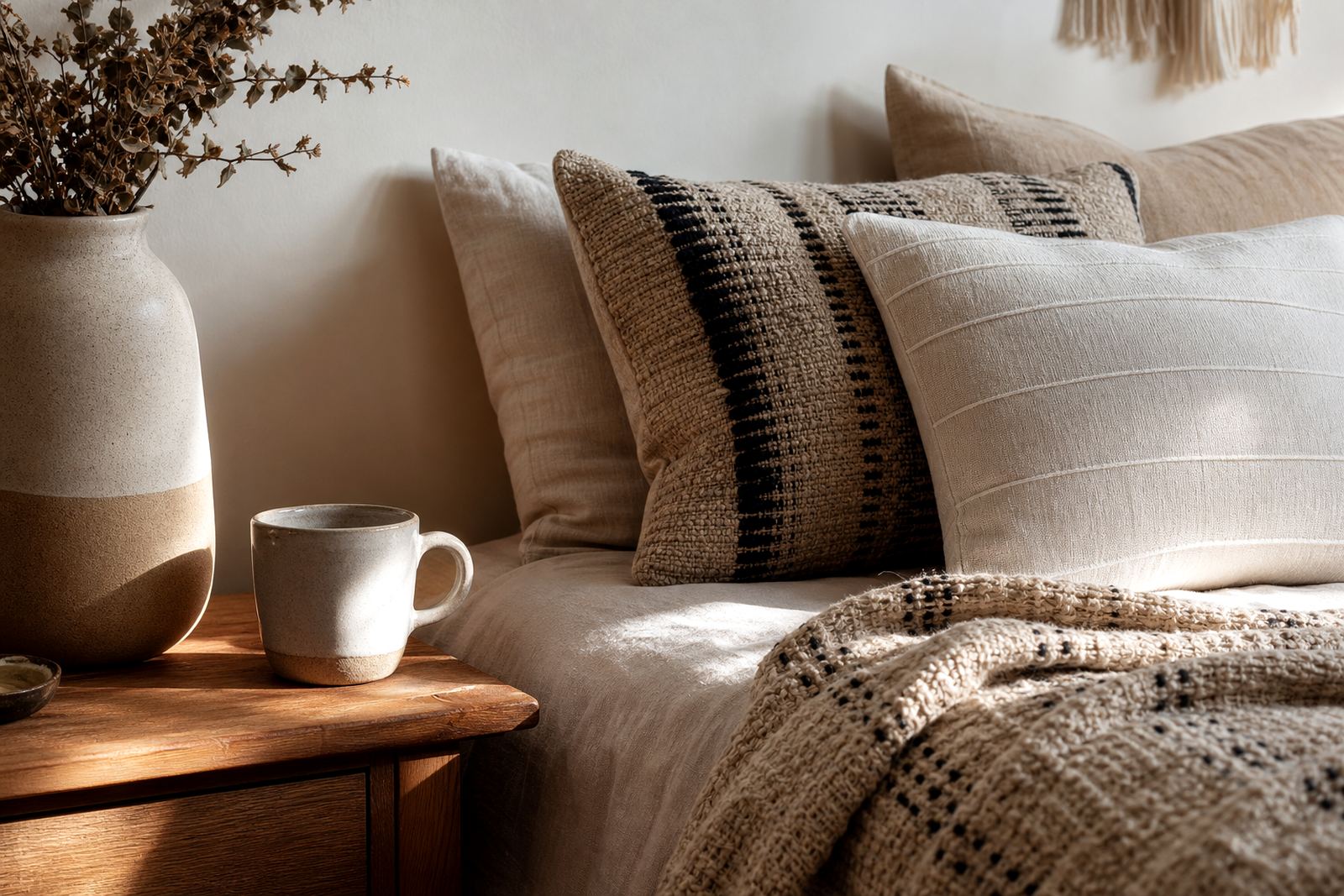
- Bedroom: lean into muted blush, flax, mushroom and dusty brown on cushions and throws.
- Living room: add terracotta, olive and charcoal accents through decor objects and occasional textiles.
- Entryway: keep it restrained with one strong bowl, one textile piece and a timber tray.
A Stellenbosch home with pale floors might use deeper clay notes to stop the room feeling washed out. A Durban space with more sunlight can carry richer greens and browns without feeling heavy. The main thing is to let the palette respond to the light in the room, not just the look of the object on its own.
Practical care for handmade finishes
Earthy palettes often rely on natural or lightly finished materials, so care matters. Ceramics are usually straightforward, but pieces with hand-applied glaze or a textured surface should be washed gently and dried well. Textiles last longer when they are kept free of heavy sun exposure and handled according to the fibre. Wood needs regular dusting and the occasional light conditioning if the finish allows it.
It also helps to think about where each item lives. A handwoven cushion in a sunny window may fade faster than one in a shaded corner. A serving board used every day will mark differently from one used only for display. That does not mean the pieces are delicate in a bad way, just that they are made with real materials and should be treated that way. Small marks can add character, but good care keeps them useful and tidy. It is less about being precious and more about being practical.
- Keep ceramics away from sudden temperature changes.
- Shake out or air textiles before storing them.
- Wipe wooden pieces dry after cleaning.
- Rotate decor objects now and then so colour fades evenly.
A local palette that fits South African homes
South African homes often mix old and new furniture, borrowed pieces and gifts, which is exactly why earthy palettes work so well. They let handmade homeware sit comfortably in a space without demanding a full room makeover. A ceramic jug from a maker in the Western Cape, a woven runner placed on a table in Pretoria, or a timber bowl used in Durban can all share the same visual language if the tones are warm and grounded.
For gifting, this makes life easier too. Housewarming sets, wedding gifts and corporate pieces can stay useful over time when the colours are calm and easy to place in many kinds of homes. A set of neutral ceramics and a cotton textile can suit a compact apartment in the Southern Suburbs or a larger family home in Johannesburg just as well. That is the value of an earthy palette: it gives the homeware more than one life, and it does not fight with the pieces already there.
At LocalMaker, that kind of mix is part of the appeal of shopping handmade. The items are chosen for the way they sit together, not just for one season or one style. Warm neutrals make that easier, and they leave enough space for the maker’s hand to show through.