
The feel in your hand matters first
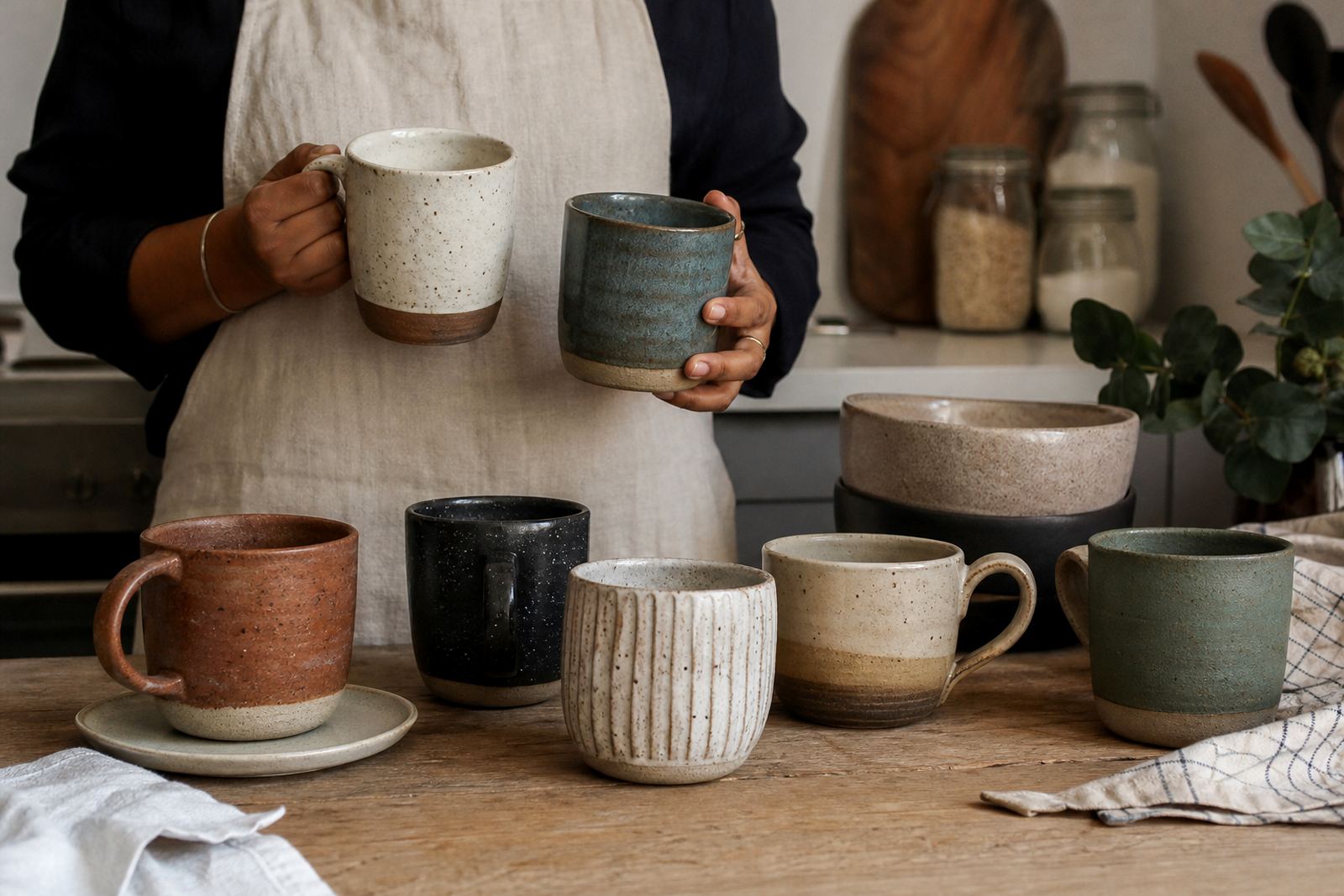
A good daily mug starts with the handle and the rim. If the handle is too small, too thin or set too close to the body, your fingers feel cramped by the third sip. If it is too large, the mug loses that settled feel and can feel clumsy when full. The best handmade mugs usually give enough space for two or three fingers, with a handle that has a smooth inside edge and enough depth to support a secure grip.
The rim should also be pleasant against the mouth. A trimmed, even lip makes a bigger difference than many people expect. It lets you drink tea, coffee or hot chocolate without a sharp edge or a bulky feel. In daily use, comfort usually comes from these small choices rather than from decoration.
- Check the handle opening with your own fingers, not just by eye.
- Look for a rim that feels even all the way around.
- Choose a mug that feels steady when lifted with one hand.
Weight, balance and the size that suits your routine
Daily mugs should feel balanced when full, not top-heavy or awkwardly weighted at the base. A wider foot can help the mug sit steadily on a kitchen counter, office table or breakfast tray. A base that is too narrow may look elegant, but if the mug is tall and heavy at the top it can feel unstable in the hand.
Capacity matters too. For a morning filter coffee you may want a slightly larger mug, while a strong tea drinker may prefer something smaller and more concentrated. The right size depends on how you actually drink, not on a matching set or a trend. In many Cape Town homes, especially where the kitchen is short on storage space, a mug that stacks neatly or tucks into a shelf without fuss becomes the one used most often.
- Choose a size that matches your usual drink, not an occasional one.
- Lift the mug when it is full if you can, to test balance.
- Look for a base that sits flat and does not wobble.
Clay body, heat and why handmade mugs feel different
The clay body shapes how a mug performs from the first pour. Stoneware is often favoured for daily use because it is durable, holds heat well and has a satisfying weight. Earthenware can be lovely too, usually with a warmer feel and lighter body, though it may need a bit more care depending on the glaze and firing. Porcelain is finer and often lighter, with a crisp feel in the hand, though some people prefer a little more warmth and substance.
Handmade mugs also tend to vary slightly from piece to piece, which is part of the appeal. That variation can make a mug feel more personal, but it should not interfere with comfort. A well-made mug has even walls, a base that feels secure and a profile that sits naturally against the palm. In a humid coastal area like Woodstock or the Atlantic Seaboard, a dense clay body with a well-fired glaze can also help the mug keep its finish looking tidy in everyday kitchen conditions.
- Stoneware is a practical choice for regular use.
- Porcelain feels lighter and often more refined in the hand.
- Even wall thickness helps with comfort and heat retention.
Glaze finish and the look of everyday use
Glaze affects more than colour. A glossy glaze can feel smooth and easy to wipe clean, while a satin or matte finish can give a softer touch and a quieter look on the table. The finish should feel pleasant where the lips meet the rim and where the hand rests on the body or handle. Some mugs use a mix of surfaces, such as a matte exterior with a glazed interior, which gives both grip and easy cleaning.
For daily use, practical marks matter more than perfection. A mug that can handle tea stains, coffee rings and ordinary washing without losing its character is often the one people keep reaching for. In homes across Johannesburg, Durban and Pretoria, the best everyday mug is usually the one that does not ask to be treated like a display piece. It is made to be used, washed and used again, with the glaze carrying the small signs of life in a good way.
- Glossy interiors are often easier to wipe clean.
- Matte exteriors can feel warmer and more tactile.
- A slight glaze variation is normal in handmade work.
Care habits that keep a favourite mug in use
Handmade mugs last well when they are cared for properly. Letting a mug cool before washing helps reduce stress on the clay and glaze. A soft sponge and mild soap are usually enough for most everyday mugs. If the piece is dishwasher safe, it still helps to avoid crowding it against heavier crockery that may chip the rim or handle.
For mugs that hold tea or coffee daily, occasional soaking with warm water can help with staining, but harsh scouring pads should be avoided unless the maker has specifically said the surface can handle it. If a mug has a raw clay foot or a textured finish, dry it fully before stacking. In Cape Town, where coastal air can leave surfaces damp longer than expected, letting mugs air dry properly is a small habit that helps preserve the finish.
- Wash gently and dry fully before stacking.
- Avoid hard knocks on the rim and handle.
- Keep textured or unglazed areas from staying damp.
A good mug for the way South Africans drink
Daily use in South Africa often means a mug has to serve many moments, from a quick rooibos before the school run to coffee during load-shedding breakfast prep or a quiet cup after a long drive. A handmade mug should handle that rhythm without feeling precious or difficult. That is why the most satisfying pieces tend to be the ones with a confident handle, a stable base and a shape that suits the way people actually live.
A local example is a family in Stellenbosch choosing a set of handmade mugs for a small kitchen with limited shelving. They want pieces that stack neatly, feel good in the hand and can move between early-morning tea and late-afternoon coffee without fuss. The right mug becomes part of the routine, not something set aside for special occasions. That is the real test of comfort: whether it still feels right after the hundredth cup.
- Choose a mug that suits your daily drink and routine.
- Look for balance, not only decoration.
- Pick pieces that feel good to live with, not just to look at.