
A dining room used for real meals, not only formal occasions
The brief came from a family in Rosebank, Johannesburg who used their dining room daily and hosted often. They wanted a table setting that felt warm and informal, with enough character for Friday supper and enough polish for a birthday lunch. The room had a rectangular table, mixed seating and a pale wall finish, so the pieces needed to add texture without crowding the space.
There were a few practical limits to work around. The family needed serving pieces that could travel from prep space to table without fuss, with runners that would sit neatly on a timber surface without competing with the grain. Candlesticks had to feel steady, and the ceramics had to suit shared platters as well as smaller individual servings. We also had to make cleaning straightforward, because the room is used often, not only for special occasions.
The brief, translated into usable table pieces
The table needed to carry everyday food well, but still look considered when guests arrived. We focused on handmade ceramics, woven textiles and a few wood pieces that would suit a townhouse dining room in Johannesburg, where winter dinners, summer lunches and load shedding meals all end up happening at the same table. The colour palette stayed grounded in clay, off-white, charcoal and natural fibre tones, with one muted accent in the runners.
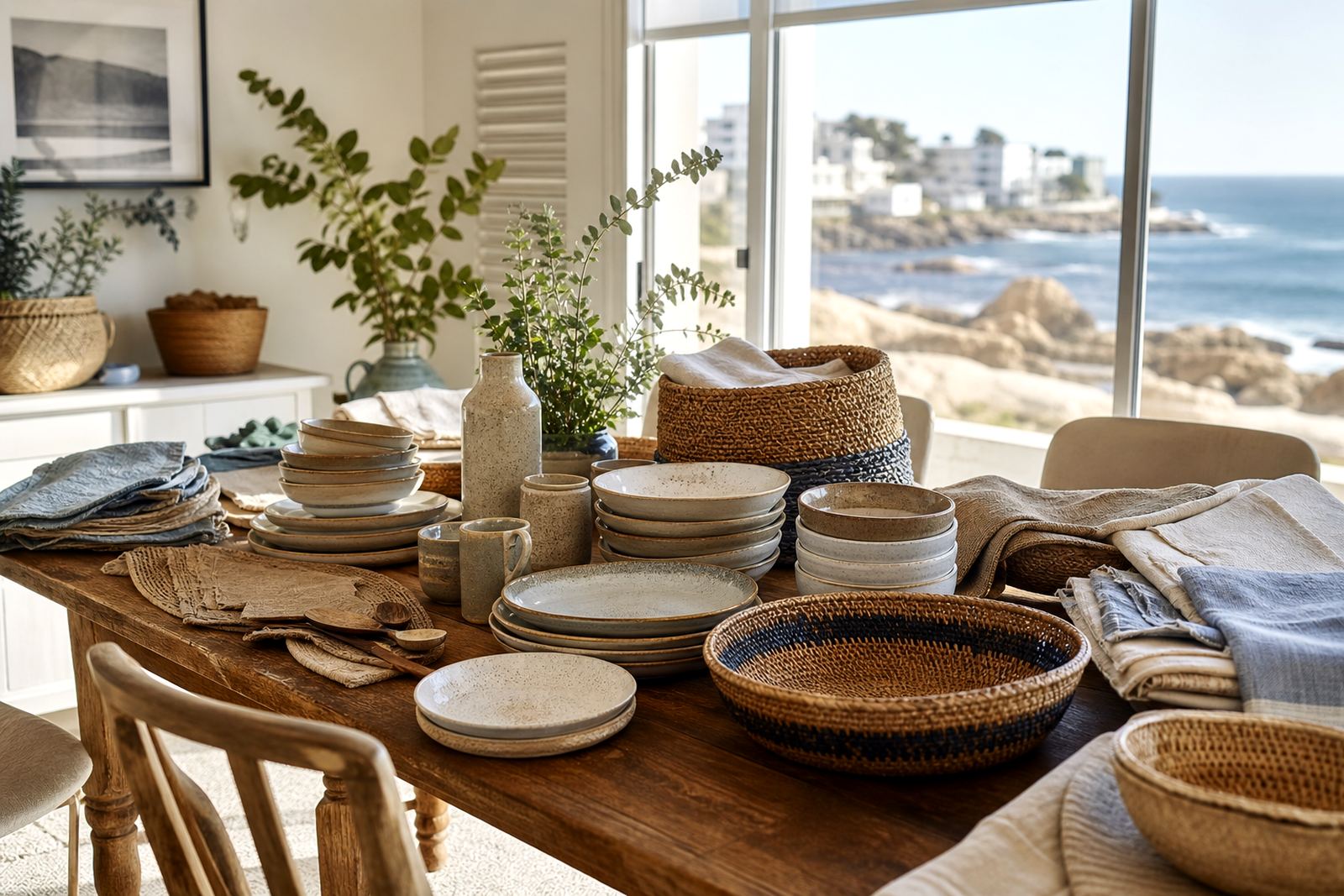
- Handmade ceramic serving bowls in medium and large sizes for salads, vegetables and shared mains
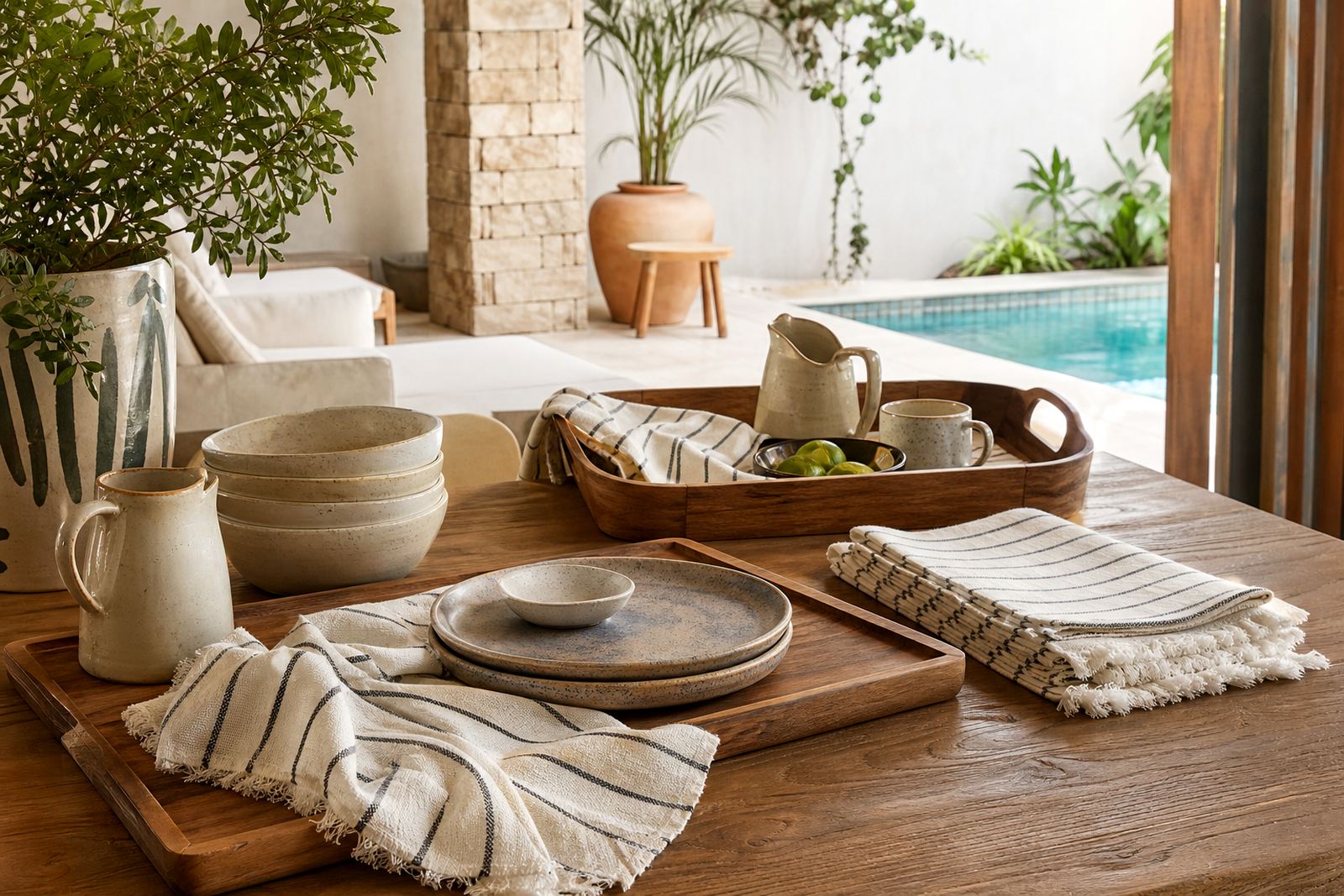
- Woven runners with a natural weave and a hemmed edge for a neater fall
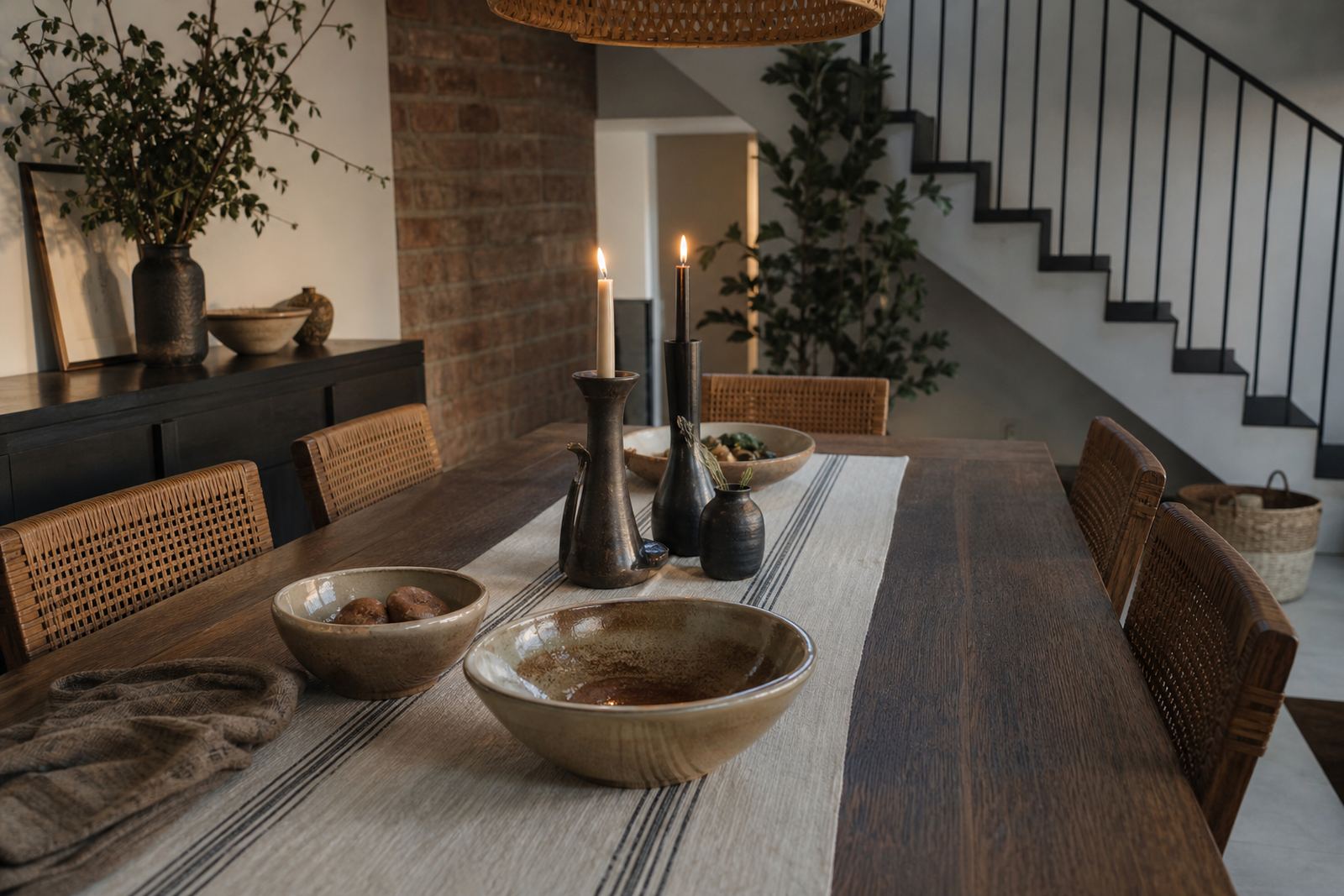
- Candlesticks in a weighted form, suited to taper candles and steady placement
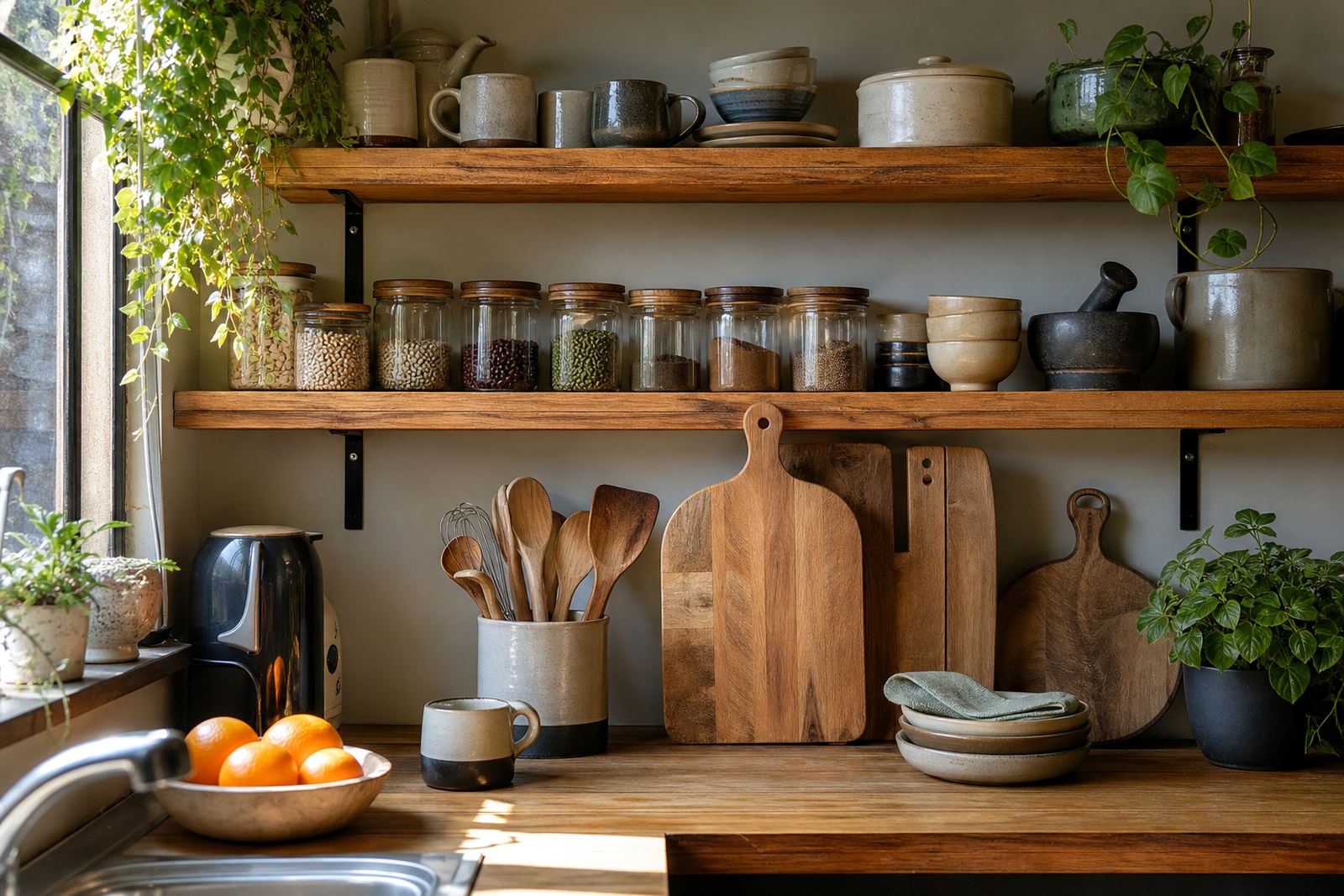
- Wood serving boards for bread, cheese and sliced fruit
- Small decor objects that could sit at one end of the table without blocking conversation
The family did not want a matchy set. They wanted things that looked collected over time, which suits handmade work better anyway. A slightly uneven glaze, a visible weave or a timber marking gives the table a more human feel and stops it from looking over arranged.
Materials chosen for everyday handling and easy care
For the ceramics, we chose stoneware-style pieces with a weight that feels steady in the hand. The glaze finishes were matte to low-sheen, so fingerprints do not show as much, and the serving bowls could handle hot food better than lighter decorative ware. The wood pieces were selected for their tight grain and smooth finish, with enough depth to hold oils from bread and cheese without looking tired after a few uses.
The runners were made from natural fibre textiles that soften with washing and drape well on a timber surface. We checked that the weave would sit flat, not curl at the edges, and that the fabric would not feel too delicate for regular family use. Candlesticks were kept simple, with a base broad enough to stay put when the table was cleared and reset in a hurry.
- Ceramics: wipe after use, wash with mild soap and dry fully before stacking
- Wood: hand wash or wipe clean, then dry straight away to protect the finish
- Textiles: wash gently and press while slightly damp for a cleaner line
- Candlesticks: remove wax after cooling, then wipe with a soft cloth
What we supplied and how the table was styled
We supplied the pieces in stages over a three week period so the family could set the table up and see what still needed adjusting. First came the ceramics and runners, then the candlesticks and wood items. That order helped us refine scale, because a runner that looks balanced on paper can feel too narrow once bowls and serving boards are in place.
The final arrangement was built around a central runner with two clusters of candlesticks, leaving enough open surface for dishes and water glasses. The serving bowls were sized to sit comfortably in the middle of the table, while the wood boards were kept to the edges for bread and small bites. Nothing felt too precious, which was important because the family wanted to use the setting midweek too. It also meant the room could shift from dinner with children to a proper supper with friends without needing a full reset.
- 2 large serving bowls for shared dishes
- 3 medium bowls for sides and salads
- 2 hand finished runners sized for a six to eight seater table
- 4 weighted candlesticks with taper fit
- 2 wood boards for bread, cheese and fruit
The room after the reset
Once the pieces were in place, the room felt calmer and more joined up. The runners pulled the table together, the ceramics gave the centre weight and the candlelight softened the hard lines of the townhouse interior. The family got a setting that works for ordinary meals and does not need to be packed away between uses. It looked better, but more importantly it worked better.
There was also a practical gain. Serving dishes now move from kitchen to table with less fuss, and the wood boards make it easier to serve quickly when guests arrive early or the meal changes at the last minute. The family said the table now feels ready, rather than staged. That is usually the point with this kind of project, because a dining room in Rosebank has to keep pace with real life, not only photographs.
What we would keep for a similar townhouse project
If we were setting up another townhouse dining room, we would take the same approach: keep the palette restrained, use handmade pieces with clear purpose, and leave enough open surface for serving. In a home where the dining table is used often, the safest choice is not a full set of matching objects, but a small group of pieces that work hard and age well.
We would also keep one eye on care from the start. Textile edges, ceramic weight and wood finish all matter more when a room is used every week. A good result is not about filling the table with more items, it is about choosing fewer pieces that sit well together and are easy to live with. That is what made this project hold together nicely, even with the odd spill or two.
Project facts at a glance
- Project type: Family dining room table styling
- Location: Rosebank, Johannesburg
- Timeline: 3 weeks
- Main materials: Handmade ceramics, woven textiles, wood and candle accessories
- Key use: Everyday meals, easy entertaining and family hosting
- Style direction: Warm, practical and low-fuss with a handmade finish
Key facts
| Project | Rosebank Townhouse Table |
|---|---|
| Client type | Family home |
| Town | Rosebank, Johannesburg |
| Timeline | 3 weeks |
| Main pieces | Serving bowls, runners, candlesticks, wood boards |
| Use case | Daily dining and easy entertaining |