
Keep Dust Off Before It Settles In
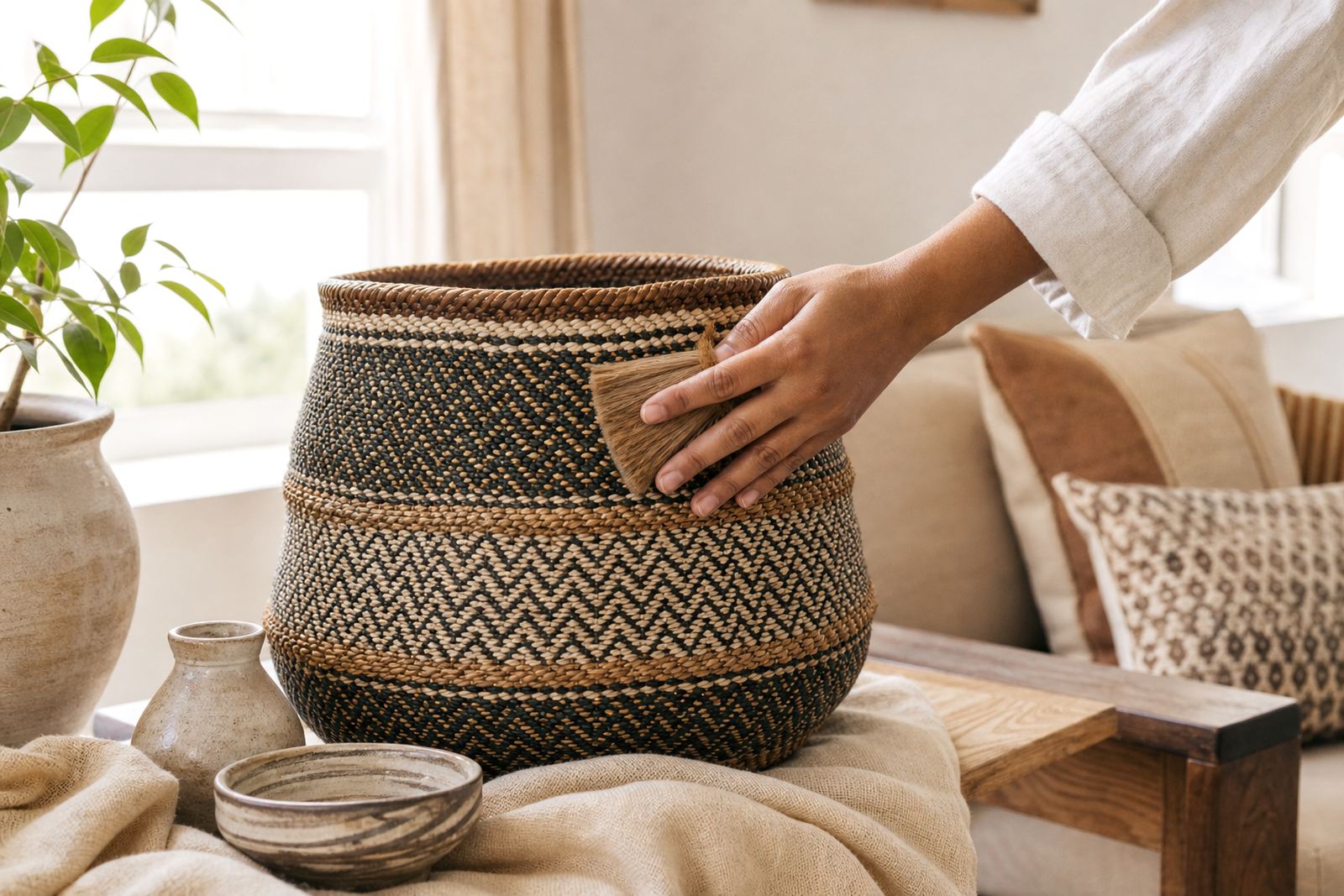
Most baskets only need light, regular cleaning to stay tidy. Dust settles into the weave, especially on open shelves, in bedrooms and near entrances where shoes and bags move past every day. A soft dry cloth, a small hand brush or a vacuum with a brush attachment works well for removing loose dust from the surface and between the strands. For fine weaves, work along the grain rather than across it so you do not pull at the shape.
If a basket holds dry items like throws, toys or papers, tip it out every so often and clean the inside as well. Crumbs and grit can rub against the weave and wear it down over time. This is especially useful for kitchen or braai area baskets where dust, ash and food bits can collect in the corners.
- Dust once a week for display baskets
- Brush the inside seams and base
- Shake out loose debris before cleaning
- Use gentle strokes on tight weave areas
Moisture Rules For Coastal And Inland Homes
Woven baskets and excess moisture do not mix well. In coastal places like Woodstock, the Southern Suburbs and the Atlantic Seaboard, humidity can soften natural fibres and lead to musty smells if baskets sit in closed, damp rooms. In inland homes, steam from bathrooms and laundry rooms can cause the same trouble. Keep baskets in dry, airy spaces where they can breathe.
If a basket does become damp, dry it slowly at room temperature. Do not place it in direct sun for long stretches, and do not use high heat. Fast drying can make fibres brittle or twist the weave out of shape. For lightly wet spots, pat the area with a dry cloth first, then leave the basket open so air can move through it.
- Avoid bathrooms unless there is strong ventilation
- Keep baskets off wet floors and window ledges that collect condensation
- Dry spills straight away with a clean cloth
- Do not store baskets while still damp
How To Shape A Basket Without Damaging The Weave
Some baskets soften slightly with use and may lose their roundness or stand a little unevenly. That does not always mean they are damaged. If the basket is made from natural fibres or reed-like material, you can usually restore the form by emptying it, smoothing the sides with your hands and filling it lightly with clean dry towels or paper to encourage the shape while it settles. Leave it in a dry spot for a day or two.
For woven handles, check both sides before lifting heavy items. A basket that is overloaded can stretch at the handle points, especially when used for laundry, firewood or market shopping. When carrying weight, hold the basket from the base as well if the design allows it. That puts less strain on the weave and helps it stay firm.
- Refill with soft dry material to support the shape
- Rotate display baskets so one side does not flatten all the time
- Lift heavier loads carefully, using both hands
- Stop using the basket for heavy items if the base starts to sag
Safe Cleaning For Stains And Marks
Not every mark needs washing. For light smudges, a barely damp cloth is often enough. Wipe the spot gently, then dry it at once with another cloth. If the basket has natural colour variation or hand-finished dye work, test a small hidden area first because some pigments can lift or spread when rubbed too hard. Strong detergents are not a good match for handwoven fibre and can leave a harsh residue.
For sticky marks, use a soft cloth with a little mild soap and water, then wipe again with plain water. Keep the amount of liquid low. The aim is to clean the surface without soaking the fibres. If the stain has soaked into a tight weave, it may be better to leave a faint mark than to overwork the area and weaken it.
- Use mild soap only when needed
- Keep water use light and controlled
- Dry immediately after cleaning
- Avoid scrubbing pads and stiff brushes
Storage Habits That Help Baskets Last Longer
Good storage matters just as much as cleaning. Stack baskets only when they fit neatly inside one another and do not press hard against each other. If the weave is decorative or has raised detail, store the basket on its own or place soft cloth between pieces. This helps protect the surface from rubbing and keeps the rim from flattening.
For baskets that are used only part of the year, store them in a cool dry cupboard or shelf, away from direct sunlight and damp walls. In closed storage, a little airflow helps. A cotton bag or open shelf is better than a sealed plastic container, which can trap moisture and cause a stale smell. If you use baskets for linen, toys or pantry items, check them from time to time so you notice dust, insects or damp before it becomes a problem.
- Store in a dry space with airflow
- Use cloth between stacked baskets
- Avoid sealed plastic storage for long periods
- Check hidden corners and bases every few weeks
A Small Care Routine That Fits Busy Homes
A quick routine is usually enough. Dust on one day, check for moisture on another and give the basket a proper shape check when you move it around the home. In a household where baskets are used for fruit, blankets, bathroom towels or gifting, this sort of steady attention keeps them presentable without much effort. It also helps you notice when a basket needs a rest from heavy use.
For woven homeware in South Africa, the conditions at home matter quite a bit. Sea air, sun through a west-facing window and steam from daily cooking can all affect fibres over time. A basket that is handled gently, dried properly and kept clean will stay useful for much longer, and it will hold its character better too.
- Weekly dusting for display baskets
- Monthly shape check for handles and base
- Immediate drying after any spill
- Seasonal storage review for spare baskets
When A Basket Needs Extra Attention
Sometimes a basket needs more than normal care. If the weave is splitting, the base is very soft, or there is a persistent smell after drying, set it aside and inspect it closely. Small loose strands can often be trimmed neatly, but do not pull them out. If the basket has a cracked rim or badly stretched handle, it may still work for light storage, though not for carrying weight.
For gift baskets and curated home pieces, clean presentation matters. A basket that is tidy, dry and shaped properly makes a better impression and is easier to use in the home. If a basket has sentimental value, treat it with the same care you would use for a textile or ceramic piece: gently, steadily and without too much water.