
Start With The First Wash
New cotton items often carry a little loose fibre from weaving, cutting or stitching, so give them a first wash before regular use. Wash similar colours together, especially with darker covers or richly dyed aprons, because some cottons may release a small amount of colour in the early washes. In Cape Town, where coastal air can hold dampness for longer, it helps to air dry these pieces fully before putting them away so they do not pick up a stale smell.
If a tea towel or apron has embroidery, contrast thread or printed detail, turn it inside out before washing. That reduces friction in the drum and helps the surface keep its finish. A mild liquid detergent is usually enough for everyday laundering, and it is safer than heavy powder on fine weave cotton or items with hand-finished edges.
Washing Habits That Protect The Weave
Most cotton homeware handles a normal machine wash well, but the gentler the cycle, the better the fabric will hold its shape. Use cool to warm water for regular care and save hotter washes for items that need a deeper clean, such as tea towels used around cooking spills or covers with visible marks. If you live in a busy household, it is better to wash cottons often than to let stains sit for days.
- Separate whites, naturals and deeper colours.
- Close ties, buttons or apron straps before washing.
- Use a shorter cycle for lighter items.
- Do not overload the machine, the fabric needs room to move.
- Skip strong bleach unless the care label allows it.
Bleach can weaken cotton over time and may leave patchy marks, especially on dyed or printed pieces. For stubborn food stains, pre-treat the area with a little detergent and cool water, then wash as usual. If you spot a tea towel with wax, oil or sauce, treat it before it dries in. Once set, it is much harder to lift.
Drying Without Hardening The Fabric
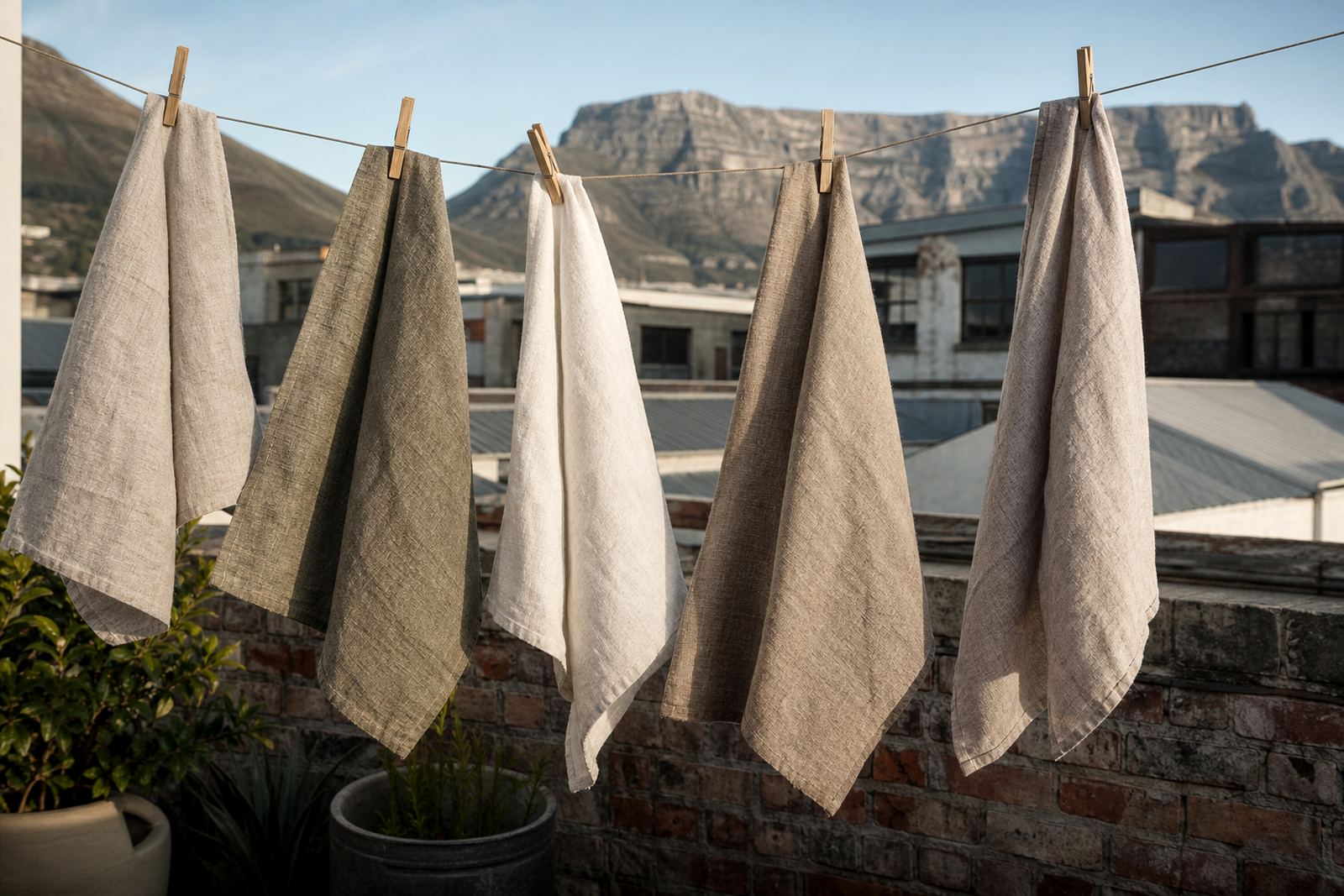
Cotton dries best with good airflow. Line drying is often the safest choice, particularly for thicker aprons and covers that need to keep their shape. Shake each item out before hanging it so the fibres lie flatter, then smooth seams and hems by hand. In humid coastal areas such as Woodstock, Cape Town and the Atlantic Seaboard, spacing items apart on the line helps them dry properly instead of staying slightly damp in the middle.
Machine drying can be useful, but keep it on a low or medium heat setting. High heat makes cotton stiff, can shrink the weave and may weaken stitched edges over time. If a piece comes out a bit rough, fold it while it is still slightly warm and rub the fabric between clean hands. That often softens it without extra washing.
- Take items off the line as soon as they are dry.
- Do not leave cotton bunched in a basket for long periods.
- Avoid drying in direct harsh sun every time, it can fade stronger colours.
- Lay flat any item that has shaped corners or thick trims.
Keeping Tea Towels Absorbent
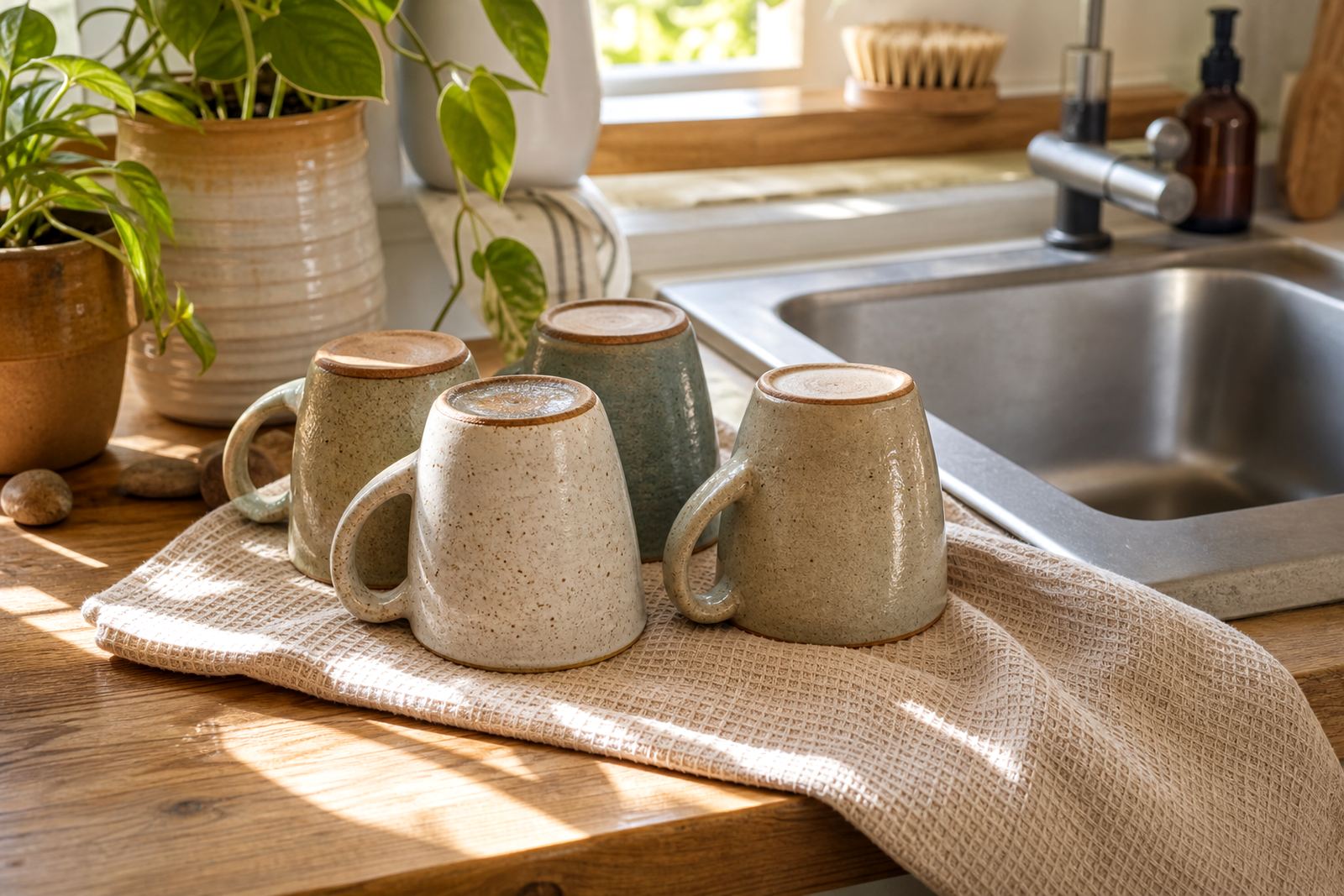
Tea towels should dry dishes, hands and surfaces quickly, so they need care that keeps fibres open. Fabric softener can leave a coating on cotton and reduce absorbency, which is not ideal for kitchen cloths. If a towel starts feeling less effective, wash it without softener and rinse well. A small amount of white vinegar in the rinse can help remove residue now and then, but use it sparingly and never mix it with bleach.
Tea towels used daily in homes from Johannesburg to Pretoria may need washing more often than decorative covers or aprons. Rotate your towels so one is not overused while others sit in the cupboard. A simple rotation helps every piece wear more evenly, which matters if you like to keep a matching set looking tidy for longer.
- Keep one set for general kitchen use and one for more delicate serving or hosting tasks.
- Wash heavily used towels before they build up odour.
- If a towel loses absorbency, strip residue with a plain wash cycle.
- Store folded, not damp, to prevent musty smells.
Aprons Need A Little Shape Care
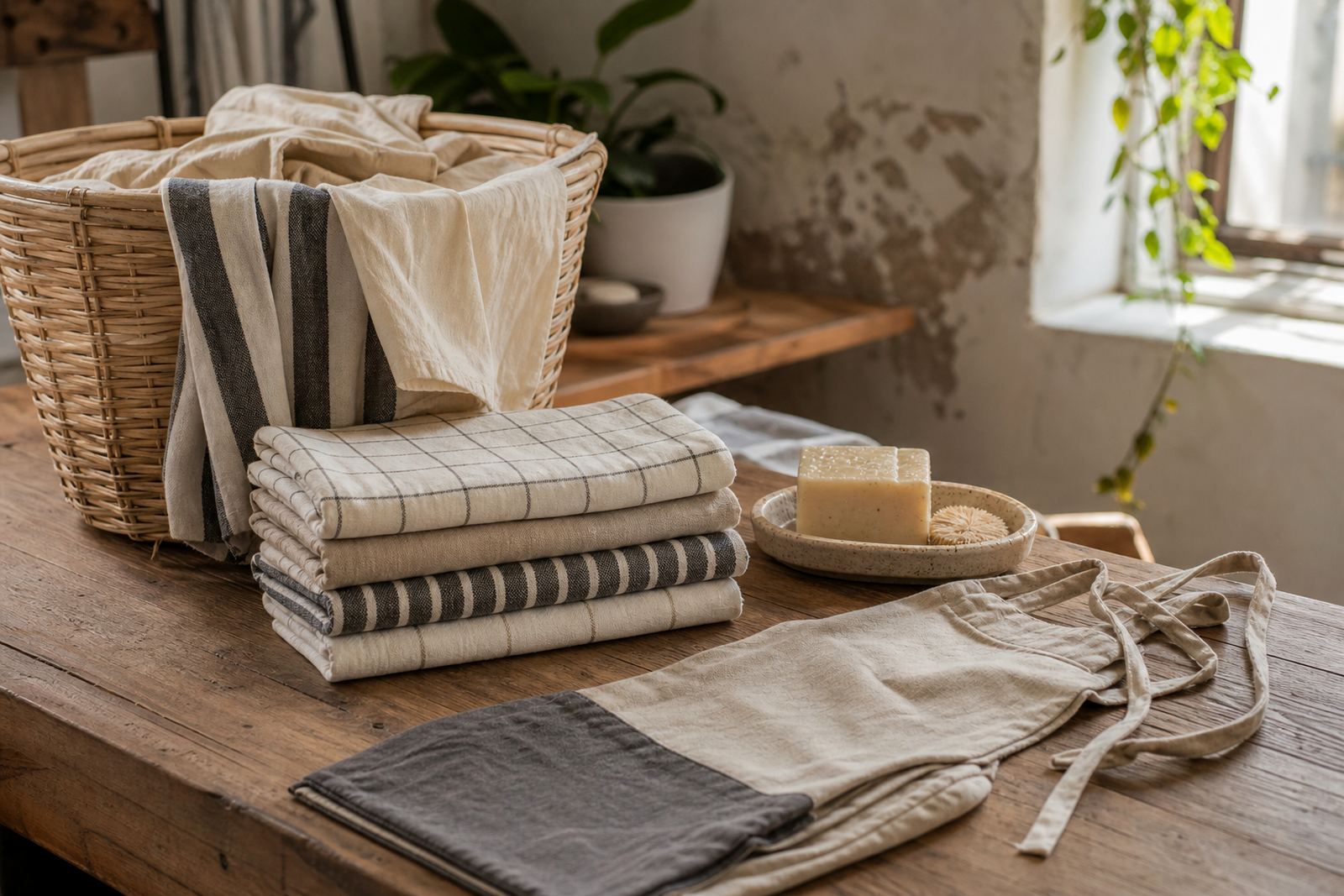
Aprons often take the most handling, so pay attention to straps, pockets and waistband seams. Check for loose stitching after washing, especially around the ties and top corners where strain is highest. If you notice a thread pulling, trim it carefully rather than tugging, because pulling can open the weave further. Small repairs done early are easier to manage than a full seam split later.
Ironing can help an apron look neat, but use the correct heat for cotton and avoid pressing directly over printed details or applied trims. If the fabric is only slightly creased, steaming may be enough. Fold aprons along their natural lines, then hang them or stack them flat so the straps do not twist. That keeps them easier to grab when the kitchen is busy and prevents deep creases at the waist.
Covers And Decorative Pieces Need Gentle Handling
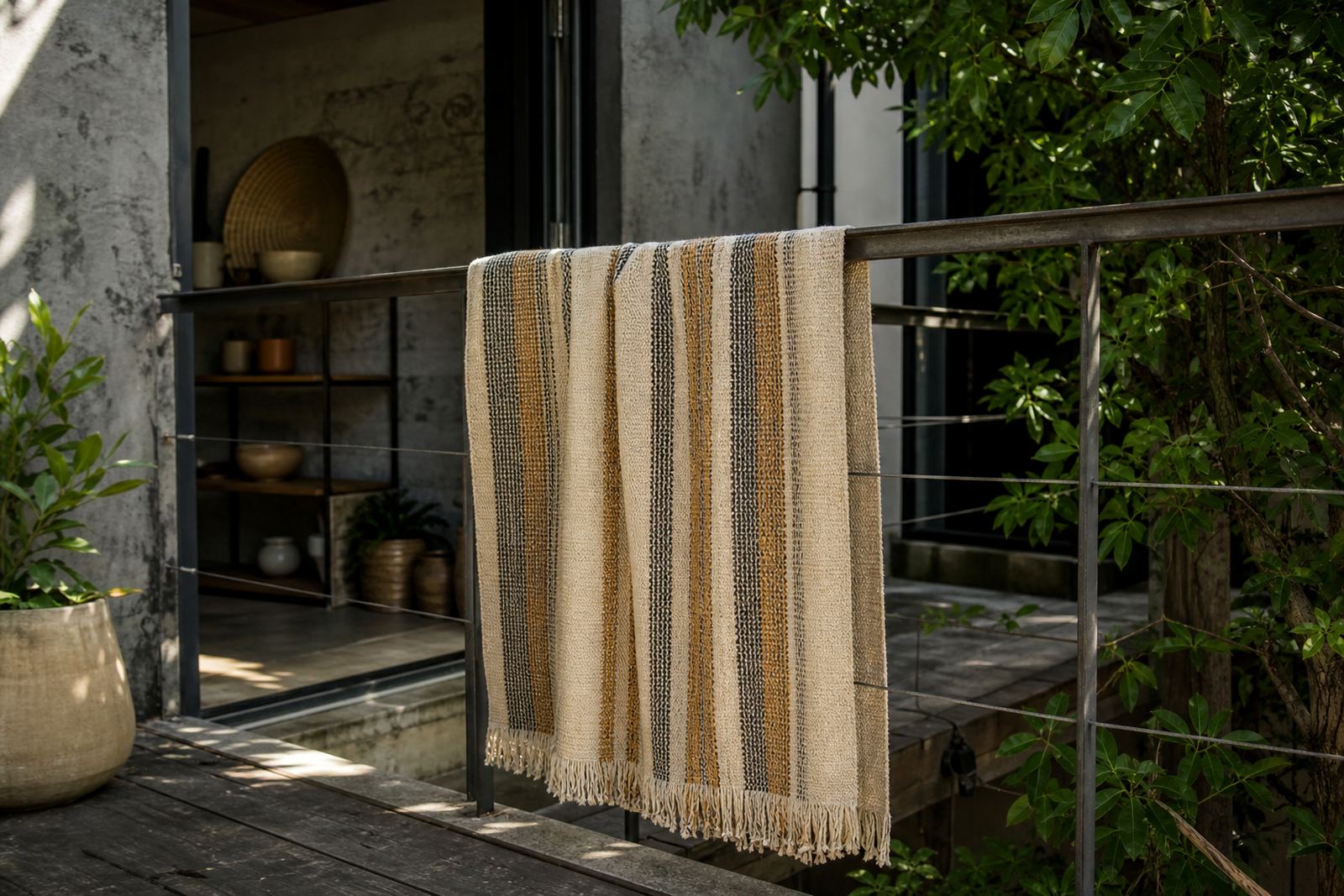
Fabric covers for cushions, baskets or table pieces often use cotton for its texture and easy care, but they still need a lighter touch than everyday kitchen towels. Turn covers inside out before washing and close zips or fasteners where present. If the item has hand-stitched detail, wash it on a gentle cycle and avoid rough spinning. For decor pieces that are lightly filled or structured, shape them while damp and let them dry naturally so the corners and edges keep their form.
For homes in Durban and other warmer areas, dust can settle quickly on fabric decor, so a regular shake-out and occasional airing helps between washes. Keep these pieces out of prolonged direct sunlight too, since strong light can fade natural dyes faster than expected. A cotton cover that is cared for steadily will usually look better over time, with a softer handle and less visible wear at the fold points.
A Small Care Routine For Busy Homes
If you want a simple system, treat cotton homeware the same way each time. Sort, wash, dry, fold and store without rushing the drying stage. That routine works well for households that use the same towels and aprons every day, and it makes it easier to notice when something needs a mend or a deeper clean. It also helps when you are packing a gift box or preparing housewarming pieces for someone else, because well-kept textiles always present neatly.
- Check care labels before the first wash.
- Treat stains early, before they settle.
- Keep fabrics fully dry before storage.
- Fold with seams aligned to reduce creasing.
- Inspect ties, hems and edges now and then.
If you are caring for a mix of tea towels, aprons and covers, give each item the washing temperature and drying method it handles best. Cotton is forgiving, but it still rewards routine. A little attention after each wash goes a long way, and your textiles will stay useful, tidy and comfortable for longer.