
Start With A Gentle Wash Routine
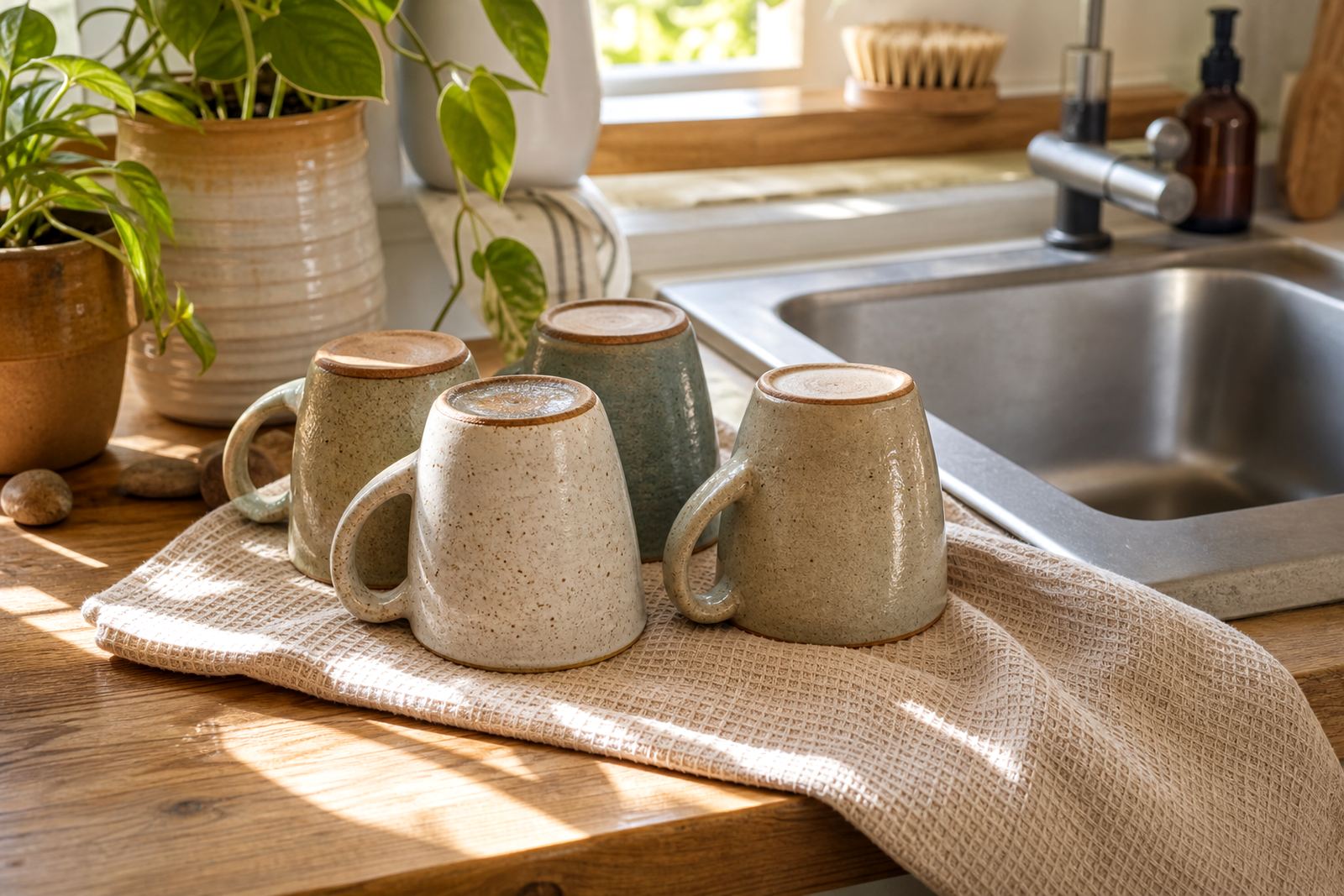
Wash handmade mugs by hand in warm water with a mild dish soap. A soft sponge or cloth is best, especially on matte glazes, textured clay surfaces and painted details that can pick up wear if scrubbed too hard. Rinse well so soap does not sit in seams or around the handle.
If a mug has a raw clay base or an unglazed section at the foot, dry that area properly after washing. Moisture left there can leave marks on shelves, absorb smells and make the mug feel damp for longer than it should.
- Use warm, not hot, water for everyday washing
- Avoid abrasive scourers and steel wool
- Dry the mug fully before stacking or storing
- Check the handle and base for trapped moisture
Keep Stains From Setting In
Tea and coffee can leave stains on pale mugs, especially where the glaze has a fine texture. If a mark appears, soak the mug in warm water with a small amount of dish soap first. For stubborn tea rings, make a paste with bicarbonate of soda and a little water, then rub it in gently with your fingers or a soft cloth. Rinse well afterwards.
For red wine, beetroot or coloured drinks, do not leave residue sitting overnight. A quick rinse after use makes a big difference. If the stain stays visible, repeat the soak rather than scrubbing harder. Handmade glaze often has tiny variations, so a light stain may settle into the surface in a way that is still safe and normal.
- Rinse after tea, coffee or strongly coloured drinks
- Use bicarbonate of soda for mild stain lifting
- Avoid chlorine bleach on decorated surfaces
- Do not use harsh powders on matte finishes
Handle Heat Changes With Care
Sudden heat changes are one of the main causes of hairline cracks in ceramics. A mug taken straight from the fridge into boiling liquid can be stressed by the change, and a mug that has been sitting in a very cold cupboard in winter may react the same way. Warm the mug with a little hot water first if it has been stored cold.
Likewise, do not rinse a very hot mug under cold tap water right after use. Let it cool on its own for a short while. This is especially useful in Cape Town coastal homes where cool mornings and warm kitchens can affect temperature shifts, and in inland areas where summer heat can make surfaces warm very quickly.
- Warm the mug before pouring in very hot liquid
- Let hot mugs cool before rinsing
- Avoid moving mugs from freezer cold to boiling hot
- Watch for fine cracks around the rim and handle
Stacking And Cupboard Storage That Prevents Chips
Handmade mugs often vary slightly in shape, which makes neat stacking tempting but not always wise. If mugs are stacked too tightly, the rims and glaze edges can chip. Store them with enough space between each piece, or place a soft liner between stacked mugs if cupboard space is limited.
In busy kitchens, it helps to keep heavier mugs on the lower shelf and lighter cups higher up. Avoid placing mugs where they rub against other crockery every day. In Johannesburg apartments, compact storage is often the issue, while in larger family kitchens in Pretoria or Durban the problem is usually crowding and quick packing after washing.
- Leave space between mugs and plates
- Use a shelf liner or cloth between stacked pieces
- Keep heavier mugs lower down
- Do not force rims together to save space
What To Watch For On The Base And Handle
The base and handle take the most wear during everyday use. The handle should feel steady, with no movement or fine cracking where it joins the mug body. The base should sit evenly on a flat surface, not wobble or rock. Small glaze marks on the foot ring are usually normal on handmade work, but new chips or rough edges deserve attention.
If the mug is used often for very hot drinks, inspect it every so often under good light. A fine crack can sometimes be easy to miss until the mug is washed. Once a crack runs through the body or handle, it is safer to stop using the mug for hot liquids.
- Check the handle for hairline cracks
- Place the mug on a flat surface to test for wobble
- Feel the rim for chips or sharp spots
- Look over the foot ring after washing
A Practical Weekly Mug Check
A short weekly check keeps the whole set in good order. It does not need much time, just enough to spot early wear before it becomes a bigger problem. Wipe down cupboard shelves, check for moisture rings and rotate mugs so the same one is not always used first. That helps spread wear across the set and keeps favourite pieces from taking all the work.
For homes with gift sets, wedding presents or mixed handmade collections, it helps to group mugs by size and thickness. Thicker mugs usually cope better with frequent use, while finer pieces benefit from gentler handling. If a mug no longer feels steady or has taken a knock, set it aside for cold drinks only or retire it from daily use.
- Wipe shelves and dry any damp patches
- Rotate mugs so wear is shared
- Separate chipped pieces from daily-use mugs
- Store gift mugs with a little extra space around them