
Start with the grain, not the sink
Most wooden boards and trays are made from solid timber or laminated pieces, and both need gentle handling. If a board is used for bread, cheese, fruit or serving, wipe off crumbs and moisture soon after use so stains do not sit in the grain. In coastal towns like Cape Town, the air can carry extra dampness, so leaving wood wet on the counter for long periods can lead to warping or a dull finish.
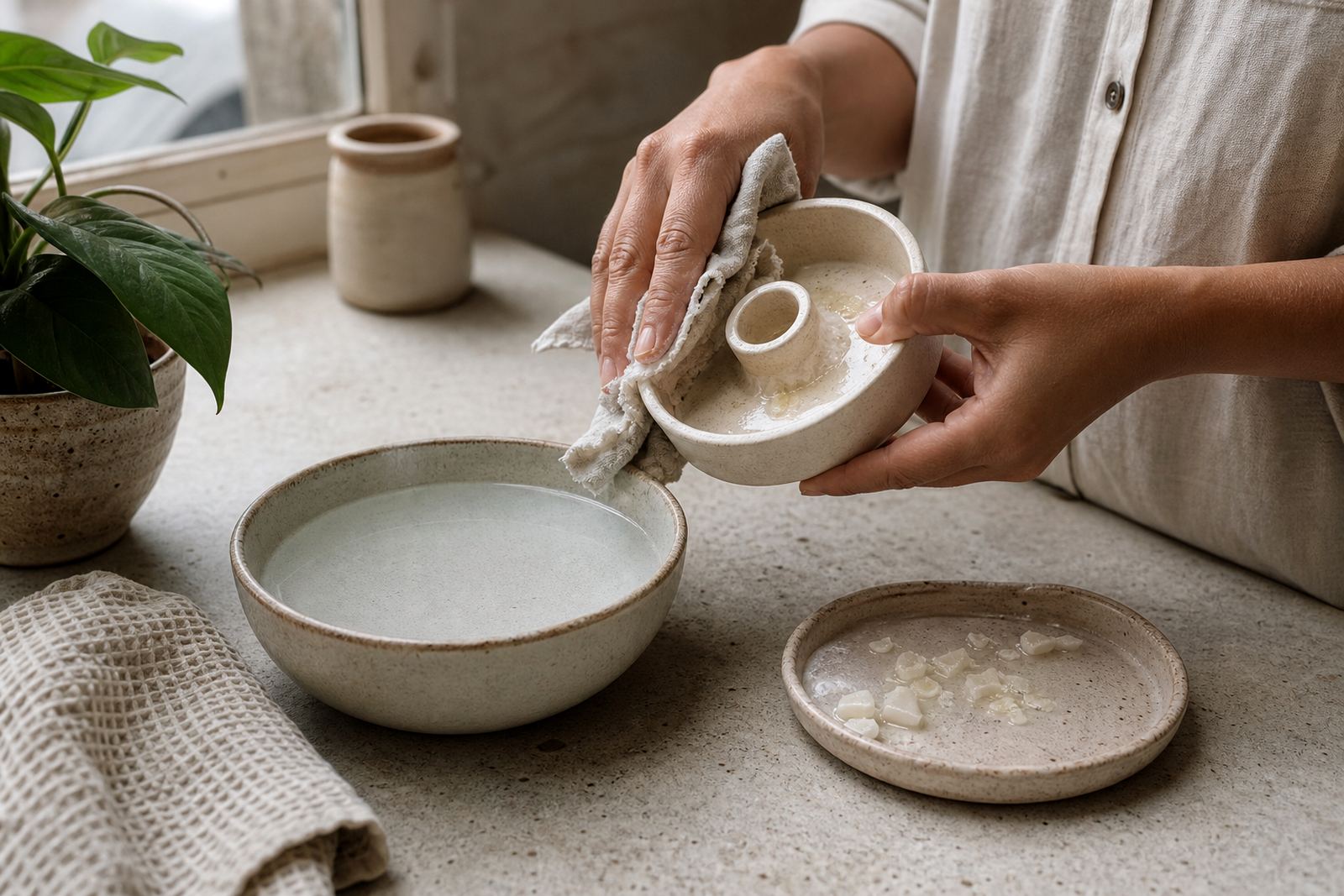
A quick wipe with a soft cloth or sponge is usually enough for daily cleaning. For sticky residue, use warm water with a small amount of mild dish soap, then rinse lightly and dry at once. Do not soak the board in the basin or leave it standing in water. The edges, joins and carved handles hold moisture longer than the flat face, so pay attention there.
- Brush off crumbs before washing
- Use warm water and a mild soap
- Rinse lightly, do not soak
- Dry both sides straight away
Drying matters more than most people think
Wood responds to moisture and heat. If one side dries faster than the other, the board can cup or twist over time. After washing, stand the board upright so air reaches both faces, or lay it flat on a rack with space underneath. A tea towel left under a damp board traps moisture, which is not helpful on a humid Durban morning or after a hot wash-up session in Pretoria.
If a tray has a raised rim or inset handles, tilt it slightly so water does not sit in corners. Do not place wooden pieces in direct sunlight for long periods, beside a stove, or in front of a heater. Fast drying can split the timber or open fine cracks. A little patience keeps the piece in better shape for longer.
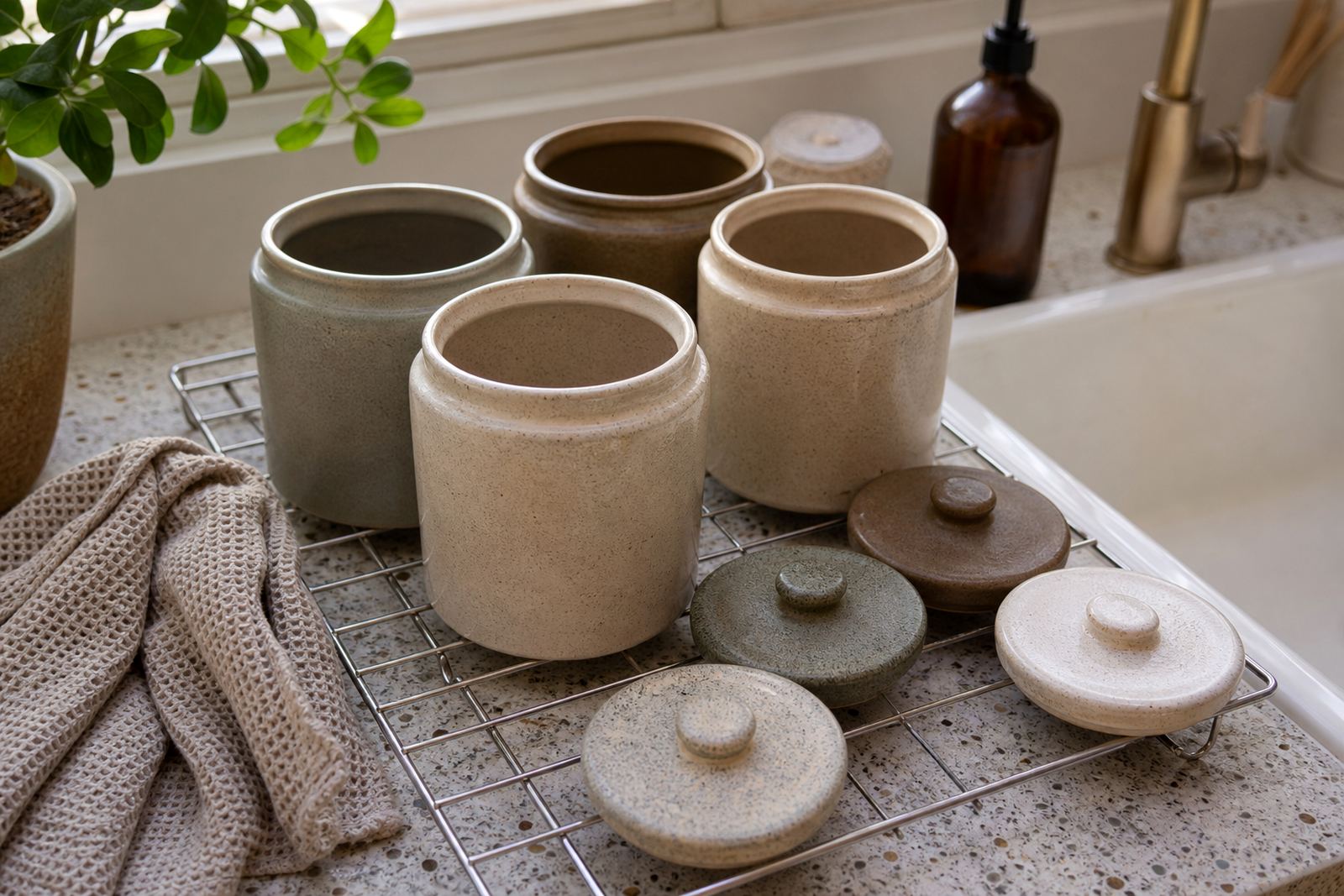
- Air dry standing up or on a rack
- Keep towels away from the underside
- Wipe rims and corners carefully
- Avoid strong sun and direct heat
When a board needs oil
Oil helps wood hold onto moisture balance and keeps the surface from looking dry or patchy. Most boards do not need oil every week. A good sign is when water stops beading on the surface or the wood begins to look pale and thirsty. Light use boards may only need oil every few weeks, while everyday chopping boards may need attention a little more often.
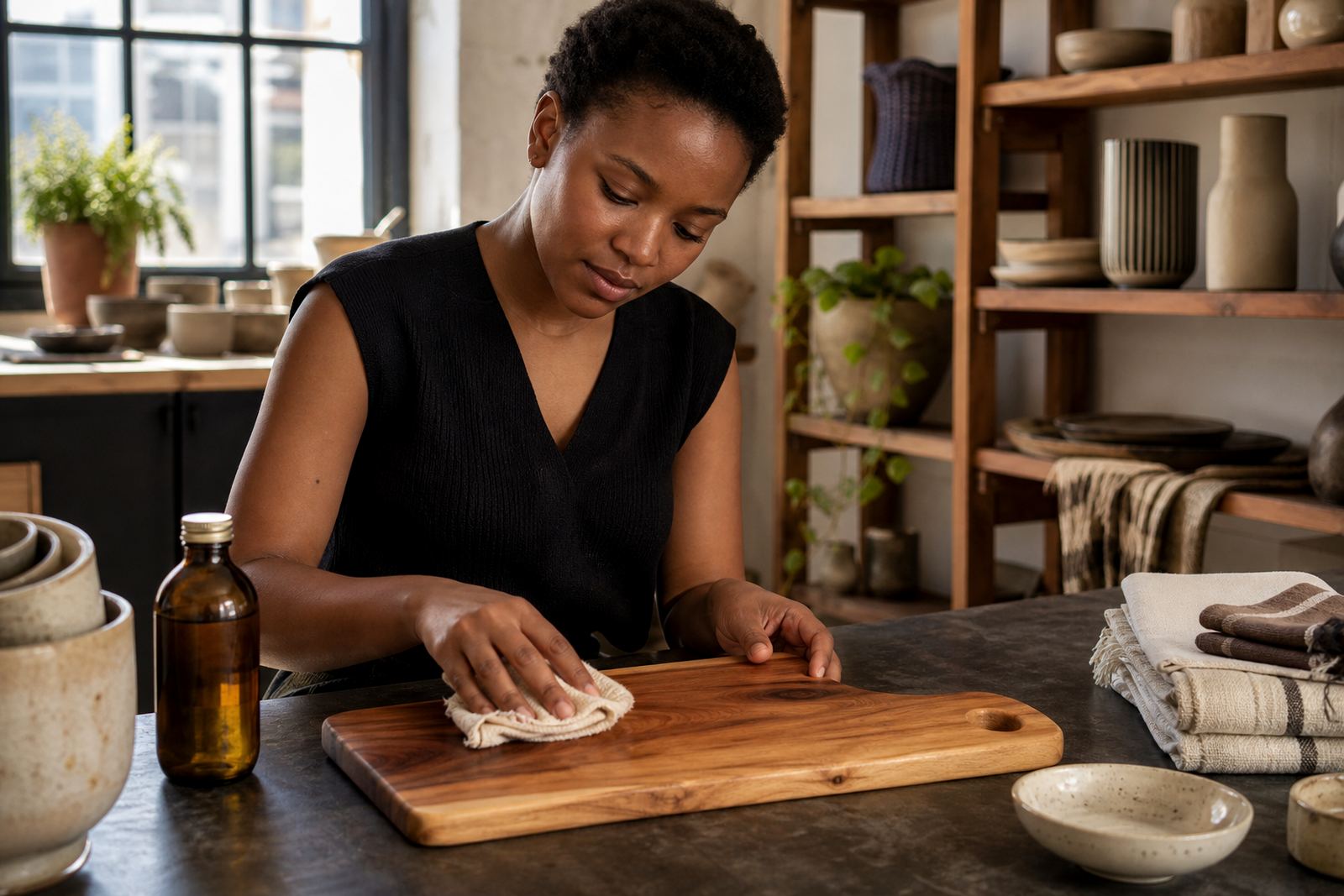
Use a food-safe mineral oil or a board oil made for kitchen wood. Apply a small amount to a clean, dry cloth and rub it in along the grain. Let it sit for a few hours or overnight, then buff away any excess. If the board looks sticky after oiling, too much was applied. Thin coats work better than heavy ones, and the same rule applies to trays and serving boards.
- Oil only when the wood looks dry
- Use a food-safe product
- Work with the grain
- Buff off anything left on the surface
Keep food, colour and smell from settling in
Handmade boards often show character from use, but that does not mean stains should be left alone. Beetroot, turmeric, coffee and rich sauces can mark lighter wood if they sit too long. Wipe up spills as soon as possible, especially on serving trays where sauces or drinks may spill around the edges. Strong smells from onion, garlic or fish can also linger if the board is not cleaned properly.
For stubborn marks, make a paste with coarse salt and a little lemon juice or baking soda and water, then rub gently with a cloth. Rinse lightly and dry right away. Do not scrub with steel wool or harsh pads, as they can scratch the surface and leave the timber rough. If a tray is used for candles, small pots or decor, dust it often so grit does not mark the finish.
- Wipe stains straight after use
- Use a gentle paste for stubborn marks
- Avoid abrasive pads
- Dust trays used for display pieces
Storage that keeps the shape true
Boards and trays last longer when stored in a dry, steady place. Keep them away from dishwashers, steaming kettles and walls that sweat in winter. In homes where kitchen cupboards sit close to the washing area, it helps to store wood upright with a little space around it. Piling heavy pots on top can leave dents or pressure marks, especially on softer woods.
If you own several boards, separate them with a tea towel or place them in a rack so air can move between each piece. For trays with metal handles or mixed materials, check that all parts are dry before packing them away. A little airflow protects both the wood and any fitted hardware.
- Store in a dry cupboard or rack
- Keep boards upright if possible
- Do not stack heavy items on top
- Make sure metal parts are dry too
A practical care routine for busy kitchens
If your board or tray is used often, set a simple routine and stick to it. A quick wipe after each use, a proper wash when needed, and a monthly check for dryness is enough for many homes. Households that use boards for serving at family meals or on a balcony with sea air may need to oil slightly more often. In inland areas, the wood may dry out faster in winter when heaters are on, so the surface should be checked a bit more regularly.
If you are unsure whether a piece needs oil, feel the surface. Smooth wood with a soft finish usually needs nothing. If it looks dull, feels rough or absorbs water quickly, it is time for a light treatment. Small hairline marks are normal on handmade wood, but deep cracks, lifting joints or a strong bend should be looked at before the piece is used again.
- Wipe after each use
- Wash gently when needed
- Check for dryness once a month
- Watch for cracks, lifting or warping