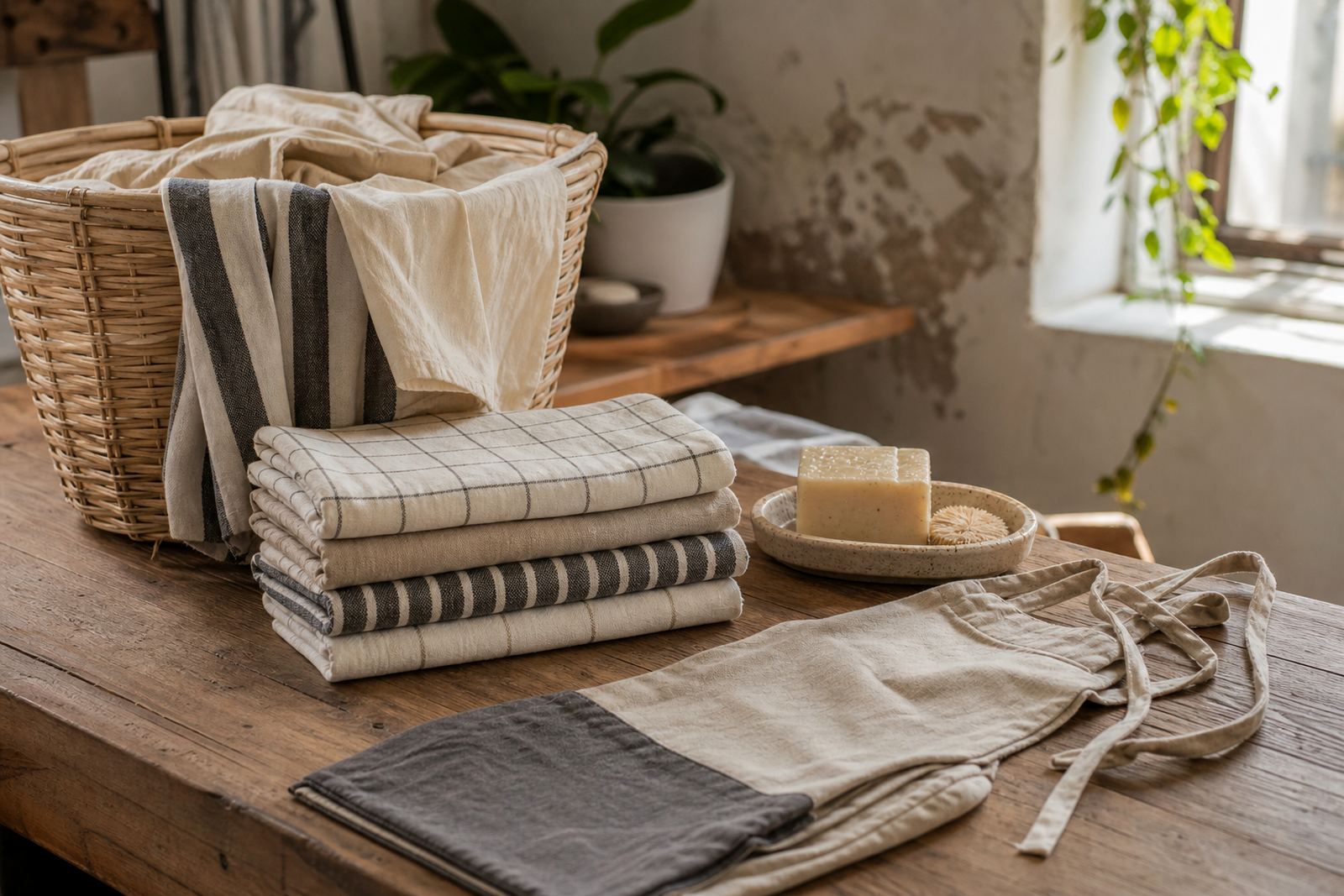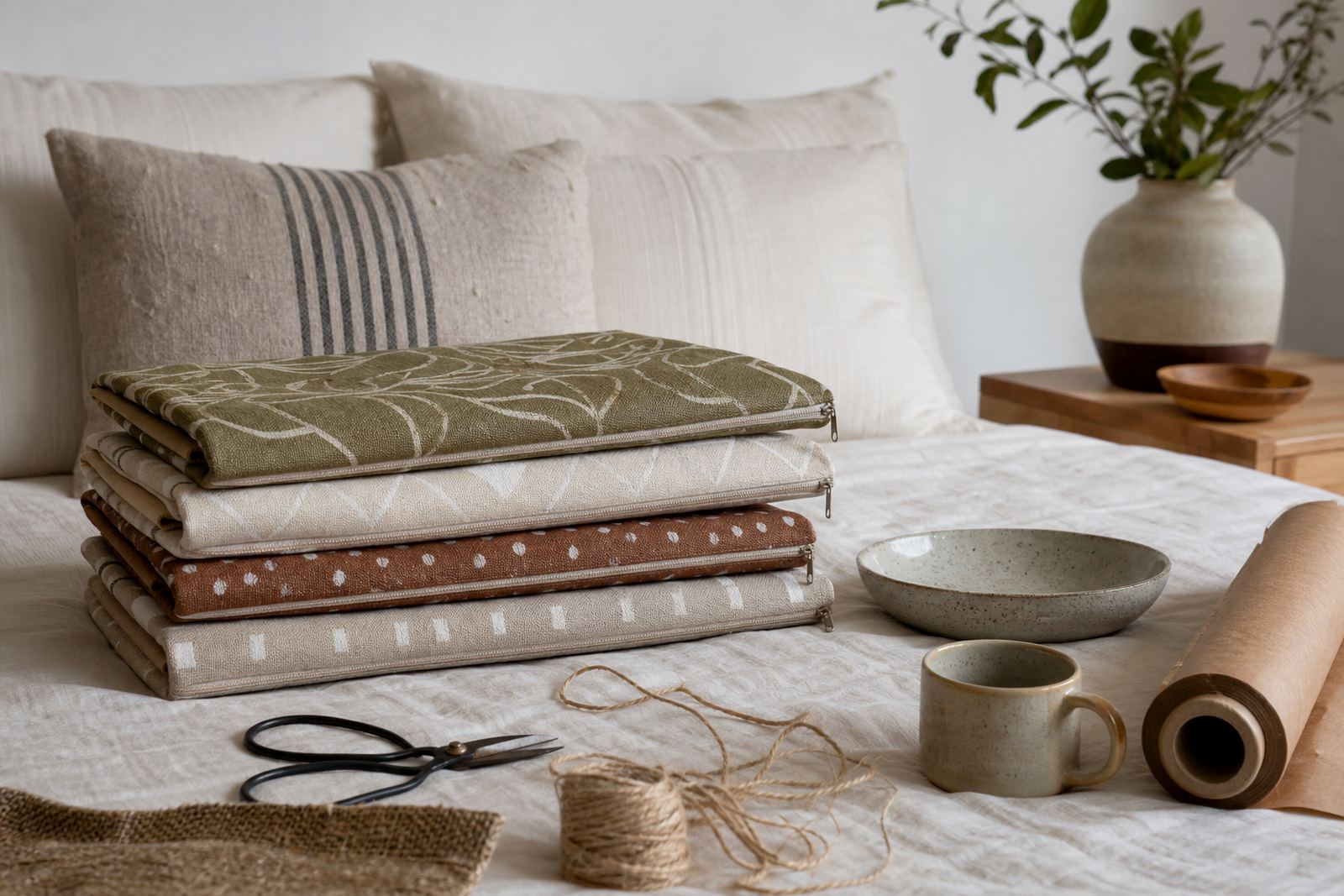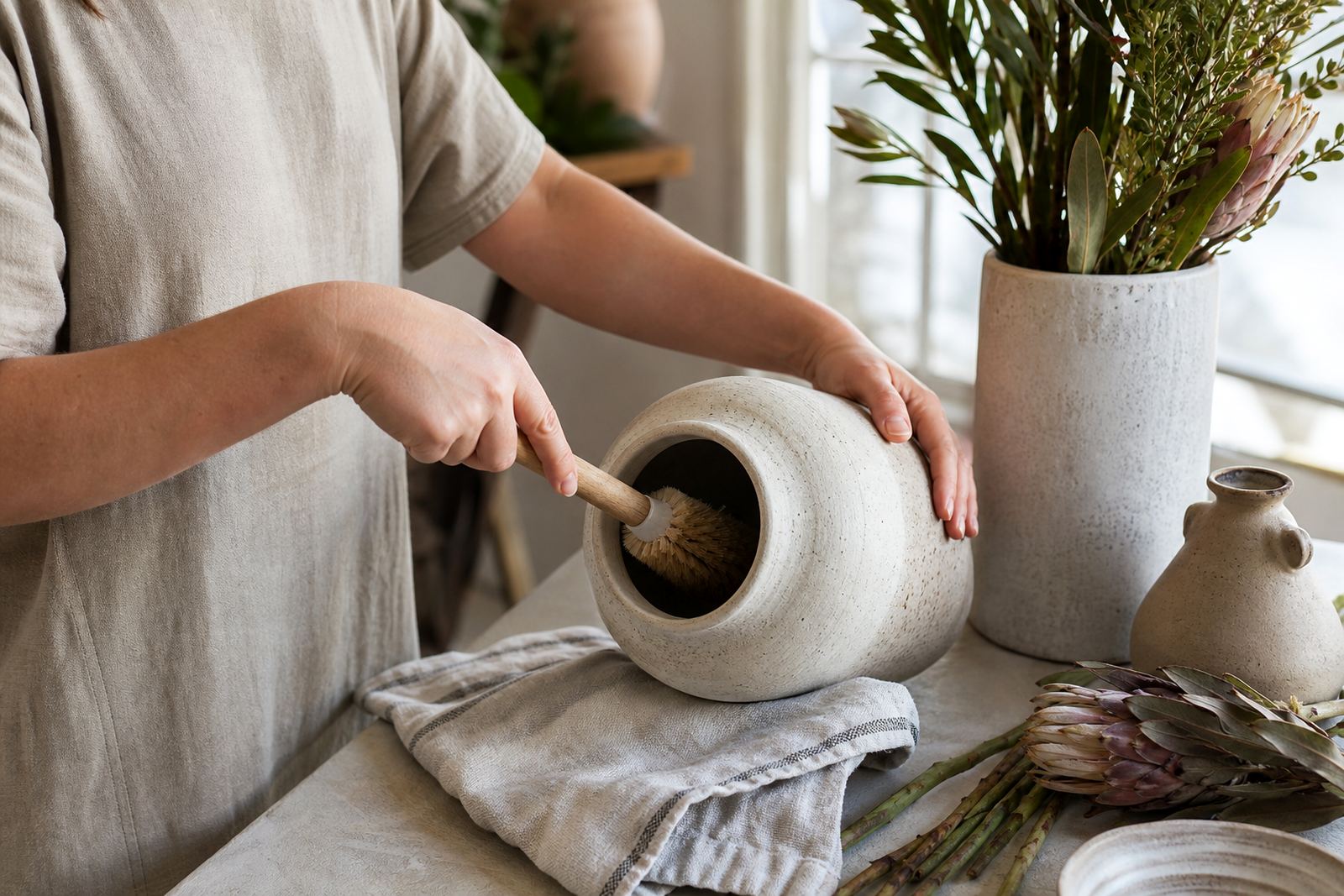

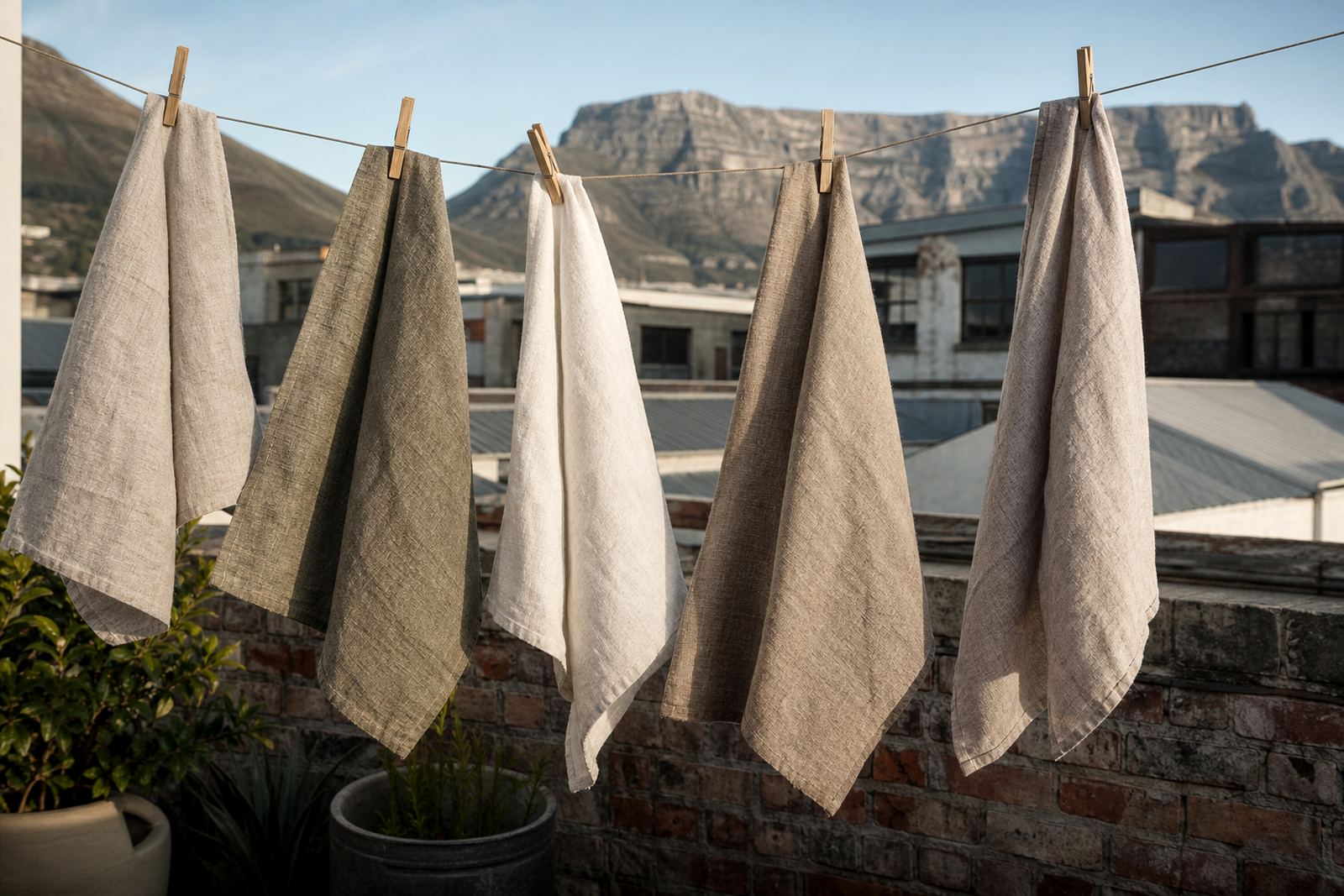
Start With The First Wash
New linen tableware often feels a little firm at first. That is normal for natural fibres. Give each item a separate first wash so loose fibres and any finishing residue can rinse out cleanly, especially on pale napkins, runners and placemats.
Check hems, folded edges and stitching before washing. If an item has a printed or embroidered detail, turn it inside out to reduce rubbing. In Cape Town or Durban, where humidity can hang around in the air, do not leave damp linen in a basket for long periods because musty smells can set in quickly.
- Shake out crumbs and dust before washing.
- Sort whites, naturals and darker colours separately.
- Use cool to warm water for the first few washes.
- Wash new linen on its own when possible.
Choose A Gentle Wash Routine
Linen does best with a mild liquid detergent and a calm wash cycle. Strong bleach and heavy stain removers can weaken the fibres over time, and hot water can encourage shrinkage on some weaves. For everyday table linen, a gentle machine cycle is usually enough. If the cloth is delicate or hand-finished, hand washing is the safer route.
Use a light touch when agitating the fabric. Linen does not need a hard scrub to get clean, and too much rubbing can flatten the surface. For homes in Johannesburg or Pretoria, where dust can settle quickly, a shake-out before washing helps more than adding extra detergent.
- Use mild detergent only.
- Avoid bleach and harsh whitening products.
- Keep the load light so the fabric can move freely.
- Rinse well to remove all soap traces.
Drying That Keeps The Cloth Soft
Air drying is best for linen. Hang the item straight after washing so creases do not set in deeply. A line, rail or drying rack works well, but keep dark or richly dyed pieces out of strong midday sun for too long because colour can fade unevenly.
When the cloth is almost dry, remove it while it still feels slightly cool and press it flat with your hands. This makes ironing easier and helps the weave relax. If you prefer a crisper finish for formal dining, iron the linen while it is still a little damp. If you like a softer look, let it dry fully and smooth it by hand before folding.
- Do not tumble dry on high heat.
- Dry flat if the piece is heavily embroidered or hand-finished.
- Give runners and napkins space so they do not stretch at the pegs.
- Keep drying cloths away from direct splashes and dust.
Dealing With Spills Before They Set
Table linen is made for real use, so spills happen. The quicker you act, the easier the clean-up. Blot, do not rub, because rubbing pushes the stain deeper into the weave. For oils, a little absorbent powder can help lift the mark before washing. For sauces, tea or wine, rinse from the back of the fabric with cool water first.
For older stains, soak the area gently before washing again. Avoid soaking dark dyes for too long, especially if the piece is richly coloured or hand dyed. If a stain remains after the first wash, let the linen dry and try again rather than using a rough brush. Patience usually protects the cloth better than force.
Looking After Napkins, Runners And Placemats
Different pieces in a linen set can need slightly different handling. Napkins usually take the most frequent washing, so fold them loosely and avoid packing them tightly while still damp. Runners may crease more along the middle, so a light press after drying helps them lie neatly across the table. Placemats with stitched borders should be reshaped while drying so the edges stay even.
If your tableware has mixed materials, such as linen with wood, leather ties or decorative trims, wash according to the most delicate part. That usually means gentler water, less agitation and careful drying. A bit of routine keeps the whole set looking cared for.
- Wash napkins after heavier meals or spills.
- Air dry runners flat or on a straight line.
- Reshape placemats while still slightly damp.
- Press trims from the reverse side if needed.
Folding, Storing And Rotating Linen
Once linen is fully dry, fold it with clean hands and store it in a cool, dry cupboard. Natural fibres breathe well, but they still need space. Do not pack them too tightly or they can hold sharp creases and a stale smell. If you use linen for everyday meals, rotate sets so each piece gets time to rest between washes.
For long-term storage, add a sheet of tissue paper between folded items if the cloth has embroidery or a printed surface. Avoid plastic bags for long periods because they can trap moisture. In coastal areas such as Woodstock, the Atlantic Seaboard and parts of Durban, a dry cupboard with good airflow matters more than fancy storage. It keeps linen fresher and ready for the next table setting.
- Store only when completely dry.
- Fold with the weave aligned to reduce hard creases.
- Use breathable shelves or cotton storage bags.
- Air out stored linen now and then.