
Start with the gentlest wash
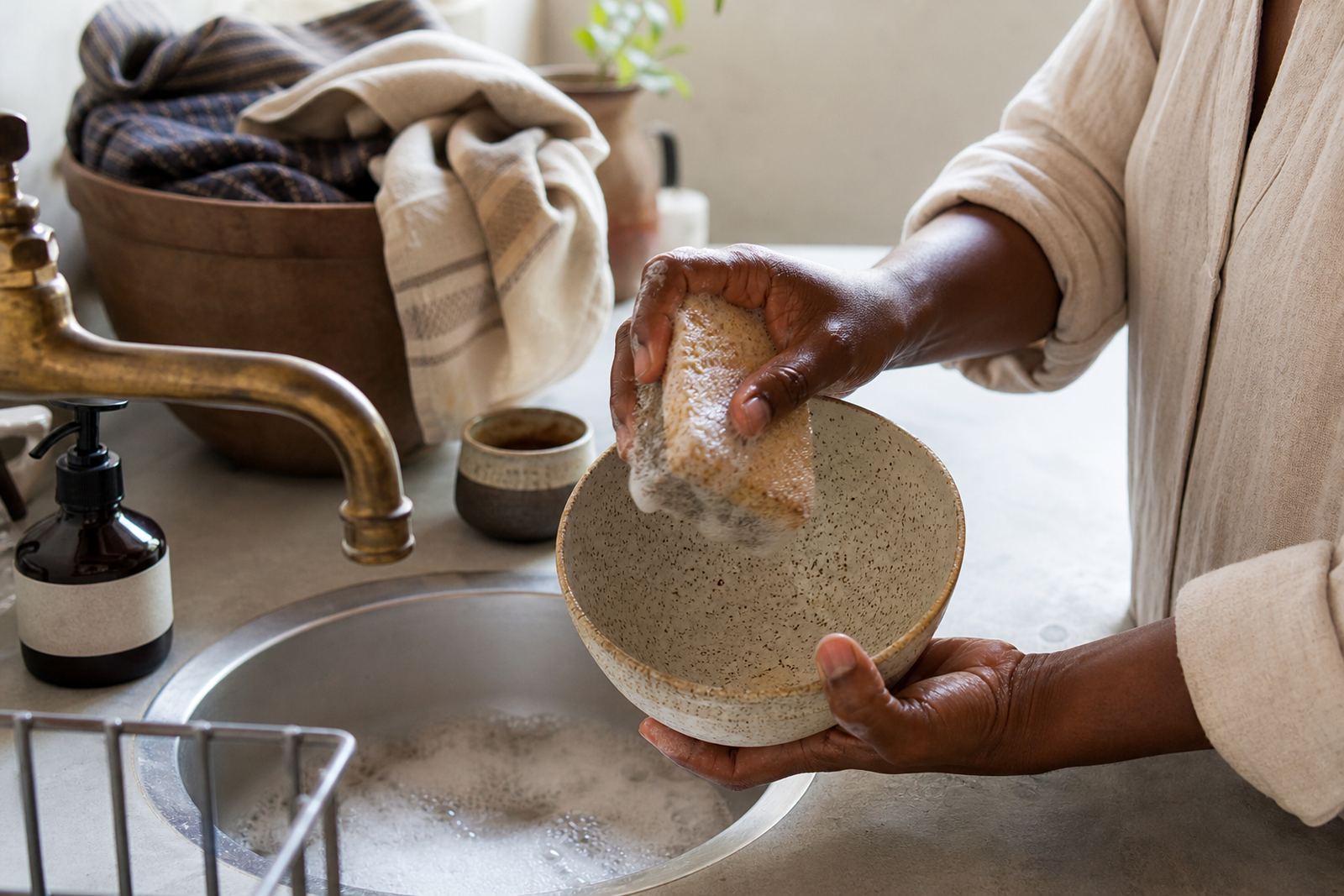
For everyday cleaning, warm water and a mild dish soap are usually enough. Use a soft sponge or cloth and wipe the piece without scrubbing hard at the base, rim or handle where handmade items can have small edges. If food has dried on, soak the item for a short while first, then wash it gently.
Do not use steel wool, harsh powders or stiff brushes on decorative glazes. These can dull the finish over time and leave fine marks on the surface. If a piece has a matte glaze, treat it with extra care because it can show wear more quickly than a glossy finish.
- Wash soon after use to prevent staining from tea, coffee or sauces.
- Rinse well so soap residue does not sit on the glaze.
- Use a soft drying cloth if you want to reduce water spots.
Dry fully before putting pieces away
Handmade ceramics should be dried completely before storage, especially in humid coastal areas like Cape Town where moisture can linger in cupboards. If a cup or bowl is packed away while still damp, the inside can develop a musty smell and the base may hold moisture against wooden shelves or cloth liners.
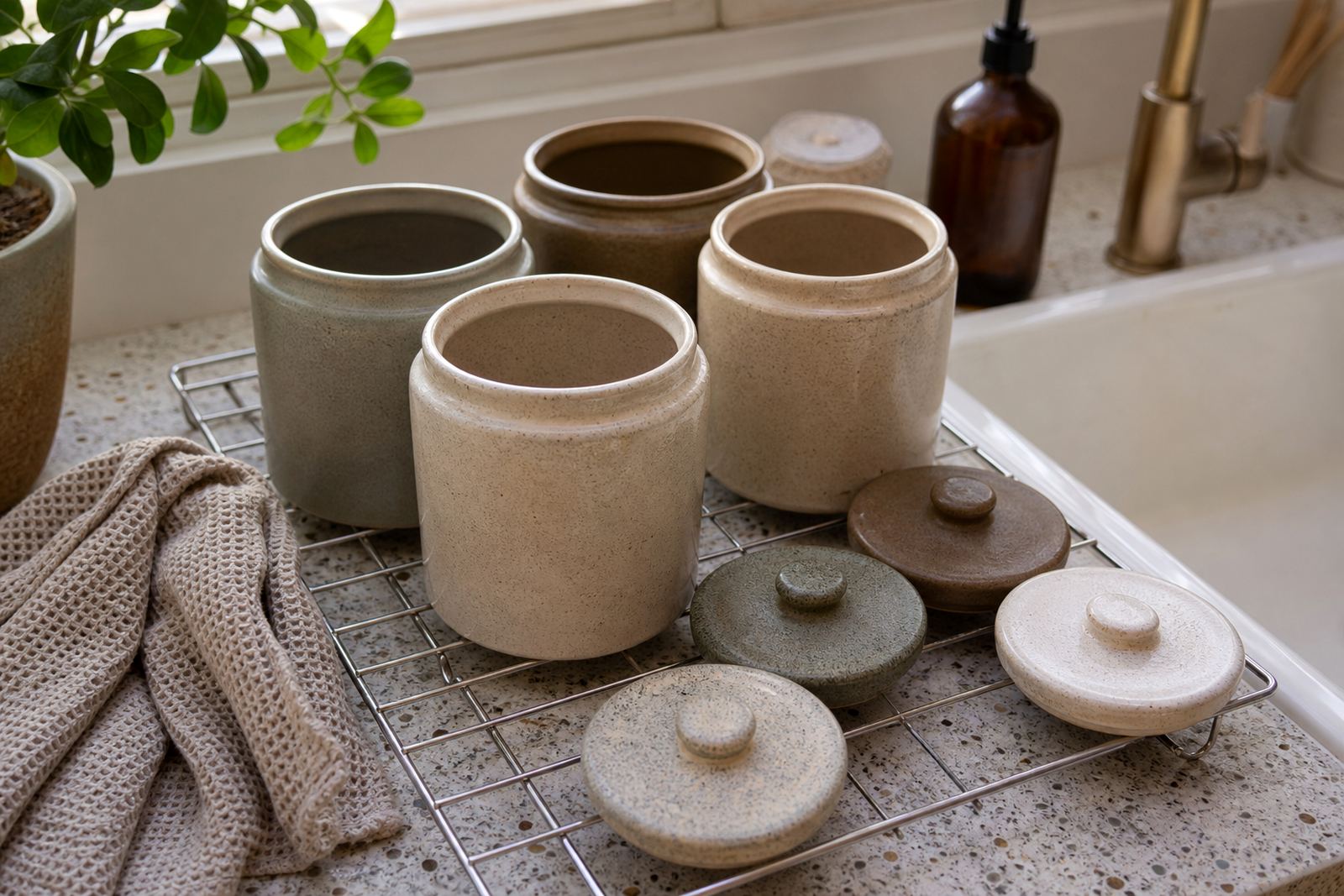
Leave washed pieces on a drying rack or tea towel until every surface is dry, including the foot ring and the underside of lids. Turn cups and small bowls upside down only once the trapped water has drained, otherwise droplets can sit inside and mark the glaze.
- Check rims, handles and lids for hidden moisture.
- Do not stack damp pieces directly on one another.
- Allow extra drying time after washing on a cold or wet day.
Storage that keeps chips and scratches down
Good storage matters as much as washing. Keep plates, bowls and mugs in a cupboard where they are not knocking against harder objects. If you stack pieces, place a soft cloth, paper liner or felt separator between them. This is especially useful for hand-thrown items with slight variations in shape, because uneven contact points can cause rubbing.
Heavy serving dishes should sit on a lower shelf if possible. Smaller items can live on a higher shelf, but make sure they are not packed too tightly. In homes where cupboards are shared with glassware or metal cookware, keep ceramics in a separate section so they are easier to lift out without contact marks.
- Store lids beside their matching containers, not under pressure.
- Leave space around handles so they are not bumped when opening the cupboard.
- Use shelf liners if your cupboards have rough timber or chipped paint.
Treat stains and marks before they settle
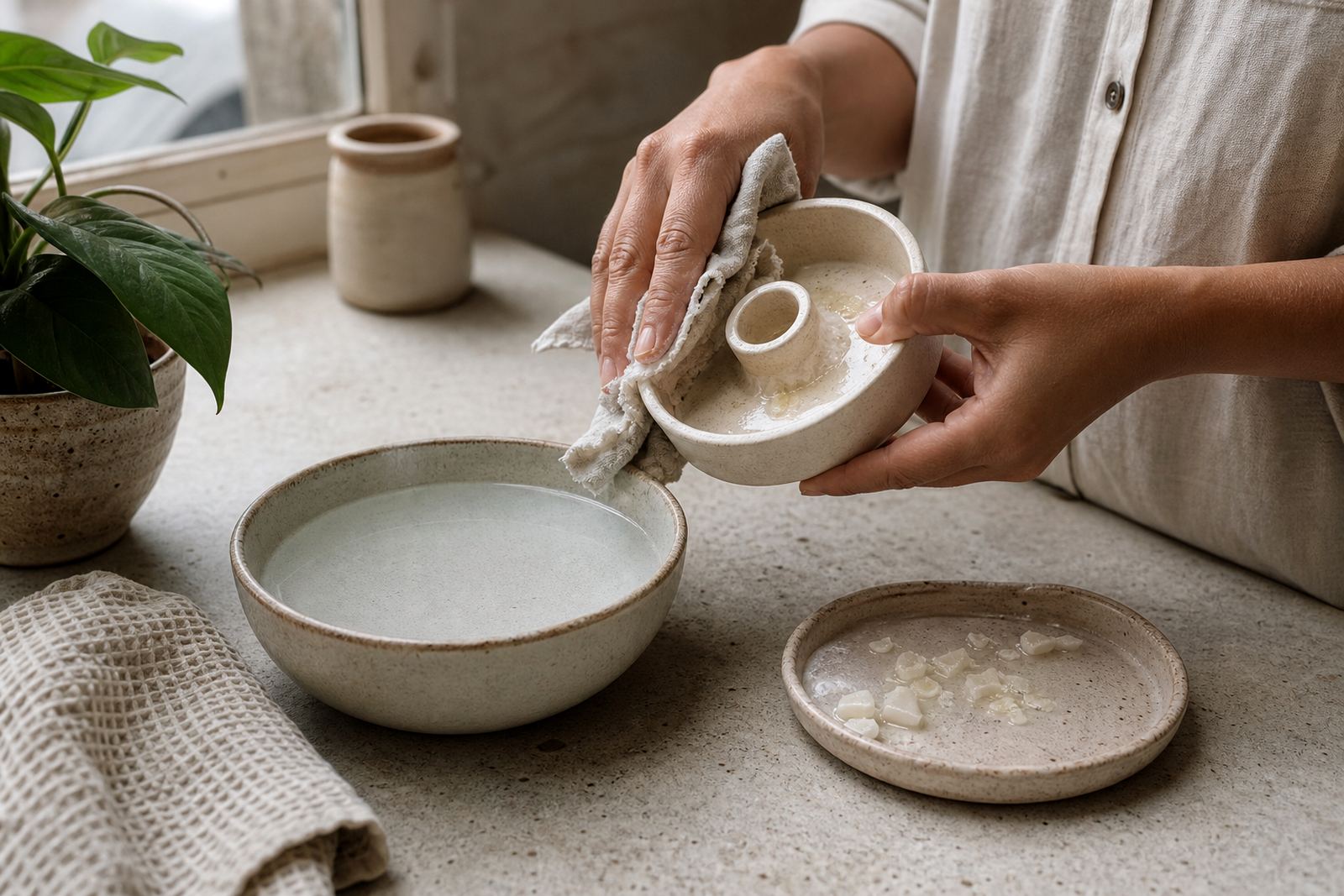
Tea and coffee can leave a stain on light glazes if the residue sits too long. Rinse the piece soon after use and wash it with mild soap. If a stain remains, make a paste of bicarbonate of soda and water, rub it on lightly with your fingers or a soft cloth, then rinse well. This works best on plain food stains and not on textured decorative finishes.
For stubborn marks on the outside of a mug, a soft cloth dampened with warm water often does enough. Avoid soaking pieces with unglazed bases for long periods, as the foot ring can stay damp and pick up marks from the sink or counter. If there is a scuff from cutlery, try cleaning first before reaching for any abrasive product.
- Use bicarbonate paste only on the stained area.
- Rinse thoroughly so no residue stays on the glaze.
- Stop rubbing as soon as the mark lifts.
Mind heat, sudden changes and everyday handling
Many handmade ceramics handle daily use well, but sudden temperature changes can still be hard on them. Do not take a room-temperature mug and pour boiling liquid straight into it if the ceramic is very thin or if the item has a hairline crack. A gradual change is kinder to the material. The same goes for moving a hot plate from the oven area to a cold countertop.
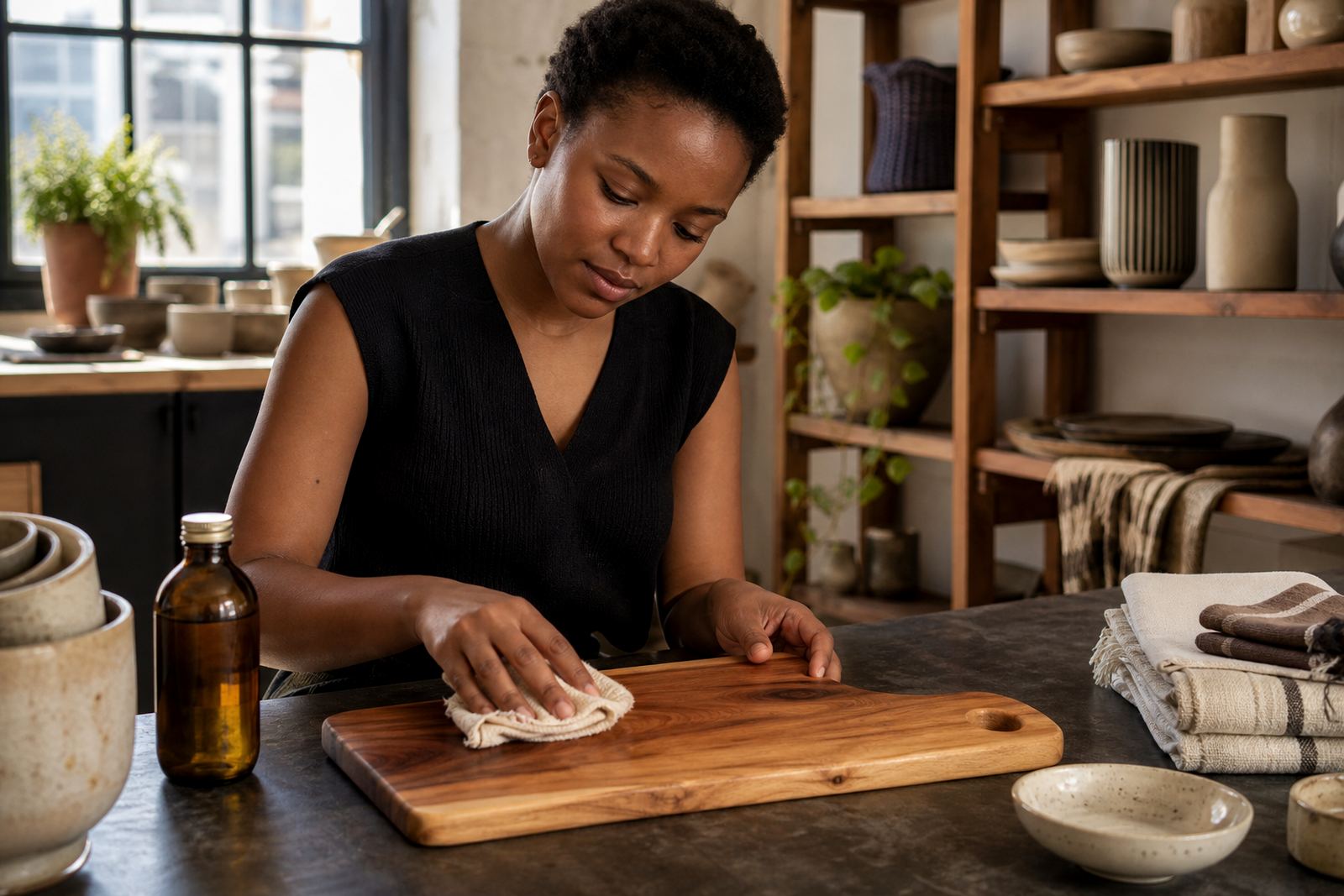
When setting pieces down, place them on wood, cork or a cloth rather than a hard stone surface if you want to reduce the chance of small chips. Pick up bowls and mugs by the main body or handle, not by a delicate rim. Small care habits like these help handmade pieces stay useful for longer, especially in busy kitchens.
If you notice a crack, stop using the piece for liquids until it has been assessed. A damaged ceramic can worsen with repeated washing and temperature changes.
A quick care checklist for the week
Use this simple checklist when you are putting away your ceramics after meals or after a full kitchen clean. It takes very little time and helps prevent the usual wear that builds up from daily handling.
- Wash with warm water and mild soap.
- Dry every surface, including the base.
- Check for chips around rims and handles.
- Keep stacked pieces separated with a soft liner.
- Move fragile items away from crowded shelves.
- Wipe away tea, coffee or sauce stains soon after use.
If you are storing pieces for gifting, a season change, or simply rotating what you use at home, wrap each item in clean tissue or a soft cloth and keep it in a dry cupboard. That small bit of care helps handmade ceramics stay clean, dry and ready for the next meal.