
Start With Pieces That Do More Than One Job
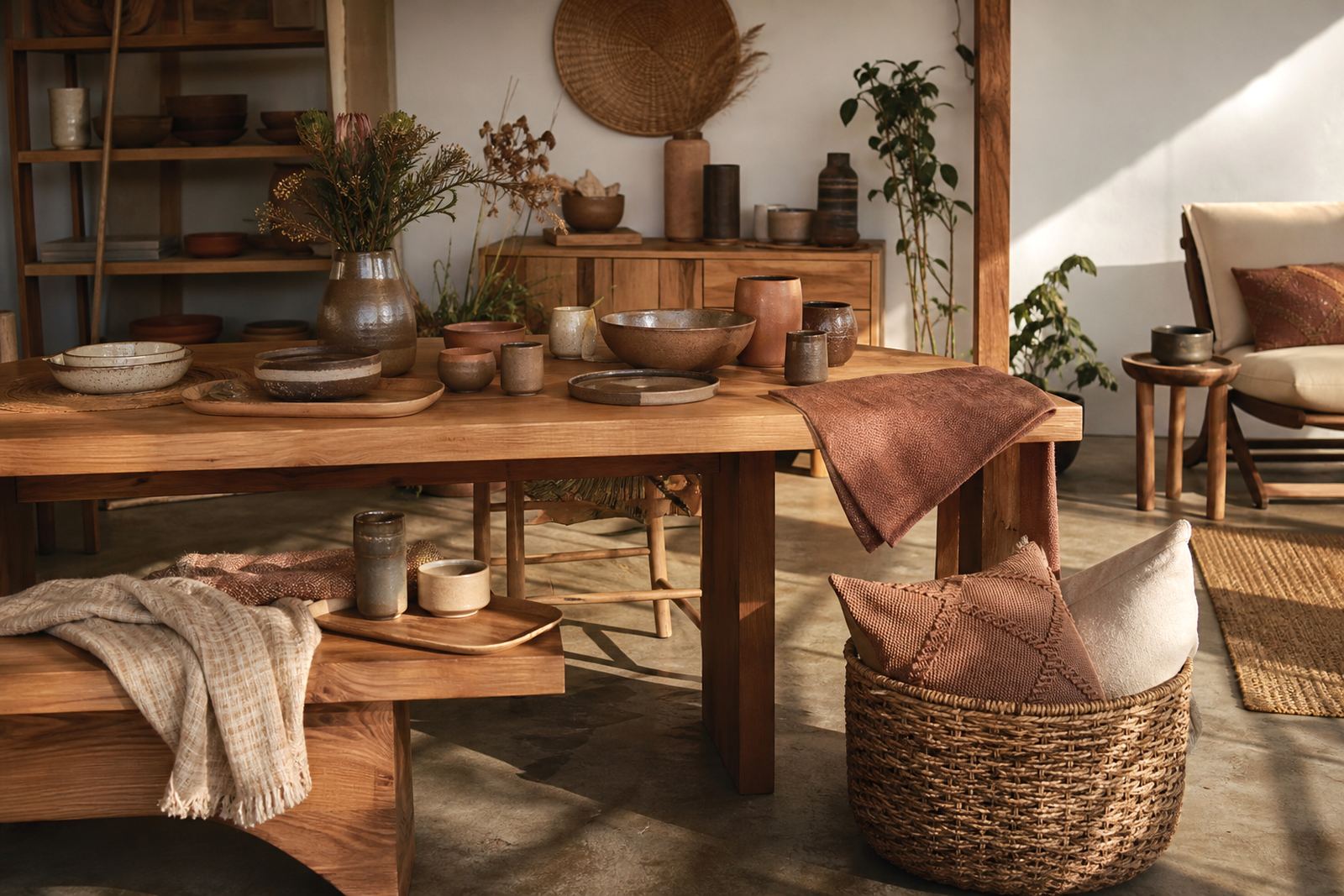
For casual hosting, the best serving pieces are the ones that can handle breakfast, tea, a quick braai plate, then a proper spread for visitors. A medium ceramic platter works for sliced bread, fruit or roast vegetables, while small bowls are useful for olives, chutney, nuts and salt. A jug can hold water or homemade cordial, and a simple tray keeps cups, spoons and serviettes together when guests arrive all at once.
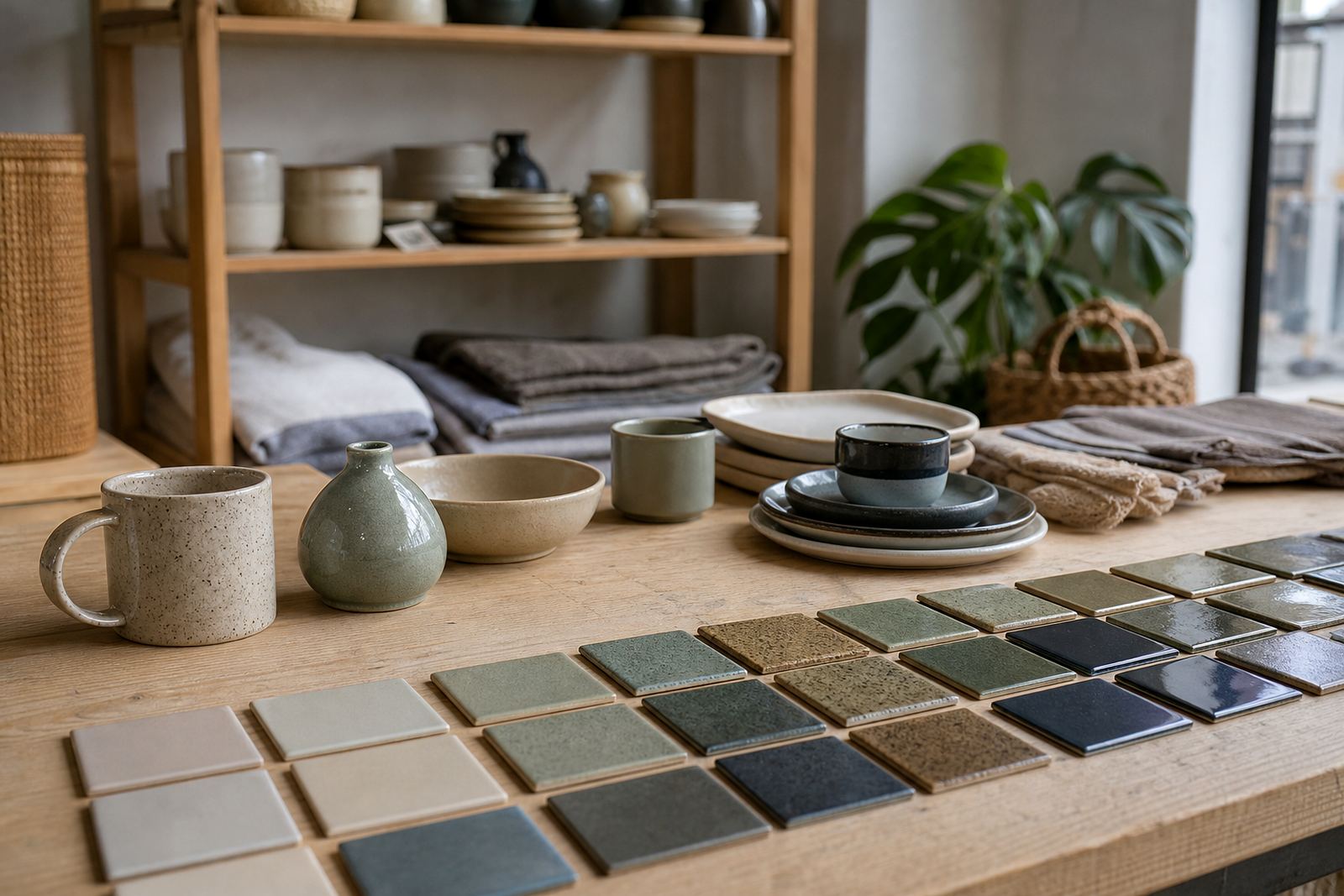
Handmade pieces often have slight variations in glaze, shape or rim thickness. That is part of the appeal, and it also means each item needs the same careful eye when you choose it for everyday use. Look for a comfortable weight, a stable base and enough depth for food that carries a little sauce.
- One large platter for shared food
- Two to four small bowls for snacks and condiments
- A jug or carafe for drinks
- A tray for carrying and arranging pieces
Textiles That Make A Table Feel Sorted
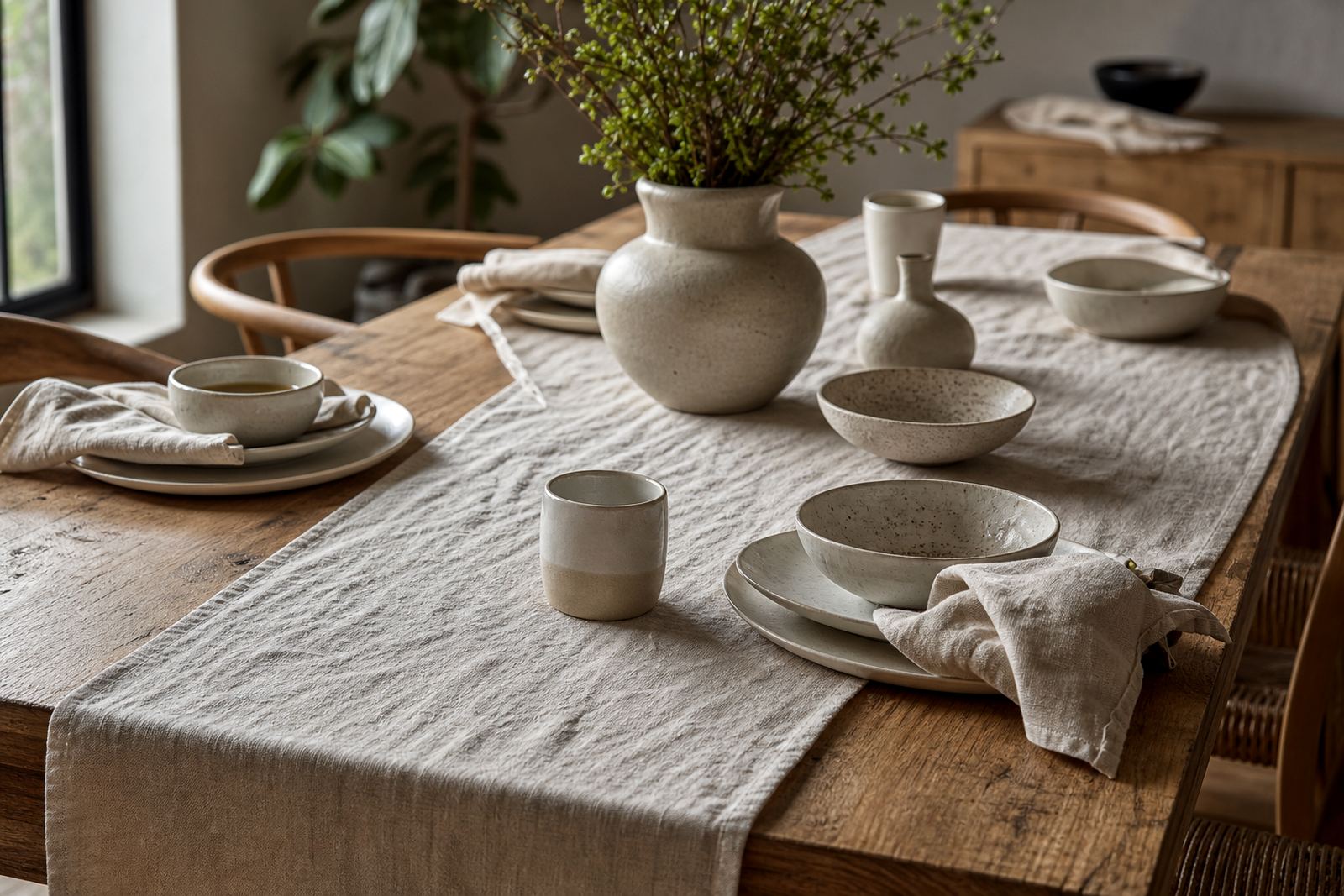
Textiles are often the quickest way to pull a table together, especially when the rest of the room is busy. A cotton or linen runner softens a wooden table and helps define the serving area. Napkins in plain weave or lightly textured fabric feel more relaxed than formal table linen and they wash well after sticky puddings, tomato sauces and oily fingers.
If your dining area gets strong afternoon light, keep to natural colours or muted patterns that will not show every mark. In humid coastal homes, cotton and linen are useful because they dry properly after washing when they are hung up straight. A woven cloth basket for extra napkins or bread also helps keep the table clear.
- Cotton napkins for repeated use
- A runner for an easy centre line
- A small cloth-lined basket for rolls or crackers
- Tea towels that can double as a cover for warm bread
Wood Pieces That Carry The Room Without Shouting
Wooden serving boards and small stands add warmth and balance to ceramic pieces. They are useful for cheese, sliced fruit, vetkoek, rusks or a simple selection of savoury bites. A board with a smooth edge is easier to carry between kitchen and table, and a lighter finish usually shows less dust in homes where doors and windows stay open for much of the day.
In Cape Town homes with sea air, wooden pieces need a little more care than ceramics. Wipe them dry after use and avoid leaving them wet in a sink. A light food-safe oil now and then helps keep the surface from drying out. If a board has a handle hole it is easier to hang, which saves cupboard space in smaller flats and cottage kitchens.
Useful wood pieces for casual hosting:
- A medium board for cheese or bread
- A small paddle board for snacks
- A riser or stand to lift a dish off the table
- A bread knife with a comfortable grip
A Hosting Set Up That Works In A Small South African Home
Many homes in Woodstock, Southern Suburbs and the Atlantic Seaboard have compact kitchens and narrow tables, so the trick is to keep the setup simple. Use one anchor piece, such as a runner or board, then place the main dish and two supporting bowls around it. That leaves space for glasses, plates and conversation. A neat table feels calmer than a crowded one, and it is easier to clear after the meal.
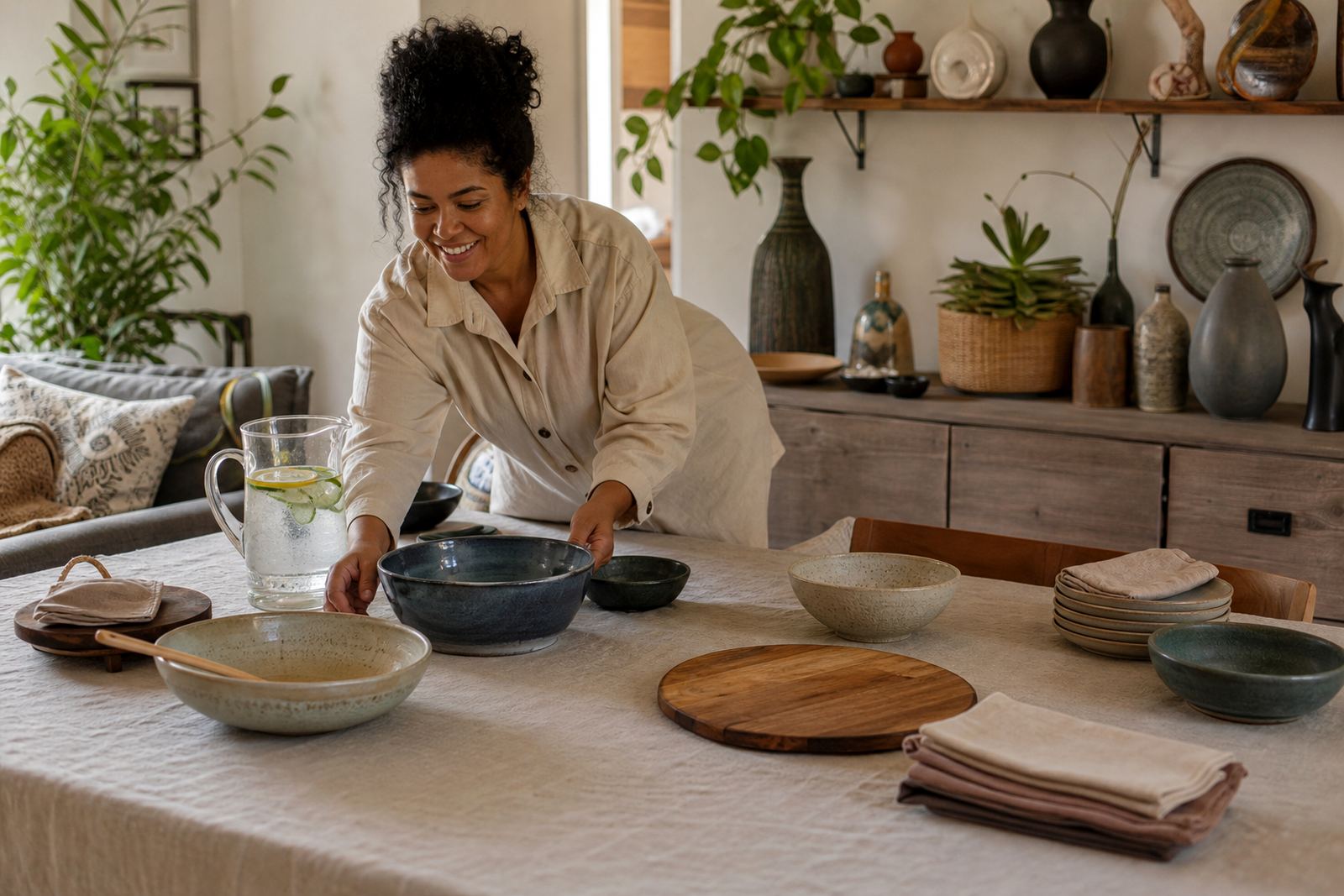
For a Saturday lunch with neighbours, a ceramic bowl of salad, a wood board of bread and a small stack of cloth napkins is enough. Add one jug of water or juice and a bowl for lemon wedges, and the table can handle extra guests without needing a full formal setting. In Johannesburg and Pretoria, where entertaining often happens indoors, this kind of flexible set up works well for both warm days and cooler evenings.
- Keep the centre low so people can talk across the table
- Use one texture, one colour and one natural material to guide the look
- Stack smaller bowls inside one another when not in use
- Choose serving pieces that fit into existing cupboards
Care That Keeps Handmade Items Looking Their Best
Handmade ceramics and textiles last longer when they are cleaned in the right way. Most glazed ceramics can be washed in warm soapy water, then dried with a soft cloth. If a piece has a matte finish or a crackle glaze, it may need a gentler touch and should not be scrubbed hard. Textiles should be washed according to their fibre content, with cotton and linen usually handling regular laundering well.
For wooden items, avoid soaking and keep them away from harsh detergents. If a board starts to look dry, a light oil treatment can help restore it. These pieces are meant to be used, not hidden away, so small marks from honest use are part of the story. A little attention after hosting is usually enough to keep them in good shape.
A Local Example For A Weeknight Supper
A young family in Stellenbosch planning a weekday supper for friends might not want a full table of separate serving dishes. They can set out a ceramic platter of roasted vegetables, a shallow bowl of yoghurt dressing, a wooden board with bread and a cloth napkin stack near the edge of the table. That is enough to feel organised without turning the evening into a production.
Later, the same pieces can move to a weekend breakfast, a birthday tea or a small housewarming. That flexibility matters in homes where storage is tight and every item should earn its place. Good hosting basics are not about having more things, only better chosen ones that can work hard and still look good.